Libya Cash Economy Dinars, Why Every Payment Runs on Physical Banknotes at the Black Market Rate
Libya runs on physical cash only. Foreign cards fail in every ATM, and the black-market USD rate determines what you actually pay for everything.
No Libyan ATM Will Accept Your Card
You are wrong if you think a major international bank card works here. The cash economy in Libya is total. Every foreign Visa and Mastercard transaction is declined due to international sanctions and Libyan banking isolation. Arrive in Tripoli with nothing but plastic and you will not eat, sleep, or move. The only way to pay for anything in Libya is physical cash, converted at the black market rate.
The Libya Black Market Exchange Rate Dictates Everything
The official rate set by the Central Bank of Libya is pegged to the IMF Special Drawing Rights. That number is irrelevant to you. The black market rate is the only one that matters. It is the rate every shopkeeper, driver, and hotel manager uses, because the official rate overvalues the Libyan dinar by a wide margin. The parallel market spread versus the official rate shifts with political and liquidity conditions. The 2024 spread was substantial. Libya's Central Bank publishes the official rate on its website. Compare that number with what a money changer offers on the street. You will receive 50% to 100% more Libyan dinars per dollar on the street than through a bank.
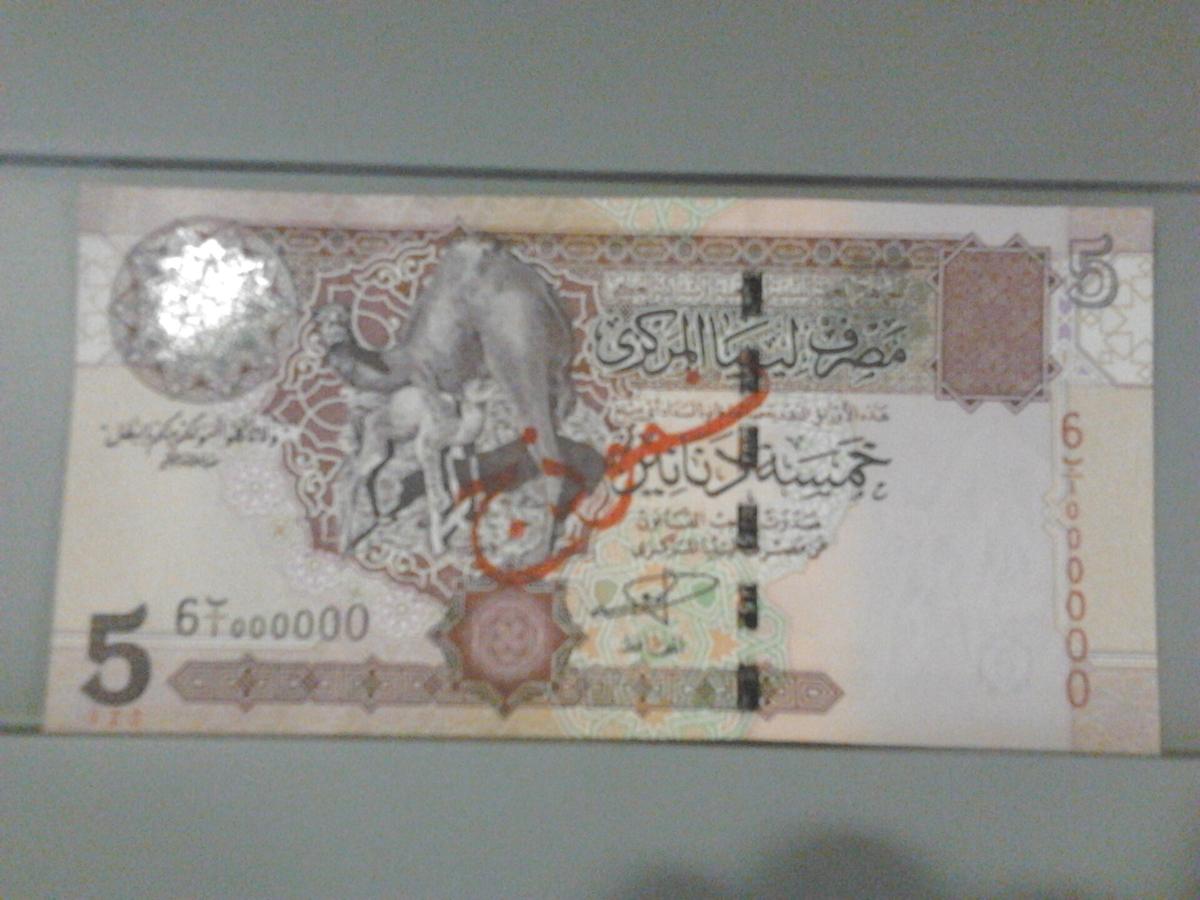

Libyan Dinar to USD Street Rate: How to Get it
Do not convert money at Tripoli's Mitiga Airport. The rate there is the official bank rate and you lose a significant amount. Instead, bring crisp, undamaged USD or EUR banknotes. Old, torn, or marked bills are rejected. Enter a licensed conversion bureau in the Tripoli Medina or central Benghazi. These bureaux operate openly and their posted rate is the Libyan dinar to USD street rate.
Use Your Fixer
A second option is your prearranged fixer or driver. Most fixers will convert dollars for you at the street rate once you are inside their vehicle. This avoids carrying large sums through the streets. Never deal with random individuals on the sidewalk. The risk of robbery or receiving counterfeit dinars is real.
Do ATMs Work in Libya?
No. The short answer to 'do ATMs work in Libya' is that they do not work for foreign cards. ATMs exist in Tripoli, Benghazi, and Misrata, and they operate on domestic switches. The machines may display Visa or Mastercard logos, but those logos do not guarantee acceptance of foreign issued cards. Even if a machine accepts your card, functionality is intermittent due to cash shortages, power cuts, and connectivity disruptions.
Plan For The Failure Case
Assume an ATM will not work and enter the country with no dinar. Carry enough cash from your conversion to cover your entire itinerary plus a 30% buffer for unplanned costs: extra checkpoint bribes, inflated fuel costs for long desert drives, or a night in a better hotel when your planned accommodation has no running water.
Carrying Cash in Libya Safety: the Practical Guide
The question of carrying cash in Libya safety is about bulk, not security. A LD 50 note is the largest denomination in circulation. To have US$1000 worth of Libyan dinars at the street rate, you carry a brick about the size of a paperback. You cannot fit a week's budget in a normal wallet.
Where To Keep Your Cash Brick
Split your cash into three locations. A thin bundle for day to day spending goes in a front pocket or a zipped pouch under clothing. The main brick goes in a locked bag that never leaves your side. A third stash, the emergency reserve, goes in the bottom of your luggage inside a sealed toiletry bag. Do not put all of the money in a hotel safe. Most hotels outside the international chains in Tripoli do not have functional room safes, and the front desk safe is a drawer in a metal cabinet.
Checkpoints And Cash
Security checkpoints are the most common point of friction. You will pass through dozens of them moving between Tripoli, the Nafusa Mountains, and the Fezzan. The Libyan dinar cannot be legally exported in significant quantity, and you are required to declare amounts above a threshold upon exit. That threshold is set annually by the Libyan Customs Authority. In practice, checkpoint guards want to know that you have legitimate business and a fixer. Having a large brick of cash visible invites questions and potential requests for payment. Keep your bricks inside a closed daypack or under a seat cover. Your fixer handles all conversations at checkpoints. If a guard asks about money, let your fixer respond. Do not reach for your cash to show them.
_-_panoramio.jpg)
Card Terminals: the Rare Exception
Card terminals exist in a small number of high end businesses and international chain hotels in Tripoli. If a terminal accepts your card, the transaction is subject to dynamic currency conversion risk. The terminal may offer to convert the charge to your home currency, and the rate applied is set by the merchant's acquirer, not by the Central Bank of Libya. That rate is worse than the street rate. Decline the conversion and pay in Libyan dinars. Even where card payment is possible, do not rely on it as a primary means of payment. The terminal can fail, the connection can drop, and you are then left with a partially processed transaction and no cash to complete the purchase.
The One Thing That Most Often Goes Wrong
Visitors arrive with the assumption that a bank withdrawal in the capital will solve their cash problem. It will not. The single most common failure is entering the country with only a card, no foreign cash, and no prearranged fixer to convert dollars on arrival. The result is a day spent trying every ATM in Tripoli while your guide waits, the clock on your internal travel permits ticks, and you cannot pay for your own dinner. Bring bricks of clean, new USD notes. Convert them at the street rate the moment you clear customs. Forget the cards at home.
Common Questions
Can I use a prepaid travel card in Libya?
No. Prepaid cards carry the same international sanctions restrictions as bank issued cards. They are declined at ATMs and terminals. Treat a prepaid card as if it does not exist.
What happens if I run out of Libyan dinars during my trip?
You cannot get more without access to a foreign currency conversion bureau and a fixer who can take you to one. Carry a reserve of USD or EUR in small denominations and convert them with your fixer or at a bureau. Without that reserve, you are stranded.
Are credit cards accepted at the Mitiga Airport duty free shop?
Some airport shops claim to accept cards, but processing failures are common. Bring enough cash to pay for any last minute purchases before departure. Assume the terminal will decline your card.
Can I bring Libyan dinars back home with me?
No. Exporting Libyan dinar in significant quantity is illegal. Convert any leftover dinars back to USD or EUR at a bureau before you reach the airport. Do not attempt to carry dinars through departure security.
Do I tip in USD or Libyan dinars?
Tipping in small Libyan dinar notes is common for hotel staff and fuel station attendants. For guides and drivers, the amount is negotiated or offered in USD or EUR depending on the region. Carry both currencies.
Read next
-
 Staying Connected in Libya When the Internet Fights Back
Forget eSIMs in Libya: you need a fixer to register a local SIM in their name, a VPN installed before landing, and offline maps for the moment 4G vanishes
Staying Connected in Libya When the Internet Fights Back
Forget eSIMs in Libya: you need a fixer to register a local SIM in their name, a VPN installed before landing, and offline maps for the moment 4G vanishes
-
 Libya Has a Short Window When the Desert Is Survivable and the Coast Bearable
Libya's travel window runs November to March. Summer interior heat is lethal, Ramadan halts daytime services, and Eid clogs the few flights available.
Libya Has a Short Window When the Desert Is Survivable and the Coast Bearable
Libya's travel window runs November to March. Summer interior heat is lethal, Ramadan halts daytime services, and Eid clogs the few flights available.
-
 You Cannot Simply Rent a Car and Drive Across Libya
Moving between Libyan regions demands a fixer-driver and internal travel permits arranged days in advance by your sponsor. Spontaneous road trips do not exist here.
You Cannot Simply Rent a Car and Drive Across Libya
Moving between Libyan regions demands a fixer-driver and internal travel permits arranged days in advance by your sponsor. Spontaneous road trips do not exist here.
-
 You Cannot Board a Flight to Libya Without This One Document
A Libyan tourist visa is impossible without an invitation letter from a registered local operator.
You Cannot Board a Flight to Libya Without This One Document
A Libyan tourist visa is impossible without an invitation letter from a registered local operator.
-
Reading the Official Libya Travel Warning Without Letting It Mislead You
Libya safety advisories paint a broad picture. The real risks are checkpoint photography leading to detention, not violent crime, and the permit system
-
 How Money Actually Works for a Libya Trip in Cash and Chaos
Libya runs on physical dinars exchanged at the black-market rate, and your budget is shaped by cash stacks, fixer fees, and the absence of any credit card
How Money Actually Works for a Libya Trip in Cash and Chaos
Libya runs on physical dinars exchanged at the black-market rate, and your budget is shaped by cash stacks, fixer fees, and the absence of any credit card
-
 A Ground-Level Logistics Guide to Independent Travel in China
First-time independent travel in China: what you need to know about visas, rail booking, eSIMs, mobile payments, and power adapters.
A Ground-Level Logistics Guide to Independent Travel in China
First-time independent travel in China: what you need to know about visas, rail booking, eSIMs, mobile payments, and power adapters.
-
 How Solo Travelers Stay Ahead of Flight Delays and Cancellations
How solo travelers can track inbound aircraft, claim rebooking rights, and adjust ground transport when flights go wrong — step by step.
How Solo Travelers Stay Ahead of Flight Delays and Cancellations
How solo travelers can track inbound aircraft, claim rebooking rights, and adjust ground transport when flights go wrong — step by step.
-
 Why Your eSIM Might Not Work Abroad and How to Check Before You Go
Buying an eSIM doesn't guarantee signal abroad. Learn why coverage fails by location and how to verify reach before you commit to a plan.
Why Your eSIM Might Not Work Abroad and How to Check Before You Go
Buying an eSIM doesn't guarantee signal abroad. Learn why coverage fails by location and how to verify reach before you commit to a plan.