The Libya Safety Travel Advisory Reality You Need to Understand
Libya safety advisories paint a broad picture. The real risks are checkpoint photography leading to detention, not violent crime, and the permit system
You hand your passport to the man at the roadblock. He does not look at it. He looks at your camera bag. He asks, in Arabic, what you are photographing. You say nothing. He takes the bag, removes the camera, and walks into the shack. That is the moment the Libya safety travel advisory reality separates from the travel advisory text.
Every government that issues a Libya travel warning, the United Kingdom Foreign, Commonwealth & Development Office (FCDO), the United States Department of State, Global Affairs Canada, the Australian Department of Foreign Affairs and Trade (DFAT), and the New Zealand Ministry of Foreign Affairs and Trade (MFAT), publishes a version that sounds identical. The 2026 editions all list armed conflict, militia roadblocks, kidnapping risk, landmines, and arbitrary detention. They are not wrong. But they flatten the country into a single threat level, and that flattening misleads a traveller more than it protects one.
The One Risk That Gets You Detained: Photography at Checkpoints and Government Buildings
The Camera Rule
The official advisories mention the risk of arbitrary detention at unofficial roadblocks. What they fail to specify is the single action guaranteed to trigger it: pointing a camera at anything that looks like infrastructure. A barrier. A military vehicle parked near a government building. A fuel depot. An oil pipeline. A police station. Photographing any of these will result in camera confiscation, detention for questioning, and a consular access process that takes days, not hours.
This is not a suggestion. It is a near-certain outcome. Libya checkpoint photography detention is the most common reason travellers end up in local custody. The rule is absolute: do not take the camera out of the bag within sight of a roadblock or any building that could be construed as official. That includes the Arch of Marcus Aurelius in the capital, it sits near government buildings, and the approach roads to Leptis Magna, which pass through active checkpoint zones. If you must photograph a landmark, ask your fixer-driver to confirm the surrounding zone is clear first.
Is Libya Safe for Tourists Now? the Question Misses the Point
Safety Is Specific, Not General
The question "is Libya safe for tourists now" assumes safety is a binary. It is not. Libya is safe for a specific traveller in a specific itinerary conducted with a specific level of logistical discipline. For an intrepid archaeologist who needs a guide, a fixer, a 4x4, and a tolerance for delays, Libya is safe enough to visit and rewarding enough to justify the friction. For a first-time Africa visitor or a solo female traveller, the same country is genuinely dangerous, not because of violent crime against tourists, but because the permit system, the cash-only economy, and the absence of consular support outside the capital turn a small problem into a serious one.
The Armed Presence
The armed presence is constant. You will see men with weapons at every roadblock, on street corners in the capital, and escorting fuel trucks on the coastal highway. That presence is not directed at tourists. It is the visible residue of the militia system that controls territory across the country. The risk for a traveller is not being targeted; it is being caught in the wrong place when a roadblock changes hands or a political demonstration escalates. The regions with the highest reported security incidents, the capital and the surrounding western coastal area, are also the regions with the most archaeological sites. You navigate that by moving between them with a pre-arranged driver and a verified permit, not by avoiding them entirely.
Libya Government Building Photograph Ban: a Rule with No Exceptions
The Libya government building photograph ban extends beyond what you would expect. It covers not only military barracks and police stations but also water treatment plants, electricity substations, telecommunications towers, airport perimeters, and the entire coastal strip near oil export terminals. The Sirte basin, the strategic oil corridor between the capital and Benghazi, is a no-go zone for photography the entire length of the drive. If your driver tells you to put the camera away, do not argue. He knows which militia controls the next roadblock.
The legal basis is fragmented, different areas are controlled by different authorities, but the practical consequence is identical everywhere. A visitor with a camera at a roadblock is presumed to be a spy or a journalist until proven otherwise, and proving otherwise requires a phone call to your sponsor that may or may not be answered. Carry no camera on transit days. Use your phone only inside your accommodation. If you need photographs of a site like Sabratha or Cyrene, take them at the site itself after confirming the perimeter is clear, not on the road approaching it.
Libya Security Situation Practical Advice: Checkpoints, Permits, and Cash
The Libya security situation practical advice is not a list of areas to avoid. It is a protocol for how to move through a country where movement itself is the friction. You cannot rent a car and drive. There is no operational rail network. A pre-arranged private 4x4 with a fixer-driver, paid in cash (Libyan dinar or USD), is the dominant mode. The single biggest trip-up, and the one that strands travellers, is the internal travel permit system. Moving between the capital, the Nafusa Mountains, and the Fezzan region requires permits that your sponsor must arrange days in advance. You do not get these at a border post. You get them through a registered Libyan tour operator who must submit your itinerary and passport details to local authorities before you arrive.
How to Behave at Every Checkpoint
Vehicles are expected to slow down. At night, headlights must be dimmed. Windows must be down. Your passport, visa, and vehicle registration documents must be ready in your hand, not in the glovebox. Do not get out of the car unless told to. Do not speak first. Let your driver speak. He knows the local affiliation of the roadblock operators; you do not. The risk of kidnapping for ransom or political coercion by armed groups is real, but it is concentrated on Libyans with political profiles, not visitors with a permit and a guide. Your protection is your paper trail: the visa sticker, the permit, the contact number of your sponsor. Without those, you are an illegal visitor in a militia-controlled area, and the official advisory becomes accurate.
What the Official Advisories Get Right and What They Flatten
The Real Risks
The FCDO, State Department, Global Affairs Canada, DFAT, and MFAT advisories all correctly identify: armed conflict between militias and armed groups in the capital and western regions, presence of multiple armed groups with shifting territorial control, risk of kidnapping, unexploded ordnance and landmine contamination in former conflict zones including areas around Sirte, southern outskirts of the capital, and areas around Benghazi, arbitrary detention at unofficial roadblocks operated by militias, violent crime including carjacking and armed robbery in urban areas, and political demonstrations that can escalate into armed clashes without warning. These are real. Any page that tells you they are exaggerated is dangerous.
Friction, Not Firefights
What the advisories flatten is the distinction between risk and friction. The daily reality for a tourist in Libya is not firefights. It is the permit system, the roadblock delays, the cash-only economy (ATMs reject international cards, the black-market USD rate dictates all costs, and you carry bricks of physical dinars), the absolute ban on alcohol (possession is a criminal offence), and the total absence of toilet infrastructure outside the capital and the few international hotels. The stress-to-reward ratio is high enough that this trip is not for first-time Africa visitors, solo female travellers, anyone needing reliable Wi-Fi, or those who panic when plans change hourly.
| Government | Body | Year of Advisory Status |
|---|---|---|
| United Kingdom | FCDO | 2026 |
| United States | Department of State | 2026 |
| Canada | Global Affairs Canada | 2026 |
| Australia | DFAT | 2026 |
| New Zealand | MFAT | 2026 |
The Visa and Permit Reality: the First Thing That Goes Wrong
The Invitation Letter
A tourist visa is not a formality. Visitors book flights before securing the invitation letter from a registered Libyan tour operator, which is the non-negotiable document required for the visa sticker. Without it, you are denied boarding at departure. The visa processing times and requirements change without notice. Your passport must be valid for at least six months beyond your intended stay. Israeli nationals and those with Israeli entry stamps in their passport are denied entry at every point.
Internal Permits
Once inside, the permit system dictates every move. You need a separate permit to enter the Fezzan region, which opens the route to Ghadames Oasis, the Akakus rock art, Ghat, and the black desert. You need another to travel between the capital and the Nafusa Mountains. The permits take days to arrange. Your driver-sponsor must buy a Libyana or Al-Madar SIM card in their name, you cannot register one yourself with a visitor ID, and the card costs 5-10 LYD. 4G is patchy in the capital and non-existent in the desert. Download offline maps and a VPN before arrival because many websites are blocked.
The Cash Economy: Carry Dinars or Fail
The currency in use is the Libyan dinar (LYD). The cash economy is total. International credit or debit cards are accepted almost nowhere. ATMs are unreliable or empty, particularly outside the capital. Currency exchange is limited to official bureaux and banks, where the black-market rate differs significantly. You carry your entire trip budget in physical dinars or USD. Do not arrive expecting to withdraw money. Do not arrive expecting to pay by card for a hotel, a guide, fuel, or food. The failure case is being stranded without cash and no way to get more.
Health and Infrastructure: What Breaks Down and What You Bring
Water, Food, and Vaccines
Tap water is not potable anywhere in Libya. Bottled water is your only source, plus water treated by boiling, filtration, or chemical disinfection. Food safety risks include inconsistent refrigeration and food handling standards, raw vegetables and salads washed in untreated water, unpasteurised dairy products, and street food with uncertain hygiene practices. Common foodborne illnesses are travellers' diarrhoea, hepatitis A, and typhoid. The WHO recommends routine vaccinations (MMR, DTP, polio, influenza, COVID-19), hepatitis A for most travellers, typhoid for most travellers, and hepatitis B and rabies for some travellers. A yellow fever vaccination certificate is required for entry if arriving from a country with risk of yellow fever transmission.
Medical Care and Evacuation
Malaria risk is none in most of Libya and very low risk in southwestern border areas. Leishmaniasis is present in rural and peri-urban areas, peaking in warmer months from roughly April to October. Rift Valley fever outbreaks are possible. Health infrastructure in the capital and Benghazi consists of public hospitals with shortages of medicines and equipment. Private clinics exist in both cities and require payment in cash. Outside major cities, health infrastructure is limited or absent; evacuation to the capital or abroad is often required. For serious conditions, evacuation to Tunisia or Europe is required. Carry your own supply of prescription medicines, as pharmaceutical availability is limited. Some medications legal elsewhere are controlled substances in Libya and require documentation.
Road Conditions and Driving Realities
The Coastal Highway and Desert Tracks
The coastal highway between the capital and Misrata is paved and generally maintained. Between Misrata and Sirte, and between Sirte and Benghazi, the paving is maintained but variable. Desert routes in the Fezzan region are unpaved sand and gravel tracks that require a 4WD. Routes near borders are unpaved, poorly marked, and carry a risk of landmines. Urban traffic norms include armed roadblocks operated by various militias, documentation checks, erratic driving, and limited adherence to traffic signals. On highways, high-speed driving is common and speed limits are barely enforced.
Fuel and Seasonal Hazards
Fuel availability in the capital and Benghazi is generally available at fuel stations. In rural and desert areas, fuel is limited with long distances between stations. Petrol and diesel are the commonly available fuel types. Road hazards in desert regions include sand dune encroachment on roads and sudden sandstorms that reduce visibility to near zero, most frequent in spring and early summer. In the Nafusa and Akhdar mountains, winding roads and rockfall risk after rain are the hazards. Coastal areas experience flash flooding of wadis and low-lying roads during winter rains from November to February. Desert interior temperatures exceed 45°C in summer months, causing vehicle overheating.
When to Go and When to Stay Home
Peak season is November to March. Coastal humidity drops and daytime desert temperatures become survivable for camping. June to September is the avoid window: coastal heat is oppressive and the interior is dangerously hot. Avoid the entire month of Ramadan if you need daytime meals or functional business hours. Public observance of Ramadan affects availability of food and services during daylight hours. Eid al-Fitr sees chaotic domestic travel that clogs the few available flights.
Minimum days for a worthwhile trip is 10. The visa process alone dictates a fixed itinerary, and the distances between the capital, the Roman coast, and the southern desert require long, roadblock-heavy drives. You need that time to absorb the delays built into every movement.
Common Questions
Can I photograph anything I want in Libya?
No. Photographing any roadblock, government building, military vehicle, oil infrastructure, fuel depot, police station, airport perimeter, or telecommunications tower will result in camera confiscation and detention for questioning. The ban is absolute and applies to the entire Sirte basin and the coastal strip near oil terminals. Ask your driver before taking any photograph outside a designated tourist site.
Do I need a visa to enter Libya?
Yes. A visa is required for nationals of most countries. It is not available on arrival for most nationalities. You must obtain it in advance through a registered Libyan tour operator who provides an invitation letter. Without that letter, you are denied boarding at departure. Passport validity must be at least six months beyond your intended stay.
Can I rent a car and drive myself in Libya?
No. You cannot simply rent a car and drive. You must travel with a pre-arranged private 4x4 and a fixer-driver. Internal travel permits are required to move between regions, and only a registered sponsor can arrange them days in advance. Without a permit, you cannot legally enter the Nafusa Mountains, the Fezzan, or the southern desert.
Is alcohol available in Libya?
No. Alcohol is completely banned. Possession is a criminal offence, not just a cultural faux pas. Do not attempt to bring alcohol into the country. Do not expect to find it in hotels, restaurants, or anywhere else.
Can I use my credit card in Libya?
Almost never. The country operates on a cash-only economy. ATMs reject international cards and are unreliable or empty, especially outside the capital. You must carry your entire trip budget in Libyan dinar or USD. The black-market rate for USD differs significantly from the official rate.
Is the internet reliable in Libya?
No. 4G is patchy in the capital and non-existent in the desert. Libyana and Al-Madar SIM cards are cheap (5-10 LYD) but require a local ID to register; your fixer must buy one in their name. Download offline maps and a VPN before arrival because many websites are blocked. Internet and mobile networks can be shut down during armed clashes.
What happens if I need medical help in the desert?
Health infrastructure outside major cities is limited or absent. Evacuation to the capital or abroad is required. For serious conditions, evacuation to Tunisia or Europe is necessary. Private clinics in the capital and Benghazi require cash payment. Carry your own supply of prescription medicines and a medical evacuation insurance policy that covers Libya.
Read next
-
 Staying Connected in Libya When the Internet Fights Back
Forget eSIMs in Libya: you need a fixer to register a local SIM in their name, a VPN installed before landing, and offline maps for the moment 4G vanishes
Staying Connected in Libya When the Internet Fights Back
Forget eSIMs in Libya: you need a fixer to register a local SIM in their name, a VPN installed before landing, and offline maps for the moment 4G vanishes
-
 Libya Has a Short Window When the Desert Is Survivable and the Coast Bearable
Libya's travel window runs November to March. Summer interior heat is lethal, Ramadan halts daytime services, and Eid clogs the few flights available.
Libya Has a Short Window When the Desert Is Survivable and the Coast Bearable
Libya's travel window runs November to March. Summer interior heat is lethal, Ramadan halts daytime services, and Eid clogs the few flights available.
-
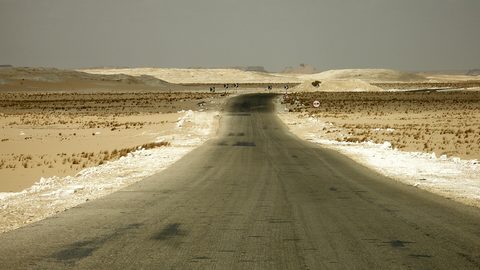 You Cannot Simply Rent a Car and Drive Across Libya
Moving between Libyan regions demands a fixer-driver and internal travel permits arranged days in advance by your sponsor. Spontaneous road trips do not exist here.
You Cannot Simply Rent a Car and Drive Across Libya
Moving between Libyan regions demands a fixer-driver and internal travel permits arranged days in advance by your sponsor. Spontaneous road trips do not exist here.
-
 You Cannot Board a Flight to Libya Without This One Document
A Libyan tourist visa is impossible without an invitation letter from a registered local operator.
You Cannot Board a Flight to Libya Without This One Document
A Libyan tourist visa is impossible without an invitation letter from a registered local operator.
-
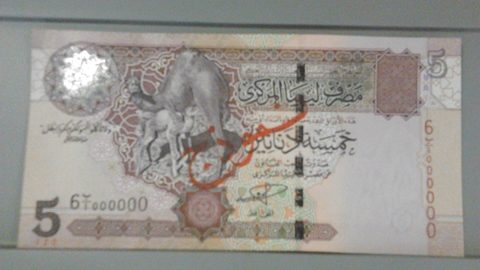 Bring Bricks of Dinars Because No Libyan ATM Will Accept Your Card
Libya runs on physical cash only. Foreign cards fail in every ATM, and the black-market USD rate determines what you actually pay for everything.
Bring Bricks of Dinars Because No Libyan ATM Will Accept Your Card
Libya runs on physical cash only. Foreign cards fail in every ATM, and the black-market USD rate determines what you actually pay for everything.
-
 How Money Actually Works for a Libya Trip in Cash and Chaos
Libya runs on physical dinars exchanged at the black-market rate, and your budget is shaped by cash stacks, fixer fees, and the absence of any credit card
How Money Actually Works for a Libya Trip in Cash and Chaos
Libya runs on physical dinars exchanged at the black-market rate, and your budget is shaped by cash stacks, fixer fees, and the absence of any credit card
-
 A Ground-Level Logistics Guide to Independent Travel in China
First-time independent travel in China: what you need to know about visas, rail booking, eSIMs, mobile payments, and power adapters.
A Ground-Level Logistics Guide to Independent Travel in China
First-time independent travel in China: what you need to know about visas, rail booking, eSIMs, mobile payments, and power adapters.
-
 How Solo Travelers Stay Ahead of Flight Delays and Cancellations
How solo travelers can track inbound aircraft, claim rebooking rights, and adjust ground transport when flights go wrong — step by step.
How Solo Travelers Stay Ahead of Flight Delays and Cancellations
How solo travelers can track inbound aircraft, claim rebooking rights, and adjust ground transport when flights go wrong — step by step.
-
 Why Your eSIM Might Not Work Abroad and How to Check Before You Go
Buying an eSIM doesn't guarantee signal abroad. Learn why coverage fails by location and how to verify reach before you commit to a plan.
Why Your eSIM Might Not Work Abroad and How to Check Before You Go
Buying an eSIM doesn't guarantee signal abroad. Learn why coverage fails by location and how to verify reach before you commit to a plan.