How to Get Up Lycabettus Hill in Athens and Whether the View Is Worth It
How to get up Lycabettus Hill in Athens by funicular or on foot, whether the view is worth the effort, and how it compares to Philopappos Hill.
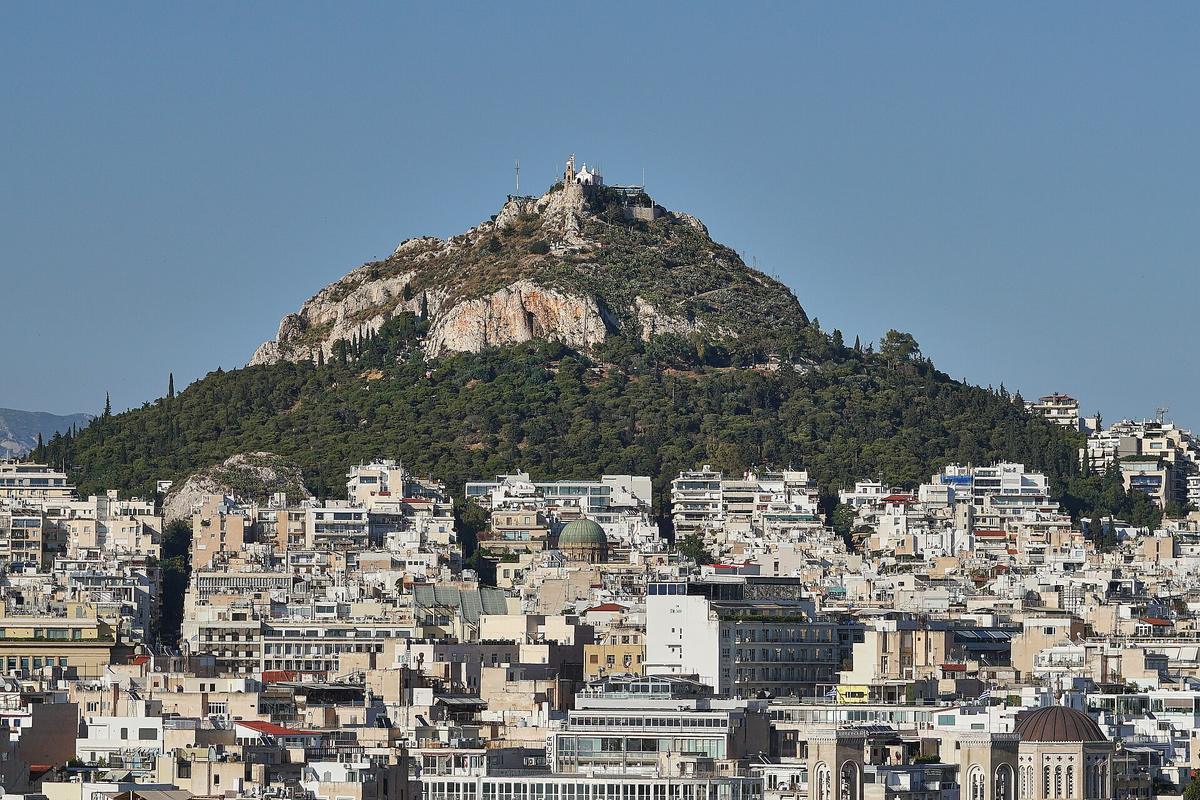
Lycabettus Hill Athens How to Get Up and Whether the View is Worth it
The cable car for Lycabettus Hill starts at Aristippou Street in Kolonaki, not at the base of the hill where most people first look. If you walk up from Syntagma Square and hit the slope directly, you will climb 130 metres of elevation on uneven ground in the open sun. The ride cuts that to three minutes through a bored tunnel. Getting here without a car works, as long as you plan around the one useful entrance. You will waste time in the heat hunting for it if you do not know it is tucked away on a quiet residential street three blocks north of the Kolonaki shopping strip. The lower terminal is marked, but not loudly. Plug 'Aristippou 1, Athens' into your maps and follow it to the end of the street, where a short ramp leads down to the ticket window. The car runs every 15 to 30 minutes depending on demand and season, carries about 34 passengers, and you buy a ticket at the window. No advance booking is needed for the ride itself. The theatre events at the summit do require tickets through the City of Athens website, but hill access and the viewing platform are free.
- Summit Elevation: 277 m above sea level
- Funicular Lower Station: Aristippou Street, Kolonaki
- Funicular Travel Time: Approx. 3 minutes
- Funicular Frequency: Every 15-30 minutes depending on demand and season
- Walking Time From Lower Station to Summit: Approx. 20-30 minutes
- Walking Time From Evangelismos Metro to Lower Station: Approx. 10-15 minutes
- Typical Visit Duration: 45-90 minutes
- Best Time for Views: Late afternoon into sunset
- Summit Features: Chapel of St. George, viewing platform, open-air theatre, café, public toilets
- Wheelchair Access: Via funicular only. Walking paths are not suitable.
Lycabettus Hill Funicular: Where it Starts and How it Works
The system is cable-driven, with a single car pair running on a track about 210 metres long. It opened in 1965 and received a refurbishment in 2002. The Hellenic Public Properties Company (ETAD) operates it, though the precise schedule varies; check odap.gr for the day's timing before you go. The upper terminal delivers you directly next to the Chapel of St. George, a Greek Orthodox chapel open to the public on limited hours that change annually. From the exit, you step onto the summit's viewing platform within thirty seconds.
Do not expect a scenic ride. The tunnel is dark and featureless. The view starts only when you step out at the top. If you are travelling with someone who uses a wheelchair, this is the only viable route; the walking paths are not suitable for wheels or strollers. Public toilets and a water fountain sit at the summit, so you can hydrate and use facilities before descending.
Lycabettus Hill View: What You Actually See and When to See it
The summit offers a 360-degree panorama. To the west you see the Acropolis, Piraeus, and the Saronic Gulf. To the east and north stretch the surrounding mountains of the Attica basin. The viewing platform faces the best angle for the ancient citadel and the sea, which is also the direction of the sunset. The café terrace at the top is functional for a drink while you wait for the light to change, but the coffee is average. Bring your own water and sit on the low wall of the platform instead.
Lycabettus Hill Sunset
Sunset is the reason most people come. The timing shifts from roughly 17:00 in December to roughly 20:45 in June, so check the day's exact sunset time and arrive forty-five minutes early to claim a position on the platform. The view faces west toward Piraeus and the gulf, and the light turns the marble of the Acropolis gold before the sky goes pink and then dark. It is impressive. But it is also crowded. From April through October, expect the platform to fill with people an hour before sunset, and the queue for the ride down to back up afterward. If you want the same sunset light with fewer people and no queue, walk down via the paved path; it takes twenty minutes and you will have the descent to yourself.
Lycabettus Hill Worth It Compared to Other Viewpoints
Here is the honest comparison. The Acropolis itself gives you a closer view of the Parthenon but a restricted sightline of the city; you are on it, not looking at it. Philopappos Hill, on the other side of the Acropolis, is free, wooded, and gives the single best photography angle of the ancient citadel itself. Lycabettus is higher than both, at 277 metres, and it is the only spot where you see the entire Athens basin laid out including the sea. The trade-off is the climb, the cost of the ride, and the wind exposure: Lycabettus is exposed on all sides, and on a windy winter day the summit is genuinely unpleasant. December through February bring the strongest winds, and the platform offers no shelter. For a clear late-spring or autumn evening, Lycabettus wins. For a quick Acropolis photo in a relaxed setting, Philopappos is the better choice. For the history of standing on the ancient citadel itself, only the Acropolis serves that purpose. Lycabettus is not a replacement for either; it is the high-altitude city view you choose when you want to see where the sea meets the concrete.
Lycabettus Hill Climb: the Physical Reality in Summer Heat
Walking up Lycabettus is a 20-to-30-minute climb from the lower terminal, gaining roughly 130 metres of elevation. In August, when the temperature regularly exceeds 38°C, that is a punishing effort. The path surface mixes paved sections and unpaved dirt, and the summer dust on the unpaved parts turns to a fine powder that coats your shoes and ankles. Pine cover exists on the upper slopes but it is patchy; much of the lower path is fully exposed to the sun. The main walking route starts from the same Aristippou Street area and winds upward through the residential fringe of Kolonaki before entering the hill's scrub. There is no standardised number of steps because multiple routes converge, but none of them is gentle. If you walk up, do it before 09:00 or after 18:00 in the hot months. Carry at least one litre of water per person. The path lighting at night is present on the main route but not on every fork, so a phone torch is useful for the descent after sunset.
Taxi and Parking Options
The alternative approach is to take a taxi to the drop-off point on the upper road that skirts the hill, which cuts the climb to about five minutes of steep pavement walking. Taxi drivers in Athens may refuse short fares, so offer the destination clearly and agree on the meter before you get in. The Kolonaki area has limited street parking and paid car parks. A taxi from Syntagma Square saves you the walk through the lower neighbourhood.



Practical Combination: Lycabettus with Kolonaki and Nearby Sites
The same visit can easily include the Benaki Museum of Greek Culture, the Museum of Cycladic Art, or the Byzantine and Christian Museum, all of which sit within a 15-minute walk of the lower terminal. The National Garden and the Panathenaic Stadium are also within walking distance, though they lie on the far side of Kolonaki toward Syntagma. A logical afternoon route is the Museum of Cycladic Art (small, superb, takes about 90 minutes), then a slow walk up through Kolonaki's steep chic streets to the cable car for a sunset ride, then a dinner in the Psyrri or Koukaki district afterward. The nearby Evangelismos metro stop (Line 3) is a 10-to-15-minute walk from the lower terminal; Syntagma (Lines 2 and 3) is about 15 to 20 minutes. Use the metro to return rather than the cable car descent if the queue is long; the walk down is faster than waiting for the car.
Common Questions
Do I need to book tickets in advance for Lycabettus Hill?
No. Hill access and the cable car do not require advance booking. You buy tickets at the lower terminal. The Lycabettus Theatre events do require tickets via the City of Athens website.
How long does the funicular ride take?
Approximately three minutes. The car travels through a bored tunnel about 210 metres long from Aristippou Street to the summit.
Is Lycabettus Hill accessible for wheelchair users?
Yes, but only via the cable car. The walking paths are not suitable for wheelchairs or strollers.
Which is better for sunset, Lycabettus or Philopappos Hill?
Lycabettus gives a higher 360-degree view including the sea. Philopappos gives the best direct-angle photo of the Acropolis itself. For the city-wide panorama at golden hour, choose Lycabettus. For a close Acropolis shot, choose Philopappos.
How much does the funicular cost?
The exact fare changes seasonally and is set by ETAD. Expect to pay a few euros each way. The ticket machine accepts card. Check odap.gr for the current rate.
Is Lycabettus Hill worth the climb in summer?
Only if you go very early or near sunset. The midday heat on the exposed path is brutal, and the haze in July and August often obscures the view. September through November or March through May give the clearest conditions.
What is at the top of Lycabettus Hill?
The Chapel of St. George (limited hours, check annually), a viewing platform, an open-air theatre, a café terrace, public toilets, and a water fountain.
Read next
-
 Athens Hotels by Price Band and What Each Band Actually Gets You
Athens hotel prices rise sharply with Acropolis views and rooftop access. Here's what each price band actually delivers.
-
 Where to Stay in Athens and What Each District Costs You
The district you choose in Athens changes everything about your trip. Compare Plaka, Monastiraki, Koukaki, and the rest by trade-off.
-
 Athens Flights, Flying Into ATH and Getting Out of the Airport
Flying into Athens: what to expect at ATH, and how to get from the airport to Syntagma, Monastiraki, or Piraeus.
-
 Athens Things to Do Ordered by Whether They Are Worth the Time
Not every Athens sight deserves your limited hours. This guide ranks what to do by the time it takes and what it gives back.
-
 Best Time to Visit Athens and What Each Season Does to It
Athens has two comfortable shoulder seasons, a brutal August, and winter free-entry Sundays. Here's what each season does to the city.
-
 Getting Around Athens Without Wasting Half Your Trip
Athens has a good metro but late nights, marble streets, and taxi habits can trip you up. Here's how to get around without friction.
-
 Acropolis
How to visit the Acropolis and Parthenon in Athens without queueing twice, including the timed-entry system, the south slope entrance, and the marble terrain.
-
 Acropolis Museum
Whether the Acropolis Museum in Athens is worth the time, how to visit without queueing twice, and how to sequence it with the Acropolis itself.
-
 Ancient Agora
What the Ancient Agora in Athens is, whether it is worth your time, and how to visit the Hephaisteion and Stoa of Attalos without rushing.