Kolonaki, Athens: What It Is Like, Who It Suits, and What Is Within Walking Distance
Kolonaki, Athens: the upscale gallery and designer-shopping district on steep streets, what it feels like, and who it suits.
- Flag
-
- ISO code
- GR
- Currency
- EUR
- Timezone
- Europe/Athens
Kolonaki, Athens: What it is Like, Who it Suits, and What is Within Walking Distance
Kolonaki sits on the lower southwest slope of Lycabettus Hill at 110 to 150 metres above sea level. Every walk out is a descent. Every walk back is an unapologetic climb. The area covers roughly one square kilometre between Vasilissis Sofias Avenue and the ring road around Lycabettus, holds about 6,000 to 7,000 residents, and operates on an entirely different logic from the tourist corridors of Plaka and Monastiraki. This is the part of Athens where money lives quietly, where shops close for August and no one apologises for it, and where the city's best museums and commercial art galleries sit on streets that double as the embassy quarter. The pavement is narrow, the gradient is real, and a 10 minute downhill stroll to Syntagma Square becomes a 15 minute uphill slog on the return. That physical demand is the trade-off for a calm that the central districts cannot offer. If you want designer retail, serious collections, and a base that feels like a neighbourhood rather than a stage set, Kolonaki is the choice. If budget, nightlife, or flat terrain are priorities, pick somewhere else.
Kolonaki Neighbourhood: the Character and the Trade-Offs
The Lay Of The Land
Kolonaki is dense, upmarket, and predominantly residential. The building stock runs from the 1930s through the 1970s, five to nine stories, with neoclassical survivors tucked onto side streets. The street pattern is an irregular grid on steep ground, and the main axes are Patriarchou Ioakim, Skoufa, Tsakalof, Anagnostopoulou, Kanari, and Ploutarchou. Kolonaki Square, officially Plateia Filikis Etaireias, is the central point: a small paved square surrounded by cafes and a single periptero. It is not a grand piazza. It is a node where residents stop for coffee and dog walkers sit with their papers.
How It Compares
The area differs from Exarchia, its neighbour to the northwest, by income, by retail focus, and by noise level. Exarchia is student-heavy, activist-led, dense with street art and late bars. Kolonaki is quieter at night, more formal, and driven by fashion and art. The difference from Syntagma is structural: Syntagma is a government and hotel zone split by major through-traffic; Kolonaki is a lived-in quarter scaled to pedestrians. The difference from Plaka is fundamental: Plaka is a low-rise tourist-historic area built for souvenir shopping and taverna meals; Kolonaki is a real central neighbourhood where people live, work, and shop for groceries.
What The Calm Costs
The calm comes at a price, and the price is not just financial. The streets punish the unprepared. Pavements are narrow, often blocked by parked motorbikes or cafe tables, and the marble-like stone becomes dangerous when wet. Upper streets near Lycabettus are the quietest and the quiet itself is the point. This is not a place for travellers who want noise, chaos, or budget souvlaki at 2am. It suits travellers who want a central, walkable base with upmarket retail and dining and fewer late-night crowds.
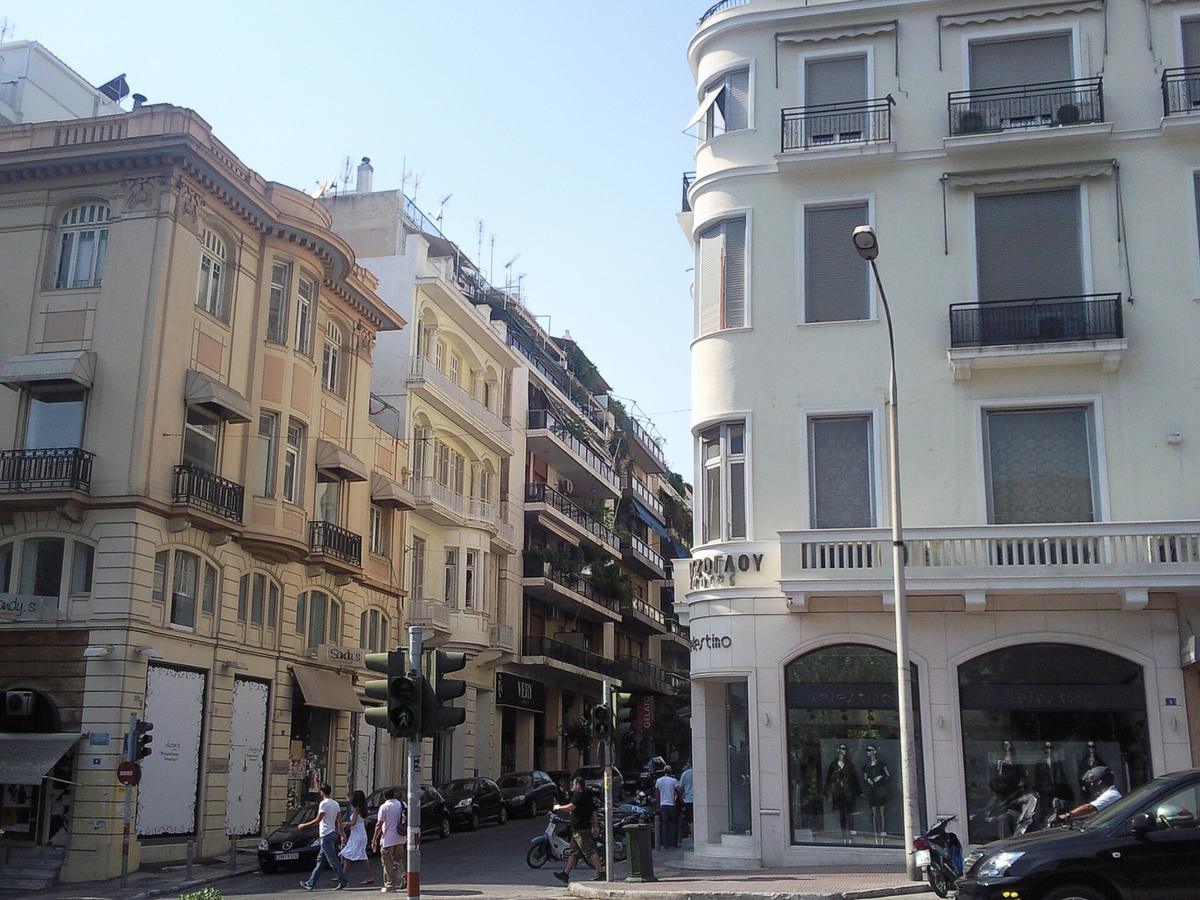

Kolonaki Shopping: Designer Retail and Art Galleries on Steep Streets
What It Costs And What To Skip
Kolonaki is expensive by Athens standards. A coffee at a square-side cafe costs more than the same coffee in Exarchia or Koukaki. A dinner with wine at a mid-range restaurant on Skoufa will run higher than a comparable meal in Pangrati. The premium buys quieter streets, better-curated retail, and a clientele that is not primarily tourists. What is not worth the premium is the attempt to find street market bargains or late-night bar-hopping. Kolonaki has no open-air market, no laiki agora within the area, and no large nightlife venues. The nearest market days rotate weekly in neighbouring districts, and the nightlife is limited to wine bars, cocktail bars, and quiet late cafes that close earlier than their equivalents in Psyrri or Gazi. If those are what you want, stay in Monastiraki or Koukaki and take a taxi uphill for a gallery visit, then go back down.
Kolonaki Restaurants: Where to Eat and Drink in the Neighbourhood
If You Only Eat One Meal In The Neighbourhood
Skip the square-side restaurants with English menus and multilingual waiters. Walk up to Dexameni or toward the Lycabettus footpath start and pick a restaurant that is full of Greek speakers. Order what the table next to you is eating. The food will be better and the bill will be lower. The difference is not subtle.

Where to Stay in Kolonaki: Hotels, Apartments, and Who Should Book Them
What You Pay For The Peace
Kolonaki is more expensive than Koukaki, Pangrati, or Exarchia. A boutique hotel room here costs roughly the same as a Syntagma hotel room, but you get quieter streets and better local retail. The trade-off is the gradient, the limited nightlife, and the fact that August empties the area of its character. If you are travelling in August, stay in Koukaki or Thissio instead. The museums and galleries will still be open, but the neighbourhood itself will feel half-alive.
Other areas in Athens
Common Questions
Is Kolonaki safe at night?
Yes. Kolonaki has low violent crime rates. The main risks are pickpocketing in cafes and retail areas, particularly around Kolonaki Square, and occasional vehicle break-ins on side streets. The upper streets near Lycabettus are very quiet at night, and the embassy presence on Vasilissis Sofias means visible police and private security on that edge. Solo travellers, including women, walk the main streets after dark without issue. Take the same precautions you would in any central European area.
How far is Kolonaki from the Acropolis?
The walk from Kolonaki Square to the Acropolis entrance takes 25 to 35 minutes on foot via Dionysiou Areopagitou, mostly downhill. A taxi from Vasilissis Sofias takes about 10 minutes, but the fare can double in traffic. The Acropolis Museum sits on the same route, so you can visit both on the same walk. Do not attempt the Acropolis and the museum back-to-back in summer heat without pre-booked tickets. You will queue for hours at midday and arrive at the top exhausted.
Does Kolonaki have good public transport links?
Evangelismos metro station on Line 3 sits on Kolonaki's southern edge, and Panepistimio on Line 2 is about 700 metres west. Multiple trolleybus and bus lines run along Vasilissis Sofias and Kifissias. The nearest tram stop is 500 to 800 metres south. Metro service stops around midnight on weekdays, so late returns usually require a taxi. Ride-hailing apps Uber, Free Now, and Bolt operate in the area. Taxis are easy to flag on Vasilissis Sofias and Kolonaki Square but scarce on upper residential streets.
What is the best time of year to stay in Kolonaki?
April through June and September through October. These months bring warm but not brutal weather, long daylight, and the highest concentration of cultural events. Avoid mid-July through August, when extreme heat regularly exceeds 38 degrees Celsius and many local shops and restaurants close for holidays. The area feels emptied of Athenians and full of overheated tourists. Also avoid Orthodox Easter weekend if you want normal museum hours, as schedules shift and crowds spike.
Who should NOT stay in Kolonaki?
Travellers who need flat terrain, easy stroller routes, or quiet parks. Those on a tight budget. Anyone who wants late-night bar-hopping or street market energy. Visitors with significant mobility limitations should avoid the upper streets entirely. The area is not suitable for travellers who dislike uphill walking or who want a relaxing, green, pristine European capital. Kolonaki is for people who know what they are buying: calm, culture, and designer retail, at the cost of gradient and expense.
Read next
-
 Athens Hotels by Price Band and What Each Band Actually Gets You
Athens hotel prices rise sharply with Acropolis views and rooftop access. Here's what each price band actually delivers.
-
 Where to Stay in Athens and What Each District Costs You
The district you choose in Athens changes everything about your trip. Compare Plaka, Monastiraki, Koukaki, and the rest by trade-off.
-
 Athens Flights, Flying Into ATH and Getting Out of the Airport
Flying into Athens: what to expect at ATH, and how to get from the airport to Syntagma, Monastiraki, or Piraeus.
-
 Athens Things to Do Ordered by Whether They Are Worth the Time
Not every Athens sight deserves your limited hours. This guide ranks what to do by the time it takes and what it gives back.
-
 Best Time to Visit Athens and What Each Season Does to It
Athens has two comfortable shoulder seasons, a brutal August, and winter free-entry Sundays. Here's what each season does to the city.
-
 Getting Around Athens Without Wasting Half Your Trip
Athens has a good metro but late nights, marble streets, and taxi habits can trip you up. Here's how to get around without friction.
-
 Monastiraki
, Athens: the flea-market district with rooftop bars and a metro nexus, what it feels like, and who it suits.
-
 Koukaki
, Athens: the quiet residential district near the Acropolis Museum, what it feels like, who it suits, and what is nearby.
-
 Plaka
Plaka, Athens: the neoclassical district beneath the Acropolis, what it feels like, who it suits, and what is within walking distance.