Plaka, Athens: What It Is Like, Who It Suits, and What Is Within Walking Distance
Plaka, Athens: the neoclassical district beneath the Acropolis, what it feels like, who it suits, and what is within walking distance.
- Flag
-
- ISO code
- GR
- Currency
- EUR
- Timezone
- Europe/Athens
Plaka Athens: What it is Like, Who it Suits, and What is Within Walking Distance
Plaka Athens is the most atmospheric and the most crowded district in the city. It is a narrow labyrinth of neoclassical buildings and cobblestone lanes pressed against the northeast and east slopes of the Acropolis. The trade-off is direct: you stay here for the shortest walk to the ancient sites, and you accept that Adrianou Street and Kydathineon Street will be thick with souvenir shops, cruise ship crowds, and restaurant touts from March through October. The core streets are pedestrianised, but they are not quiet. Foot traffic, outdoor seating, and motorbikes on the boundary streets produce a high noise profile during daytime and evening hours. Upper lanes near Anafiotika are calmer. If you know that trade-off and choose it, Plaka is the right base. If you want a relaxed, green, or quiet European capital, it is not.
What Plaka Neighbourhood Athens Actually Looks and Feels Like
The Streets And Buildings
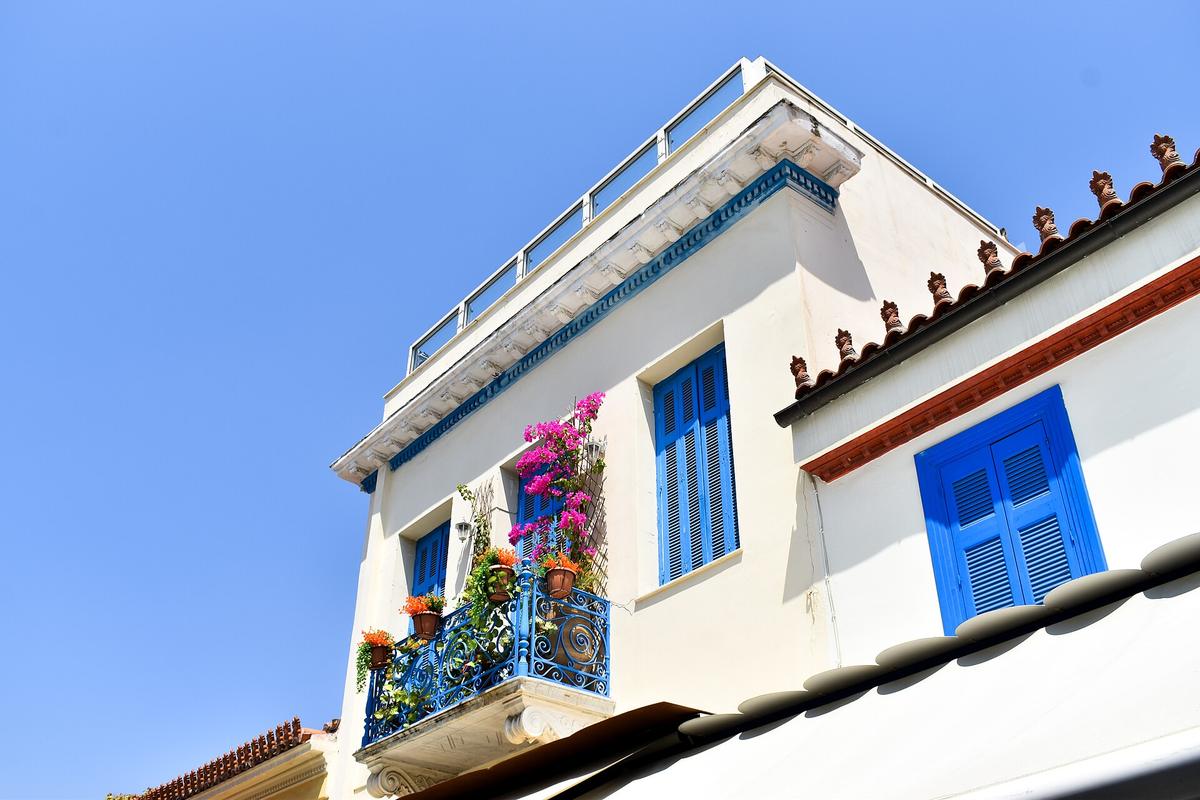
The Plaka neighbourhood Athens occupies sits on an elevation range of roughly 70 to 150 metres above sea level, rising as you move toward Anafiotika on the upper slopes. The building stock is predominantly 19th and early 20th century neoclassical and vernacular, with some Ottoman era remnants. Streets are irregular, narrow, and often laid with polished marble that becomes dangerously slippery when wet. Pavements are narrow, broken in places, or blocked by café tables and parked scooters. Tree cover is limited: you get shade mainly from buildings, awnings, and the occasional church courtyard.
Primary pedestrian routes are Adrianou Street, running northwest to southeast through the district, and Kydathineon Street. Pandrossou Street marks the northern boundary with Monastiraki and is lined with market stalls. The difference from Monastiraki is clear: Plaka has more residential character and fewer street market stalls, while Monastiraki has higher commercial density and a larger flea market presence. The difference from Psyrri is also sharp: Psyrri has more nightlife, bars, and street art; Plaka is quieter at night and more oriented to daytime sightseeing.
Anafiotika: The Island Quarter
Anafiotika is a sub quarter of Plaka on the northeast slope of the Acropolis, built from the mid 19th century by workers from the Cyclades. Its whitewashed, island style houses and narrow stepped lanes feel distinct from the rest of Plaka. Walk time from central Plaka to Anafiotika is 2 to 10 minutes uphill. Make the climb for the sudden quiet and the views.
Where to Stay in Plaka: Who it Suits and Who Should Look Elsewhere
Who Plaka Suits
Where to stay in Plaka depends entirely on your tolerance for density. Accommodation is mostly small hotels, guesthouses, and short term rental apartments. There are few large hotels. Typical stay length suited to Plaka is 2 to 5 nights. Accommodation prices peak from May to September, and drop from November to March outside holiday periods. Availability is tightest April to October.
This district suits first time visitors who prioritise walkable access to ancient sites. From any point in Plaka, walk time to the Acropolis main entrance is 5 to 15 minutes. Walk time to Syntagma Square is 5 to 12 minutes. Walk time to Monastiraki Square is 3 to 10 minutes. Walk time to the Roman Agora is 2 to 8 minutes. Metro access is at Acropoli station on Line M2 at the southern edge, Monastiraki station on Lines M1 and M3 at the northern edge, and Syntagma station on Lines M2 and M3 at the eastern edge.
Who Should Look Elsewhere
It does not suit travellers with significant mobility limitations. The slopes, steps, uneven marble, and gradients are relentless. Families wanting easy stroller routes and quiet parks should choose Koukaki instead, which has more local residential life and fewer souvenir shops. Visitors who dislike heat, crowds, or visible urban decay will be unhappy here. The noise profile is high daytime and evening, though quieter on the upper slopes and early morning. Late night returns from the metro require taxis or walking because metro service stops around midnight on weekdays.
Air conditioning is standard in hotels and newer short term rentals but less consistent in older converted buildings. If you book a short term rental, check whether the listing includes air conditioning and a quiet courtyard room away from the pedestrian lanes.
Plaka Restaurants: Where to Eat and What to Skip
Where To Eat
Plaka restaurants cluster most densely along Adrianou, Kydathineon, and the steps near the Roman Agora. The cuisine mix is heavily Greek tavernas and tourist oriented restaurants, with some upscale dining. There are fewer non Greek options than in Syntagma or Psyrri. The dining concentration is highest around the steps near the Roman Agora, where touts stand outside with menus. Approach these with caution: the ones with a person in the street are the ones paying commission and the food is often average.
Better options are on the side streets one lane off Adrianou, or the tavernas on the upper lanes toward Anafiotika. Look for places where the diners are speaking Greek and the menu is handwritten on a board. Rooftop dining in Plaka or Monastiraki with direct Acropolis views is worth booking for one night, but the view adds a premium to the bill and the food can be secondary to the setting. Book a rooftop terrace dinner for sunset, but eat your souvlaki or gyros elsewhere. Specific central spots like O Thanasis and Kostas are reliable for a quick, honest wrap, though both are in Monastiraki rather than Plaka proper.
What To Eat
For breakfast or a mid morning snack, buy a koulouri, a sesame bread ring, from a street vendor, or stop at a bakery for bougatsa, cream or cheese filled filo pastry. Loukoumades at Krinos are hot honey soaked doughnuts and worth the detour toward Monastiraki. Revithia, slow baked chickpea stew, is a Sunday staple in tavernas and appears on lunch menus of better tavernas in Plaka. Peak meal times are lunch 13:00 to 15:00 and dinner 20:00 to 23:00. Outdoor seating is common from March to November.
Plaka to Acropolis: Walking Routes and Timings
Plaka to Acropolis walk time is 5 to 15 minutes depending on your starting point within the district. From the southern edge of Plaka near Acropoli metro station, the walk to the main entrance is about 5 minutes. From the northern edge near Monastiraki, allow 12 to 15 minutes. The route climbs steadily. The surface is marble and cobblestone, and the gradient is noticeable. Do not attempt this in the heat of midday during July or August. A common mistake is trying to see the Acropolis and the Acropolis Museum back to back on the same morning in summer heat, without pre booked tickets, which leaves you exhausted and queuing for hours at midday. Book your Acropolis timed entry for the first slot of the day, 08:00 in summer, and visit the museum on a separate afternoon. The Acropolis Museum is on the southern edge of Plaka, a walk of 10 to 18 minutes from central Plaka.


What is Within Walking Distance of Plaka
Ancient Sites
Plaka is the most central district for archaeology, and almost everything you came to see is within a 15 minute walk. The Roman Agora and Tower of the Winds are on the western edge of Plaka, a 2 to 8 minute walk. Hadrian's Library is on the northern edge near Monastiraki, a 3 to 10 minute walk. The Ancient Agora is 8 to 15 minutes from Plaka. The Temple of Olympian Zeus is a 10 to 15 minute walk southeast. The Panathenaic Stadium is about 20 minutes on foot. The Acropolis Museum is 10 to 18 minutes.
Squares, Hills, And Views
Syntagma Square, with Parliament and the Evzones changing of the guard, is 5 to 12 minutes northeast. Monastiraki Square and its flea market are 3 to 10 minutes north. Philopappos Hill, which offers the best Acropolis photo angle and is free and wooded, is a 15 minute walk west, past the Acropolis entrance. Lycabettus Hill is further, about a 30 minute walk or a short metro ride from Syntagma, and requires a funicular or steep climb.
Museums And Churches
Several small museums sit within Plaka itself. The Museum of Greek Folk Art on Kydathineon Street, the Frissiras Museum focusing on contemporary European painting, the Jewish Museum of Greece on Nikis Street, and the Kanellopoulos Museum with antiquities from prehistoric to Byzantine periods are all walkable. At least five museums operate within the district boundaries. The primary church is the Metropolitan Cathedral of Athens on the northeastern boundary, dedicated to the Annunciation of the Theotokos. Smaller historic churches include the 11th century Agios Nikolaos Rangavas, the 11th to 12th century Agia Aikaterini, and Soteira tou Kotaki from the 11th century.
Other areas in Athens
Common Questions
Is Plaka the best neighbourhood to stay in Athens for first time visitors?
For first time visitors who prioritise walkable access to ancient sites and accept high tourist density, yes. No other district puts you within 5 to 15 minutes of the Acropolis. But if you value quiet, green space, or local residential life, choose Koukaki or Thissio instead.
How many days do I need in Plaka and central Athens?
Three full days minimum: enough for the Acropolis, the Ancient Agora, the Acropolis Museum, and two neighbourhoods without rushing. Four to five days is more comfortable and allows for a day trip to Cape Sounion or a morning at the National Archaeological Museum.
When is the worst time of year to stay in Plaka?
Mid July through August. Extreme heat regularly exceeds 38°C, many local restaurants and shops close for holidays, and the city feels emptied of Athenians but full of overheated tourists. Also avoid Orthodox Easter weekend if you want museums and sites open normally, as hours shift and crowds spike.
Can I walk from Plaka to the Acropolis Museum without climbing stairs?
The route from central Plaka to the Acropolis Museum involves slopes, marble steps, and uneven paving. There is no step free route through the pedestrian lanes. If mobility is a concern, enter Plaka from the southern edge near Acropoli metro station and keep to the main road, Dionysiou Areopagitou, which is flatter and smoother than the internal lanes.
Are Plaka restaurants worth the price?
On the main pedestrian lanes, many restaurants pay commission to touts and the food is average for the price. The better value is one street off Adrianou, on the upper lanes toward Anafiotika, or outside Plaka entirely in Psyrri or Pangrati. Book a rooftop dinner once for the Acropolis view, but eat your everyday meals elsewhere.
Read next
-
 Athens Hotels by Price Band and What Each Band Actually Gets You
Athens hotel prices rise sharply with Acropolis views and rooftop access. Here's what each price band actually delivers.
-
 Where to Stay in Athens and What Each District Costs You
The district you choose in Athens changes everything about your trip. Compare Plaka, Monastiraki, Koukaki, and the rest by trade-off.
-
 Athens Flights, Flying Into ATH and Getting Out of the Airport
Flying into Athens: what to expect at ATH, and how to get from the airport to Syntagma, Monastiraki, or Piraeus.
-
 Athens Things to Do Ordered by Whether They Are Worth the Time
Not every Athens sight deserves your limited hours. This guide ranks what to do by the time it takes and what it gives back.
-
 Best Time to Visit Athens and What Each Season Does to It
Athens has two comfortable shoulder seasons, a brutal August, and winter free-entry Sundays. Here's what each season does to the city.
-
 Getting Around Athens Without Wasting Half Your Trip
Athens has a good metro but late nights, marble streets, and taxi habits can trip you up. Here's how to get around without friction.
-
 Monastiraki
, Athens: the flea-market district with rooftop bars and a metro nexus, what it feels like, and who it suits.
-
 Koukaki
, Athens: the quiet residential district near the Acropolis Museum, what it feels like, who it suits, and what is nearby.
-
 Kolonaki
, Athens: the upscale gallery and designer-shopping district on steep streets, what it feels like, and who it suits.