Koukaki, Athens: What It Is Like, Who It Suits, and What Is Within Walking Distance
Koukaki, Athens: the quiet residential district near the Acropolis Museum, what it feels like, who it suits, and what is nearby.
- Flag
-
- ISO code
- GR
- Currency
- EUR
- Timezone
- Europe/Athens
Koukaki, Athens: What it is Like, Who it Suits, and What is Within Walking Distance
You have read about Plaka and seen the Monastiraki flea market photos, but something is nagging at you. Those districts pack tourists into every block, and after a long flight and a hotter city, you doubt you will enjoy a hotel room above a rooftop bar that thumps until 3am. Koukaki Athens solves that specific problem. It is the quiet residential base a twenty-minute walk from the Acropolis Museum, where the economy is local, the evening noise drops to a hum, and the food costs less because no one has painted a menu in five languages on the window. Here is what Koukaki is like on the ground, who should choose it over the obvious alternatives, and what you can reach on foot without breaking a sweat.
Koukaki Neighbourhood Character
The Street Grid And The Commercial Spine
Koukaki is a residential district immediately south and southeast of the Acropolis and Plaka. Its stock is mid-rise apartment blocks from the 1950s through the 1970s, the polykatoikia housing that defines modern Athens. There is no pre-19th-century street plan here. Instead you get a grid of narrow side streets in the lower section and irregular lanes climbing toward Filopappou Hill. The commercial spine is Veikou Street, with secondary shopping on Dimitrakopoulou, Matrozou, Olympiou, and the pedestrianised Drakou Street. Restaurant and cafe concentration follows those same corridors. Weekly laiki agora street markets rotate through the neighbourhood, though the exact schedule changes; ask at your hotel or check the Athens municipality site for the current weekday and location.
Where The Noise Drops
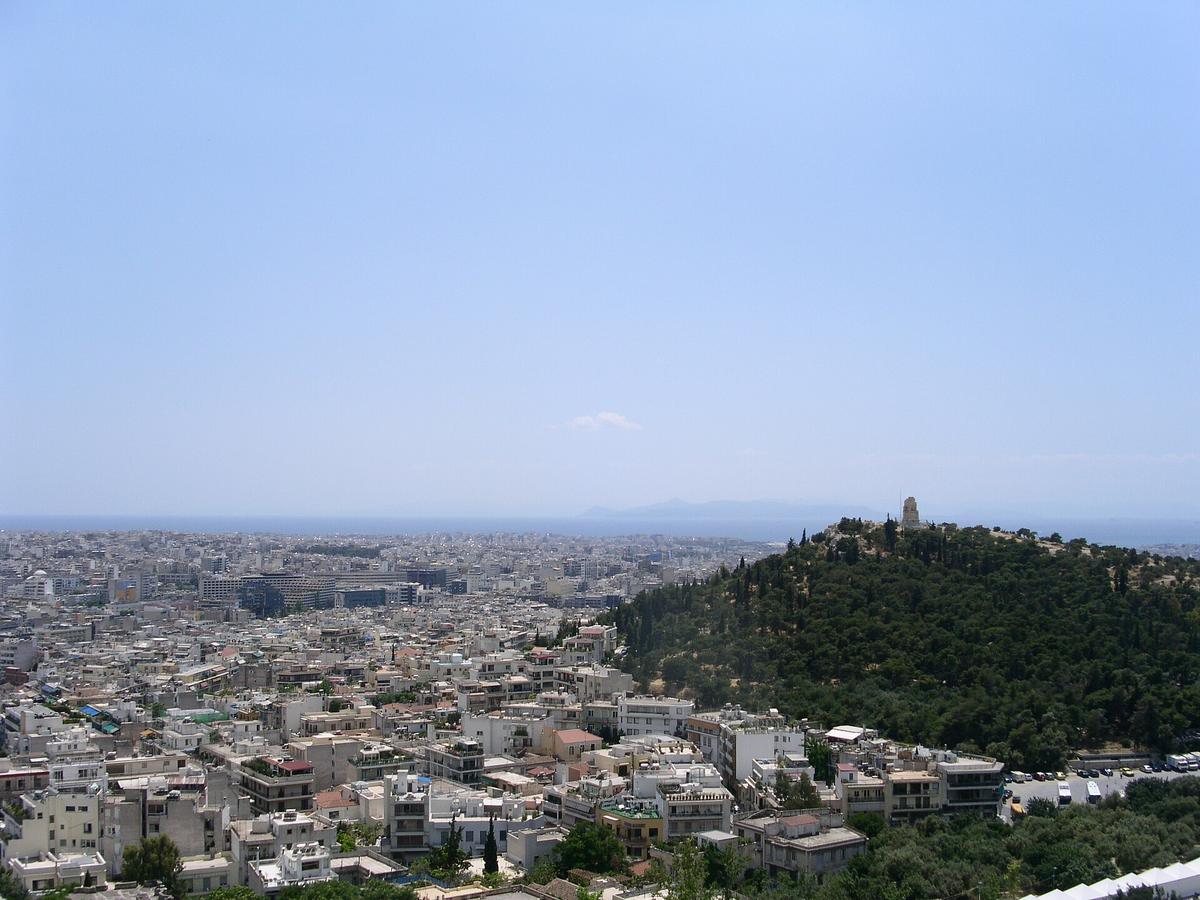
The noise profile matters more than most visitors expect. Koukaki is louder along the Syngrou Avenue and Vouliagmenis Avenue frontages, where traffic runs day and night, but drops substantially west of Dimitrakopoulou toward Filopappou Hill. The quietest zones are those streets near the slope, where the only sound after 10pm is the occasional motorbike heading home. That makes the district a functional alternative to the nightlife-heavy blocks of Psyrri, Monastiraki, and Exarchia, where the bar scene keeps the street active until the small hours. You trade some convenience for quiet, but the trade is small: the Acropolis Museum is ten to twelve minutes on foot from Koukaki Square, and the main Acropolis entrance is about 1.2 kilometres.

Where to Stay in Koukaki
Choosing Your Block
Koukaki has high hotel and short-term rental density, among the highest in central Athens. Accommodation type mix includes hotels, aparthotels, apartment rentals, and small guesthouses. The largest concentration of hotels runs along the Syngrou Avenue frontage and around Koukaki Square itself. Apartment rentals cluster on the residential side streets. This is a good-value district: accommodation prices follow the same seasonal curve as the rest of Athens, highest from May through September and during Orthodox Easter, lowest from January through February. A room with a view of the Acropolis from an upper floor or rooftop is common on north-facing blocks.
Choose a property on a residential street west of Dimitrakopoulou if your priority is silence. Choose one on the Syngrou frontage if you want quick tram access to the coast. The metro stations serving the district are Syngrou-Fix on Line 2, about 300 metres from Koukaki Square, and Akropoli on the same line, about 600 metres away. Tram stops Fix and Kasomouli on Line T5 connect south to Palaio Faliro and beyond, making it possible to reach the Athens Riviera without a taxi. Avoid booking a room directly above a restaurant on Drakou Street or Olympiou Street if you plan to sleep before midnight; the tables and foot traffic run late even by Athenian standards.
Getting Around From Koukaki
The metro is the backbone for getting around. Line 2 connects directly to Syntagma, the central transfer point for Line 3 to the airport. Service runs every five to ten minutes during the daytime and every ten to fifteen late evening. First departure from Syngrou-Fix toward Elliniko is approximately 05:30, last departure toward Anthoupoli around 00:20. After that, night buses serve the Syngrou and Vouliagmenis corridors, or you can use ride-hailing services Uber, Free Now, and Beat. Taxi availability is high on the main avenues.
Koukaki Restaurants
Where To Eat And Drink
Koukaki dining is cheaper than Plaka and Monastiraki for equivalent cuisine. The restaurant concentration on Drakou Street and Olympiou Street covers Greek tavernas, modern Greek bistros, souvlaki shops, bakeries, and third-wave coffee spots. Multiple bakeries on Veikou and Dimitrakopoulou sell bougatsa, cream or cheese-filled filo pastry that serves as a proper breakfast. Souvlaki shops cluster on those same streets and on Kallirois Avenue. The cocktail bars along Veikou, Falirou, and Georgaki Olympiou run late but draw a quieter crowd than the Psyrri scene. Traditional kafeneia are present but fewer here than in Petralona or Plaka. Reserve a table if you want a specific taverna on a weekend evening; walk-ins work on weeknights. A meal for two with wine runs noticeably less than the equivalent meal in the tourist zones north of Dionysiou Areopagitou.
The Weekly Market
The weekly laiki agora, the street market where local farmers and merchants sell produce directly, rotates through Koukaki on a schedule published by the municipal authority. It operates from early morning to early afternoon. Check the Athens municipality site for the current weekday and specific street location. Buy your fruit, olives, and cheese there for picnic lunches on Filopappou Hill.
Koukaki to Acropolis Walking Routes
The Direct Walk North
From Koukaki Square, walk north on Drakou Street to Dionysiou Areopagitou, the pedestrianised artery that runs along the southern edge of the Acropolis site. Turn left and you reach the Acropolis Museum entrance in about 300 metres. Turn right and you reach the main Acropolis ticket entrance in about 1.2 kilometres. The walk to Plaka takes 18 to 22 minutes. Monastiraki Square is 20 to 25 minutes. Syntagma Square is 25 to 30 minutes. None of these require a metro ride.
Filopappou Hill And Pnyx
Filopappou Hill is the unmissable free bonus from this base. The main access path is from Dionysiou Areopagitou at the Apostolou Pavlou junction, west of Koukaki. The summit sits at 147 metres above sea level and provides the best Acropolis photo angle, with the Parthenon framed behind the pine trees. The hill is a 70 hectare park and archaeological site. Pnyx, at 109 metres, is reachable from the same path. Both have open access, no ticket required, and are walkable from Koukaki Square in about 15 to 20 minutes. The National Museum of Contemporary Art sits on the east edge of Koukaki at Kallirois Avenue and Amvrosiou Frantzi Street, opened at that site in 2016.
Timing Your Visit
Book your Acropolis and Acropolis Museum tickets ahead on the Hellenic Ministry of Culture e-ticketing site and the museum official website respectively. Do not attempt both back to back in summer heat. Visit the Acropolis at opening time, 08:00, and do the museum in the late afternoon when the air cools. Without pre-booked tickets you queue for hours at midday and exhaust yourself on the marble steps. Those steps, and the marble and stone paving throughout the archaeological zone, become dangerously slippery when wet or worn smooth. Wear shoes with grip.

Who Koukaki Suits and Who Should Skip it
Koukaki suits history-focused travellers who want depth over polish, solo explorers comfortable with urban grit, food-driven visitors on a mid-range budget, night owls who eat late and bar-hop within walking distance, and city-break travellers using Athens as a 3 to 5 day destination in its own right. Three full days is the minimum: enough for the Acropolis, Ancient Agora, one museum, and two neighbourhoods without rushing, but 4 or 5 days is more comfortable. If you are a repeat visitor to Athens or planning a longer stay, Koukaki gives you the quiet base that keeps your per-night costs lower than Plaka or Kolonaki.
Koukaki is not for travellers seeking a relaxing, green, or pristine European capital. It is not for those with significant mobility limitations due to slopes, steps, and uneven marble. It is not for visitors who dislike heat, crowds, smoking indoors-adjacent spaces, or visible urban decay. Families wanting easy stroller routes and quiet parks will find Koukaki's narrow pavements and broken footpaths frustrating. If you need a hotel with a pool, a spa, and a garden, look at the coast or the northern suburbs. If you want to stay where the Acropolis is visible from your pillow and the only sound is the refrigerator, Koukaki is the right call.
Other areas in Athens
Common Questions
Is Koukaki a safe neighbourhood at night?
Yes. Koukaki is quieter than Psyrri, Monastiraki, and Exarchia, with lower tourist density and a residential police precinct on Dimitrakopoulou Street. The main risk is the same as anywhere in central Athens: watch your bag on crowded buses and metro carriages. The quietest streets west of Dimitrakopoulou toward Filopappou Hill have little foot traffic after midnight but are well lit.
How far is Koukaki from the airport?
There is no direct metro link from Koukaki to the airport. Take Line 2 from Syngrou-Fix or Akropoli to Syntagma and transfer to Line 3. The total journey is about 40 minutes. Alternatively, take the X95 bus from Syntagma to the airport. A taxi flat rate to the centre is 40 euros daytime, 55 euros midnight to 5am.
Can I walk to the Acropolis from Koukaki?
Yes. Koukaki Square to the Acropolis main entrance is approximately 1.2 kilometres on foot. The walk takes about 15 minutes via Drakou Street and Dionysiou Areopagitou. You do not need a metro or a bus for the Acropolis, Acropolis Museum, Filopappou Hill, or Pnyx.
What is the best time of year to stay in Koukaki?
April through June and September through October. These months bring warm but not brutal weather and long daylight. Avoid mid-July through August, when heat regularly exceeds 38 degree Celsius, many local shops close for holidays, and the city feels emptied of Athenians but full of overheated tourists. Also avoid Orthodox Easter weekend if you want normal museum and site hours.
Are there good rooftop bars in Koukaki?
Several hotel rooftops along Syngrou Avenue and on north-facing blocks near the Acropolis offer direct views of the Parthenon. These are quieter than the rooftop bars in Plaka and Monastiraki. Most are open to non-guests; check with the hotel reception in advance. Cocktail bars have also opened on Veikou, Falirou, and Georgaki Olympiou streets.
Does Koukaki have supermarkets and pharmacies?
Yes. Multiple small and medium supermarkets operate on Veikou, Kallirois, and Syngrou. Pharmacy density is high, with several on Veikou, Dimitrakopoulou, and Kallirois. The nearest major hospital is Evangelismos, about two kilometres northeast. The nearest public hospital south is Alexandra, about three kilometres northeast.
How does Koukaki differ from Makrygianni?
Makrygianni is the district directly north of Koukaki, dominated by the Acropolis Museum, hotels, and pedestrian tourist flow. Koukaki is residential with local commerce. You sleep in Koukaki and walk to Makrygianni for the museum. The difference matters if you want a bakery that sells to neighbours rather than souvenir shops.
Read next
-
 Athens Hotels by Price Band and What Each Band Actually Gets You
Athens hotel prices rise sharply with Acropolis views and rooftop access. Here's what each price band actually delivers.
-
 Where to Stay in Athens and What Each District Costs You
The district you choose in Athens changes everything about your trip. Compare Plaka, Monastiraki, Koukaki, and the rest by trade-off.
-
 Athens Flights, Flying Into ATH and Getting Out of the Airport
Flying into Athens: what to expect at ATH, and how to get from the airport to Syntagma, Monastiraki, or Piraeus.
-
 Athens Things to Do Ordered by Whether They Are Worth the Time
Not every Athens sight deserves your limited hours. This guide ranks what to do by the time it takes and what it gives back.
-
 Best Time to Visit Athens and What Each Season Does to It
Athens has two comfortable shoulder seasons, a brutal August, and winter free-entry Sundays. Here's what each season does to the city.
-
 Getting Around Athens Without Wasting Half Your Trip
Athens has a good metro but late nights, marble streets, and taxi habits can trip you up. Here's how to get around without friction.
-
 Monastiraki
, Athens: the flea-market district with rooftop bars and a metro nexus, what it feels like, and who it suits.
-
 Plaka
Plaka, Athens: the neoclassical district beneath the Acropolis, what it feels like, who it suits, and what is within walking distance.
-
 Kolonaki
, Athens: the upscale gallery and designer-shopping district on steep streets, what it feels like, and who it suits.