How to Move Between Greek Islands and Across the Mainland
Moving around Greece: what connects where, why the ferry network dominates, and what the map oversells about island-hopping speed.
The Ferry Network is the Only Way to Island Hop, and the Map Lies About it
The map shows stepping stones across the Aegean. Distances are measured in hours, not kilometres. The ferry system is the dominant inter-island mode, but the romantic idea of hopping at will collapses the moment you check actual schedules. Routes radiate from mainland ports. Most connections between island groups require backtracking through Piraeus.
A 30 kilometre crossing on a conventional ferry can take four hours. High-speed vessels halve that time but cancel when winds exceed Beaufort 7 or 8. This happens regularly in the Cyclades from July to September. Book via Ferryhopper or Ferryscanner. Download your tickets before leaving Wi-Fi. Never book a same-day flight after a ferry. A single storm can strand you for 48 hours, and Hellenic Coast Guard departure bans are enforced regardless of your onward booking.

Three Mainland Ports, Not Just Piraeus
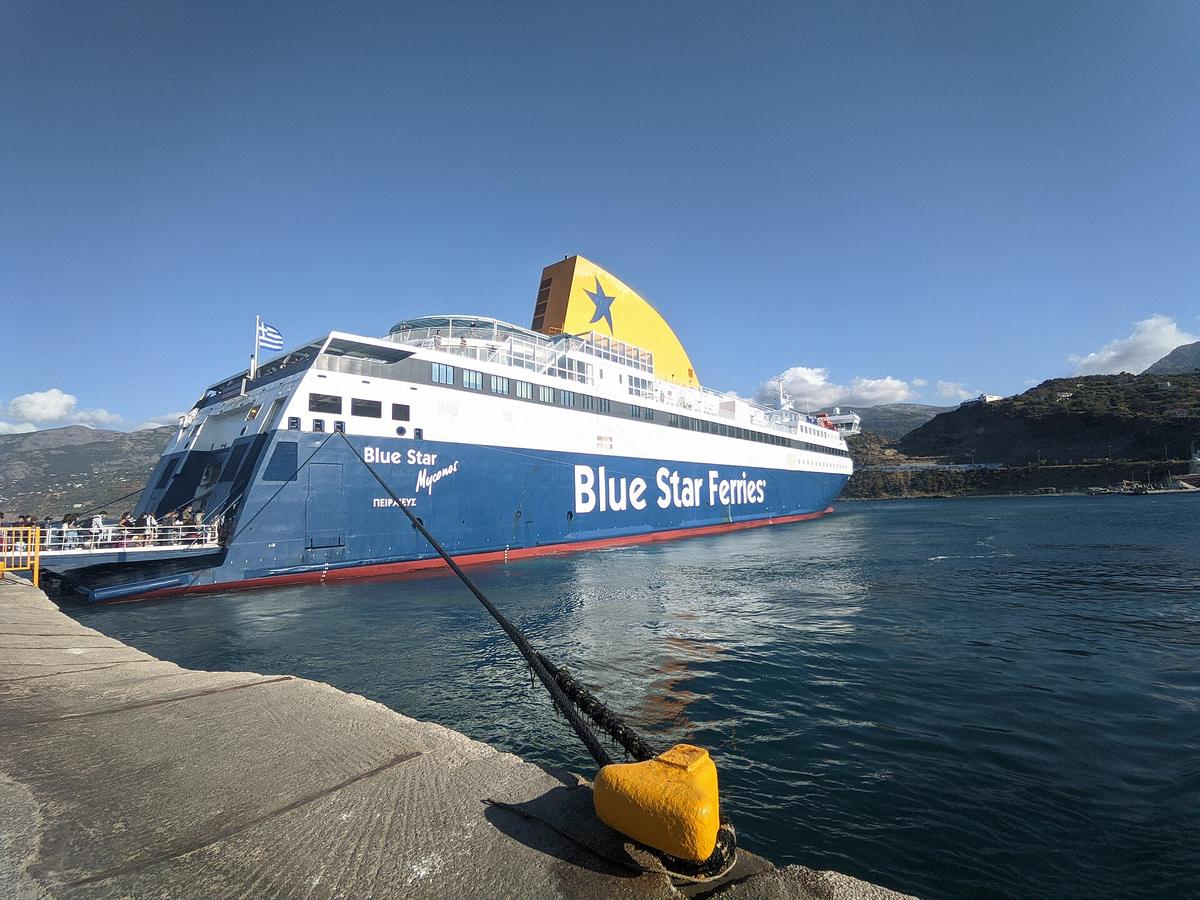
Piraeus handles the majority of Aegean ferry traffic, but it is not your only option. Rafina, on the east coast of Attica, serves the Cyclades and some Dodecanese routes and connects directly to Athens International Airport by bus in about 30 minutes. Lavrio, further south, runs ferries to the Cyclades and occasionally to Crete. From Rafina you reach Andros, Tinos, and Mykonos faster than from the capital's main harbour. From Lavrio you avoid the congestion of the central hub entirely. Check Ferryhopper for departures from all three ports rather than defaulting to the big one; the time saved at the port end can be an hour or more in peak season.
Greek Ferry Booking Apps: Ferryhopper and Ferryscanner Are the Only Ones You Need
Greek ferry booking apps solve the fragmentation of Greece's ferry industry. There is no single national ferry company. Blue Star Ferries, Hellenic Seaways, SeaJets, Minoan Lines, ANEK Lines, and Golden Star Ferries each run their own schedules and pricing. Ferryhopper and Ferryscanner aggregate them into a single search interface and issue combined tickets across different operators. Both apps accept credit cards and generate QR code tickets that work offline once downloaded. Do not use third-party travel agents that charge a booking fee; Ferryhopper and Ferryscanner do not.
The critical detail: ferry schedules change with weather and union action. Strikes happen with 24 to 48 hours' notice, and the apps do not always update cancellations instantly. Check the Hellenic Coast Guard website the morning of your departure for live sailing status.
Greece KTEL Bus Network: the Mainland Backbone That Requires Cash
Greece KTEL bus services cover every prefecture on the mainland and connect larger towns to each other and to ferry ports. Each prefecture operates its own KTEL cooperative, meaning there is no single national booking platform. You buy tickets on individual regional KTEL websites, at station kiosks, or on the bus itself. Rural routes require cash. Card acceptance is unreliable outside major cities and tourist centres.
Key Routes and Winter Reductions
Athens to Thessaloniki takes about six hours; check the KTEL website for the current fare. Athens to Delphi runs two and a half hours. The buses are reliable, air-conditioned, and run on schedule, but the system shrinks in winter when some routes reduce to one departure per day. For villages in Epirus, the Peloponnese interior, and mountain areas, KTEL is the only public transport and runs once or twice daily.
Athens to Islands Transport: the Default Route and the Smarter Alternatives
Athens to islands transport begins at Piraeus for most travellers, but the choice of port and vessel determines whether you spend half a day or a full day at sea. Piraeus to Santorini takes five to eight hours on a conventional car ferry and four to five hours on a high-speed catamaran. Piraeus to Mykonos runs three to five hours conventional and two to three hours high-speed. The overnight ferries to Heraklion take eight to ten hours and save a day of accommodation. From Rafina, the high-speed ferry to Tinos takes under three hours, and from Tinos you connect to Mykonos in 30 minutes. For the Saronic Gulf, hydrofoils from Piraeus reach Hydra in one hour 40 minutes.
Use Hubs to Save Time
The mistake travellers make is booking a direct ferry from Athens to a single island when a two-leg route via a hub saves time and money. Syros in the Cyclades and Rhodes in the Dodecanese function as inter-island ferry hubs with more frequent connections than direct routes from Athens.
Renting a Car in Greece: Where it Works and Where it is a Liability
Renting a car in Greece makes sense on Crete, the Peloponnese, and in Epirus and Thessaly, where distances are large and public transport sparse. On Crete, a car lets you reach the Samaria Gorge trailhead, Knossos Palace, and the Lasithi plateau in a single itinerary. On the Peloponnese, it connects ancient Mycenae, Epidaurus, Olympia, and Mystras without relying on KTEL schedules that run once daily.
Where a Car Becomes a Problem
In Santorini and Mykonos old towns, a car is a liability. The streets are pedestrianised or too narrow for vehicles. Parking costs are set by local operators and can be steep; the island bus systems serve every beach and village adequately. Minimum rental age is 21 to 23, and you need a credit card in your name for the deposit. Non-EU drivers require an International Driving Permit.
Fuel and Mountain Driving
Fuel stations on the isles close early afternoon and on Sundays; fill up before you leave a major town. On mountain roads in the Peloponnese and Epirus, distances under 100 kilometres routinely take over two hours due to hairpin turns. Snow chains are mandatory in winter in affected regions when signposted.
Athens Metro and the Patchy Tap and Go Rollout
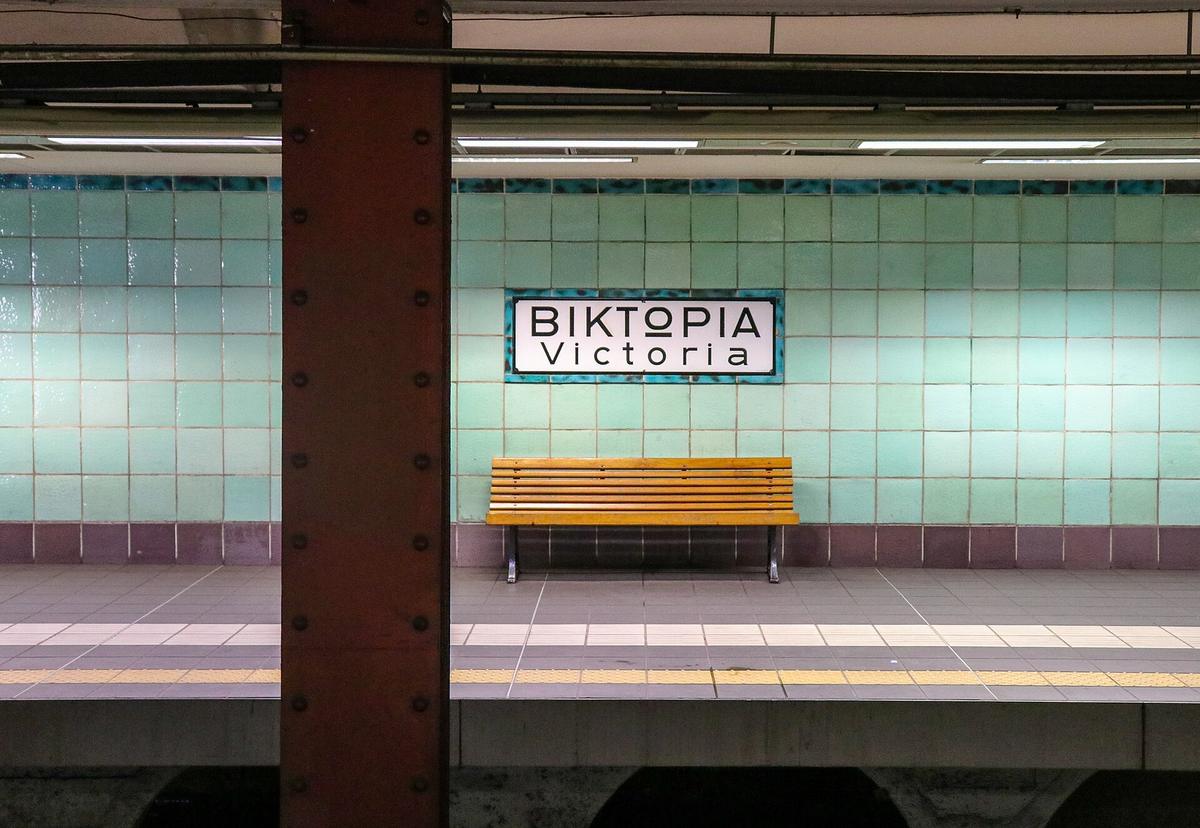
The Athens Metro runs Line 3 from the airport to Syntagma in 40 minutes. A one-way ticket costs 9 euros. The 24-hour express bus X95 does the same run for 5.50 euros. City buses and the metro use the reloadable Ath.ena card. The card itself costs 0.50 euros. Tap and go with a bank card works on Athens buses and metro but not consistently nationwide. In Thessaloniki, the metro opened in 2024 and the bus system uses a separate ticketing setup. On the outlying destinations, local buses accept cash only. The failure case: if your bank card does not work at the Ath.ena card vending machine, and you do not have a 0.50 euro coin, you cannot buy a card, and you cannot board the bus without tapping. Keep 5 euros in coins for this exact scenario.

Domestic Flights: the Backup When Ferries Are Too Slow or Too Few
Domestic air backbone routes connect Athens to Thessaloniki (55 minutes airborne), Heraklion (50 minutes), Rhodes, and Santorini. Aegean Airlines, Olympic Air, and Sky Express operate these routes year-round. Seasonal routes to smaller destinations run from May to October. Several smaller airports, such as Skiathos, have visual approach only and cancel flights in low visibility.
Domestic flights are a time saver but not a guarantee: when the Meltemi wind grounds ferries, flights fill up fast. Book domestic flights at the same time as your ferry tickets if your itinerary depends on a connection. Never fly into Athens and take a ferry out the same day if you can avoid it; flight delays happen, and the ferry will not wait.
The Rail Network: Athens to Thessaloniki and Nothing Else That Matters
Hellenic Train runs the Athens to Thessaloniki mainline in about four hours by InterCity Express. The line is electrified. Regional branches are diesel-operated and slow. There is no rail service on any of the outlying destinations except a short Pelion narrow-gauge tourist line. For destinations south of Athens, such as the Peloponnese, the train is slower than the bus and runs less frequently. KTEL is the better option for the Peloponnese interior and Epirus. The rail system is not viable for island hopping or for connecting to ferry ports beyond Athens.
What the Ferry Map Does Not Show You
The map makes the Cyclades look like a close cluster. The reality is that island groups connect to each other through hub ports, not directly. Getting from the Cyclades to the Dodecanese requires returning to Piraeus or transiting through Syros and then crossing to Rhodes. The Ionian destinations are a separate world connected from Patras and Igoumenitsa, not from Athens. Trying to visit three island groups in one week means you haemorrhage entire days on indirect routes. Stick to one group for a 10-day trip.
Seasonal Reality and Hidden Loops
The Saronic Gulf works as a quick escape from Athens: Hydra is one hour 40 minutes by hydrofoil, no cars allowed. The Sporades require a return to the mainland between connections. The ferry system treats schedules as loose suggestions in winter. From October to May, many connections suspend entirely, and the remaining sailings run once or twice per week. In the Cyclades, even in peak season, a 30-minute crossing between neighbouring outcrops can take three hours on a conventional ferry because the route loops through the hub port first.
Who Greece’s Transport Network Works for and Who it Does Not
The ferry and bus system suits independent travellers who build slack into their itineraries and treat schedules as directional. It works for archaeology obsessives, island-hopping backpackers, sun-seekers who want beach days with cultural interludes, and sailing enthusiasts.
Who Should Think Twice
It does not work for travellers who need rigid punctuality and tight logistics. Anyone with severe mobility issues will struggle with steps, slopes, and uneven marble streets at ports and in old towns. Visitors who dislike cigarette smoke in indoor-outdoor spaces should factor that into their bar and taverna choices.
The single thing that most often goes wrong: booking a flight home the same day as a ferry connection, then watching the ferry cancel at noon while your flight leaves at six. Never do it.
Common Questions
Can I flush toilet paper in Greece?
No. Toilet paper goes in the bin beside the toilet everywhere. Flushing it clogs the plumbing, which is narrow and old in most buildings. This applies to hotels, restaurants, ferries, and public toilets without exception.
How far ahead should I book ferry tickets for August?
Book ferry tickets for August 1 to 20 as soon as they go on sale, usually 30 to 45 days before departure. The entire Cyclades hits absolute capacity then. For shoulder season, three to seven days ahead is sufficient.
Is tap water safe to drink on the Cycladic islands?
No. Water on most Cycladic destinations is desalinated or tankered. Buy bottled water for drinking and brushing teeth. Tap water is safe on the mainland and on larger places such as Crete and Corfu.
What do I do if my ferry is cancelled due to strikes or weather?
Check the Hellenic Coast Guard website the morning of departure for live sailing status. Do not rely on the booking app. If cancelled, rebook at the port ticket office or through the app immediately. Have a buffer of one extra day in your itinerary for exactly this scenario.
Read next
-

 Staying Connected in Greece With eSIM Local SIM or Roaming
How to choose between eSIM, a local Cosmote SIM, or roaming for reliable mobile data across Greek islands, ferries, and mountain villages.
Staying Connected in Greece With eSIM Local SIM or Roaming
How to choose between eSIM, a local Cosmote SIM, or roaming for reliable mobile data across Greek islands, ferries, and mountain villages.
-
 Best Time to Visit Greece by Month, Heat, Crowds, Meltemi and Closures
When to go to Greece, and what each season actually does to the heat, the crowds, the ferry schedules, and the opening hours.
Best Time to Visit Greece by Month, Heat, Crowds, Meltemi and Closures
When to go to Greece, and what each season actually does to the heat, the crowds, the ferry schedules, and the opening hours.
-
 Greece Visa Requirements for Tourists, Schengen Rules and the Entry Process
Who needs a visa for Greece, who does not, and how the Schengen entry process runs at airports and ferry ports.
Greece Visa Requirements for Tourists, Schengen Rules and the Entry Process
Who needs a visa for Greece, who does not, and how the Schengen entry process runs at airports and ferry ports.
-
 Cash or Card in Greece, What Actually Works in Tavernas, Taxis and on Ferries
Paying for things in Greece: the euro, where cards work reliably, and the situations where cash still wins.
Cash or Card in Greece, What Actually Works in Tavernas, Taxis and on Ferries
Paying for things in Greece: the euro, where cards work reliably, and the situations where cash still wins.
-
 Is Greece Safe, Reading Travel Advice Without Being Misled by It
Reading safety advice about Greece without being misled by it: the real risks are pickpockets, quad bikes, and slippery marble.
Is Greece Safe, Reading Travel Advice Without Being Misled by It
Reading safety advice about Greece without being misled by it: the real risks are pickpockets, quad bikes, and slippery marble.
-
What a Trip to Greece Costs Shaped by Season and Island Choices
How Greece trip costs shift shape between a Santorini cliffside stay, a Crete village rental, and a Peloponnese road trip in different seasons.
-
 How Solo Travelers Stay Ahead of Flight Delays and Cancellations
How solo travelers can track inbound aircraft, claim rebooking rights, and adjust ground transport when flights go wrong — step by step.
How Solo Travelers Stay Ahead of Flight Delays and Cancellations
How solo travelers can track inbound aircraft, claim rebooking rights, and adjust ground transport when flights go wrong — step by step.
-
 Why Your eSIM Might Not Work Abroad and How to Check Before You Go
Buying an eSIM doesn't guarantee signal abroad. Learn why coverage fails by location and how to verify reach before you commit to a plan.
Why Your eSIM Might Not Work Abroad and How to Check Before You Go
Buying an eSIM doesn't guarantee signal abroad. Learn why coverage fails by location and how to verify reach before you commit to a plan.