The Tourist Traps in Athens and What Locals Do Instead
The places in Athens that trade on the name, and the equivalent locals actually use for food, drink, and shopping.

Athens Tourist Traps and What Locals Do Instead
The photo-menu restaurant on Mitropoleos Street is the most expensive meal you will eat in Athens and the worst. The waiter stands by the door, the menu has laminated pictures of moussaka, and the price you pay has no relation to the plate you get. This is the classic Athens tourist trap, and it repeats itself across the restaurant rows of Mitropoleos Street, the souvenir-choked alleys of Plaka, and the rooftop bars in Monastiraki that charge whatever the view will bear for a beer. Each one trades on a name you recognise for a product you would not buy at home. The local alternative requires a fifteen-minute walk and a willingness to eat where the street sign is in Greek only.
Athens rewards the traveller who skips the postcard and orders the plate. The city is dense, sun-scorched, and abrupt: ancient ruins sit directly between apartment blocks and traffic. Pavements are narrow and blocked by parked motorbikes. Marble becomes dangerously slippery when wet. The reward is cheap food of extraordinary quality, a raw lived-in energy, and the strange intimacy of walking through 2,500-year-old history on an ordinary city block. The question is which specific places exploit the visitor and what the local equivalent is.
Tourist Trap Restaurants Athens: the Photo-Menu Problem
Mitropoleos Street, which runs from Syntagma Square toward the Metropolitan Cathedral, is lined with restaurants that all operate the same mechanism. The menu is displayed outside with photographs of each dish. A staff member greets you in English before you have stopped walking. The prices look moderate until the bill arrives with a cover charge, a bread charge, and a service fee that was never mentioned. The food is reheated, the wine is bulk, and the moussaka arrived from a freezer, not an oven. These restaurants survive on one-time visitors who never return.
Athens has 3.1 million people in the metropolitan area. It also has thousands of tavernas. You do not need to eat on Mitropoleos Street.
Where Locals Eat Instead
The souvlaki at Kostas and O Thanasis is the counter to the photo-menu trap. Kostas operates from a tiny shop near the Monastiraki metro. There is no menu with photos. You order by pointing at the skewer. A pork souvlaki wrap costs what a coffee costs in other European capitals, and the quality is what keeps Athenians queuing at 2pm. O Thanasis, on Mitropoleos Street itself, is the exception that proves the rule: it has been there since 1964, it does not use a photo menu, and the queue spills onto the pavement. Order the grilled meat, not the wrap, and eat standing at the counter. Both places serve what the tourist-trap restaurants promise and fail to deliver.
For a proper sit-down meal, walk to Ipitou Street in Pangrati. This is the local taverna strip. The restaurants here have handwritten specials, paper tablecloths, and a wine list that means the house red. A shared meal of mezze, salad, and grilled meat costs what the neighbourhood pays, not what a tour group pays. The customers are neighbours. The street is ten minutes from Syntagma by foot or one stop on the metro to Evangelismos station.
Plaka Tourist Trap: the Souvenir Block
Plaka is the oldest continuously inhabited district in Athens, and it is also the most souvenir-dense. The streets around the base of the ancient citadel are lined with shops selling the same plaster miniatures, worry beads, and olive-wood kitchen tools at the same inflated prices. A small statue of Athena that costs one price in the flea market costs double in Plaka. The difference is the rent and the foot traffic. Plaka's charm is real: the neoclassical architecture, the bougainvillea, the Anafiotika houses built by Cycladic masons on the citadel slope. But the shopping is a trap set by location.
Where to Buy Souvenirs Instead
The flea market around Avissinias Square is where Athenians actually shop for second-hand furniture, vintage records, and oddities. The price is still inflated on Sunday, which is peak day, but you negotiate, and the starting point is lower than Plaka's sticker price. For edible souvenirs, skip the pre-packaged olive oil in decorative tins. Walk to the Central Market on Athinas Street, the Varvakios Agora, where spice vendors sell saffron and oregano by weight, olive oil is sold from barrels, and the meat and fish halls are a spectacle in themselves. Prices here are wholesale-adjacent. A bag of oregano costs pocket change. A half-litre of olive oil from a producer in Attica costs what a sandwich costs in Syntagma. You are buying what Athenians buy for their own kitchens.
Monastiraki Rooftop Bars and the Inflated View
The square around the metro station has half a dozen rooftop bars with direct views of the Parthenon. The mechanism is simple: a cocktail costs what a full dinner costs in Pangrati, a beer costs what a souvlaki wrap and a freddo espresso cost together, and the service is indifferent because you are there for the ancient citadel and they know it. The drink is not the product. The view is the product. You get one, not two. A single round on a rooftop here costs what a full dinner costs at a local taverna.
The better option is Koukaki, the residential district south of the Acropolis Museum. Several cafés and bars on pedestrian-friendly streets offer views of the ancient hill from a distance, without the square's premium. Or climb Philopappos Hill, which is free, wooded, and offers the best photo angle at sunset. Bring a beer from a kiosk and sit on the stone benches. The view is the same. The company is locals walking their dogs.
| The Trap | What It Costs | The Local Alternative | What That Costs |
|---|---|---|---|
| Photo-menu restaurant on Mitropoleos Street | A cover charge, bread charge, and service fee on top of the menu price | Kostas or O Thanasis for souvlaki | A few euros, set by the shop, not a menu |
| Souvenir shop in Plaka | Double the flea market price for a plaster statue | Flea market or Central Market | Negotiable; oregano by weight costs pocket change |
| Rooftop bar in the square | A cocktail priced like a full taverna dinner | Philopappos Hill or a Koukaki café | A kiosk beer or a freddo espresso |
| Taverna in Plaka with English menu | Standard dishes at a premium | Ipitou Street tavernas in Pangrati | Shared mezze and wine at neighbourhood prices |
What to Eat Instead: Specific Local Places
The local equivalents are not hidden. They are busy, loud, and often have queues. That is how you find them.
Krinos, near the Central Market, has been serving loukoumades since 1923. These are hot honey-soaked doughnuts dusted with cinnamon. The queue moves fast. Eat them standing at the counter. For a breakfast alternative, buy a koulouri, the sesame bread ring, from any street vendor. It is the default morning food in Athens and it costs almost nothing.
Kostas on Ermou Street near the Monastiraki metro: the menu is the counter. Point at the pork or chicken skewer. The wrap comes with tomato, onion, and tzatziki. It takes four minutes. Eat it on the pavement. There is no seating, and that is the point: the quality does not need a dining room.
O Thanasis on Mitropoleos Street: the line is the guarantee. Do not go at peak lunch if you are in a hurry. Order the grilled meat plate, not the wrap. The fries are hand-cut. The service is fast and rude in the Athenian style.
Ipitou Street in Pangrati: the tavernas here include several that have been in the same family for decades. The menu is in Greek and English, but the Greek side has more dishes. Point at what the table next to you is eating. The wine is kept in barrels behind the counter. Dinner starts at 10pm, which is the local rhythm. If you arrive at 7pm, the restaurant will be empty and the owner will be having his own dinner.
The Failure Case and How to Avoid it
The single thing that most often goes wrong in Athens is the combination of the ancient citadel and the Acropolis Museum on the same morning in July, without pre-booked tickets, in 38°C heat. Visitors arrive at 10am, queue for an hour for tickets, spend two hours on the bare marble hill with no shade, then walk to the museum and collapse in the air-conditioning unable to focus on the exhibits. The citadel opens earlier in summer: arrive at 08:00, enter through the main gate with a pre-booked timed ticket, and you are off the hill by 10:30 before the cruise-ship crowds arrive. The museum can wait for the afternoon or a different day. The combined ticket covers five days, covering the ancient citadel, Ancient Agora, Roman Agora, Hadrian's Library, Kerameikos, Aristotle's Lyceum, and the Temple of Olympian Zeus. You have five days to use it. There is no reason to do it all in one morning.
If you arrive at the ancient citadel without a ticket in high season, you will queue for 45-90 minutes at the ticket booth. The ticket office is operated by the Hellenic Organisation of Cultural Resources Development (O.D.A.P.), and online tickets are sold through the Hellenic Ministry of Culture and Sports e-ticketing portal. Book before you leave your hotel. The lift for wheelchair users is available on request, but the rest of the site has uneven marble surfaces that are difficult even for able-bodied visitors after rain.
Who Athens is for and Who Should Skip it
Athens suits history-focused travellers who want depth over polish. It suits solo explorers comfortable with urban grit. It suits food-driven visitors on a mid-range budget who eat late and bar-hop. It suits city-break travellers using Athens as a 3-5 day destination in its own right. The minimum comfortable stay is three full days, enough for the ancient citadel, one museum, one neighbourhood, and the Central Market without rushing. Four to five days is better.
Athens is not for travellers seeking a relaxing, green, or pristine European capital. It is not for visitors with significant mobility limitations due to slopes, steps, and uneven marble. It is not for those who dislike heat, crowds, smoking indoors-adjacent spaces, or visible urban decay. It is not for families wanting easy stroller routes and quiet parks. The city is loud, hot, and physically demanding. The reward is a plate of souvlaki that costs a few euros and tastes like the real thing, eaten standing on a pavement while a 2,500-year-old temple sits on a hill a hundred metres away. That trade is not for everyone. But for those who make it, the postcard is the deception and the plate is the truth.
Read next
-
 Athens Hotels by Price Band and What Each Band Actually Gets You
Athens hotel prices rise sharply with Acropolis views and rooftop access. Here's what each price band actually delivers.
-
 Where to Stay in Athens and What Each District Costs You
The district you choose in Athens changes everything about your trip. Compare Plaka, Monastiraki, Koukaki, and the rest by trade-off.
-
 Athens Flights, Flying Into ATH and Getting Out of the Airport
Flying into Athens: what to expect at ATH, and how to get from the airport to Syntagma, Monastiraki, or Piraeus.
-
 Athens Things to Do Ordered by Whether They Are Worth the Time
Not every Athens sight deserves your limited hours. This guide ranks what to do by the time it takes and what it gives back.
-
 Best Time to Visit Athens and What Each Season Does to It
Athens has two comfortable shoulder seasons, a brutal August, and winter free-entry Sundays. Here's what each season does to the city.
-
 Getting Around Athens Without Wasting Half Your Trip
Athens has a good metro but late nights, marble streets, and taxi habits can trip you up. Here's how to get around without friction.
-
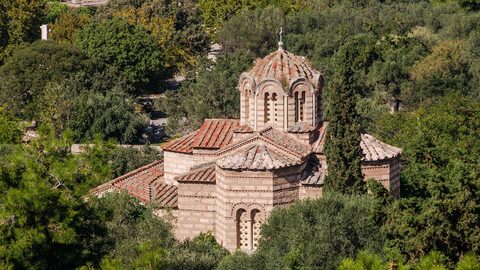 Acropolis
How to visit the Acropolis and Parthenon in Athens without queueing twice, including the timed-entry system, the south slope entrance, and the marble terrain.
-
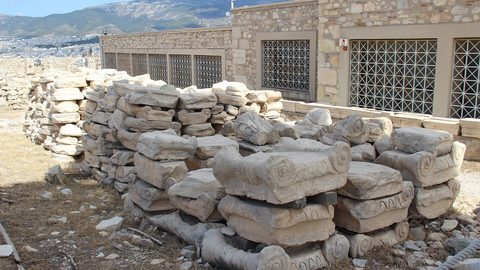 Acropolis Museum
Whether the Acropolis Museum in Athens is worth the time, how to visit without queueing twice, and how to sequence it with the Acropolis itself.
-
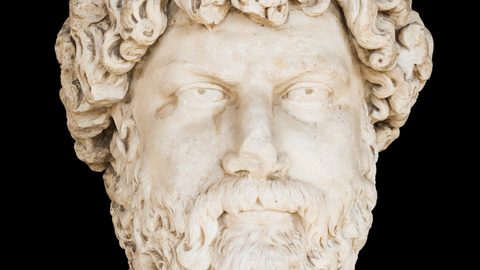 Ancient Agora
What the Ancient Agora in Athens is, whether it is worth your time, and how to visit the Hephaisteion and Stoa of Attalos without rushing.