How to Pay for Things in Germany Without Getting Stranded
Germany remains a cash-first economy where many restaurants and shops refuse cards. Here is exactly where you need physical euros.
Cash vs Card in Germany: What Actually Happens at the Register
Most visitors arrive in Germany assuming their Visa or Mastercard will work everywhere, the way it does in London, Paris, or New York. That assumption is wrong. Cash dominates by transaction count. Card refusal happens often, without any sign on the door. You will hand over euro banknotes and coins in situations unthinkable in most other wealthy countries. A bakery in Berlin. A market stall in Munich. A toilet turnstile at a highway rest stop. A restaurant bill in a small Black Forest town. A coffee in a Cologne bar. The electric boat across the Königssee. All require cash.
The failure case: you order a meal, eat it, and cannot pay because the terminal is "kaputt" and your pocket holds only coins. Know where that happens and carry enough to avoid it.
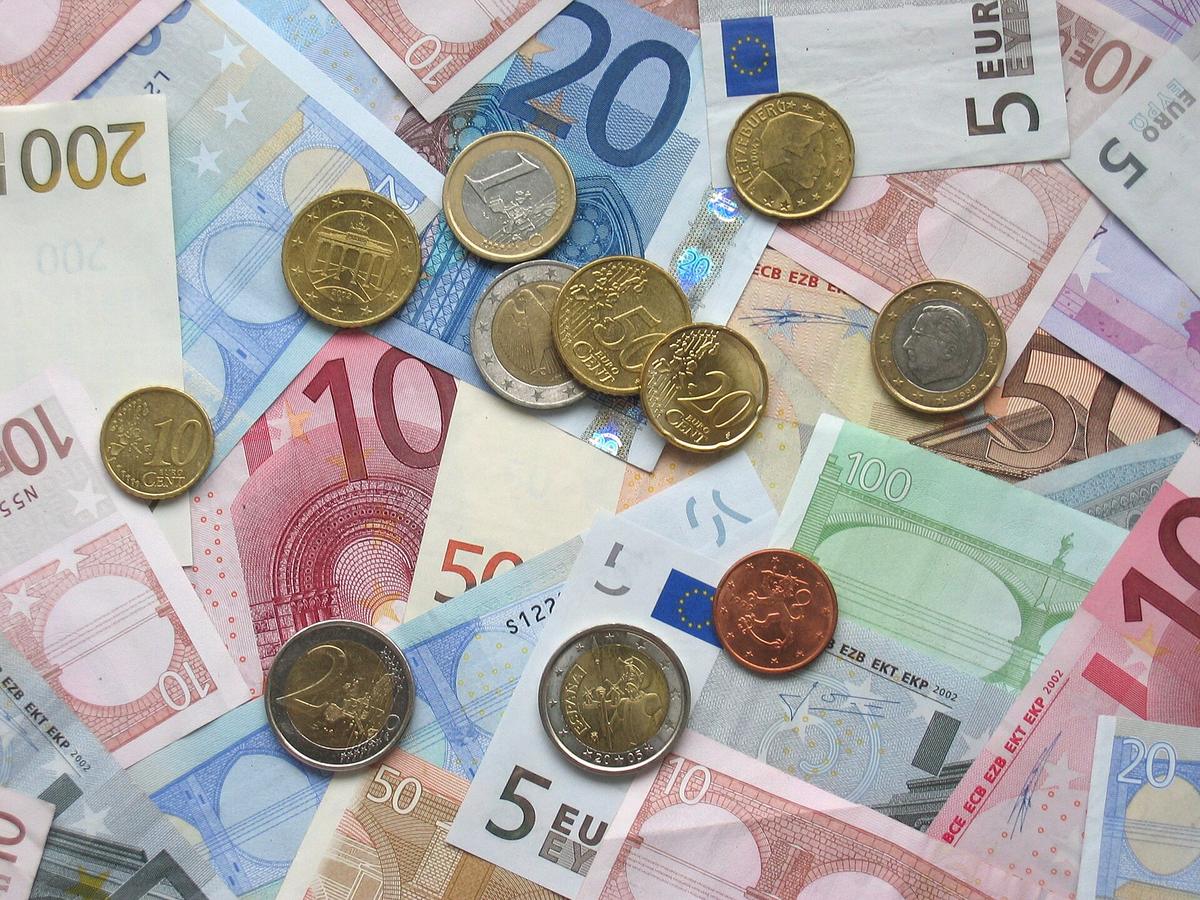

Germany Currency Euro: What You Need in Your Wallet
Germany uses the euro (EUR, €). You need euro coins: 1c, 2c, 5c, 10c, 20c, 50c, €1, and €2. Banknotes come as €5, €10, €20, €50, €100, €200, and €500. The €500 note stopped being issued in 2019 but remains legal tender if someone hands you one; smaller businesses may refuse it because they cannot make change.
Carry a mix of denominations for your first day. You will need small coins, especially 50c and €1 coins, for public toilets.
The Sanifair Toilet Voucher System
Public toilets at highway rest stops, train stations, and some city centre squares cost 50c to €1. Many use a coin-operated turnstile and the Sanifair system, which prints a voucher worth the same amount. Attached shops and rest-stop restaurants accept that voucher as credit toward a purchase. The voucher is not a refund: buy a coffee or a snack to recover the value. Without coins, you cannot enter the toilet. Keep a stash of 50c and €1 coins in a separate pocket.
Germany Cash Only Restaurants: Where Card Refusal is Guaranteed
Card refusal in Germany is not signposted. A restaurant with a credit card sticker on the door may still reject your card. The terminal is down. The minimum spend is €10. The server prefers cash. You will encounter refusal most at these businesses:
- Bakeries and butcher shops: Most are cash only, especially outside city centres. A pretzel and coffee cost a few euros. You hand over coins or you walk away hungry.
- Market stalls and Christmas market booths: All cash. The mulled wine, the bratwurst, the wooden ornaments, the roasted almonds. All paid in euro banknotes and coins. No terminals exist.
- Smaller restaurants and Gasthäuser: Many accept cash only or impose a €10 to €20 minimum for card payments. Check before you order. No card logo on the menu means cash only.
- Rural cafés and bars: Lower card acceptance than in cities. In the Bavarian Alps, the Harz Mountains, or the Moselle Valley, assume every transaction requires cash.
- The Königssee electric boat: The boat to St. Bartholomä is cash only. No ticket machine takes cards. Buy your ticket at the dock with euro banknotes.
Urban retail in Berlin, Munich, Hamburg, and Frankfurt accepts Girocard and major credit and debit cards at supermarkets, department stores, and chain restaurants. Even there, the corner Döner shop, the small café, and the neighbourhood Späti operate on cash only.
Paying in Germany: How to Tip, How to Handle the Bill
Tipping in German restaurants is not done by leaving coins on the table. You state the total amount you wish to pay when handing over cash or your card. If the bill is €28.50 and you want to tip 10%, say "€32" to the server and hand over €32 in cash, or tell them to charge €32 to your card. For larger bills, 5 to 10 percent is standard. For smaller bills, round up to the nearest convenient euro amount. In bars and cafés, round up to the next euro or add a small amount. For taxis, round up to the next euro or add 5 to 10 percent. In hotels, porters expect €1 to €2 per bag; housekeeping tips are uncommon but a small amount at the end of your stay is appreciated. Where a service charge is already included on the bill, no additional tip is expected, though rounding up still occurs.
How To Avoid Dynamic Currency Conversion
When you pay with a foreign card at a terminal or withdraw from an ATM, the machine may offer to convert the amount to your home currency at a poor exchange rate. This is dynamic currency conversion (DCC). Decline it every time. Select "Ohne Umrechnung" or "In Euro belasten" to process the transaction in euros at your card network's exchange rate. The prompt appears in English on many machines but is easy to miss. Read the screen and choose the euro option. It saves you 3 to 5 percent per transaction.
Germany ATM Fees: How to Withdraw Without Getting Ripped Off
Germany has an extensive ATM network. Machines are operated by banks (Deutsche Bank, Commerzbank, Sparkassen, Volksbanken) and by independent operators such as Euronet and Cardpoint. For foreign cardholders, the fee depends on which machine you use.
Bank ATMs
ATMs at major German banks often charge no fee to the cardholder. Your own bank may apply a foreign transaction fee. The machine displays the fee on the screen before you confirm the withdrawal. Check that screen before accepting.
Independent ATMs
Independent machines such as Euronet and Cardpoint charge a fixed fee, disclosed on-screen before withdrawal. These are the machines in tourist-heavy areas, at airports, and in train station concourses. Avoid them. Walk an extra block to a Sparkasse or Volksbank machine. The withdrawal limit is set by your card-issuing bank, not by German regulation, though some machines cap the per-transaction amount.
Domestic Cards
A German Girocard carries zero fees at its own bank and network partners. The Girocard system is being phased out and replaced by co-badged Debit Mastercard and Visa Debit cards, but the network remains widely used.

The Sunday Cash Trap and Other Practical Realities
Sundays in Germany mean almost all retail is closed. Supermarkets, clothing shops, department stores. Shut. Only train station shops and some bakeries open. Arrive on a Sunday with no cash and you cannot buy anything from a shop. If the few open bakeries are cash only, you are stuck. Withdraw euros on Saturday or at the airport on arrival.
The same applies to public holidays, which are numerous: New Year's Day, Good Friday, Easter Monday, Labour Day (1 May), Ascension Day, Whit Monday, Corpus Christi (in Catholic regions), German Unity Day (3 October), Reformation Day (31 October, in Protestant states), and the Christmas holidays (25 and 26 December). Plan your cash supply around these closures.
Connectivity And The Bank Holiday Trap
Mobile data black spots are common on Deutsche Bahn intercity trains and in rural areas. Free public Wi-Fi is scarce; do not rely on it. A local SIM card (Telekom, Vodafone, O2) requires passport registration by law. If your bank's app requires internet to authorise a payment or check your balance, and you are in a rural area with no signal, you cannot access your money. Withdraw cash before you leave the city.
The Single Thing That Most Often Goes Wrong
Tourists board an ICE train with a regional-only ticket and face a €60 fine, then try to pay the fine with a card that is not accepted, then realise they have no cash on them. The Deutsche Bahn conductor will not wait while you find an ATM. The fine must be paid on the spot or by invoice. If you cannot pay, the situation escalates. Before you board any ICE train, confirm that your ticket covers that specific train type. Buy your ticket through the DB Navigator app or a station ticket machine using your card. Keep a backup €50 note in your shoe, your jacket lining, or your phone case. Cash is not optional in Germany. It is the payment method that never fails, and the one you will reach for more often than you expect.
Common Questions
Which cards are accepted in Germany?
Visa and Mastercard are the most widely accepted credit and debit cards. American Express is accepted at the fewest locations. The domestic Girocard is accepted everywhere but is not available to foreign visitors. Apple Pay and Google Pay work wherever contactless terminals exist, which is most terminals issued since roughly 2018. Contactless payment is standard on newer machines, but the business itself may still not accept cards at all.
Can I use my US or UK debit card in German ATMs?
Yes, provided the card is on the Visa or Mastercard network and has a four-digit PIN. Use bank-operated ATMs (Sparkasse, Volksbank, Deutsche Bank) to avoid the fee charged by independent operators such as Euronet. Decline dynamic currency conversion at the machine.
What happens if I try to pay with a card and the terminal is down?
The server will tell you the terminal is 'kaputt' and ask for cash. This happens regularly. If you do not have enough cash, find an ATM and return, or ask if you can walk to a nearby ATM and come back. The restaurant is not obligated to hold your table. Carry at least €50 to €100.
Are German restaurant tips really not left on the table?
Correct. You state the total you want to pay, including the tip, when you hand over cash or your card. Saying '€32' on a €28.50 bill tells the server the total to charge. Leaving coins on the table is not the custom and may be seen as confusing or rude.
Do German public toilets really cost money?
Yes. Most public toilets, including those at train stations, rest stops, and some city squares, cost 50c to €1. They use coin-operated turnstiles. The Sanifair system gives you a voucher worth the same amount that you can use as credit at the attached shop or rest-stop restaurant. Keep 50c and €1 coins accessible.
Read next
-
 Staying Connected in Germany With eSIM, Local SIM, or Roaming
Mobile data in Germany means navigating rural black spots, scarce free Wi-Fi, and mandatory passport registration for local SIM cards.
Staying Connected in Germany With eSIM, Local SIM, or Roaming
Mobile data in Germany means navigating rural black spots, scarce free Wi-Fi, and mandatory passport registration for local SIM cards.
-
 When to Visit Germany and What Each Season Actually Delivers
Germany's travel seasons are defined by school holidays, trade fairs, and Christmas markets. Here is when to go and when to avoid.
When to Visit Germany and What Each Season Actually Delivers
Germany's travel seasons are defined by school holidays, trade fairs, and Christmas markets. Here is when to go and when to avoid.
-
 Getting Around Germany Without Falling for the Flexpreis Trap
How to use Germany's train system, avoid a €60 fine for the wrong ticket, and understand the difference between flexible and advance fares.
Getting Around Germany Without Falling for the Flexpreis Trap
How to use Germany's train system, avoid a €60 fine for the wrong ticket, and understand the difference between flexible and advance fares.
-
 Who Needs a Visa for Germany and How the Application Actually Works
A clear breakdown of who needs a visa to enter Germany, who is exempt, and the step-by-step process for a Schengen visa application.
Who Needs a Visa for Germany and How the Application Actually Works
A clear breakdown of who needs a visa to enter Germany, who is exempt, and the step-by-step process for a Schengen visa application.
-
 Is Germany Safe for Travelers and What Are the Actual Risks
Germany is a safe country, but petty theft at markets and fines on trains are real risks. Here is what to actually watch for.
Is Germany Safe for Travelers and What Are the Actual Risks
Germany is a safe country, but petty theft at markets and fines on trains are real risks. Here is what to actually watch for.
-
 How Much a Trip to Germany Actually Costs, Shaped by Region and Season
Germany trip costs split along regional lines, with Bavaria and trade-fair cities operating on a different budget logic than the Harz or Baltic Coast.
How Much a Trip to Germany Actually Costs, Shaped by Region and Season
Germany trip costs split along regional lines, with Bavaria and trade-fair cities operating on a different budget logic than the Harz or Baltic Coast.
-
 A Ground-Level Logistics Guide to Independent Travel in China
First-time independent travel in China: what you need to know about visas, rail booking, eSIMs, mobile payments, and power adapters.
A Ground-Level Logistics Guide to Independent Travel in China
First-time independent travel in China: what you need to know about visas, rail booking, eSIMs, mobile payments, and power adapters.
-
 How Solo Travelers Stay Ahead of Flight Delays and Cancellations
How solo travelers can track inbound aircraft, claim rebooking rights, and adjust ground transport when flights go wrong — step by step.
How Solo Travelers Stay Ahead of Flight Delays and Cancellations
How solo travelers can track inbound aircraft, claim rebooking rights, and adjust ground transport when flights go wrong — step by step.
-
 Why Your eSIM Might Not Work Abroad and How to Check Before You Go
Buying an eSIM doesn't guarantee signal abroad. Learn why coverage fails by location and how to verify reach before you commit to a plan.
Why Your eSIM Might Not Work Abroad and How to Check Before You Go
Buying an eSIM doesn't guarantee signal abroad. Learn why coverage fails by location and how to verify reach before you commit to a plan.