What You Need to Know About China Power Plug Type Voltage
China runs on 220V with a mix of Type A, C, and I sockets. The real packing decision is your power bank capacity—train security confiscates anything over 20,000mAh.
Power Sockets and Voltage in China
You slide into your G-train seat, phone at 12%, and find a USB-A port under the armrest. Relief lasts three seconds. Your power bank is in your checked bag and the charger block is back at the hotel. This is the standard friction of charging in China, and it starts with what comes out of the wall. The full answer is 220V at 50Hz using a mix of Type A (two flat pins), Type C (two round pins), and Type I (three flat pins in a triangle). Multi-standard wall sockets that accept several plug types are common in hotels built after 2015 but are not guaranteed anywhere else. Pack for the worst case.
What Plug Types, Voltage, and Frequency You Actually Face
Socket Types You Will Meet
Type A and Type I are the dominant domestic sockets. Type C, the standard European round-pin plug, will physically fit into a Type A socket because the two round pins insert into the flat-pin holes. It lacks a ground connection. For any device with a metal casing or a three-pin charger, you need the grounded Type I socket. A universal adapter that covers Type A, C, and I in one block costs ¥30 to ¥60 on Taobao. Buy that one. Do not buy a UK-to-China adapter unless you also carry a multi-plug extension.
Check Your Devices Before You Pack
Your phone, laptop, camera, and power bank chargers almost certainly list 100-240V on their brick. They are dual-voltage and work here without a transformer. Check the fine print. Any device rated for only 110-120V, hair dryers, electric shavers, old US-only appliances, will burn out immediately at 220V and needs a step-down transformer that weighs as much as the device itself. Leave the single-voltage gear at home.


China USB Charging Stations: the Real Supply on Trains and in Hotels
On Trains and Planes
USB-A ports exist on high-speed G-series and D-series trains built after roughly 2016, located between the seats at the base of the armrest. Older rolling stock does not have them at all. On a four-hour run from Shanghai to Xi'an, you may get a port or you may get nothing. Domestic flights offer no charging in economy class on most Chinese airlines, including China Southern and Air China. Business class and first class on wide-body aircraft sometimes include USB-A. Check your specific aircraft type on the booking page. Do not assume. Long-distance buses rarely have USB ports except on premium sleeper coaches on routes like Chengdu to Lhasa, and even then it is not standard.
In Hotels and Guesthouses
Hotels in tier-1 cities and international chains (Hilton, Marriott, Shangri-La) frequently have USB-A ports built into bedside lamps and power strips. Guesthouses, rural homestays, and budget hotels in places like the Tulou Clusters in Fujian or the Longji Rice Terraces will have only wall sockets, almost certainly Type A and Type I. Pack a compact multi-port USB charger. A GaN charger with two USB-C and one USB-A is ideal, so you charge three devices from a single Type I socket. Your smartphone charger block alone consumes a full socket that could be charging your power bank.
| Location | Socket Types | USB-A at Seat | USB-C at Seat | Public Outlets |
|---|---|---|---|---|
| G-series high-speed train (new) | Type A, Type I | Yes, most cars | Rare | None |
| D-series high-speed train (older) | Type A | Inconsistent | No | None |
| Domestic flight (economy) | None | No | No | No |
| Domestic flight (business) | Type A (some) | Some wide-body | No | No |
| International hotel (Beijing, Shanghai) | Type A, Type I, USB-A | -- | -- | Bedside and desk |
| Budget guesthouse (rural) | Type A | Rare | No | Limited |
China Power Bank Size Limit on Trains: What You Can Bring
Every high-speed rail station in China has airport-style security screening before you enter the waiting hall. Bags go through X-ray, and staff check for prohibited items. Aerosols are confiscated. Power banks with a rated capacity above 20,000mAh are also confiscated on the spot. No exceptions. No refund. The limit is enforced at the security gate, not on the train itself. That oversized battery pack that powers your laptop for three days is a loss waiting to happen.
Pack a power bank at or under 20,000mAh. A 10,000mAh unit will recharge a modern smartphone roughly two to three times, enough for a full day of navigation, translation, and photography between outlets. If you need more, carry two 10,000mAh banks. The security line moves fast and the staff do not debate the rule. The capacity is printed on the side of every power bank. Check it before you pack.
China Voltage Converter: When You Definitely Need One
You almost certainly do not need a voltage transformer. The vast majority of modern electronics, phones, tablets, laptops, camera chargers, e-readers, are dual-voltage and handle 100-240V. The one exception is high-wattage appliances like hair dryers, curling irons, and electric kettles. Many of these are built for 110-120V only. Plug a US hair dryer into a Chinese 220V socket without a step-down transformer and it will either blow a fuse or catch fire within seconds.
The honest solution is to buy a cheap local hair dryer in China from a supermarket chain like Carrefour or an electronics store like Suning. It will have a Chinese Type A or Type I plug, work at the correct voltage, and you leave it behind when you fly home. A step-down transformer that handles high wattage costs as much and weighs as much as a small kettle. Unnecessary bulk. Leave the transformer at home.
Who Should Rethink Their Charging Strategy
The Stakes Are Higher Than You Think
This subject suits any traveller who relies on a smartphone for WeChat Pay, Alipay, navigation, and translation. That is almost everyone. Without charging, you lose access to payment. In a largely cashless society where foreign cards often fail to link to mobile payment apps, that is a crisis.
It does not suit travellers who expect to find public USB ports at every seat, in every cafe, and on every flight. China is not South Korea or Japan in this regard. Public outlets in waiting halls and food courts are rare. You carry your own power or you go dark. The single thing that most often goes wrong is arriving at a train station with an oversized power bank and having it confiscated an hour before your train departs, leaving you with no backup for a six-hour journey. Stay under 20,000mAh and you solve the biggest problem before it starts.
Common Questions
Do I need a power converter for China?
Only if your device is rated for 110-120V exclusively. Check the label on the charger brick. If it says 100-240V, you need only a plug adapter, not a transformer. Hair dryers and curling irons are the common single-voltage items. Buy a cheap local one instead of hauling a transformer.
What does a Type I plug look like?
Three flat pins arranged in a triangle. The top pin is the ground, the two lower pins carry power. It looks similar to the Australian plug. Type A has two flat parallel pins and no ground.
Can I charge my phone on a bullet train in China?
Newer G-series and D-series trains have USB-A ports at the seats. Older trains do not. The port is usually between the seats at the base of the armrest. No guarantee. Always carry a charged power bank.
What is the maximum power bank size for Chinese trains?
20,000mAh. Station security confiscates anything above that. The limit is enforced at the X-ray checkpoint before you enter the waiting area. Check the printed capacity on your bank before you travel.
Are there USB-C ports in Chinese hotels?
Increasingly common in international-brand hotels in Beijing, Shanghai, and Guangzhou. Rare in domestic hotels, guesthouses, and rural areas. Bring your own USB-C charger block.
Do I need a VPN for WeChat Pay or Alipay?
No, WeChat Pay and Alipay work without a VPN inside China. But you need a VPN to access Google, Instagram, WhatsApp, and Gmail, which are blocked. Install the VPN before you arrive. The app store in China does not offer them.
Can I use a UK three-pin plug in China?
No. UK plugs (Type G) are not compatible with Chinese sockets. You need a universal adapter that supports Type A, C, and I, or a UK-to-China adapter. A multi-port charger that plugs directly into a Type I socket is the most compact solution.
Read next
-
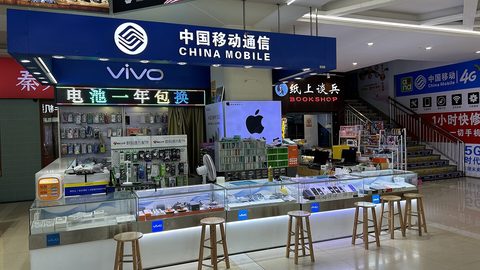
 Staying Connected in China Without Losing Access to Everything
The central tradeoff is this: a local physical SIM gives you the Chinese phone number you need for WeChat Pay, bike sharing, and public Wi-Fi login.
Staying Connected in China Without Losing Access to Everything
The central tradeoff is this: a local physical SIM gives you the Chinese phone number you need for WeChat Pay, bike sharing, and public Wi-Fi login.
-
 Best Time to Visit China by Region and Season
China's climate spans subtropical to subarctic. Here is what each season means region by region, from October's clear Beijing skies to August's Guangdong humidity.
Best Time to Visit China by Region and Season
China's climate spans subtropical to subarctic. Here is what each season means region by region, from October's clear Beijing skies to August's Guangdong humidity.
-
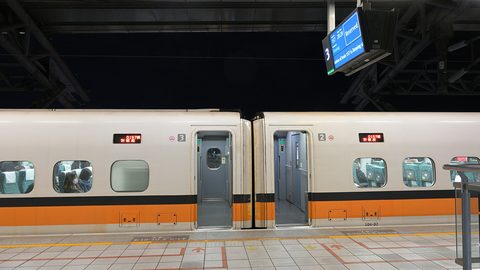 China High-Speed Trains and Getting Around Without a Chinese App
China's high-speed rail is fast and efficient, but booking as a foreigner is a puzzle.
China High-Speed Trains and Getting Around Without a Chinese App
China's high-speed rail is fast and efficient, but booking as a foreigner is a puzzle.
-
 China Visa Requirements and the Application Process Step by Step
Most visitors need a Chinese tourist visa before departure. Here is who qualifies for visa-free entry, who does not, and exactly how the L-visa application works.
China Visa Requirements and the Application Process Step by Step
Most visitors need a Chinese tourist visa before departure. Here is who qualifies for visa-free entry, who does not, and exactly how the L-visa application works.
-
 How to Pay for Things in China Without Getting Stranded
China runs on WeChat Pay and Alipay, and cash is often refused. Here is how to link a foreign card, what to do when it fails, and where renminbi notes still work.
How to Pay for Things in China Without Getting Stranded
China runs on WeChat Pay and Alipay, and cash is often refused. Here is how to link a foreign card, what to do when it fails, and where renminbi notes still work.
-
 Is China Safe for Travel and What Safety Advice Actually Applies
China is statistically safe from violent crime, but scams, air pollution, and digital surveillance are real concerns. Here is what to actually watch for.
Is China Safe for Travel and What Safety Advice Actually Applies
China is statistically safe from violent crime, but scams, air pollution, and digital surveillance are real concerns. Here is what to actually watch for.
-
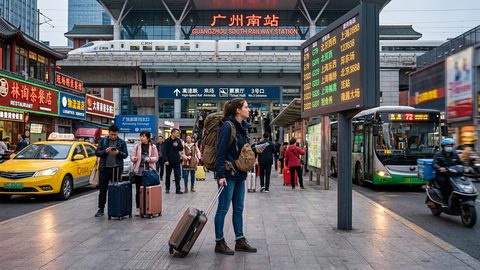 A Ground-Level Logistics Guide to Independent Travel in China
First-time independent travel in China: what you need to know about visas, rail booking, eSIMs, mobile payments, and power adapters.
A Ground-Level Logistics Guide to Independent Travel in China
First-time independent travel in China: what you need to know about visas, rail booking, eSIMs, mobile payments, and power adapters.
-
 How Solo Travelers Stay Ahead of Flight Delays and Cancellations
How solo travelers can track inbound aircraft, claim rebooking rights, and adjust ground transport when flights go wrong — step by step.
How Solo Travelers Stay Ahead of Flight Delays and Cancellations
How solo travelers can track inbound aircraft, claim rebooking rights, and adjust ground transport when flights go wrong — step by step.
-
 Why Your eSIM Might Not Work Abroad and How to Check Before You Go
Buying an eSIM doesn't guarantee signal abroad. Learn why coverage fails by location and how to verify reach before you commit to a plan.
Why Your eSIM Might Not Work Abroad and How to Check Before You Go
Buying an eSIM doesn't guarantee signal abroad. Learn why coverage fails by location and how to verify reach before you commit to a plan.