Sockets and Voltage Across Austria
Austria uses Type F Schuko sockets at 230V. Most phone and laptop chargers are dual-voltage, but pack an adapter—mountain huts often have one distant socket.
Austria Plug Type and Voltage
You are standing in a Salzburg hotel room at 10pm after a flight from New York. Your phone is at 12 percent. The socket on the wall has two round holes and two metal clips on the sides. Your plug has two flat pins. It does not fit.
Here is what you need to know, in one sentence: Austria uses the standard European Type F (Schuko) socket at 230V/50Hz. Below you will find the adapter to pack, the appliances that survive the voltage, and the one thing that will fry your hair straightener if you plug it in without checking.
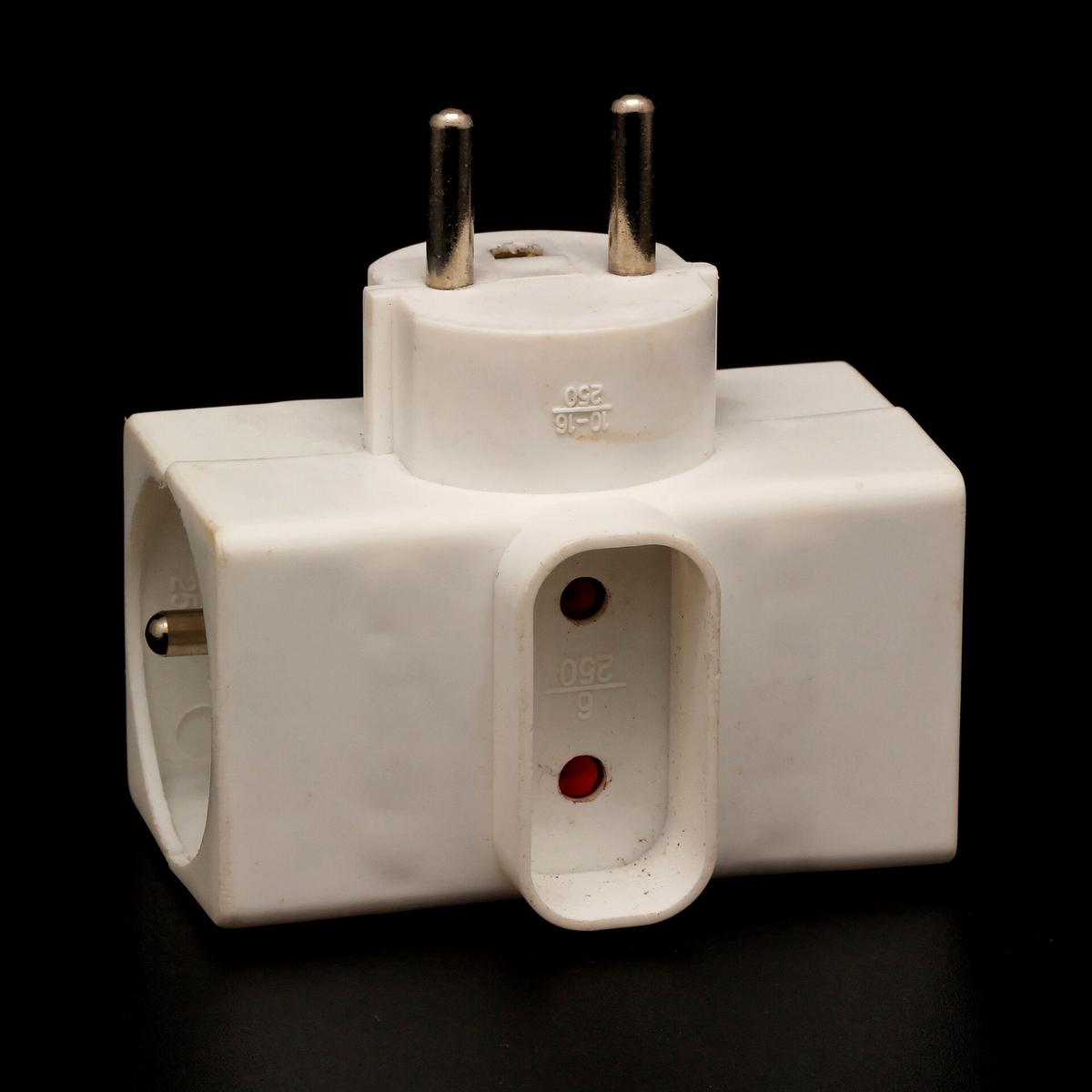

European Plug Adapter Austria: Which One Actually Works
Buy One Universal Adapter
Pack a universal travel adapter that accepts Type C and Type F plugs. That is the only adapter you need for Austria. Type C (Europlug) has two round pins, no earth clips, and is rated at 2.5 A. Type F (Schuko) has the same two round pins plus side earth clips and is rated at 16 A. Every socket in Austria is Type F, and every Type F socket accepts both Type C and Type F plugs. Your adapter converts your home plug shape to one of those two. It does not change voltage. That distinction matters.
Adapter Versus Voltage Converter
An adapter is a mechanical shape changer. A voltage converter changes the electrical current. If you plug a 110 V appliance from the United States into a 230 V Austrian socket using only an adapter, you will see smoke within seconds. The appliance will be destroyed. If your device is marked with a dual-voltage range, which is the standard for phone chargers, laptop power bricks, camera battery chargers, and electric toothbrushes, you need only the adapter. If it is marked 110 V only, you need a voltage converter or you leave it at home.
Austria Power Socket Type F: What the Socket Looks Like and Where to Find it
Spotting a Type F Socket
Type F is the standard wall socket across Austria, Germany, the Netherlands, and most of continental Europe. The two round holes are 19 mm apart. The side clips grip the plug and provide the earth connection. The socket is recessed, so plugs sit flush against the wall. Every hotel, guesthouse, apartment, and train station in Austria uses this socket. You will find them in airports, cafés, museums, and public libraries.
USB Ports Are Patchy
One exception you will encounter: newer Austrian hotel rooms increasingly include USB A ports built into the bedside lamps or wall sockets. Hotels opened or renovated recently also sometimes add USB C ports. Do not rely on this. Mountain huts and traditional guesthouses often have a single socket across the room, sometimes behind a piece of furniture. If you are staying in a hut in the Hohe Tauern National Park or a Gasthof in the Salzkammergut, bring a multi-port USB hub and a short extension cord. You will need it.
Austria Voltage 230V: What Needs a Converter and What Does Not
Check Every Device Before You Plug In
Mains voltage is 230 V at 50 Hz. This is standard across Europe. If you are arriving from the United States, Canada, Japan, or any country that uses a lower voltage, check every device before you plug it in.
These devices are dual voltage and need only an adapter: phone chargers, laptop power bricks, tablet chargers, camera battery chargers, electric shavers, CPAP machines, and USB power banks. The label on the power brick will say Input 100-240 V, 50-60 Hz. If it says that, you are safe.
Single-Voltage Appliances Will Burn Out
These devices are single voltage and will be destroyed on 230 V: hair dryers, curling irons, hair straighteners, electric blankets, space heaters, and most kitchen appliances. A 110 V hair dryer on 230 V will run at double its rated power for about three seconds before the motor burns out. If you must bring one, buy a voltage converter rated for the wattage of the device. A 1500 W hair dryer requires a converter rated for at least 2000 W. Those converters are heavy, about the size of a brick, and cost more than buying a cheap hair dryer at a Bipa drugstore in Vienna.
Austria USB Charging Travel: Where You Can Charge Without an Adapter
Hotels and Guesthouses
USB charging access in Austria is better than it was five years ago but still inconsistent. Here is where you can expect to find it and where you cannot.
Hotels and guesthouses opened or renovated recently often include USB A and sometimes USB C ports at the bedside. The real figure for coverage is published by the Austrian Hotelier Association, whose data is updated annually. Mid-range and luxury hotels in Vienna, Salzburg, and Innsbruck are the most likely to have them. Budget hotels, private holiday apartments, and traditional alpine huts are the least likely. If you book a Ferienwohnung through a local letting agency, assume you will need your own power brick.
Trains, Buses, and Airports
On long-distance trains, ÖBB Railjet and Nightjet trains include USB A charging ports at every seat in first and second class. Older Intercity rolling stock may lack seat-level USB entirely. On regional trains and Postbus services, USB ports are not guaranteed. The presence varies by operator, vehicle age, and specific route. Download an offline map of Austria and your train tickets before you board, because mobile signal drops to zero in deep Alpine valleys and on high passes.
At Vienna International Airport, USB A and USB C charging stations are available in the terminal areas. At Graz, Innsbruck, and Salzburg airports, availability varies by terminal zone. The safest assumption is that you will need your own power brick and your own cable everywhere outside a major hotel or a Railjet train.
| Specification | Value |
|---|---|
| Mains voltage | 230 V |
| Mains frequency | 50 Hz |
| Plug types in use | Type C (Europlug, 2.5 A) and Type F (Schuko, 16 A) |
| Socket compatibility | Type F socket accepts both Type C and Type F plugs |
| Common adapter needed | Universal travel adapter with Type C and Type F output |
| Dual voltage range | 100–240 V, 50–60 Hz (check device label) |
| USB A in hotels | Widespread in newer hotels; less common in huts and apartments |
| USB C in hotels | Increasing in hotels recently; not standard in budget |
| USB on ÖBB Railjet | USB A at every seat, first and second class |
| USB at Vienna Airport | USB A and C charging stations in terminals |
What Happens When You Get it Wrong
The Sunday Trap
The most common mistake travellers make in Austria regarding electricity has nothing to do with the plug shape. It is assuming that a device that works in the United States will work in Austria without a converter. The second most common mistake is assuming that because a hotel has USB ports, the power brick you brought from home will work. It will. But if you lose that power brick, finding a replacement in a small Austrian town on a Sunday is nearly impossible. Sunday closures are total. Supermarkets, pharmacies, and most shops shut completely. Only petrol stations and railway station shops will be open. If you lose your phone charger on a Saturday afternoon in Zell am See, you will be without power until Monday morning.
Cash, Coins, and a Backup Cable
Cash is required in many mountain huts, Heurigen wine taverns, and small cafés. Do not assume card acceptance. The same applies to the coin-operated turnstiles at public toilets, which cost 0.50 to 1.00 euro even in train stations. Keep a stash of small coins and a backup charging cable in your daypack. The combination of a dead phone, no cash, and a Sunday closure is the single thing that most often goes wrong for travellers in Austria who did not prepare for the power situation.
Who This Power Situation Suits and Who Should Prepare Differently
This power setup suits culture-first city breakers who also want mountain day trips, classical music and opera devotees, intermediate skiers, slow-travel road trippers, and families seeking clean, safe infrastructure-rich holidays. These travellers stay in hotels where USB ports are common and carry devices that are dual voltage by default. A single universal adapter and a multi-port USB hub will cover everything they bring.
This power setup does not suit budget backpackers on a shoestring, who are more likely to stay in hostels and private apartments where USB ports are absent and sockets are scarce. It also does not suit travellers who rely on a single cable for everything and have no backup plan for a Sunday. If you are that traveller, buy a second power brick and a compact extension cord before you leave home. The combination of a dead phone, a Sunday closure, and no cash is the single thing that most often goes wrong for travellers in Austria who did not prepare for the power situation.
Common Questions
Do I need a voltage converter for my phone charger in Austria?
No, if the charger is marked with a dual-voltage input range. Most phone chargers, laptop bricks, and camera chargers are dual voltage. Check the label on the power brick, not the device itself.
What is the difference between a Type C and a Type F plug?
Type C (Europlug) has two round pins and no earth connection. It is rated at 2.5 A. Type F (Schuko) has two round pins plus side earth clips. It is rated at 16 A. Type F sockets accept both. Type C is fine for low power devices like phone chargers.
Can I use a US hairdryer in Austria with just an adapter?
No. A US hairdryer designed for 110 V will burn out on 230 V. You need a voltage converter rated for the wattage of the hairdryer, or you should buy a cheap hairdryer at a Bipa or DM drugstore in Austria.
Do Austrian hotels have USB ports in the rooms?
Many newer hotels opened or renovated recently include USB A and sometimes USB C ports. Older hotels, mountain huts, and private apartments often do not. The Austrian Hotelier Association publishes the most current figures. Pack your own power brick and cable.
Can I charge my laptop on an Austrian train?
On ÖBB Railjet and Nightjet trains, yes. USB A ports are available at every seat in first and second class. On older Intercity trains and regional trains, USB ports are not guaranteed. Download offline maps and tickets before boarding.
What happens if I plug a 110 V appliance into a 230 V socket?
The appliance will receive double the voltage it was designed for. It will overheat, smoke, and be destroyed within seconds. This applies to hair tools, space heaters, and kitchen appliances. Always check the voltage rating before plugging in.
Where can I buy a travel adapter in Austria if I forget mine?
Electronics shops like MediaMarkt, Saturn, and larger department stores carry universal travel adapters. On Sundays, only petrol stations and railway station shops are open, and their selection is limited. Buy one before you arrive or at the airport.
Read next
-
 Staying connected in Austria with eSIM, local SIM, or just hotel WiFi
Austrian mobile coverage vanishes in the places you need it most: deep Alpine valleys and high passes.
Staying connected in Austria with eSIM, local SIM, or just hotel WiFi
Austrian mobile coverage vanishes in the places you need it most: deep Alpine valleys and high passes.
-
 Best Time to Visit Austria for Cities, Lakes and Skiing Without Crowds
Austria's seasons dictate what's open: Christmas markets end on 24 December, the Salzburg Festival consumes July and August, and many hotels close the first week of January.
Best Time to Visit Austria for Cities, Lakes and Skiing Without Crowds
Austria's seasons dictate what's open: Christmas markets end on 24 December, the Salzburg Festival consumes July and August, and many hotels close the first week of January.
-
 Getting Around Austria by Train, Bus and Car Without the Map Mistakes
Austria's ÖBB rail network is excellent but unforgiving: Sparschiene tickets are train-specific and worthless if missed, and motorways eat schedules.
Getting Around Austria by Train, Bus and Car Without the Map Mistakes
Austria's ÖBB rail network is excellent but unforgiving: Sparschiene tickets are train-specific and worthless if missed, and motorways eat schedules.
-
 Austria Visa Requirements and Schengen Entry Rules for Travellers
Austria is in the Schengen zone. Most short-stay visitors from wealthy countries enter visa-free, but passport validity and upcoming ETIAS rules still apply.
Austria Visa Requirements and Schengen Entry Rules for Travellers
Austria is in the Schengen zone. Most short-stay visitors from wealthy countries enter visa-free, but passport validity and upcoming ETIAS rules still apply.
-
 Cash or Card in Austria – Where Euros Still Rule and ATMs Save You
Austria runs on euros, but card acceptance collapses in mountain huts, Heurigen wine taverns, and small village cafés. Carry cash daily.
Cash or Card in Austria – Where Euros Still Rule and ATMs Save You
Austria runs on euros, but card acceptance collapses in mountain huts, Heurigen wine taverns, and small village cafés. Carry cash daily.
-
 Is Austria Safe, Reading the Advice Without the Anxiety Spiral
Austria is very safe for visitors. The real risks are mountain weather shifts and overestimating hiking ability, not street crime, though Vienna pickpocketing
Is Austria Safe, Reading the Advice Without the Anxiety Spiral
Austria is very safe for visitors. The real risks are mountain weather shifts and overestimating hiking ability, not street crime, though Vienna pickpocketing