Sockets in Spain and What to Pack to Charge Everything
Spain uses Type C and F plugs at 230V. Most phone and laptop chargers work with a simple adapter, but single-voltage devices need a converter.
Sockets in Spain and What to Pack to Charge Everything
You are standing in a hotel room in Seville at 10pm. Dinner is finished, you want to charge a phone and a camera, and the wall socket accepts neither the flat pins of a US charger nor the rectangular ones of a UK plug. Spain uses Type C (two round pins, unearthed) and Type F (two round pins with side earth clips). Mains voltage is 230 V at 50 Hz. Most modern electronics work on that voltage already. The problem is not the voltage; it is the shape of the hole.
Spain Plug Type and Voltage Adapter: What You Actually Need
The Adaptor You Need Versus the Converter You Do Not
The distinction between an adapter and a converter is where travellers waste money or cook a device. A plug adapter changes the shape of the pins. A voltage converter changes the electrical pressure from 230 V down to a level North American appliances expect. You need only the adapter if your device is dual-voltage, look for a label that reads "INPUT: 100-240 V" on the power brick. That covers nearly every phone charger, laptop charger, camera battery charger, and USB-C power delivery block sold in the last decade.
When a Converter Is Non-Negotiable
If the label says "INPUT: 110-120 V", common on hair dryers, curling irons, electric toothbrushes, and some older razor chargers, you need a step-down transformer. Plugging a device built for North American voltage into a 230 V socket without a converter destroys the device in under a second. The transformer is heavy and costs from roughly €20 at an electronics shop. Most travellers find it simpler to buy a European-voltage hair dryer on arrival at a Mercadona supermarket, where prices start around €15.

| Device Type | Voltage Rating | Adapter Or Converter? | Works Without Anything? |
|---|---|---|---|
| Phone / tablet / laptop charger | 100–240 V | Adapter only | No — pin shape differs |
| Camera battery charger | 100–240 V | Adapter only | No — pin shape differs |
| USB-C plug (modern) | 100–240 V | Adapter only | No — pin shape differs |
| Hair dryer (US/Canada) | 110–120 V | Converter required | No — wrong voltage |
| Electric toothbrush (US/Canada) | 110–120 V | Converter required | No — wrong voltage |
| Shaver (older two-pin) | 110–120 V | Converter required | No — wrong voltage |
| Device with USB-A cable only | 5 V via adapter | Adapter only | If hotel has USB port, yes |
European Plug Type C for Spain: the Standard Two-Pin Socket
Where Type C Works Every Time
Type C, also called the Europlug, has two 4 mm round pins spaced 19 mm apart. It fits every outlet in Spain because it is unearthed and small enough to enter both Type C and Type F sockets. Bring a single adapter that accepts your home plug and outputs two round pins. That one piece works everywhere, Madrid airport, a rural casa rural in Aragon, a Bilbao pintxos bar.
The Grounding Trade-Off
The limitation is that Type C has no earth connection. For a phone charger that is irrelevant. For a heavy appliance like a kettle or a hair dryer, the metal casing is not grounded. In practice, Spanish building regulations require earthed Type F outlets in new construction and renovations. You will see Type F in most hotels built or refurbished after 2010. Your Type C plug still fits; the earth clips on the socket go unused.
Spain Power Socket Guide: Type C Versus Type F and Grounding
Type F Is the Standard Across the Country
Type F, the Schuko socket, is the standard grounded outlet across mainland Spain, the Balearic Islands, and the Canary Islands. It has two round pins plus spring-loaded earth clips on the sides. The socket is recessed, unlike the flush UK socket. Your plug fits if it is Type C (Europlug) or Type F (Schuko).
Older Properties and Missing Earth
Older rural properties, particularly casas rurales in Castile and León, Extremadura, or inland Aragon, may still have only two-prong ungrounded Type C outlets. If you are staying in a restored stone farmhouse in the dehesa woodlands of Extremadura, expect them. The same applies to some budget hostels in central Madrid. The absence of grounding is not dangerous for low-power electronics. For a laptop charger with a metal case, it is not ideal but is widely tolerated.
Spain Voltage 230V and Why it Matters for Dual-Voltage Travellers
Frequency Matters for Motors and Clocks
Spain runs on 230 V at 50 Hz. Continental Europe is harmonised on that standard. North America runs on a lower voltage at 60 Hz. The frequency difference (50 Hz vs 60 Hz) matters for devices with motors, clocks, fans, electric shavers with rotating heads. A US shaver running on 230 V at 50 Hz may motor more slowly.
Buy Before You Fly
If you are a US or Canadian traveller and your device does not say "100-240 V" in plain text, do not plug it in. Pick up a 230 V hair dryer at a Primor or El Corte Inglés, where prices start around €15. Buy a Type C/F travel adapter before departure. Electronics shops at Madrid-Barajas and Barcelona-El Prat sell them, but airport prices run higher than online retailers. A universal adapter bought in advance costs less and arrives before you need it.
Travel Adapter Spain: Which One to Pack and Which to Skip
Buy a Universal European Unit
Buy a universal adapter that accepts your home plug and outputs Type C/F. For UK and Ireland travellers, that is a Type G-to-Type C/F adapter. For North American travellers, that is a Type A/B-to-Type C/F adapter. Do not buy a single-country Spain-only unit; the Type C/F standard covers the entire Schengen zone, France, Germany, Italy, Portugal, Netherlands, Belgium, so a universal European adapter is more useful.
Solve the Single-Socket Problem
The failure case: charging multiple devices in a room with one outlet. Spanish sockets rarely have built-in USB ports outside hotels renovated since 2022. Pack a power strip with a Type C/F plug. A short extension cord with three sockets and a USB port costs around €10 and solves the single-outlet problem in every budget room on the Iberian Peninsula.


When You Cannot Find a Working Socket
The single most common failure in Spain: you arrive at a budget pensión in a village at 10pm after the reception desk has closed. The room has one outlet, behind the bed. Your adapter is at the bottom of your suitcase. Keep a compact universal adapter in your day bag, not buried in luggage. Carry a USB-C cable that charges directly from a laptop. Buy a Spanish power strip at the first Media Markt or Carrefour you pass. It is the one thing that makes every subsequent night easier.
When the Normal Charging Routine Stops Working
The afternoon siesta closure (roughly 2pm to 5pm) still shuts many electronics shops outside major city centres and malls. If your adapter breaks at 3pm in a small town in Castile and León, the nearest tienda de informática will be locked until 5pm. The pharmacy may sell a basic unit; ask for un adaptador de viaje. The other option is to charge at a café or a biblioteca municipal (municipal library). Libraries in Spanish cities open continuously from 9am to 9pm and have public outlets.
Which Travellers This Covers and Which it Does Not
This covers anyone carrying a phone, a laptop, a camera, or a shaver into Spain and wanting to keep it charged without blowing a fuse. It suits the late-night social traveller who returns to a hotel at 1am needing to charge everything before a 7am train to Barcelona. It suits the road-tripper crossing from Madrid to Granada to Seville who wants one adapter that works in every casa rural and parador. It does not suit travellers who only stay in five-star chains with universal sockets built into the bedside table. It does not suit anyone who assumes a US plug fits a European wall because the voltage is "close enough". The one thing that most often goes wrong: arriving with a single adapter, losing it in a taberna in the Basque Country, and spending the next two days borrowing chargers from hostel reception.
Common Questions
Can I use a US phone charger in Spain without a converter?
Yes, if the charger says 100-240 V on the brick. Most phone chargers sold since 2015 are dual-voltage. You still need a plug adapter because the pins are different.
Do Spanish bathrooms have shaver sockets?
Spanish bathrooms often lack shaver outlets. Unlike UK and Irish bathrooms, which include a dedicated shaver socket, Spanish bathrooms have the same Type C or F outlet as the rest of the room. Charge a shaver in the bedroom.
What happens if I plug a 110 V hair dryer into a 230 V socket?
It will blow the internal fuse or burn out the heating element within seconds. The device may spark, smoke, or stop working permanently. Use a step-down transformer or buy a 230 V hair dryer on arrival.
Do Spanish trains have USB charging ports?
On AVE high-speed trains, USB-A ports are available at seats on most Series 112 and refurbished S-100 sets. On Alvia and Euromed services, availability varies by rolling stock. Media Distancia and Avant trains do not have standard USB ports. ALSA Supra and Premium class intercity buses often include USB-A. Domestic flights do not.
Are USB-C ports common in Spanish hotel rooms?
USB-C ports are increasingly common in hotels opened or renovated since approximately 2022. Older hotels and budget hostels may have only mains sockets. Pack a USB-C charger block rather than relying on the room.
Does Spain use the same plug as France?
Yes. Both countries use Type C and Type F. A French plug fits in a Spanish socket and vice versa. The entire Schengen zone except the UK and Ireland uses this standard.
Can I buy a travel adapter at Madrid airport?
Yes. Shops in terminals 1, 2, and 4 at Madrid-Barajas sell universal adapters. Prices are higher than online. Barcelona-El Prat has similar options. Buy before departure if you want to save money.
Read next
-
 Staying Connected in Spain With eSIM, a Local SIM, or Just WiFi
Weighing an eSIM against a Spanish shop-bought SIM against free WiFi, with the passport-registration rule that makes airport SIM queues a grind.
Staying Connected in Spain With eSIM, a Local SIM, or Just WiFi
Weighing an eSIM against a Spanish shop-bought SIM against free WiFi, with the passport-registration rule that makes airport SIM queues a grind.
-
 Best Time to Visit Spain by Region and Season Reality
Spain has no single best month. Andalusia bakes in August while the north is mild, and the shoulder seasons deliver the sweet spot for most regions.
Best Time to Visit Spain by Region and Season Reality
Spain has no single best month. Andalusia bakes in August while the north is mild, and the shoulder seasons deliver the sweet spot for most regions.
-
 Getting Around Spain Without Believing the Distance Map
Spain's high-speed trains shrink the map, but the gaps between lines and Renfe's payment quirks can derail a tight itinerary.
Getting Around Spain Without Believing the Distance Map
Spain's high-speed trains shrink the map, but the gaps between lines and Renfe's payment quirks can derail a tight itinerary.
-
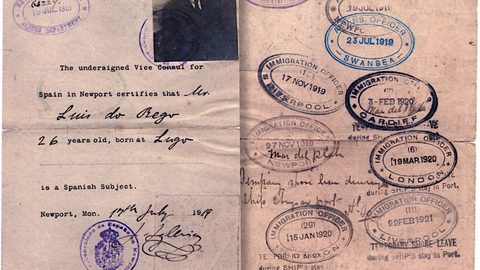 Spain Visa Requirements and the Schengen Short-Stay Rules
Whether you need a visa for Spain depends on your passport and how long you plan to stay. The Schengen 90-day clock trips up even experienced travellers.
Spain Visa Requirements and the Schengen Short-Stay Rules
Whether you need a visa for Spain depends on your passport and how long you plan to stay. The Schengen 90-day clock trips up even experienced travellers.
-
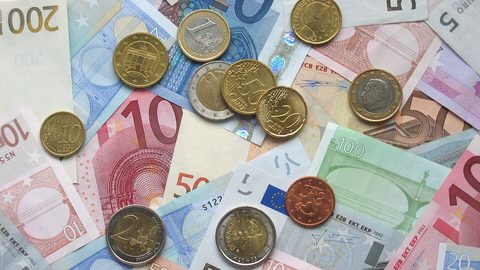 Cash or Card in Spain and Where the Euro Still Demands Coins
Spain takes contactless almost everywhere, until it does not. Small bars, market stalls, and rural buses still run on coins. Here is what to carry and when.
Cash or Card in Spain and Where the Euro Still Demands Coins
Spain takes contactless almost everywhere, until it does not. Small bars, market stalls, and rural buses still run on coins. Here is what to carry and when.
-
 Spain Safety Advice Without the Overblown Warnings
Spain is safe by any measure of violent crime, but pickpocketing in Barcelona's metro and Madrid's tourist hubs is a professional operation. What to watch for.
Spain Safety Advice Without the Overblown Warnings
Spain is safe by any measure of violent crime, but pickpocketing in Barcelona's metro and Madrid's tourist hubs is a professional operation. What to watch for.
-
 A Ground-Level Logistics Guide to Independent Travel in China
First-time independent travel in China: what you need to know about visas, rail booking, eSIMs, mobile payments, and power adapters.
A Ground-Level Logistics Guide to Independent Travel in China
First-time independent travel in China: what you need to know about visas, rail booking, eSIMs, mobile payments, and power adapters.
-
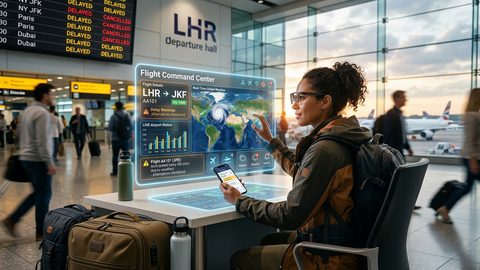 How Solo Travelers Stay Ahead of Flight Delays and Cancellations
How solo travelers can track inbound aircraft, claim rebooking rights, and adjust ground transport when flights go wrong — step by step.
How Solo Travelers Stay Ahead of Flight Delays and Cancellations
How solo travelers can track inbound aircraft, claim rebooking rights, and adjust ground transport when flights go wrong — step by step.
-
 Why Your eSIM Might Not Work Abroad and How to Check Before You Go
Buying an eSIM doesn't guarantee signal abroad. Learn why coverage fails by location and how to verify reach before you commit to a plan.
Why Your eSIM Might Not Work Abroad and How to Check Before You Go
Buying an eSIM doesn't guarantee signal abroad. Learn why coverage fails by location and how to verify reach before you commit to a plan.