eSIM and Local SIM Options for Slovenia Travel
A practical comparison of eSIM, local SIM, and roaming for Slovenia, with notes on where coverage drops in the Julian Alps.
EU Roaming vs Local SIM vs ESIM for Slovenia Travel
Your EU roaming plan will work in Slovenia for most European visitors, but it is not the right answer for everyone. The real decision is between relying on your existing plan, buying a local physical SIM at a supermarket or operator store in Slovenia, or setting up a Slovenia eSIM for travel before you leave home. Each option has a catch. EU roaming is free for EU and EEA citizens under the roam like at home rules, but non EU travellers pay steep rates. A local SIM from Hofer, Telekom Slovenije or A1 gives you strong prepaid data at local prices, but you need a passport to register and you waste arrival time finding a store. An eSIM lets you connect immediately on landing, but you pay a small premium for that convenience and some international eSIM providers use throttled data on the Telemach or A1 networks rather than the full speed you get from a local SIM bought in a shop.
Slovenia Local SIM Card: Where to Buy and What You Need
Buying A SIM At The Store
If you are not from the EU, a local prepaid SIM card is the most cost effective way to stay connected in Slovenia. The three main mobile networks are Telekom Slovenije, A1 Slovenija, and Telemach. All three sell prepaid SIMs with data allowances, and all support eSIM on prepaid and postpaid plans. You can buy a physical SIM at operator retail stores, post offices, petrol stations, supermarkets, and kiosks. The cheapest entry point is often the supermarket chain Hofer, which sells a prepaid tourist SIM that runs on the A1 network. The Hofer Slovenia tourist SIM gives you a fixed amount of data at a flat price, no contract, and no credit check.
Registration And Activation
Registration requires a passport for non EU citizens. EU and EEA residents can use a national ID card. Activation is immediate in store once the assistant processes the registration. You top up at the same locations or online. The downside is that you have to find a store that is open and has stock. If you arrive at Ljubljana Airport late in the evening or on a Sunday, the airport shops may be closed, and you will need to wait until the next morning to buy a SIM in the city.
.jpg)
Mobile Coverage in Triglav National Park and the Soča Valley
Valley Floors And Villages
Mobile coverage in Triglav National Park is good in the valley floors and around the lakes. You will get a signal at Lake Bohinj, at the cable car station on Mount Vogel, and in the town of Stara Fužina. The same is true for the Soča Valley: villages like Kobarid, Bovec, and Trenta have reliable 4G coverage on at least one network. Telekom Slovenije has the widest rural coverage of the three operators, so if you are spending time in the Julian Alps or the Karavanke, pick a SIM on that network if you can.
Above The Tree Line
The problem starts above the tree line. Data drops on high trails. At elevations above 1500 metres, especially on the slopes of Triglav itself, on the border ridges toward Austria and Italy, and on the high passes like Vršič, your phone will switch between weak signals or lose connectivity entirely. The same happens in the Kamnik Savinja Alps and the forested, sparsely populated Kočevje region. Some karst caves and gorges also block signals. Postojna Cave and Škocjan Caves have no coverage inside. The practical instruction is this: before you set off on any trail in Triglav National Park, download offline maps of the area. Google Maps offline mode works, but a dedicated app like Maps Me or Outdooractive with the Triglav area loaded is more reliable.
Hofer Slovenia Tourist SIM: Price, Data, and Activation
The Cheapest Option
Hofer, the Austrian discount supermarket chain with stores across Slovenia, sells a prepaid tourist SIM that is the cheapest option for non EU visitors who want data without a long commitment. The SIM includes a fixed data allowance valid for a set number of days. The exact price and data volume change periodically, and the current offer is published on the Hofer website and in store leaflets. You buy the SIM at the checkout, present your passport for registration, and the assistant activates it immediately. The SIM runs on the A1 Slovenija network, which is strong in urban areas and along major transport corridors but slightly narrower than Telekom Slovenije in remote alpine valleys.
If Hofer Runs Out
The catch is availability. Not every Hofer store stocks the tourist SIM, and stock can run out during peak season in July and August. If you cannot find it at Hofer, the backup plan is to go directly to an A1, Telekom Slovenije, or Telemach store. All three have shops in Ljubljana city centre, at the airport, and in larger towns like Bled, Kranjska Gora, Koper, and Maribor. The Telekom Slovenije prepaid SIM costs a bit more than the Hofer one but gives you the widest coverage in the mountains.
Slovenia Data Roaming: When it Works and When it Costs
If you carry a SIM from another EU or EEA country, your domestic data allowance applies in Slovenia at no extra charge under the EU roaming regulation. This covers visitors from France, Germany, Italy, Austria, Spain, the Netherlands, and all other EU and EEA member states. The same applies to Swiss citizens under the bilateral agreement with the EU. For these travellers, there is no reason to buy a local SIM or eSIM unless you need a Slovenian phone number for local calls. Your home plan works in Ljubljana, on the coast, and in most valleys.
The catch is that EU roaming is not free for everyone. UK citizens should check their provider: some British networks now apply a daily roaming fee in Slovenia, while others still include it. US, Canadian, Australian, New Zealand, Japanese, and South Korean visitors face high per megabyte charges on their home plans. A single day of navigation and messaging can cost tens of euros. For these travellers, a local SIM or eSIM is the only sensible option.
ESIM for Slovenia: Which Network and How to Buy
Buying Direct From A Slovenian Operator
An eSIM lets you connect to a Slovenian network before you land, skipping the queue at the airport shop. All three major networks Telekom Slovenije, A1 Slovenija, and Telemach sell prepaid and postpaid eSIMs. You can buy them online through the operator's website or app, or in their retail stores. The best option for full speed and local support is to buy directly from Telekom Slovenije or A1 Slovenija online before your trip. Telekom Slovenije's prepaid eSIM costs roughly the same as its physical SIM and gives you the widest rural coverage. A1's eSIM is competitive in urban areas.
International eSIM Providers
International travel eSIM providers like uPhone also sell Slovenia eSIMs, but those are data only and often route traffic through a partner network at reduced speeds. The downside of buying through an international reseller is that you cannot call local numbers, you cannot top up easily, and if something goes wrong you have no one in Slovenia to help. If you want a local number for restaurant reservations or hut bookings, get the eSIM directly from Telekom Slovenije or A1.

What About Coverage in Mountain Huts and Remote Areas?
Mountain huts in Triglav National Park and the Kamnik Savinja Alps have limited charging facilities and often no Wi Fi. Some huts have a weak mobile signal on the Telekom Slovenije network, but many do not. The practical instruction is to carry a power bank and treat the hut as a place to sleep, not a place to upload photos. The same applies in the Logar Valley and on Velika Planina: the high pasture settlement has intermittent coverage, and data speeds are low even when you have a signal.
Offline maps are not optional. Download the Triglav National Park area, the Soča Valley, and the Karst region before you leave Ljubljana or Bled. This covers the three most visited regions where coverage drops: the high alpine trails, the forested gorges, and the karst caves. The single most common mistake visitors make is assuming that because they have a signal at Lake Bohinj, they will have one at the summit of Triglav. They will not.
The One Thing to Do Before You Leave for Slovenia
Download offline maps of Triglav National Park, the Soča Valley, and the Karst region onto your phone. That single action protects you from the one real connectivity failure in Slovenia: losing data on high alpine trails where no network reaches. Buy your eSIM from Telekom Slovenije online before you fly if you want the widest coverage and a local number, or pick up a Hofer tourist SIM at a supermarket in Ljubljana on your first morning. Do not rely on EU roaming unless you are certain your plan includes it at no extra cost, and do not assume your home plan is cheaper than a local SIM. The five minutes you spend setting this up before arrival will save you a headache on the trail.
Common Questions
Can I use my Australian or US phone plan in Slovenia without buying anything extra?
You can use it, but the cost is high. Australian, US, Canadian, New Zealand, Japanese, and South Korean plans charge per megabyte for roaming in Slovenia. A day of navigation and messaging can cost tens of euros. Buy a local SIM or eSIM instead.
Do I need to register my SIM with ID in Slovenia?
Yes. All prepaid SIMs require photo ID. EU and EEA citizens can use a national ID card. Non EU visitors need a passport. Some operators may also ask for a Slovenian address, but a hotel address usually satisfies the requirement.
Will my phone work on Slovenian networks?
Slovenia uses 4G LTE and 5G on several common frequency bands. Almost all modern phones from the US, Canada, Australia, Europe, and Asia are compatible. Check your device supports band 20 for the best rural coverage, especially in alpine valleys.
Is there free Wi Fi in Slovenia?
Ljubljana has free public Wi Fi in the city centre and at the airport. Most hotels, hostels, and cafes offer Wi Fi. The problem is in mountain huts, which often have no Wi Fi and limited charging. Do not rely on public Wi Fi for navigation.
Can I activate an eSIM after I arrive instead of before?
Yes. You can buy an eSIM at any Telekom Slovenije, A1 Slovenija, or Telemach retail store. The store assistant activates it for you with the same ID requirements as a physical SIM. But if you arrive late or on a Sunday, the store may be closed, so pre ordering online gives you immediate connectivity.
Read next
-
 Best Time to Visit Slovenia by Season and What Actually Happens
Slovenia's seasons change what is open, how crowded the lakes and coast feel, and whether mountain passes and huts are accessible at all.
Best Time to Visit Slovenia by Season and What Actually Happens
Slovenia's seasons change what is open, how crowded the lakes and coast feel, and whether mountain passes and huts are accessible at all.
-
 Getting Around Slovenia by Car, Bus and the Gaps in Between
A rental car is the most practical way to see Slovenia, but rural roads, seasonal passes and limited public transport to trailheads change the map.
Getting Around Slovenia by Car, Bus and the Gaps in Between
A rental car is the most practical way to see Slovenia, but rural roads, seasonal passes and limited public transport to trailheads change the map.
-
 Slovenia Visa Requirements for Schengen and Non-Schengen Visitors
Slovenia is in the Schengen Area, so entry rules depend on your nationality and whether you are crossing from another Schengen country.
Slovenia Visa Requirements for Schengen and Non-Schengen Visitors
Slovenia is in the Schengen Area, so entry rules depend on your nationality and whether you are crossing from another Schengen country.
-
 Using Euros, Cards and Cash in Slovenia Without Friction
Slovenia uses the euro, and while cards work in cities and tourist hubs, rural guesthouses, mountain huts and small producers often prefer cash.
Using Euros, Cards and Cash in Slovenia Without Friction
Slovenia uses the euro, and while cards work in cities and tourist hubs, rural guesthouses, mountain huts and small producers often prefer cash.
-
 Slovenia Safety Advice Without the Overblown Warnings
Slovenia is a low-crime country, but mountain weather, steep trails, ticks and narrow alpine roads are the real risks to plan for.
Slovenia Safety Advice Without the Overblown Warnings
Slovenia is a low-crime country, but mountain weather, steep trails, ticks and narrow alpine roads are the real risks to plan for.
-
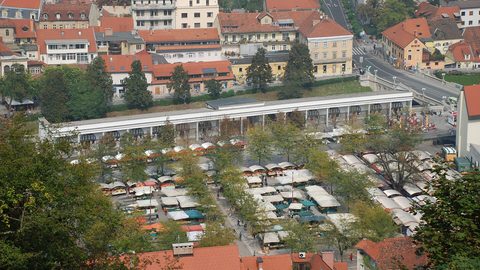 How Much Does Slovenia Cost in Real Terms
A realistic look at what Slovenia costs, from Ljubljana city breaks to alpine road trips, and where the money actually goes.
How Much Does Slovenia Cost in Real Terms
A realistic look at what Slovenia costs, from Ljubljana city breaks to alpine road trips, and where the money actually goes.
-
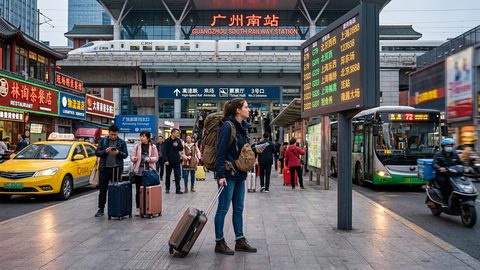 A Ground-Level Logistics Guide to Independent Travel in China
First-time independent travel in China: what you need to know about visas, rail booking, eSIMs, mobile payments, and power adapters.
A Ground-Level Logistics Guide to Independent Travel in China
First-time independent travel in China: what you need to know about visas, rail booking, eSIMs, mobile payments, and power adapters.
-
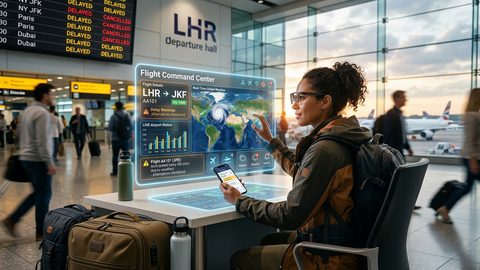 How Solo Travelers Stay Ahead of Flight Delays and Cancellations
How solo travelers can track inbound aircraft, claim rebooking rights, and adjust ground transport when flights go wrong — step by step.
How Solo Travelers Stay Ahead of Flight Delays and Cancellations
How solo travelers can track inbound aircraft, claim rebooking rights, and adjust ground transport when flights go wrong — step by step.
-
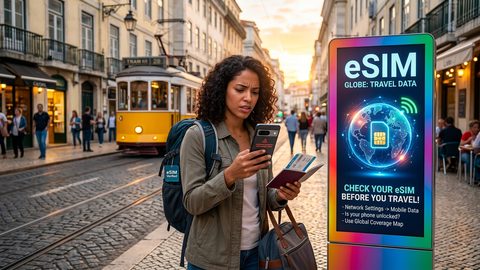 Why Your eSIM Might Not Work Abroad and How to Check Before You Go
Buying an eSIM doesn't guarantee signal abroad. Learn why coverage fails by location and how to verify reach before you commit to a plan.
Why Your eSIM Might Not Work Abroad and How to Check Before You Go
Buying an eSIM doesn't guarantee signal abroad. Learn why coverage fails by location and how to verify reach before you commit to a plan.