Who Needs a Visa to Enter Portugal
Portugal is in the Schengen Area. Most tourists get 90 days visa-free, but remote workers and long-stayers have specific visa paths to follow.
Who Needs a Visa to Enter Portugal
EU, EEA and Swiss citizens enter Portugal freely with a valid passport or national ID card. For everyone else, the answer depends on your travel document and how long you plan to stay. The core fact: Portugal follows Schengen rules. Non EU passport holders from a visa exempt country can stay up to 90 days within any 180 day period. Citizens of countries not on the exempt list must apply for a Schengen visa before travelling. Portugal does not offer visa on arrival or any e visa system. Applications go through Portuguese consulates or VFS Global centres in your home country. Processing takes 15 to 30 calendar days in most cases. Apply at least six weeks before departure.
Portugal Schengen Visa: Who Needs it and How to Apply
If your travel document is from India, China, South Africa, Russia or any country listed in EU Regulation 2018/1806 Annex I, you need a Schengen visa for Portugal before you travel. The visa allows a maximum stay of 90 days out of 180 across all Schengen states. Apply at the Portuguese consulate with jurisdiction over your residence, or through a VFS Global centre where Portugal has outsourced processing.
Documents You Cannot Skip
The non negotiable list: a passport valid for at least three months beyond your planned departure from the Schengen area and issued less than 10 years ago. You also need a completed application form, two recent passport photos, proof of accommodation for your entire stay, round trip flight booking, travel insurance covering medical expenses up to EUR 30,000, and proof of sufficient means of subsistence. AIMA, the Portuguese agency now handling immigration, sets the minimum subsistence amount, which varies by length of stay. Check the current figure on the AIMA website before you apply.
Where to Apply and How Long It Takes
Submit your application at the consulate or VFS centre no earlier than six months before travel and no later than 15 working days before. Standard processing takes 15 calendar days. Expect longer during peak season April to September. Pay the visa fee, about EUR 80 for adults, reduced for children. You must attend a biometric appointment in person. If the consulate requires additional documents, processing can stretch to 45 days. Plan for that delay.
Border Checks on Arrival
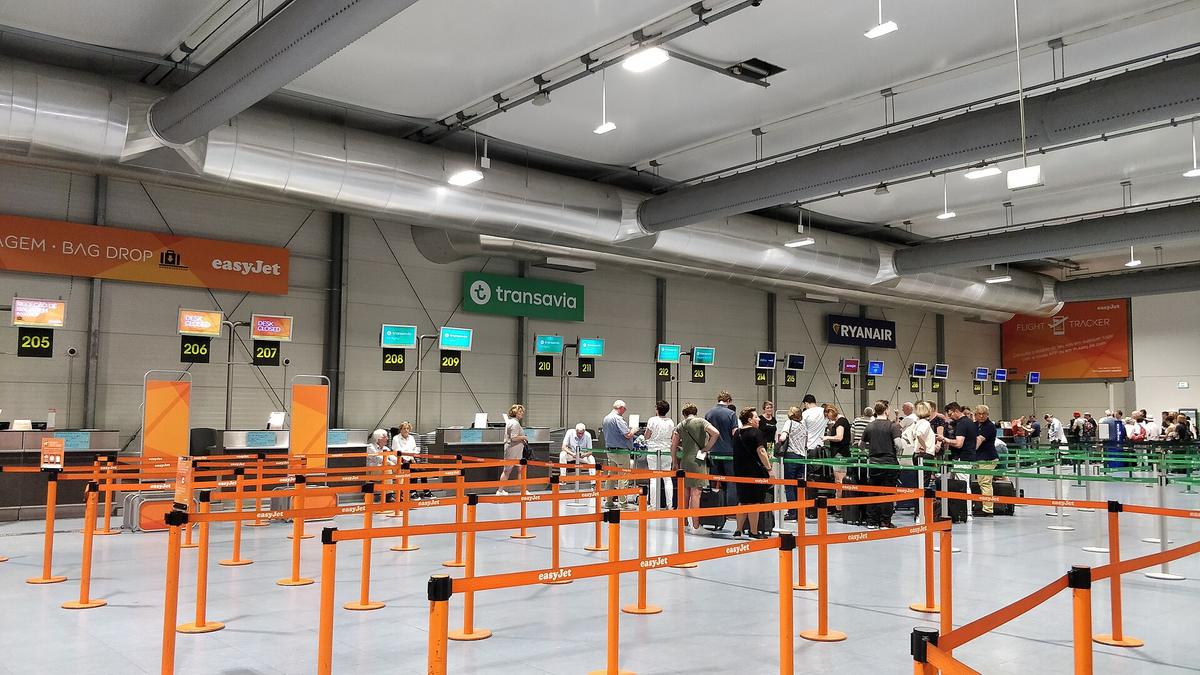
At Portuguese border control, all non EU citizens are screened against the Schengen Information System (SIS). An officer may request proof of accommodation, onward or return travel, insurance and funds. Have printed copies ready. Travel health insurance is not optional; the requirement is medical coverage of at least EUR 30,000. Without it, you can be denied entry.
.jpg)
Portugal Entry Rules for Visa Free Nationals
Citizens of the United Kingdom, United States, Canada, Australia, New Zealand, Japan, South Korea, Brazil, Argentina, Chile, Uruguay, Mexico, Israel, United Arab Emirates, Singapore, Malaysia and other Annex II countries enter Portugal without a visa for short stays. The limit is 90 days within any 180 day rolling window. The Schengen area counts as one territory, so days spent in France or Spain count against your 90.
Passport Validity Rules
Your passport must be valid for at least three months beyond your intended departure date from the Schengen area. It must also have been issued less than 10 years before your entry date. A passport issued 11 years ago is invalid for entry even if it has not expired. Border officers check both dates.
Proof of Onward Travel and Funds
By law, border officials may request proof of onward or return travel for non EU citizens. Have a flight out of Schengen booked. They may also ask for proof of accommodation and sufficient means of subsistence. The threshold is set by AIMA and varies per day of stay. A hotel booking confirmation and a credit card statement usually satisfy the check. Travel insurance covering medical evacuation and EUR 30,000 of medical expenses is strongly recommended, though not always checked at the land border. Airlines often require it before boarding.
ETIAS Is Coming
The European Travel Information and Authorisation System (ETIAS) will introduce a pre travel authorisation for visa free visitors. Once live, travellers from Annex II countries will need to complete an online application, pay a fee set by the European Commission, and receive approval before boarding a flight. ETIAS is not a visa. It is a security screening waiver. The launch has been repeatedly delayed. As of 2026, no firm go live date has been set. Check the official ETIAS website before booking. Until ETIAS launches, current rules apply: visa free entry, no pre authorisation needed.
| Visa Type | Who Needs It | Max Stay | Where to Apply | Processing Time |
|---|---|---|---|---|
| Schengen short stay | Annex I nationals | 90 days in 180 | Consulate or VFS Global | 15 30 days |
| Visa free entry | Annex II nationals | 90 days in 180 | No application needed | N/A |
| D7 passive income visa | Non EU with stable passive income | 1 year, renewable | Portuguese consulate | 2 4 months |
| Digital nomad visa | Remote workers earning above threshold | 1 year, renewable | Portuguese consulate or AIMA | 2 4 months |
| Golden visa | Investors | 1 year, renewable | AIMA | 6 12 months |
Portugal Digital uPhone Visa: Requirements and Process
Portugal offers a specific residence visa for remote workers, formally the D8 visa. It allows non EU citizens to live and work in Portugal for one year, renewable. Applicants must prove they work remotely for a company outside Portugal or run their own business registered abroad. The income requirement is set at four times the Portuguese minimum wage. That figure is updated annually by the government; verify the current amount on the AIMA website before applying.
Documents and Timeline
You need a valid passport, criminal record certificate from your country of residence, proof of health insurance covering Portugal, tax returns or payslips proving income, a work contract or client agreement, and proof of accommodation in Portugal. Submit the application at the Portuguese consulate in your home country. Processing takes two to four months. You enter Portugal on a provisional visa, then register with AIMA to receive the residence card. The card is valid for one year, renewable for two more years. After five years of legal residence, you can apply for permanent residency or citizenship.
Failure Case
The most common rejection reason is insufficient or inconsistently documented income. Your payslips and contract must clearly show the monthly amount. Freelancers should provide invoices and bank statements covering six months. If your income is borderline, wait until you cross the threshold. The visa does not allow you to work for Portuguese employers. Any local income, including freelance work for a Portuguese company, breaks the terms.
Portugal Passport Validity Rules and Common Border Problems
Two passport rules trip up travellers at Portuguese border control. First, your passport must be valid for at least three months beyond your planned departure date from the Schengen area. If you plan to leave on October 1, your passport must expire no earlier than January 1. Second, the passport must have been issued less than 10 years before your date of entry. Even a passport that is still valid but was issued 11 years ago is not accepted. Check the issue date printed on your passport. If it is close to the 10 year limit, renew before you book flights.
What Happens When Rules Are Broken
Non EU citizens who arrive with a passport that fails either test may be denied boarding by the airline before they reach Portugal. The airline is liable for repatriation costs if you are refused entry. If you reach Portuguese border control with an invalid passport, you will be held for return on the next available flight. There is no waiver for a few days or weeks of over validity. The rule is strict. Budget for a passport renewal if yours is near the 10 year mark.
Longer Stays: the D7 Passive Income Visa
If you have a stable passive income from pensions, rentals or investments, the D7 visa is an alternative to the digital uPhone visa. It grants one year of residence, renewable, and leads to permanent residency after five years. The income requirement is lower than the digital uPhone visa, set at the Portuguese minimum wage level, plus proof of accommodation. Applications go through the Portuguese consulate in your home country. Processing takes two to four months. The D7 suits retirees and investors who do not need to work. You must spend at least 16 days in Portugal in the first year, then 183 days in subsequent years to maintain the visa.
What the Portugal Visa Rules Mean for Your Trip
These visa rules suit travellers who plan in advance and respect the 90 day limit. The Schengen short stay system works well for slow travellers spending 10 days or more in Portugal, moving between Lisbon, Porto and the Algarve by train. It does not suit anyone who needs to stay longer than 90 days without a residence visa, or anyone who arrives at the border expecting a visa on arrival. That option does not exist. The D7 visa works for retirees and passive income earners. The digital uPhone visa works for remote workers earning above the threshold. Neither option suits travellers who want a quick decision or who lack clear income documentation.
The single thing that most often goes wrong: travellers assume their passport is valid because it has not expired, without checking the issue date. A passport issued 11 years ago is a hard no at the gate. Check both dates before you book anything.
Common Questions
Do I need a visa to visit Portugal as a US citizen?
No. US citizens enter Portugal visa free for up to 90 days within any 180 day period. Your passport must be valid at least three months beyond your departure date and issued less than 10 years ago.
How long does a Portugal Schengen visa take to process?
Standard processing is 15 calendar days. During peak season April to September, or if additional documents are requested, it can take up to 45 days. Apply at least six weeks before travel.
Can I work remotely in Portugal without a visa?
No. Working remotely while physically present on a tourist visa or visa free entry is not legally permitted. You need the digital nomad visa (D8) for legal remote work from Portugal.
What is the minimum income for the Portugal digital nomad visa?
The minimum is set at four times the Portuguese minimum wage. This figure is updated annually. Check the AIMA website for the current amount.
Does Portugal offer visa on arrival?
No. Portugal does not issue any visa on arrival. All visas must be obtained from a Portuguese consulate or VFS Global centre before travel.
What documents do I need at Portuguese border control?
Non EU citizens need a valid passport, proof of onward or return travel, proof of accommodation, proof of sufficient funds, and travel insurance covering medical costs up to EUR 30,000. Have printed copies ready.
Can I extend my 90 day stay in Portugal?
No. The 90 day Schengen limit cannot be extended for tourism. To stay longer, you must apply for a residence visa such as the D7 or digital nomad visa before you travel.
Read next
-

 Staying connected in Portugal with eSIM, local SIM or roaming
Compare eSIM, local SIM from MEO or Vodafone, and roaming for Portugal. Avoid airport kiosk markups and understand rural coverage gaps.
Staying connected in Portugal with eSIM, local SIM or roaming
Compare eSIM, local SIM from MEO or Vodafone, and roaming for Portugal. Avoid airport kiosk markups and understand rural coverage gaps.
-
 Best Time to Visit Portugal, Season by Season Reality
Portugal's best months are May, June, September, and October. July and August bring crowds and coastal gridlock, and the Atlantic is never truly warm.
Best Time to Visit Portugal, Season by Season Reality
Portugal's best months are May, June, September, and October. July and August bring crowds and coastal gridlock, and the Atlantic is never truly warm.
-
 Getting Around Portugal, Trains, Buses and the Interior Gap
Portugal's rail network is a coastal spine with thin branches. Express trains need seat reservations, the interior needs a bus or car, and Bolt is cheaper
Getting Around Portugal, Trains, Buses and the Interior Gap
Portugal's rail network is a coastal spine with thin branches. Express trains need seat reservations, the interior needs a bus or car, and Bolt is cheaper
-
 Money in Portugal, Euros, Cards and Where Cash Still Rules
Portugal uses the euro. Cards work in most urban places, but small tascas, rural cafés, and public toilets still demand coins.
Money in Portugal, Euros, Cards and Where Cash Still Rules
Portugal uses the euro. Cards work in most urban places, but small tascas, rural cafés, and public toilets still demand coins.
-
 Safety in Portugal, What the Warnings Mean and What They Miss
Portugal is safe, but the real risks are slippery calçada pavements, Atlantic undertows, and pickpockets on Tram 28 and at Cais da Ribeira.
Safety in Portugal, What the Warnings Mean and What They Miss
Portugal is safe, but the real risks are slippery calçada pavements, Atlantic undertows, and pickpockets on Tram 28 and at Cais da Ribeira.
-
 What a trip to Portugal actually costs and how the money flows
Understand Portugal's cost structure—seasonal price swings, the north-south gradient, dining traps, and toll-road costs—so you can budget without surprises.
What a trip to Portugal actually costs and how the money flows
Understand Portugal's cost structure—seasonal price swings, the north-south gradient, dining traps, and toll-road costs—so you can budget without surprises.
-
 A Ground-Level Logistics Guide to Independent Travel in China
First-time independent travel in China: what you need to know about visas, rail booking, eSIMs, mobile payments, and power adapters.
A Ground-Level Logistics Guide to Independent Travel in China
First-time independent travel in China: what you need to know about visas, rail booking, eSIMs, mobile payments, and power adapters.
-
 How Solo Travelers Stay Ahead of Flight Delays and Cancellations
How solo travelers can track inbound aircraft, claim rebooking rights, and adjust ground transport when flights go wrong — step by step.
How Solo Travelers Stay Ahead of Flight Delays and Cancellations
How solo travelers can track inbound aircraft, claim rebooking rights, and adjust ground transport when flights go wrong — step by step.
-
 Why Your eSIM Might Not Work Abroad and How to Check Before You Go
Buying an eSIM doesn't guarantee signal abroad. Learn why coverage fails by location and how to verify reach before you commit to a plan.
Why Your eSIM Might Not Work Abroad and How to Check Before You Go
Buying an eSIM doesn't guarantee signal abroad. Learn why coverage fails by location and how to verify reach before you commit to a plan.