When to Go to the Philippines, by Season and Region
The Philippines has two monsoons, a typhoon belt, and a Holy Week that shuts the country down.
The bangka driver cuts the engine a kilometer off Panglao, and the silence is interrupted only by the water lapping against the outriggers. This is the moment the brochures sell. Getting here meant a delayed flight from Manila, a 45 minute taxi ride across Cebu, a two hour ferry that stretched to three while the crew loaded sacks of cement, and a cash only terminal fee at Tagbilaran port. The Philippines best time to visit by season is the single decision that determines whether that scene happens in clear water or under a squall.
Philippines Best Time to Visit by Season
The Philippines has two dominant weather systems: the northeast monsoon called Amihan and the southwest monsoon called Habagat. Amihan brings cool, dry air from Siberia across the eastern seaboard of Luzon, the Visayas, and northeastern Mindanao from December into April. Habagat carries warm, moist air from the southwest across the western side of the archipelago from June into November. December to May is the dry season for most of the country, with February into April as the driest months. June to November is the wet season, with July into September seeing peak rainfall.
This is not a month by month weather chart. It is a briefing on how these two monsoons shape what is possible where, how they affect transport, prices, and access, and when you should book versus when you should stay home.
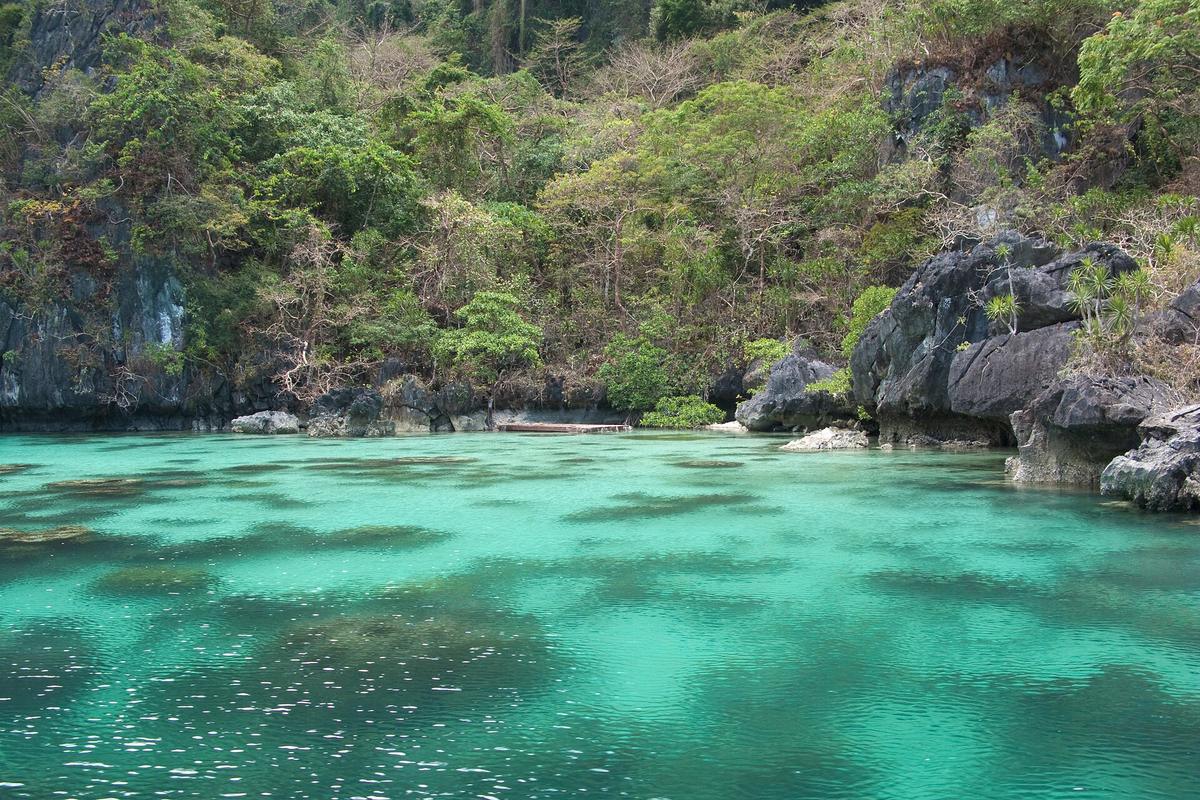

Philippines Amihan Dry Season Months: December Through April
Book Early For The Peak Season
The Amihan dry season months run from December into April. This is the safest window for island hopping, with calm seas, clear skies, and predictable ferry schedules across Luzon, the Visayas, and Palawan. It is also the busiest and most expensive period. Christmas and New Year create a domestic travel surge from mid December into early January. Holy Week, which falls in March or April depending on the liturgical calendar, gridlocks the entire country. Ferries and buses sell out. Accommodation prices spike. Some businesses close from Maundy Thursday through Easter Sunday.
Book domestic flights at least three months ahead for December and Holy Week. If you arrive without accommodation booked for Holy Week in Boracay, El Nido, or Siargao, you will pay triple rates or sleep on a bench at the port. The payoff is reliable conditions for scuba diving at Tubbataha Reefs, canyoneering at Kawasan Falls in Cebu, and island hopping in Coron. The trade off is sharing every viewpoint with the rest of the Philippines.
Philippines Habagat Monsoon Season: What Changes
When The Wet Season Improves Certain Spots
The Philippines Habagat monsoon season runs June into November. Heavy rainfall hits western Luzon, western Visayas, and Palawan. The southwest monsoon keeps seas rough on west facing coasts. Ferry cancellations become routine. Domestic flight delays and cancellations spike, especially with Cebu Pacific and AirAsia. Never book a tight international connection on the same day as a domestic flight during these months.
Some destinations actually improve during Habagat. Kitesurfers chase the monsoon winds on west facing coasts from May into October. The surf season on east facing coasts like Siargao and Baler peaks from August into November, when the northeast monsoon swell arrives early. Siargao receives consistent swell from October into March during the Amihan, but the best combination of swell size and light wind often comes in August and September. If you are chasing waves, Habagat is your season. If you are chasing calm lagoons, stay away.
| Region | Best Months | What Changes |
|---|---|---|
| Luzon (Manila, Banaue, Bicol) | December to May | Dry season November to May; eastern seaboard gets year round rainfall from northeast monsoon; Bicol sits in the typhoon corridor |
| Visayas (Cebu, Bohol, Dumaguete) | December to May | Eastern Visayas (Samar, Leyte) gets heavy rain November to February from Amihan; central Visayas relatively sheltered |
| Palawan (El Nido, Coron, Puerto Princesa) | December to May | Dry season November to May; less typhoon exposure than eastern Philippines |
| Siargao | March to September | Dry season March to September; wet season October to February; northeast monsoon brings rain and swell |
| Baguio and Cordillera | November to April | Highlands above 1,000 m; average temperature 15 to 26 C; dry season November to April; peak rainfall July to September |
| Mindanao | March to May | Less pronounced dry and wet seasons; generally wetter year round; driest March to May |
Philippines Typhoon Belt Regions: Where the Risk is Real
Check Forecasts And Build In Buffer Days
Typhoons are possible year round in the Philippines but most frequent June into November, with peak activity July into October. An average of 20 tropical cyclones enter the Philippine Area of Responsibility annually, and approximately 8 to 9 make landfall. PAGASA, the Philippine Atmospheric, Geophysical and Astronomical Services Administration, tracks and issues warnings.
The Philippines typhoon belt regions are Luzon and Eastern Visayas. Bicol, with Mayon Volcano, sits in the typhoon corridor and gets hit repeatedly. Samar and Leyte receive heavy rainfall from the northeast monsoon November into February in addition to typhoon exposure. Palawan and the central Visayas, including Bohol and Dumaguete, are relatively sheltered. Boracay also sees less direct typhoon impact, though the southwest monsoon brings rain and rough seas June into October.
If you travel to Luzon or Eastern Visayas between July and October, budget for at least two extra days of transit buffer. Check PAGASA forecasts daily. Never book a ferry during a typhoon warning. The shipping authority cancels vessels, but travellers sometimes try to push through. Do not. Maritime accidents occur periodically, and weather related cancellations are routine for a reason.
Philippines Holy Week Travel Surge: the Week to Avoid
Book Before January Or Skip It
The Philippines Holy Week travel surge is the single most disruptive event on the calendar. The entire country moves. Families return to provinces. Ferries and buses sell out days in advance. Roads gridlock, especially on the Nautical Highway corridors linking Luzon to the Visayas and Mindanao. Accommodation in popular destinations like Boracay, El Nido, and Baguio books solid three to four months ahead. Prices double or triple.
Holy Week falls in March or April. Check the liturgical calendar for the exact dates. If you want to visit the Philippines during this window, book everything before January. If you have not booked by February, pick a different week. The trade off is not worth the stress.
Beyond Holy Week, avoid Boracay during Chinese New Year and Labour Day week, when massive domestic crowds pack White Beach. Christmas and New Year also strain capacity, though the chaos is more spread across destinations than the concentrated Holy Week gridlock.


The Human Calendar: Christmas, Holy Week, and Siargao Swell
Plan Around The Crowds And The Swell
December into April is the safest window for weather and the worst window for crowds and prices. Christmas and New Year create a domestic travel surge from mid December into early January. Transport books solid. Many businesses operate reduced hours. If you arrive in Manila on December 28 without a domestic flight booked onward, you may wait three days for a seat to Cebu.
Holy Week in March or April is the peak of the peak. The entire country moves. Book everything before January or skip the week entirely.
Siargao surf season runs August into November, overlapping with the typhoon belt. The northeast monsoon brings consistent swell to the eastern coast from October into March, but the best combination of swell size and offshore wind hits August into November. This means surfing through the wet season. Pack rain gear. Expect afternoon thunderstorms. The waves are worth it.
Shoulder Months: May and November
Trade Price For Flexibility
May marks the transition from dry to wet season. Tourist volumes drop. Afternoon thunderstorms become frequent. Humidity rises. Sea conditions become transitional. You get lower accommodation demand and fewer visitors in exchange for higher probability of weather disruption.
November transitions from wet to dry. Typhoon risk is still present. Tourist volumes begin increasing. Landscapes are green from the wet season rainfall. Some roads in rural areas may still be affected by wet season damage. The trade off is the same as May: lower prices versus higher risk of a cancelled ferry or a flooded access road.
Both months suit budget conscious travellers who can pivot. If your itinerary depends on four islands in 14 days, stick to December into April. If you have 21 days and the flexibility to linger when a ferry cancels, May and November reward you with emptier beaches and cheaper rooms.
What This Seasonality Means for Your Itinerary
Pick One Region For 14 Days
The Philippines demands a minimum of 14 days. Anything less and you burn half the trip in domestic transit, seeing only a fraction of one region. The common mistake is trying to cram Luzon, Palawan, and the Visayas into a 10 day trip. Travellers lose two to three full days in transit and check ins, leaving themselves exhausted and barely scratching each region.
If you have 14 days and want reliable weather, pick one region. A Luzon itinerary covering Manila, Banaue Rice Terraces, and Bicol works December into April. A Visayas itinerary covering Cebu, Bohol, and Dumaguete works the same window. If you have 21 days, you can connect two regions via the Nautical Highway system, which has three main corridors: the Western Nautical Highway linking Luzon, Mindoro, Panay, Negros, and Mindanao; the Central Nautical Highway linking Luzon, Masbate, Cebu, Bohol, and Mindanao; and the Eastern Nautical Highway linking Luzon, Samar, Leyte, and Mindanao.
Know What You Are Signing Up For
The Philippines delivers raw, high reward tropical beauty but demands logistical grit. Island hopping looks effortless on Instagram but means sweaty ferry terminals, unpredictable delays, and patchy infrastructure. First timers are often stunned by the sheer time it takes to get anywhere and the jarring contrast between paradise beaches and grinding provincial poverty.
This destination suits intrepid backpackers who do not mind long transits, dedicated scuba divers and snorkellers chasing biodiversity, island hopping obsessives willing to trade comfort for empty sand, and kitesurfers chasing monsoon winds. It is not for luxury resort minimalists who want a single base, travellers who need reliable high speed Wi Fi for work, anyone on a tight seven to ten day schedule who wants to see multiple regions, or people frustrated by loose schedules. Filipino time delays are real. The single thing that most often goes wrong is underestimating transit time. A two hour ferry is never two hours. A domestic flight is never on time. Plan for it, and the Philippines rewards you anyway.
Common Questions
What is the cheapest month to visit the Philippines?
May and November are the shoulder months. Accommodation demand drops, prices fall, and fewer visitors crowd the sights. May brings afternoon thunderstorms and rising humidity as the dry season transitions to wet. November still carries typhoon risk, but landscapes are green from the wet season rains. Both months offer lower rates versus December into April, but you accept a higher probability of weather disruption.
Can I island hop during typhoon season?
Yes, but only in sheltered regions. Palawan and the central Visayas, including Bohol and Dumaguete, receive less typhoon exposure than Luzon and Eastern Visayas. Even in these areas, the southwest monsoon brings rough seas on west facing coasts June into October. Ferry schedules become unreliable. Budget extra transit days and carry a deep cash buffer of at least PHP 10,000, since ATMs on small islands often go offline during storms.
When is the surf season in Siargao?
The northeast monsoon brings consistent swell from September into April, with peak swell from August into November. The dry season runs March to September, meaning the best wave conditions in August and September overlap with the start of the wet season. Expect rain and afternoon thunderstorms. The surf is worth the wet clothes.
What happens to ferry schedules during Habagat?
Ferry cancellations become routine. The Maritime Industry Authority, MARINA, regulates safety, but weather related cancellations are common during the southwest monsoon. Never assume a two hour ferry means a two hour journey. Boarding, unloading, and weather holds routinely turn it into a five hour ordeal. Confirm schedules at the port the day before, not from an online listing.
Is Mindanao safe to visit?
Multiple governments including the United States Department of State, the United Kingdom Foreign Commonwealth and Development Office, Australia Department of Foreign Affairs and Trade, and Canada Global Affairs Canada advise against all travel or all but essential travel to specific areas of Mindanao. The restricted zones include the Sulu Archipelago, Marawi City, and parts of Cotabato. These advisories are destination specific, not blanket bans. Davao City and Camiguin Island are generally considered safe, but check the latest advisories from your government before booking.
Read next
-
 Staying Connected in the Philippines with eSIM, Local SIM or Pocket Wi-Fi
Choosing between a Philippines eSIM, local Globe or Smart SIM, or pocket Wi-Fi depends on which islands you visit and how much offline backup you plan for
Staying Connected in the Philippines with eSIM, Local SIM or Pocket Wi-Fi
Choosing between a Philippines eSIM, local Globe or Smart SIM, or pocket Wi-Fi depends on which islands you visit and how much offline backup you plan for
-
 Getting Around the Philippines, Ferries, Flights, and Why the Map Lies
Domestic flights, RORO ferries, fast cats, bangkas, jeepneys, and tricycles—here is how Philippine transport actually works, and why every journey takes
Getting Around the Philippines, Ferries, Flights, and Why the Map Lies
Domestic flights, RORO ferries, fast cats, bangkas, jeepneys, and tricycles—here is how Philippine transport actually works, and why every journey takes
-
 Philippines Visa Requirements, Who Gets Visa-Free Entry and Who Needs to Apply
Most nationalities get 30 days visa-free in the Philippines, with extensions possible up to 36 months.
Philippines Visa Requirements, Who Gets Visa-Free Entry and Who Needs to Apply
Most nationalities get 30 days visa-free in the Philippines, with extensions possible up to 36 months.
-
 Money in the Philippines, Cash Rules, ATM Reliability, and What Cards Actually Work
The Philippines runs on cash, especially on small islands where ATMs are scarce and often offline.
Money in the Philippines, Cash Rules, ATM Reliability, and What Cards Actually Work
The Philippines runs on cash, especially on small islands where ATMs are scarce and often offline.
-
 Safety in the Philippines, Reading the Advice Without Being Misled by It
Government advisories flag specific Philippine regions, but most tourist destinations are low-risk.
Safety in the Philippines, Reading the Advice Without Being Misled by It
Government advisories flag specific Philippine regions, but most tourist destinations are low-risk.
-
 What a Philippines Trip Actually Costs and How to Shape Your Budget
Philippines trip costs are shaped less by accommodation grade and more by the logistical price of moving between islands, where transit eats budget faster
What a Philippines Trip Actually Costs and How to Shape Your Budget
Philippines trip costs are shaped less by accommodation grade and more by the logistical price of moving between islands, where transit eats budget faster
-
 A Ground-Level Logistics Guide to Independent Travel in China
First-time independent travel in China: what you need to know about visas, rail booking, eSIMs, mobile payments, and power adapters.
A Ground-Level Logistics Guide to Independent Travel in China
First-time independent travel in China: what you need to know about visas, rail booking, eSIMs, mobile payments, and power adapters.
-
 How Solo Travelers Stay Ahead of Flight Delays and Cancellations
How solo travelers can track inbound aircraft, claim rebooking rights, and adjust ground transport when flights go wrong — step by step.
How Solo Travelers Stay Ahead of Flight Delays and Cancellations
How solo travelers can track inbound aircraft, claim rebooking rights, and adjust ground transport when flights go wrong — step by step.
-
 Why Your eSIM Might Not Work Abroad and How to Check Before You Go
Buying an eSIM doesn't guarantee signal abroad. Learn why coverage fails by location and how to verify reach before you commit to a plan.
Why Your eSIM Might Not Work Abroad and How to Check Before You Go
Buying an eSIM doesn't guarantee signal abroad. Learn why coverage fails by location and how to verify reach before you commit to a plan.