Managing Pakistan Cash Travel Money Without Getting Stranded
Pakistan is a cash economy. ATMs are scarce north of Gilgit, card machines fail with power cuts, and no transport network accepts cards.
Paying for Things in Pakistan Without Getting Stranded
The most common mistake travellers make about money in Pakistan is assuming they can rely on ATMs and credit cards the way they do in Turkey or Thailand. They cannot. Pakistan runs on cash. The further you get from the capital, the more true that becomes. The question is not whether you need cash. It is how much, what denominations, and what happens when the machine runs out of rupees or the power cuts kill the terminal.
Here is the answer: how much cash to carry, where cards and ATMs stop working, and what to do about the dual pricing system that makes foreigners pay 10 to 20 times the local rate at major monuments. Treat your cash needs as two separate problems. One for the cities and Punjab. Another, more demanding one for the mountain leg north of Gilgit.
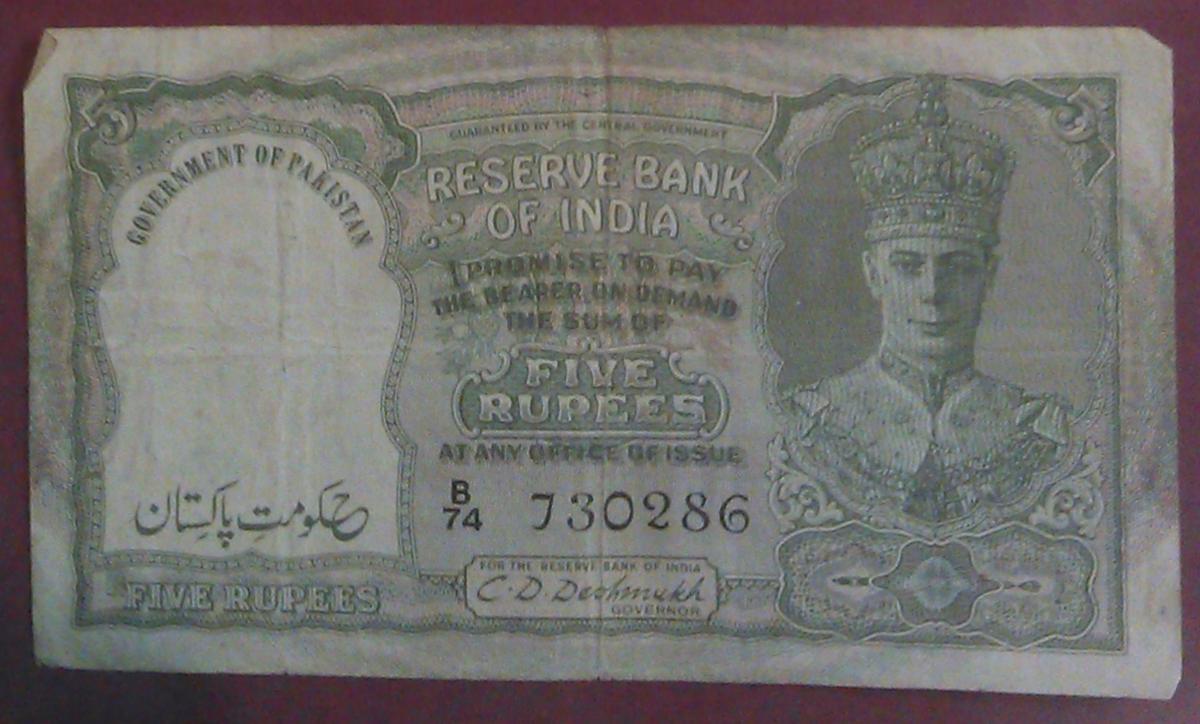

Pakistani Rupee ATM Availability North
ATMs run by the 1LINK and MNET networks are common in Karachi, Lahore, the capital, and the larger towns of Punjab and Sindh. Gilgit has a handful of machines that reliably accept Visa and Mastercard, though they occasionally run out of cash during the peak May to October trekking season. North of Gilgit, availability drops sharply. In Hunza Valley, there is exactly one ATM in Karimabad, and it is known to be empty for days at a time. Skardu has a few machines, but they can reject foreign cards without explanation. Beyond those points, at places like Fairy Meadows, Passu, or the start of the K2 Base Camp trek from Askole, there are no ATMs at all.
The failure case: your card is swallowed, the machine displays a network error, or the cash drawer is empty and the next reload is three days away. In that situation, there is no bank branch to complain to and no Western Union within hours. The solution is to withdraw all the cash you need for the mountain leg in the capital or Gilgit before heading north. This is not a suggestion. It is the single most important financial rule for travelling in Pakistan.
Pakistan Card Acceptance Mountain Areas
Card machines exist in theory in the mountain areas. In practice, they fail with power cuts, which happen multiple times daily in places like Skardu and Hunza outside the main tourist season. The few hotels in Hunza and Skardu that advertise card acceptance usually have a terminal that works intermittently. Small guesthouses in Fairy Meadows or the Kalash Valleys do not take cards at all. Roadside businesses, including the shared Toyota Hiace vans and hired private 4x4s that are the default transport in the north, accept only Pakistani rupee notes in small denominations.
Contactless payment is essentially nonexistent outside upscale urban establishments in Karachi and Lahore. If you hand a shopkeeper in the mountains a Rs 5000 note for a Rs 200 purchase, they will likely not have change. Carry a mix of denominations: plenty of Rs 50, Rs 100, and Rs 500 notes for daily purchases, and a few Rs 1000 notes for larger payments like hotel bills or long-distance transport. Keep the Rs 5000 notes for emergencies or planned large expenses in Gilgit or the capital before you leave.
Pakistan Foreigner Dual Pricing Monuments
At every major government-managed landmark, foreigners pay significantly more than locals. At the Lahore Fort and Badshahi Mosque, the foreigner ticket is 10 to 20 times the local rate. The same applies at Shalimar Gardens, Rohtas Fort, Taxila ruins, and Shah Jahan Mosque in Thatta. The price difference is not hidden, but it can still sting if you have not budgeted for it. Carry a photocopy of your passport at all times. Ticket counters at these sites will ask to see it, and some require the physical passport to confirm your nationality.
The dual pricing system is not negotiable and applies at the cash-only ticket windows. No card machine processes these monument entry fees, even in cities. Budget roughly PKR 500 to PKR 2000 per major monument for the foreigner rate, depending on the site. Mohenjo-daro and Derawar Fort, both remote, charge the same inflated rate and also accept only cash. If you arrive without small bills, you will either have to overpay or walk away.
.jpg)
Carrying Cash Pakistan Safety
Carrying large amounts of cash in any country raises safety questions. In Pakistan, the actual risk of theft is low compared to the risk of being stranded without money. Hospitality is intense and generosity can feel uncomfortable, but opportunist theft from tourists is uncommon in the mountain areas and Punjab. In Karachi, where armed neighbourhood checkpoints and elite guarded compounds are normal, keep your cash stash in a money belt under clothing or a locked bag in your hotel safe. Do not flash a wad of notes when paying for a Rs 100 cup of Kashmiri chai at a roadside stall.
The undeclared foreign currency import limit is USD 10,000. Amounts above that, including equivalent in euros or pounds, must be declared on arrival. You can exchange US dollars, euros, British pounds, UAE dirhams, and Saudi riyals at authorised money changers in cities. Outside urban centres, exchange options are scarce. An informal black market exists and offers rates that diverge from the official rate, but using it carries its own risks. The safer approach is to bring all the rupees you need for the mountains from the capital or Gilgit, where exchange rates and availability are best.
Budgeting for Cash Across the Four Regions
Pakistan travels as four distinct countries stitched by one visa. The cash behaviour is different in each. In the Indus plains around Lahore and Multan, ATMs work during business hours and mid-range hotels take cards. In the Hindu Kush and Karakoram Highway corridor, from Gilgit up to Hunza and over to Skardu, cash is king and ATMs are scarce. In the Baloch desert, including Gwadar and the Makran Coast, infrastructure is sparse and you should carry enough cash for the entire stay. In the Karakoram Highway corridor, the rule is simple: treat the capital and Gilgit as your last reliable cash points.
The peak season for the mountains runs May to October. During this window, demand for cash spikes. ATMs in Gilgit and Skardu run out of currency more frequently. If you arrive in August, the monsoon makes travel in southern Punjab and Sindh miserable, and the same humidity can damage notes carried loosely in a pocket. Store your cash in a dry, secure place.
Transport Costs And Cash-Only Rules
No transport network in Pakistan accepts cards. Long-distance buses like Daewoo and Faisal Movers, shared Toyota Hiace vans, private 4x4s with drivers, and rickshaws all require Pakistani rupee notes. Small denominations are essential because drivers rarely have change for a Rs 5000 note. From the capital to Hunza, a journey that on a map is 600 km takes 14 to 18 hours with checkpoints and landslides. That trip costs roughly PKR 3000 to PKR 5000 per person in shared transport. A private 4x4 with driver costs more, depending on negotiation. Paying that in large notes is fine, but having smaller bills for food stops along the way saves arguments.
What To Do If Your Card Is Declined
A card declined at an ATM in Pakistan is a common event. The terminal may be out of service, the network may be down, or the machine may simply reject foreign cards after a certain hour. Do not assume the problem is your bank. Try a different ATM on a different network. The 1LINK network is the most widespread. If no machine in town works, ask at a mid-range hotel. Some hotels will exchange cash at a rate for their guests, though this is not a bank and rates will be worse than a money changer. For non-residents, export of Pakistani rupees is prohibited, and import is limited to Rs 10,000. Plan your cash exit strategy before you cross back into the airport.
Common Questions
How much cash should I carry for a two week trip to Pakistan?
For the mountain leg, budget PKR 3000 to PKR 5000 per person per day for food, local transport, and accommodation in guesthouses. For cities like Lahore and the capital, PKR 2000 to PKR 4000 per day covers eating at mid-range restaurants and local transport. This assumes you pay for hotels with a card where possible. Carry enough cash for the entire mountain leg before leaving the capital or Gilgit.
Can I use my foreign debit card at Pakistani ATMs?
Most ATMs that display Visa or Mastercard logos will accept foreign cards. The ATM operator charges a flat per-withdrawal fee. Daily and per-transaction limits are set by your bank and the ATM network. Dynamic currency conversion may be offered, which includes a markup over the card network rate, so always choose to be charged in Pakistani rupees.
What happens if I run out of cash north of Gilgit?
There are no functioning ATMs beyond Hunza and Skardu. Your only option is to find another traveller who can lend you rupees and repay them via a digital transfer, or to turn back to Gilgit. Hotels and shops will not accept cards or foreign currency. Do not let this happen.
Is the dual pricing at monuments the same everywhere?
Yes. Every government-managed site charges foreigners 10 to 20 times the local rate. This includes Lahore Fort, Badshahi Mosque, Shalimar Gardens, Rohtas Fort, Taxila ruins, Mohenjo-daro, and Shah Jahan Mosque. The rate applies at the cash-only ticket window. Passport photocopy required.
Should I bring US dollars or Pakistani rupees?
Bring a mix. US dollars or euros can be exchanged at authorised money changers in cities and at the airport, where rates are fair. But for daily spending, you need Pakistani rupees in small denominations. Exchange your foreign currency at the airport upon arrival, then withdraw additional rupees from an ATM in the capital before heading north.
Read next
-
 Staying Connected in Pakistan, eSIM, Local SIM, and Northern Dead Zones
Mobile internet in Pakistan works well in cities, frays north of Gilgit, and dies above Karimabad—here is how to plan connectivity around the Karakoram's dead zones.
Staying Connected in Pakistan, eSIM, Local SIM, and Northern Dead Zones
Mobile internet in Pakistan works well in cities, frays north of Gilgit, and dies above Karimabad—here is how to plan connectivity around the Karakoram's dead zones.
-
 Best Time to Visit Pakistan, Two Countries, Two Completely Different Seasons
Pakistan has two opposite travel windows: May to October for the mountains, November to March for the plains.
Best Time to Visit Pakistan, Two Countries, Two Completely Different Seasons
Pakistan has two opposite travel windows: May to October for the mountains, November to March for the plains.
-
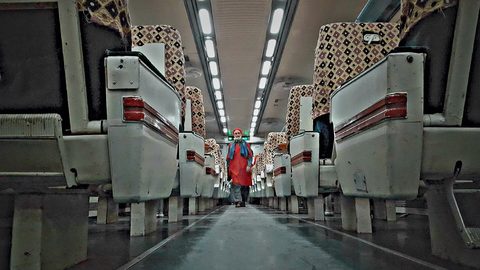 Getting Around Pakistan, Buses, Shared Vans and the Roads Google Maps Lies About
Long-distance buses connect Punjab and Sindh reliably. For the north, shared Toyota Hiace vans and hired 4x4s are the default.
Getting Around Pakistan, Buses, Shared Vans and the Roads Google Maps Lies About
Long-distance buses connect Punjab and Sindh reliably. For the north, shared Toyota Hiace vans and hired 4x4s are the default.
-
 Pakistan Visa Requirements and the NOC System Explained
A Pakistan visa does not grant unrestricted access. No-Objection Certificates control movement in Gilgit-Baltistan, Azad Kashmir, and Balochistan.
Pakistan Visa Requirements and the NOC System Explained
A Pakistan visa does not grant unrestricted access. No-Objection Certificates control movement in Gilgit-Baltistan, Azad Kashmir, and Balochistan.
-
 Pakistan Safety Advice, Reading the Warnings Without Being Misled by Them
Security checkpoints and police escorts are real in parts of Pakistan, but the Karakoram Highway corridor operates under a different reality.
Pakistan Safety Advice, Reading the Warnings Without Being Misled by Them
Security checkpoints and police escorts are real in parts of Pakistan, but the Karakoram Highway corridor operates under a different reality.
-
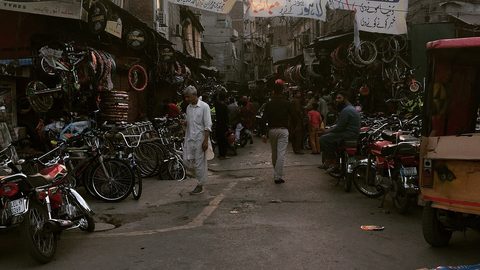 What a Trip to Pakistan Costs, Shaped by Region and Season
A Pakistan travel budget is not one number—it bends sharply between a frugal Punjab week and the fixed cash costs of a Karakoram Highway overland trip.
What a Trip to Pakistan Costs, Shaped by Region and Season
A Pakistan travel budget is not one number—it bends sharply between a frugal Punjab week and the fixed cash costs of a Karakoram Highway overland trip.
-
 A Ground-Level Logistics Guide to Independent Travel in China
First-time independent travel in China: what you need to know about visas, rail booking, eSIMs, mobile payments, and power adapters.
A Ground-Level Logistics Guide to Independent Travel in China
First-time independent travel in China: what you need to know about visas, rail booking, eSIMs, mobile payments, and power adapters.
-
 How Solo Travelers Stay Ahead of Flight Delays and Cancellations
How solo travelers can track inbound aircraft, claim rebooking rights, and adjust ground transport when flights go wrong — step by step.
How Solo Travelers Stay Ahead of Flight Delays and Cancellations
How solo travelers can track inbound aircraft, claim rebooking rights, and adjust ground transport when flights go wrong — step by step.
-
 Why Your eSIM Might Not Work Abroad and How to Check Before You Go
Buying an eSIM doesn't guarantee signal abroad. Learn why coverage fails by location and how to verify reach before you commit to a plan.
Why Your eSIM Might Not Work Abroad and How to Check Before You Go
Buying an eSIM doesn't guarantee signal abroad. Learn why coverage fails by location and how to verify reach before you commit to a plan.