Reading Pakistan Travel Safety Advice Without Being Misled
Security checkpoints and police escorts are real in parts of Pakistan, but the Karakoram Highway corridor operates under a different reality.
How to Think About Safety in Pakistan Beyond the Government Advisories
At the police post before Attabad Lake, the officer waves your vehicle aside, copies your passport number into a ledger, and asks where you are staying in Karimabad. He does not seem alarmed. He does this fifty times a day. This moment, routine, bureaucratic, slightly unnerving, is closer to the reality of moving through Pakistan than any headline from a foreign ministry. The UK Foreign, Commonwealth & Development Office, the US Department of State, the Government of Canada, and the Australian Department of Foreign Affairs and Trade all maintain active advisories for parts of the country. They are right to. But those advisories flatten a nation of four distinct travel zones into one warning level. Here is what the government advisories do not tell you: where the risk actually lives, where it does not, and how to move through both.
What the Advisories Actually Say, and What They Miss
The Four Countries Inside One Visa
Pakistan operates as four separate countries stitched by one visa: the Indus plains, the Hindu Kush, the Baloch desert, and the Karakoram Highway corridor. The FCDO and the US State Department blanket large areas with a single risk rating, but the reality at the Afghan border and the reality in the Hunza Valley share almost nothing in common. Most incidents affecting foreigners in Pakistan are traffic accidents on mountain roads, not the militant attacks that dominate news coverage. The Karakoram Highway from Gilgit to Hunza averages 25 to 30 km/h. A landslide, a fog bank, or a broken axle will delay you far more often than any security event.
The genuine risks are real and non-negotiable. Police escorts in parts of Khyber Pakhtunkhwa and Balochistan are mandatory, not optional. Security posts north of Islamabad and west of the Indus are a daily fact of travel. The stops are routine but slow: each one adds 5 to 15 minutes. A journey from Islamabad to Hunza that looks like 600 km on a map takes 14 to 18 hours with posts and landslide-prone roads. Plan for that time, not the distance.
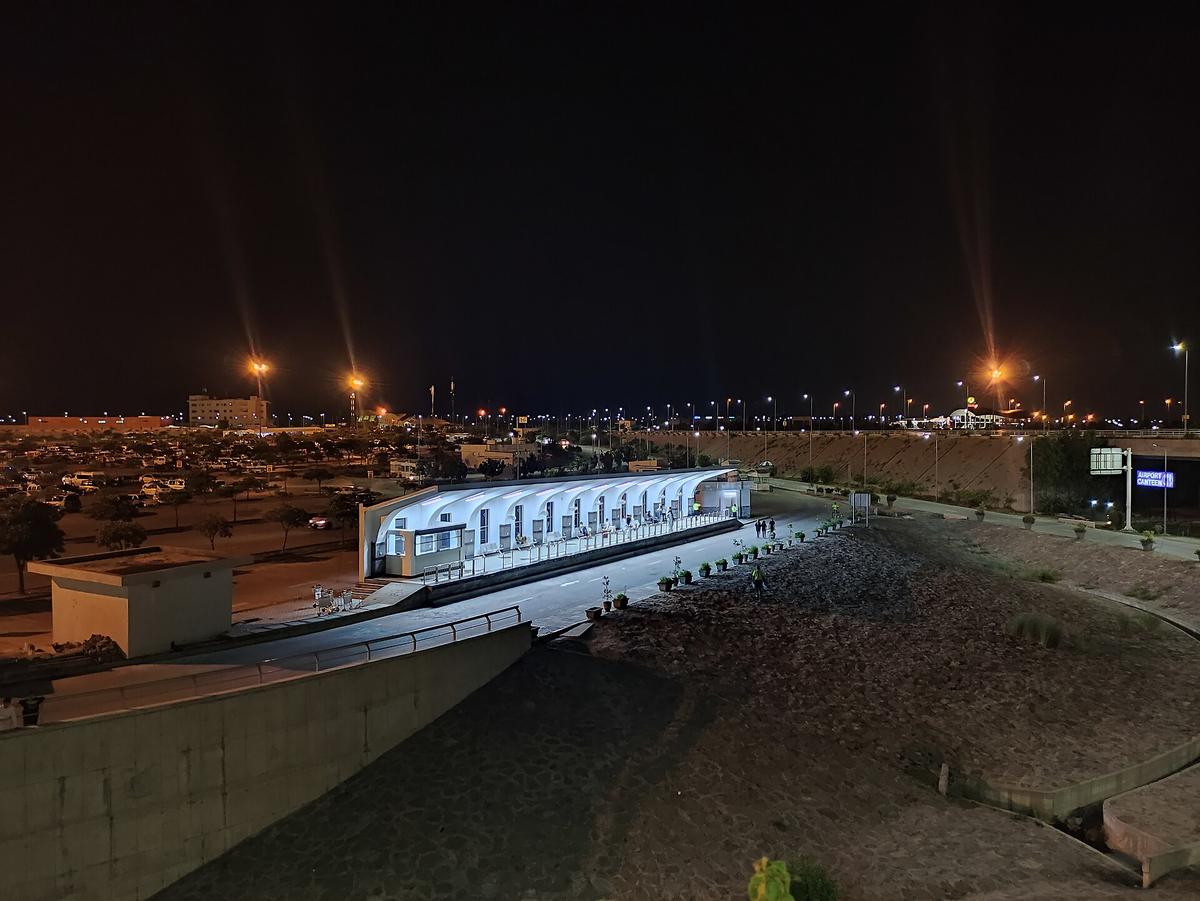

Pakistan Police Escort Khyber Pakhtunkhwa, Why it is Not Optional
In parts of Khyber Pakhtunkhwa, particularly routes toward the Khyber Pass and areas near the Afghan border, the police will insist on accompanying your vehicle. This is not a suggestion. It is a non-negotiable measure dictated by the district administration, and arguing will not change it. The escort can slow travel dramatically. A convoy may wait for other vehicles to form a group, stretching a 3-hour drive to 6 hours. The escort itself is professional; officers are habituated to foreign visitors and will handle all interactions at posts for you.
The failure case: you arrive at a district boundary without a registered tour operator. You will be turned back. The No-Objection Certificate required for many areas outside Punjab and Sindh, including parts of Gilgit-Baltistan, Azad Kashmir, and all of Balochistan, must be obtained through a registered tour operator before you travel, not at the border. If you arrive unannounced, the police will not issue one on the spot. Go back to Islamabad, arrange it, try again.
Pakistan Security Checkpoint Experience, What Actually Happens
On the Karakoram Highway
Most posts on the Karakoram Highway and in northern Pakistan follow the same script. The officer asks for your passport. He may ask where you are staying. He copies the number into a paper ledger or a smartphone. He waves you through. The entire exchange takes 2 to 5 minutes. Some posts require a vehicle search: you pop the boot, an officer glances inside, and you close it. Foreigners are not routinely treated with suspicion; you are a rarity, and the interaction is usually polite.
In the Cities
Posts in Punjab and Sindh are different. In Karachi, armed neighbourhood posts are normal, particularly near Clifton and Saddar. The guards are private security or police auxiliary. They will ask for your hotel name or your host's name. Know it before you arrive. In Lahore, posts near the Old City and Wagah Border are heavier but similarly routine. Keep a copy of your passport and any NOC on your phone. Do not photograph posts or personnel. That is the fastest way to turn a 2-minute stop into a 2-hour delay.
Pakistan Safety Karakoram Highway Hunza, a Different Security Reality
The Karakoram Highway corridor from Gilgit to Karimabad and onward to the Khunjerab Pass runs through a reality distinct from the borderlands. The area is administered by Gilgit-Baltistan, a semi-autonomous territory, and the threat profile is lower than in Khyber Pakhtunkhwa or Balochistan. The biggest risk on this route is altitude sickness above 2,500 metres, not security incidents. The road is one of Earth's highest paved highways, and the passes at Babusar Top and Shandur close from mid-December to late February due to snow. Plan for that seasonality, not just the security status.
The practical reality in Hunza: foreign visitors move freely through Karimabad, walk the Hussaini Bridge, and stay in guesthouses in Altit and Gulmit without police accompaniment. The Aga Khan heritage projects have created a tourism infrastructure that functions independently of the high-security zones further south and west. If you are reading government advisories as a blanket ban on all of Pakistan, the Hunza Valley is the case study that proves the map wrong.
| Zone | Security Risk Level | Primary Hazard | Escort Required |
|---|---|---|---|
| Hunza Valley and Skardu | Low | Altitude sickness, road conditions | No |
| Gilgit to Karakoram Highway corridor | Low to moderate | Checkpoints, landslide delays | No (except valley exits) |
| Peshawar and Khyber borderlands | Moderate to high | Security incidents, police escort slowdown | Yes (specific routes) |
| Balochistan (including Gwadar and Makran Coast) | High | Sparse infrastructure, security incidents | Yes (all areas) |
| Lahore and Punjab plains | Low | Traffic accidents, smog (Nov–Jan) | No |
| Karachi | Low to moderate | Neighbourhood checkpoints, traffic | No |
Pakistan Solo Female Travel Realities, What the Advice Does Not Say
What to Wear and Where to Stay
Solo female travel in Pakistan is possible, but it requires constant vigilance and different preparation than in India or Sri Lanka. Covering up is not optional. Loose clothing that covers arms and legs is expected everywhere except some upmarket cafes in Islamabad and Lahore. A dupatta or scarf signals respect and reduces unwanted attention. Accommodation is straightforward in tourist areas: guesthouses in Hunza and Skardu are accustomed to solo women. In less touristed areas, Multan, rural Sindh, Balochistan, the assumption will be that you are part of a group or travelling with family. Book ahead, have a clear itinerary, and share it with someone at home.
The One Rule That Prevents Trouble
The failure case: arriving in a smaller city after dark without accommodation booked. Check into a hotel by 17:00 in winter, 18:00 in summer. Police and locals will be helpful if you have a problem, but you are better off not needing that help. The solo female visitor who succeeds in Pakistan treats every interaction as a negotiation of expectations, not as an adventure in spontaneity.
Practical Precautions That Actually Matter
Most of what goes wrong in Pakistan is preventable with specific preparation. Here is what matters day-to-day:
- Cash is king north of Gilgit. ATMs are scarce in the mountains. Card machines fail with power cuts. Carry enough Pakistani rupees for your entire mountain leg. Allow PKR 7,000 to 10,000 per day for a driver, food, and basic accommodation.
- Buy a local SIM immediately. Jazz and Zong have the best northern coverage. Biometric verification takes 15 minutes at the airport or a franchise shop. Install a VPN before you arrive; WhatsApp voice calls and some social media apps are intermittently throttled on mobile data.
- Download offline maps. WiFi is unreliable above Gilgit. Google Maps shows roads that are washed out, military-restricted, or seasonally impassable. Confirm every route with a local driver the day you travel.
- Treat all tap water as non-potable. Bottled water is available in cities and along major highways. In remote areas, carry a UV purifier or chemical disinfectant. Food safety risk from street food and raw vegetables is high; travellers' diarrhoea, typhoid, and hepatitis A are common.
- Respect the dual pricing system. Foreigners pay more at major monuments. This is how the system works. Carry passport copies for proof. The fee is still nominal by international standards.
The One Thing That Goes Wrong Most Often
Underestimating distances and road speeds. A journey from Islamabad to Hunza is 600 km on a map but takes 14 to 18 hours with stops, landslides, and 25 to 30 km/h average speeds on mountain roads. Trying to combine Lahore, Islamabad, and the north into 10 days means spending the entire trip in a vehicle. The single most practical thing you can do: budget 14 days minimum for any itinerary that includes the mountains, and plan one full travel day for every 200 km of mountain road. Everything else, the posts, the escorts, the solo female vigilance, becomes manageable when you are not running against the clock.
FAQs About Pakistan Safety for Visitors
Is it safe to drive the Karakoram Highway as a foreigner?
Yes, with preparation. The road is paved and maintained but narrow, and traffic accidents are the most common incident for foreigners. Drive only in daylight, check road conditions at the nearest post before starting, and account for landslide delays in monsoon season (July to September). Self-drivers need an International Driving Permit or a home licence with certified translation.
Do I really need a police escort in Khyber Pakhtunkhwa?
On specific routes near the Afghan border, yes. The police will insist on accompanying your vehicle. This is not negotiable and is arranged through your tour operator. It can add 2 to 3 hours to a journey. On the main Karakoram Highway corridor through Gilgit-Baltistan, no escort is required.
How safe is Hunza Valley for solo travellers?
Hunza is one of the safest areas in Pakistan for foreign visitors. The security condition is low, the tourism infrastructure is established, and police escorts are not required. The primary hazards are altitude sickness above 2,500 metres and road conditions on the approach from Gilgit.
What vaccinations do I need for Pakistan?
Hepatitis A, typhoid, tetanus, diphtheria, and polio are routinely recommended. Consider hepatitis B, rabies, Japanese encephalitis, and cholera depending on your itinerary. A yellow fever certificate is required if arriving from a yellow fever endemic country. Proof of polio vaccination may be required when departing Pakistan, administered at least 4 weeks before exit.
How do I handle security checkpoints in Pakistan?
Stay calm, present your passport, and answer where you are staying. Do not photograph the post or personnel. The interaction is routine and polite. At neighbourhood posts in Karachi and Lahore, know your hotel name or host's address before arriving.
Is it safe to travel to Pakistan as a solo female?
It is possible with constant vigilance. Dress conservatively with arms and legs covered, carry a scarf, book accommodation before you arrive, and plan to stop travelling by late afternoon. Solo female visitors are less common in Pakistan, so you will attract attention. Polite refusal and a prepared itinerary are your best tools.
What should I do if I get altitude sickness in Hunza or Skardu?
Descend immediately. Carry acetazolamide (Diamox) from home as a preventive measure. Above 2,500 metres, ascending more than 300 to 500 metres per day in sleeping altitude increases the risk. Skardu sits at 2,228 metres, Hunza main valley at 2,400 metres, and Deosai Plains at 4,114 metres. If you feel headache, nausea, or shortness of breath, do not go higher.
Read next
-
 Staying Connected in Pakistan, eSIM, Local SIM, and Northern Dead Zones
Mobile internet in Pakistan works well in cities, frays north of Gilgit, and dies above Karimabad—here is how to plan connectivity around the Karakoram's dead zones.
Staying Connected in Pakistan, eSIM, Local SIM, and Northern Dead Zones
Mobile internet in Pakistan works well in cities, frays north of Gilgit, and dies above Karimabad—here is how to plan connectivity around the Karakoram's dead zones.
-
 Best Time to Visit Pakistan, Two Countries, Two Completely Different Seasons
Pakistan has two opposite travel windows: May to October for the mountains, November to March for the plains.
Best Time to Visit Pakistan, Two Countries, Two Completely Different Seasons
Pakistan has two opposite travel windows: May to October for the mountains, November to March for the plains.
-
 Getting Around Pakistan, Buses, Shared Vans and the Roads Google Maps Lies About
Long-distance buses connect Punjab and Sindh reliably. For the north, shared Toyota Hiace vans and hired 4x4s are the default.
Getting Around Pakistan, Buses, Shared Vans and the Roads Google Maps Lies About
Long-distance buses connect Punjab and Sindh reliably. For the north, shared Toyota Hiace vans and hired 4x4s are the default.
-
 Pakistan Visa Requirements and the NOC System Explained
A Pakistan visa does not grant unrestricted access. No-Objection Certificates control movement in Gilgit-Baltistan, Azad Kashmir, and Balochistan.
Pakistan Visa Requirements and the NOC System Explained
A Pakistan visa does not grant unrestricted access. No-Objection Certificates control movement in Gilgit-Baltistan, Azad Kashmir, and Balochistan.
-
 Cash, Cards and the Pakistani Rupee, How to Pay Across Pakistan
Pakistan is a cash economy. ATMs are scarce north of Gilgit, card machines fail with power cuts, and no transport network accepts cards.
Cash, Cards and the Pakistani Rupee, How to Pay Across Pakistan
Pakistan is a cash economy. ATMs are scarce north of Gilgit, card machines fail with power cuts, and no transport network accepts cards.
-
 What a Trip to Pakistan Costs, Shaped by Region and Season
A Pakistan travel budget is not one number—it bends sharply between a frugal Punjab week and the fixed cash costs of a Karakoram Highway overland trip.
What a Trip to Pakistan Costs, Shaped by Region and Season
A Pakistan travel budget is not one number—it bends sharply between a frugal Punjab week and the fixed cash costs of a Karakoram Highway overland trip.
-
 A Ground-Level Logistics Guide to Independent Travel in China
First-time independent travel in China: what you need to know about visas, rail booking, eSIMs, mobile payments, and power adapters.
A Ground-Level Logistics Guide to Independent Travel in China
First-time independent travel in China: what you need to know about visas, rail booking, eSIMs, mobile payments, and power adapters.
-
 How Solo Travelers Stay Ahead of Flight Delays and Cancellations
How solo travelers can track inbound aircraft, claim rebooking rights, and adjust ground transport when flights go wrong — step by step.
How Solo Travelers Stay Ahead of Flight Delays and Cancellations
How solo travelers can track inbound aircraft, claim rebooking rights, and adjust ground transport when flights go wrong — step by step.
-
 Why Your eSIM Might Not Work Abroad and How to Check Before You Go
Buying an eSIM doesn't guarantee signal abroad. Learn why coverage fails by location and how to verify reach before you commit to a plan.
Why Your eSIM Might Not Work Abroad and How to Check Before You Go
Buying an eSIM doesn't guarantee signal abroad. Learn why coverage fails by location and how to verify reach before you commit to a plan.