New Zealand Power Plug Type and Voltage Adapter You Need
New Zealand uses the Type I three-pin plug at 230V. Australian devices fit without an adapter, but everyone else needs one—and motel sockets are often scarce.
Which Plug Adapter You Need for New Zealand
You have just driven through a single day that served you rainforest, a glacier, and a sandfly swarm, and you walk into your budget motel room near Franz Josef with 6% battery on your phone and a dead camera. There are exactly two power sockets. Both are in awkward places. One is occupied by the kettle. This is the moment you need to know the New Zealand power plug type and voltage, and whether you packed the right thing.
New Zealand Power Plug Type and Voltage: the Specifics You Need
New Zealand uses a Type I plug, standard AS/NZS 3112. That is three flat pins in a triangular arrangement: two angled flat pins for active and neutral, plus a flat vertical earth pin. The mains voltage is 230 V with a frequency of 50 Hz. If your device is not dual voltage, meaning it does not explicitly say it supports 100-240 V and 50-60 Hz, you need more than a plug adaptor. You need a step-down transformer. A plug adaptor alone will send 230 V into a 110 V device and destroy it.
Most phone and laptop chargers, camera battery chargers, and USB power bricks sold in the last decade are dual voltage. Check the small print on the brick. If it says INPUT: 100-240 V, you only need the adaptor. If it says INPUT: 110-120 V only, do not plug it in.

New Zealand Power Adapter Australia: One Less Thing to Pack
If you are already carrying a Type I plug because you live in or have travelled to Australia, stop. Australian plugs are identical to New Zealand plugs. They are the same AS/NZS 3112 standard. You do not need a separate New Zealand power adaptor if you already have one that fits Australian sockets. That saves one hole in your packing cube.
For everyone else, buy a universal travel adaptor that covers Type I. Do not buy a New Zealand-only unit. A universal one covers you for stopovers in Singapore, Fiji, or anywhere else en route. Single-country adaptors are a waste of money.
| Specification | Value |
|---|---|
| Plug type | Type I (AS/NZS 3112), three flat pins |
| Mains voltage | 230 V |
| Mains frequency | 50 Hz |
| Australian plugs fit? | Yes, identical standard |
| USB sockets in motels? | Common in hotels and newer hostels, not guaranteed in budget motels |
| Voltage converter needed? | Only for single-voltage 110 V devices |
| Dual voltage device requirement | Acceptable range: 100–240 V, 50–60 Hz |
Type I Plug New Zealand: the Physical Reality
The Type I plug New Zealand uses is physically larger than US or European plugs. It does not sit well against a bed frame or a desk shoved against the wall. In budget motels, expect limited sockets. Many rooms built before 2010 have exactly two spare outlets, often behind furniture. Pack a short extension cord in your checked luggage.
Built-In USB in Accommodation
Some outlets include a built-in USB-A port. These are common in hotels, motels, and newer backpacker hostels, often integrated into wall outlets or bedside lamps. USB-C sockets are increasingly present in properties renovated or built since approximately 2020. The real figure changes annually. The best source for up-to-date information is the accommodation itself. Send them a message on Booking.com before you arrive if having USB-C matters to you.
USB Charging New Zealand Motels: What You Can Count on
USB charging in New Zealand motels is available but uneven. In peak season December through February, newer builds in Queenstown Lakes and Auckland often have bedside USB-A ports. Budget motels on the West Coast near Franz Josef Glacier or in small towns like Hokitika often do not. Pack your own wall charger and a cable at least two metres long. The socket will be across the room from the bed.
Charging on the Move
On the move, USB charging is better. Most InterCity buses have seatback or overhead USB-A ports. The Interislander and Bluebridge Cook Strait ferries have shared charging stations in passenger lounges. The Northern Explorer, Coastal Pacific, and TranzAlpine scenic trains have USB-A at seats. Turboprop aircraft serving regional routes do not offer USB. Some jet services on main trunk routes like Auckland, Wellington or Auckland, Christchurch do.
New Zealand Voltage 230V: When You Actually Need a Converter
The New Zealand voltage of 230 V is standard for most of the world except North America and Japan. If you are from the US, Canada, or Japan, your hair dryer, curling iron, electric razor, and travel kettle are almost certainly single-voltage 110 V devices. Do not plug them in with just an adaptor. You need a step-down transformer rated for the wattage of the device. That transformer is heavy and expensive. Skip it. Buy a cheap dual-voltage travel hair dryer at a New Zealand pharmacy instead.
The Motor Exception
Devices with a motor are the wildcard. Shavers, electric toothbrushes, and CPAP machines are frequently dual voltage. Check the manufacturer label. If the voltage range includes 230 V, you are safe. If it does not, leave it at home or buy a transformer.
The Charging Strategy That Works
Pack one short extension cord with multiple outlets. It solves the budget motel problem of one socket behind the bed frame. Carry a three-port USB charger, dual voltage, checked. Use it with the extension cord to charge phone, camera, and power bank overnight.
Top Up While You Travel
Charge your power bank on the long-distance bus or the Interislander ferry. Both have USB-A ports. If you are on a guided tour of Hobbiton or a day trip to Milford Sound, your bus likely has seatback USB. Use those hours to top up. Do not rely on finding a free café with WiFi fast enough to stream maps. Mobile phone coverage vanishes on State Highway 1 through the Mackenzie Basin, on the West Coast road to Franz Josef, and on most hiking tracks. Offline maps saved to your phone before you leave the airport are non-negotiable. Buy a local SIM from Spark, One NZ, or 2degrees at the airport or any supermarket. Coverage outside towns is patchy.
Who This Destination Suits and Who Should Skip it
New Zealand is for self-driving road trippers who accept long days behind the wheel on narrow two-lane roads with no median barrier. It is for serious hikers who want the Tongariro Alpine Crossing and the Abel Tasman Coast Track. It is for adrenaline seekers chasing bungy, skydiving, and jet boating in Queenstown. It is for Lord of the Rings pilgrims who will drive two hours to Hobbiton and another hour to Waitomo in the same day.
New Zealand is not for travellers who want a cheap beach holiday with warm swimmable water year-round. It is not for anyone who dislikes driving or expects efficient public transport between regions. Auckland and Wellington have walkable cores, but this is not a late-night city destination. The thing that trips most visitors is underestimating driving time. Google Maps assumes you will drive 100 km/h on narrow winding roads without median barriers. You will not. Add 25-30% to any journey over 100 km. If you do not, you arrive after dark, exhausted, and the motel reception has already closed.
Common Questions
Do I need a voltage converter for my phone charger in New Zealand?
No. Phone chargers sold in the last decade are dual voltage. Check the brick for INPUT: 100-240 V. If it says that, you only need a plug adaptor. If it says 110-120 V only, do not plug it in.
Will my Australian power adapter work in New Zealand?
Yes. Australia and New Zealand use the identical Type I standard. An Australian plug fits without any adaptor.
Can I charge my laptop in New Zealand without an adapter?
Almost all modern laptop chargers are dual voltage and accept 230 V at 50 Hz. You need a plug adaptor to fit the Type I socket, but no voltage converter.
Are USB sockets common in New Zealand motels?
Common in hotels, motels, and newer backpacker hostels, often built into wall outlets or bedside lamps. Budget and older motels frequently lack them. Pack your own charger.
Do I need a travel adapter that works in both Australia and New Zealand?
Yes. Since the two countries share the same Type I plug standard, a single adaptor covers both. A universal travel adaptor that includes Type I is the best option.
What happens if I plug a 110 V appliance into a New Zealand socket?
It will be destroyed. 230 V is more than double what it expects. A plug adaptor does not convert voltage. You need a step-down transformer for single-voltage devices.
Where can I buy a New Zealand plug adapter at the airport?
Auckland Airport (AKL) and Christchurch Airport (CHC) have electronics shops in the international arrivals hall. Queenstown Airport (ZQN) and Wellington Airport (WLG) have smaller selections. Prices are higher than buying online before you travel.
Read next
-
 Staying connected in New Zealand eSIM local SIM or offline maps
New Zealand cannot fix its mobile service. No carrier will, because the geography does not permit it.
Staying connected in New Zealand eSIM local SIM or offline maps
New Zealand cannot fix its mobile service. No carrier will, because the geography does not permit it.
-
 Best Time to Visit New Zealand, What Each Season Actually Delivers
New Zealand summer runs December to February and brings crowds, sandflies, and booked-out campsites. Here is what each season actually means for your trip.
Best Time to Visit New Zealand, What Each Season Actually Delivers
New Zealand summer runs December to February and brings crowds, sandflies, and booked-out campsites. Here is what each season actually means for your trip.
-
 Getting Around New Zealand, Why Self-Drive Is the Default and What the Map Hides
New Zealand has no efficient inter-regional public transport. A rental car is the default, and driving times are far longer than the map suggests.
Getting Around New Zealand, Why Self-Drive Is the Default and What the Map Hides
New Zealand has no efficient inter-regional public transport. A rental car is the default, and driving times are far longer than the map suggests.
-
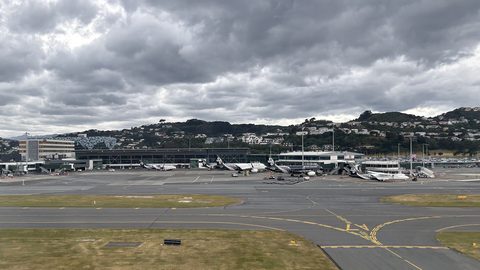 New Zealand Visa Requirements, Who Needs an NZeTA and Who Does Not
Most visitors need an NZeTA before boarding a flight to New Zealand. Here is who needs a full visa, who qualifies for the waiver, and how long each takes.
New Zealand Visa Requirements, Who Needs an NZeTA and Who Does Not
Most visitors need an NZeTA before boarding a flight to New Zealand. Here is who needs a full visa, who qualifies for the waiver, and how long each takes.
-
 Money in New Zealand, Cards, Cash and What Actually Works at the Till
New Zealand runs on contactless cards and EFTPOS, but rural cafes and roadside stalls still want cash. Here is what to carry and when.
Money in New Zealand, Cards, Cash and What Actually Works at the Till
New Zealand runs on contactless cards and EFTPOS, but rural cafes and roadside stalls still want cash. Here is what to carry and when.
-
 New Zealand Safety Advice, Reading the Warnings Without Being Misled by Them
New Zealand has a low crime rate, but the real risks are driving fatigue, alpine weather swings, and sandfly swarms. Here is what the safety pamphlets underplay.
New Zealand Safety Advice, Reading the Warnings Without Being Misled by Them
New Zealand has a low crime rate, but the real risks are driving fatigue, alpine weather swings, and sandfly swarms. Here is what the safety pamphlets underplay.
-
 A Ground-Level Logistics Guide to Independent Travel in China
First-time independent travel in China: what you need to know about visas, rail booking, eSIMs, mobile payments, and power adapters.
A Ground-Level Logistics Guide to Independent Travel in China
First-time independent travel in China: what you need to know about visas, rail booking, eSIMs, mobile payments, and power adapters.
-
 How Solo Travelers Stay Ahead of Flight Delays and Cancellations
How solo travelers can track inbound aircraft, claim rebooking rights, and adjust ground transport when flights go wrong — step by step.
How Solo Travelers Stay Ahead of Flight Delays and Cancellations
How solo travelers can track inbound aircraft, claim rebooking rights, and adjust ground transport when flights go wrong — step by step.
-
 Why Your eSIM Might Not Work Abroad and How to Check Before You Go
Buying an eSIM doesn't guarantee signal abroad. Learn why coverage fails by location and how to verify reach before you commit to a plan.
Why Your eSIM Might Not Work Abroad and How to Check Before You Go
Buying an eSIM doesn't guarantee signal abroad. Learn why coverage fails by location and how to verify reach before you commit to a plan.