Sockets, Voltage, and the Small Electrical Details for Iran
Iran uses a specific plug type and voltage standard. Check your devices and pack the right adapter before you land at IKA.
Sockets, Voltage, and the Small Electrical Details for Iran
The bus rolls into Yazd at 11pm after eight hours from Shiraz. Your phone is at 6%. You need Snapp to reach the hotel, and a VPN to get directions. The Iran plug type decides whether you sleep in a courtyard room or on the terminal floor.
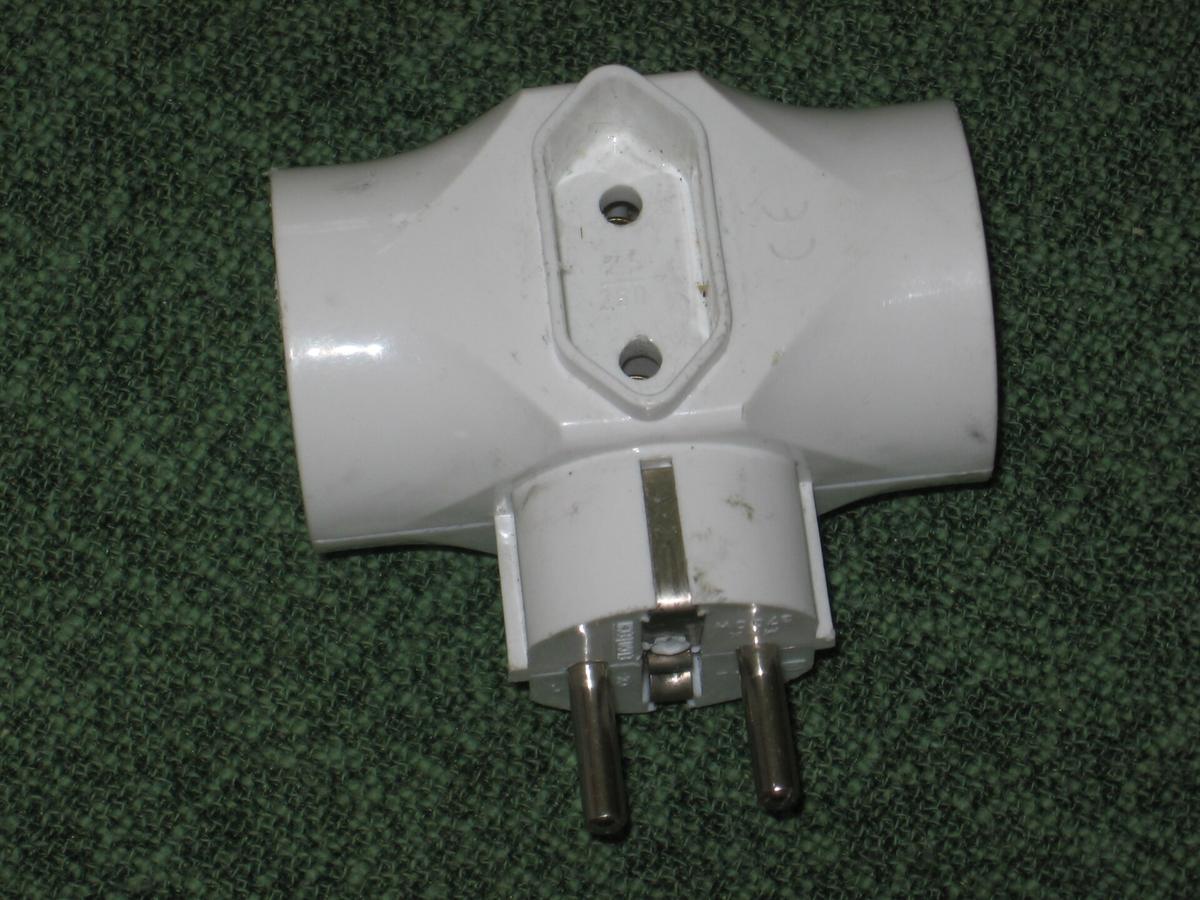
Iran runs on 230 V mains voltage at 50 Hz. The sockets are Type C, the two round pins of the Europlug, and Type F, the Schuko plug with side earth clips. Almost every socket in the country accepts both. Your charger will fit the physical hole. Whether it survives the voltage depends on where you bought it.
Here is exactly which connector and which converter to pack, what you can buy in Tehran, and how to keep your phone alive for the data apps that make travel here possible.

Iran Voltage and Frequency: What 230 V at 50 Hz Means for Your Devices
230 V is the standard across Iran. Older buildings, especially in rural areas of Kerman and the Kaluts, may run closer to 220 V with voltage fluctuations from summer grid load. The 50 Hz frequency is fixed; no variation there.
Coming from a 100-120 V region such as North America or Japan? Check every charger before you plug it in. Look for the printed input range on the block. A phone charger, most laptop power bricks, and camera battery chargers made since roughly 2010 print something like "Input: 100-240 V, 50-60 Hz". That device is dual-voltage and safe in Iran with only a plug connector. A hair dryer, electric razor, or curling iron from a 100-120 V region that lacks the dual-voltage label needs a step-down converter. Without one, the device burns out in seconds.
From Europe, the UK, and Australia the situation is simpler. The UK uses 230 V at 50 Hz, so British chargers are electrically identical to Iran. The same is true for most of continental Europe, which operates on 220-240 V. You need only the plug connector. The current is already correct.
Iran Power Connector: Which One to Buy Before You Arrive
Buy a universal travel plug with Type C and Type F outputs before you leave. Do not count on finding one at Imam Khomeini International Airport. The shops there sell SIM cards and snacks, not travel electronics. A quality universal unit costs $8-15 and packs flat. Look for one that accepts European, UK, US, and Australian plugs and outputs the two round pins Iran needs.
A common mistake is packing only a UK three-pin connector. That does not fit an Iranian Type C socket. You need an intermediary step: UK to Europlug, then Europlug into the wall.
| Where Your Device Was Bought | Voltage Match | What You Need |
|---|---|---|
| North America (120 V) | No | Connector plus step-down converter for non-dual-voltage devices; connector only for dual-voltage chargers |
| Europe (220–240 V) | Yes | Connector only (Type C or Type F input on your charger is fine; otherwise use Europlug travel plug) |
| UK (230 V) | Yes | Connector only (UK plug to Type C Europlug travel plug) |
| Australia / New Zealand (230 V) | Yes | Connector only (Australian plug to Type C Europlug travel plug) |
| Japan (100 V, 50/60 Hz regions) | No | Connector plus step-down converter for non-dual-voltage devices; connector only for dual-voltage chargers |
Iran Socket Standard: Type C and Type F in Practice
Type C, the two round pins spaced 19 mm apart, is the most common socket in Iran. It has no grounding prong, so it is fine for phone and laptop chargers that are double-insulated. Type F, Schuko, adds two side earth clips for grounded devices. Nearly every hotel and guesthouse socket accepts both.
Older Buildings and Rural Areas
In budget lodgings in Yazd, Kashan, and Masuleh, expect a single Type C socket in the room, often loose after years of use. A strong cord grip matters. In the Kaluts or Maranjab Desert, the caravanserai might have no electricity at all after the generator cuts off at 10pm. Pack a high-capacity power bank for those nights.
Multi-Socket Power Strips
A power strip with a Type C plug lets you charge your phone, camera, tablet, and battery bank from one wall socket. This is especially useful in dorm rooms at budget hotels and during overnight bus trips where the single seat-side socket is shared.
Charging Devices in Iran: USB Ports, Power Banks, and the Role of Local SIMs
Your phone is your lifeline in Iran. Snapp, TAPSI, Google Maps, and the Neshan navigation app replace cash payments for taxis and directions. You need data. You need a local SIM from Irancell or Hamrah-e Aval, bought at the airport with your passport. Roaming is too expensive and too slow. With data active, a dead battery means you cannot call a Snapp, cannot load a map, cannot run a VPN to bypass the blocks on Facebook, Twitter, and YouTube.
USB-A and USB-C in Hotels
Newer mid-range hotels in Isfahan and Shiraz, especially those recently renovated, have USB-A ports built into the bedside sockets. In North Tehran cafes and the wealthier districts, USB-C ports are appearing in newer builds. Budget lodgings, older guesthouses, and most of Yazd have none. Do not count on them.
USB on Buses, Trains, and at Airports
VIP overnight buses, the dominant intercity transport, have USB sockets at each seat. This is true on lines from Tehran to Isfahan and Shiraz to Yazd. Standard buses do not. First-class train carriages on routes operated by Islamic Republic of Iran Railways include USB ports; older rolling stock does not. At Imam Khomeini International Airport and Shiraz Shahid Dastgheib International Airport, charging stations with USB ports are available in the departure lounges.
What to Pack for Electricity in Iran: the Checklist
Pack these items before you leave. Do not assume you can substitute locally.
- Universal travel plug with Type C and Type F output. Under $15.
- High-capacity power bank. Expect 14-hour days on foot in Persepolis and Naqsh-e Jahan Square. A large bank gets you through a night without hotel power.
- Two USB cables. One for the power bank, one for the wall plug. Cables break. A second one in your daypack saves the day.
- Step-down converter only if you bring a device from North America or Japan that is not dual-voltage. Check the label. Hair tools are the common culprit.
What is hard to find in Iran? Travel plugs. Tehran's larger electronics bazaars carry them, but directing a Snapp driver to a plug shop in central Tehran while your phone battery is flashing red is not a start to a trip you want. Buy before you fly.
Frequently Asked Questions
What plug type does Iran use?
Iran uses Type C (two round pins, Europlug) and Type F (two round pins with side earth clips, Schuko). Most sockets accept both.
Do I need a voltage converter for Iran?
Only for devices from 100-120 V regions that are not marked dual-voltage. Check for the label 'Input: 100-240 V'. Modern phone and laptop chargers are universally dual-voltage. Hair dryers and straighteners from North America require a step-down converter.
Can I buy a travel plug in Iran?
At Imam Khomeini International Airport the selection is poor. Plugs are available in central Tehran's electronics bazaars, but you have to get there first, which requires a working phone. Buy a universal travel plug before departure.
Does my UK three-pin plug work in Iran?
Not directly. You need a connector that accepts the UK plug and outputs a Type C Europlug. Iran's sockets accept only the two round pins.
Are USB sockets common in Iranian hotels?
In newer mid-range and renovated hotels in Isfahan, Shiraz, and North Tehran, yes. In older budget lodgings, Yazd's adobe guesthouses, and rural areas, no. Carry your own wall plug and cables.
Will my phone charge on an Iranian bus?
VIP overnight buses have USB sockets at each seat. Standard buses do not. First-class trains have USB ports; older carriages do not. Pack a power bank for the gaps.
Is the voltage stable across Iran?
The grid standard is 230 V at 50 Hz. In older buildings and some rural areas, the actual voltage may be closer to 220 V and can fluctuate during summer peak loads when power outages occur. Your dual-voltage charger handles this automatically.
Read next
-
 Staying Connected in Iran Without Expensive Roaming
Why a physical Irancell or Hamrah-e Aval SIM registered with your passport is the only real data option in Iran, and why your VPN must be installed before landing.
Staying Connected in Iran Without Expensive Roaming
Why a physical Irancell or Hamrah-e Aval SIM registered with your passport is the only real data option in Iran, and why your VPN must be installed before landing.
-
 Best Time to Visit Iran for Persian Sites and Desert Cities
March to May is peak season in Iran, but Nowruz brings triple prices and sold-out hotels. Autumn is the best shoulder window for fewer crowds.
Best Time to Visit Iran for Persian Sites and Desert Cities
March to May is peak season in Iran, but Nowruz brings triple prices and sold-out hotels. Autumn is the best shoulder window for fewer crowds.
-
 Getting Around Iran by VIP Bus Train and Snapp Taxi
Iran's VIP overnight buses connect major cities, but terminals sit far from centres, and you need cash plus a Snapp taxi to make the system work.
Getting Around Iran by VIP Bus Train and Snapp Taxi
Iran's VIP overnight buses connect major cities, but terminals sit far from centres, and you need cash plus a Snapp taxi to make the system work.
-
 Iran Visa Rules for British American and Canadian Passport Holders
Iran visa rules vary sharply by nationality. US, UK, and Canadian citizens need an authorised guide, while many others can get visa-on-arrival at IKA.
Iran Visa Rules for British American and Canadian Passport Holders
Iran visa rules vary sharply by nationality. US, UK, and Canadian citizens need an authorised guide, while many others can get visa-on-arrival at IKA.
-
 How to Pay for Things in Iran Without International Cards
No international cards work in Iran. You must carry pristine US dollars or euros and exchange them at licensed shops for Iranian rials.
How to Pay for Things in Iran Without International Cards
No international cards work in Iran. You must carry pristine US dollars or euros and exchange them at licensed shops for Iranian rials.
-
 Is Iran Safe to Visit as an Independent Traveller
Iran's streets are generally safe and welcoming, but photography restrictions, dress code enforcement, and geopolitical warnings shape the reality.
Is Iran Safe to Visit as an Independent Traveller
Iran's streets are generally safe and welcoming, but photography restrictions, dress code enforcement, and geopolitical warnings shape the reality.
-
 A Ground-Level Logistics Guide to Independent Travel in China
First-time independent travel in China: what you need to know about visas, rail booking, eSIMs, mobile payments, and power adapters.
A Ground-Level Logistics Guide to Independent Travel in China
First-time independent travel in China: what you need to know about visas, rail booking, eSIMs, mobile payments, and power adapters.
-
 How Solo Travelers Stay Ahead of Flight Delays and Cancellations
How solo travelers can track inbound aircraft, claim rebooking rights, and adjust ground transport when flights go wrong — step by step.
How Solo Travelers Stay Ahead of Flight Delays and Cancellations
How solo travelers can track inbound aircraft, claim rebooking rights, and adjust ground transport when flights go wrong — step by step.
-
 Why Your eSIM Might Not Work Abroad and How to Check Before You Go
Buying an eSIM doesn't guarantee signal abroad. Learn why coverage fails by location and how to verify reach before you commit to a plan.
Why Your eSIM Might Not Work Abroad and How to Check Before You Go
Buying an eSIM doesn't guarantee signal abroad. Learn why coverage fails by location and how to verify reach before you commit to a plan.