Reading Iran Safety Advice Without Being Misled by It
Iran's streets are generally safe and welcoming, but photography restrictions, dress code enforcement, and geopolitical warnings shape the reality.
Is Iran Safe to Visit as an Independent Traveller
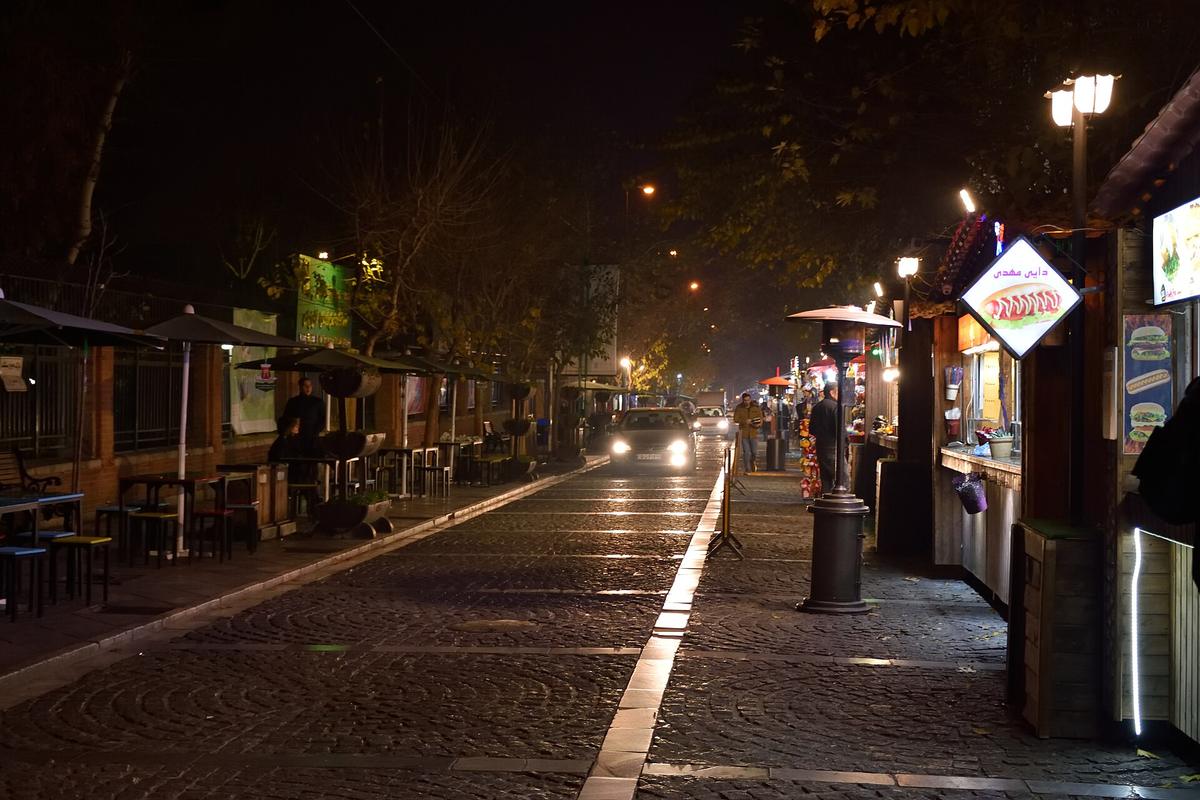
A woman in a grey manteau and loosely knotted headscarf walks alone past the blue-tiled dome of Shah Cheragh at 10 p.m. Nobody follows her, whistles, or even looks twice. That scene, repeated nightly in Shiraz, Isfahan, and Yazd, is why the question is Iran safe to visit demands a more detailed answer than a travel warning issued from a distant government ministry can provide.
Iran's streets are safe by almost any measurable standard. Violent crime against tourists is vanishingly rare. The threat that dominates advisories from the UK Foreign, Commonwealth and Development Office (FCDO), the US Department of State, Global Affairs Canada, and the Australian Department of Foreign Affairs and Trade (DFAT) is geopolitical: the risk of arbitrary detention, protest-related disruption, or regional escalation. Those warnings are real. Read them before you book. But they describe a political landscape, not the daily experience of the independent traveller on the ground. In practice, the primary safety risks are a road fatality rate that 2024 data from the World Health Organization places at approximately 20.5 per 100,000 population, the absence of global payment networks, and the friction of adapting to a strictly enforced dress code. Plan for those. You do not need to fear for your life walking through Naqsh-e Jahan Square at night.
.jpg)
Iran Travel Safety Advice: Separating Geopolitics from Daily Life
Detention Risk and Document Readiness
Every government ministry that issues Iran travel warnings publishes the same core concern: the risk of arbitrary detention, particularly for dual nationals. Iran does not recognise dual nationality. A dual citizen entering on a non-Iranian passport can be treated as a sole Iranian citizen under local law if detained. This is a genuine legal vulnerability. Carry a doctor's letter and original packaging for any prescription medication; some common drugs abroad are controlled substances in Iran. Keep your passport and visa documents with you at all times.
The on-the-ground reality for most independent travellers is different. The people of Iran treat visitors with a hospitality that borders on overwhelming. Lost in a Tehran bazaar? Someone will walk you to your destination. Standing on a bus platform in Yazd looking confused? Expect an invitation for tea. The gap between official rhetoric and daily life is immediately apparent from the moment you land at Imam Khomeini International Airport (IKA), 40 kilometres south of Tehran. Arrange a private transfer to the city centre before you arrive; the driver will likely ask where you are from and whether you like Iran before you reach the Azadi Tower.
Money, Connectivity, and Daily Friction
The logistical friction is real. You cannot use any Visa, Mastercard, or Amex card issued outside Iran. Carry all your travel funds in pristine US dollars or euros and exchange them at licensed shops. The mandatory hijab for all women in public, including tourists, is enforced from the moment of landing. This means loose clothing covering the arms and legs, and a headscarf. Squat toilets are the norm outside international hotels. Carry your own toilet paper and hand sanitiser. Buy a local SIM card from Irancell or Hamrah-e Aval at the airport with your passport to activate data; roaming is expensive. Install a VPN before you arrive. Facebook, X (Twitter), YouTube, and many news sites are blocked, and VPN download sites are also filtered.
Solo Female Travel Iran: What the Dress Code and Social Protocols Actually Mean
Solo female travel Iran is logistically more demanding than a comparable trip through Turkey or Morocco, but it is not dangerous. The mandatory enforcement of the headscarf and dress code is the single biggest daily friction. From the moment you step off the plane, cover your hair with a headscarf, wear a loose-fitting top that covers your arms, and trousers that cover your legs. In central Tehran and tourist-heavy cities like Shiraz and Isfahan, enforcement is relaxed; you will see local women with scarves pushed back revealing a lot of hair. But as a visitor, you are a visible target. A morality police officer or a zealous citizen may correct you. Comply strictly in public. Relax in your hotel room or in private homes.
Social Rules and Transport Norms
Separate social protocols apply. In shared taxis and on public transport, women sit apart from unrelated men. On the Tehran metro, the first and last carriages are women-only. In traditional tea houses and smaller restaurants, there may be a family section and a men-only section. You will be directed to the family section as a solo woman, which is often more comfortable anyway.
Practical safety is high. Street harassment is less common than in Cairo or Delhi. Walk alone in central Shiraz after dark. The main risk is not crime but the complete absence of global credit card networks. Budget for your entire trip in cash: pristine US dollars or euros exchanged at licensed shops. The one genuine safety concern specific to solo women is that rural areas and villages outside major cities may have no clinic with English-speaking staff. If you need medical help in Kerman province or near the Kaluts, serious cases are transferred to provincial capitals. Public and private hospitals are available in major cities; private hospitals are preferred by visitors for higher service standards. The emergency services number for ambulance is 115. English-speaking operators are not guaranteed.
Iran Government Travel Warnings: What They Say and What They Leave Out
The UK FCDO, US State Department, Global Affairs Canada, and Australian DFAT all advise against all travel to areas within 100 kilometres of the borders with Afghanistan and Pakistan, and against non-essential travel to parts of Sistan and Baluchestan province. These warnings are based on the risk of terrorism, kidnapping, and armed conflict in those regions. Malaria risk is also present in rural areas of Sistan and Baluchestan, southern Kerman, and Hormozgan provinces, with a transmission season approximately March to November. Take antimalarials for those areas or skip them entirely.
What the advisories rarely mention is that the classic central loop of Tehran, Shiraz, Yazd, and Isfahan is hundreds of kilometres from any of those border zones. A traveller flying into IKA and sticking to the central route is nowhere near the insecure borders. The warnings also do not address practical safety: the road fatality rate, the lack of seatbelt enforcement, the fact that lane discipline in urban areas is loosely observed and motorcycles frequently filter between vehicles and use pavements. The most dangerous part of your Iran trip is likely the taxi ride from the airport.
The advisories are correct about the legal risks. Drug offence penalties include long imprisonment and capital punishment for trafficking. Alcohol is prohibited for all; there are no legal bars, liquor shops, or licensed venues. Photography is restricted near military sites, government buildings, and some infrastructure including bridges and dams. Drone use is illegal without prior authorisation from aviation and security authorities. These are real legal boundaries that a tourist can cross without meaning to, and the consequences are severe. Read the FCDO and State Department advisories. Then plan your itinerary to avoid the border zones, carry cash, and do not take photos of anything that looks like a government building.
| Risk Factor | Reality for Tourists | What to Do |
|---|---|---|
| Violent crime against visitors | Vanishingly rare in central tourist cities | Take standard urban precautions; walk confidently at night |
| Road fatality rate | Approx. 20.5 per 100,000 (2024 WHO data) | Avoid intercity driving; use VIP overnight buses instead |
| Arbitrary detention risk | Real for dual nationals and activists | Enter on single passport; avoid protests; carry documents |
| Street crime / pickpocketing | Low in tourist areas; moderate in Tehran bazaars | Keep cash in a money belt; use a cross-body bag with a zipper |
| Malaria (rural Sistan, Kerman, Hormozgan) | Seasonal transmission March–November | Skip those regions or take antimalarials if crossing them |
| Earthquake risk | Entire country seismically active; building codes vary | Note emergency exits on arrival at each hotel |
| Tap water safety | Tehran water treated but high mineral content; rural water variable | Drink bottled water; it is widely available in all urban areas |

Iran Street Safety: Walking, Taxis, and What Happens After Dark
Iran street safety is high by global standards. Walk alone through central Tehran, Shiraz, Isfahan, and Yazd at night. The street-level risk is not assault; it is traffic. Pedestrian priority at crossings is rarely observed by drivers. Marked crossings are indicative only. Motorcycles use pavements. Look both ways twice before crossing any street, even on a green light.
Getting Around Cities and Between Them
Use the ride-hailing apps Snapp and Tapsi. They are widely available, the fare is set in the app, and you pay the driver in cash because your Visa or Mastercard from home will not work. A Snapp ride across central Tehran costs roughly $1 to $2. Do not hail taxis on the street as a solo traveller; the app provides GPS tracking and a driver identity record. For intercity travel, the VIP overnight bus is the dominant mode. VIP buses have reclining seats and air conditioning. Payment is strictly in Iranian rials cash. The main friction is that bus terminals like terminal-e-gharb and terminal-e-jonub are often far from city centres, requiring a secondary Snapp ride to reach your hotel.
If You Drive Yourself
An international driving permit is required for most nationals and must be obtained before arrival. Road condition varies significantly: major highways are paved and maintained, but rural and mountain roads may be unpaved or poorly surfaced, especially after winter. Snow and ice on mountain passes from approximately December to March is a seasonal hazard. Seatbelt use is mandatory for front-seat occupants; rear seatbelt use is uncommon in practice. There is no specific law mandating child car seats. The road fatality rate is high. Most independent travellers are better off on VIP buses and domestic flights.
Iran Photography Restrictions: What You Can and Cannot Shoot
Iran photography restrictions are straightforward: do not photograph military sites, government buildings, or some infrastructure including bridges and dams. This means you cannot take pictures of the exterior of the former US Embassy in Tehran, any active military barracks, or the radar installations visible on hilltops outside major cities. The ban also extends to drone use without prior authorisation from aviation and security authorities. Do not bring a drone to Iran unless you have written permission in advance. That permission is rare for independent travellers.
Everything else is open. The Nasir al-Mulk Mosque in Shiraz, with its stained-glass kaleidoscope best seen at 8 a.m., is intensely photogenic and guards are accustomed to tourists with cameras. The Kaluts near Kerman, giant sand-carved formations best visited at sunrise, have no restriction. The Towers of Silence in Yazd, the Khaju Bridge in Isfahan at dusk, the stepped village of Masuleh: all are legal to photograph. People are generally happy to be photographed, but ask first, particularly of older women and clerics. Do not photograph anyone without their consent. Do not photograph any building that has a soldier or a flag outside it. If a guard signals you to stop, stop immediately and delete the image in front of them. The penalty for a military site photograph can be detention. That is not worth the image.
Additional Practical Safety for Independent Travellers
Health and Medical Access
Pharmacies are widely available in cities, with many operating 24-hour rotating shifts known as shabaneh-roozi. Public and private hospitals exist in major cities; private hospitals are preferred by visitors for higher service standards. In rural areas, only basic clinics are available, and serious cases are transferred to provincial capitals. Proof of valid travel health insurance is mandatory for visa issuance for most nationalities. A yellow fever vaccination certificate is required if arriving from an endemic country. Altitude sickness is relevant in parts of the Alborz and Zagros ranges above 2,500 metres. Air pollution in Tehran creates severe inversions in winter, approximately December to February, with PM2.5 levels frequently exceeding WHO guidelines. If you have a respiratory condition, avoid Tehran between December and February.
Communication and Connectivity
Buy a local SIM card at the airport or a city mobile shop with your passport to activate data. Irancell and Hamrah-e Aval are the two main providers. Roaming is expensive. Facebook, X (Twitter), YouTube, and many news sites are blocked and require a VPN installed before you arrive, as VPN download sites are also filtered. The emergency services number for police is 110, for ambulance is 115, and for fire is 125. The Red Crescent roadside assistance number is 112. English-speaking operator availability is not guaranteed; Persian is the predominant language. Learn to say 'komak' (help) and 'police' in Persian before you go.
Currency and the Cash Economy
You cannot use any Visa, Mastercard, or Amex from outside Iran. Bring all your funds in pristine US dollars or euros and exchange them at licensed shops. The currency for local transactions is the Iranian rial (IRR), but prices are often quoted in toman, where 1 toman equals 10 rials. This mismatch causes constant small confusion. When someone tells you a price in toman, mentally add a zero to get the rial value for the cash in your hand. The maximum currency import is 10,000 euros or equivalent; amounts above that must be declared. Carry your cash in multiple places: a money belt, a hidden pocket, and a small daily wallet. Losing your entire cash supply in a country with no ATMs that accept cards from abroad is a genuine emergency.
Common Questions
Is Iran safe for American citizens to visit right now?
American citizens can obtain a visa and travel independently on the classic central loop (Tehran, Shiraz, Yazd, Isfahan) without facing street-level danger. The US State Department advises against all travel to areas within 100 km of the Afghanistan and Pakistan borders. The real risk for Americans is the absence of diplomatic relations: if you are detained, the US does not have a consular presence in Iran to assist you. Dual US-Iranian citizens face the highest legal risk because Iran does not recognise dual nationality and will treat them as Iranian citizens.
Do I need a guide in Iran or can I travel alone?
You do not need a guide. Independent travel is straightforward on the central loop. The main challenges are the cash economy (you cannot use any Visa, Mastercard, or Amex from outside Iran), the mandatory hijab for women, and the language barrier outside tourist sites. The ride-hailing app Snapp works in all major cities and eliminates the need to negotiate taxi fares in Persian. The VIP overnight bus network connects all major cities and is comfortable and safe.
What happens if I forget my headscarf in Iran?
If you are a woman and you appear in public without a headscarf, you will be asked to cover it, either by a passer-by or by a morality police officer. The first time, you will likely be given a warning or directed to a shop to buy a scarf. Repeated or defiant violation can lead to a fine, detention, or deportation. Carry a spare scarf in your day bag at all times. Enforcement is most strict in holy cities like Qom and Mashhad, and most relaxed in North Tehran and tourist-heavy Shiraz.
Can I use my credit card in Iran?
No. Visa, Mastercard, and Amex cards issued outside Iran do not function anywhere in the country. The banking system is disconnected from the global SWIFT network due to sanctions. Bring all your travel funds in cash: pristine US dollars or euros that you exchange at licensed exchange shops. A pre-loaded travel card issued outside Iran will not work either. Budget for your entire trip before you leave and carry that amount in cash.
Is it safe to take photos of people in Iran?
Generally yes, but ask first. People are hospitable and many are happy to be photographed, but gesture for permission, especially with older women and clerics. Do not photograph military sites, government buildings, or infrastructure like bridges and dams. If a guard signals you to stop, stop immediately and delete the image. Do not photograph protests or political gatherings. Drones are illegal without prior authorisation.
What should I do if I am stopped by the police in Iran?
Stay calm, be polite, and do not argue. The police in tourist areas are used to visitors. Show your passport and visa. If the issue is about photography or dress code, apologise and comply immediately. Do not offer a bribe. If you are a dual national, do not mention your second nationality. The emergency number for police is 110, but English-speaking operators are not guaranteed.
Is tap water safe to drink in Iran?
In Tehran, tap water is treated and technically potable, but the high mineral content may cause mild digestive upset in visitors. Outside major cities, the water quality is variable and often from local wells or untreated sources. Drink bottled water, which is widely available in all urban areas and most roadside shops. Commercially made ice from filtered water is common in cities, but the source is uncertain in rural tea houses. Avoid ice in rural areas.
Read next
-
 Staying Connected in Iran Without Expensive Roaming
Why a physical Irancell or Hamrah-e Aval SIM registered with your passport is the only real data option in Iran, and why your VPN must be installed before landing.
Staying Connected in Iran Without Expensive Roaming
Why a physical Irancell or Hamrah-e Aval SIM registered with your passport is the only real data option in Iran, and why your VPN must be installed before landing.
-
 Best Time to Visit Iran for Persian Sites and Desert Cities
March to May is peak season in Iran, but Nowruz brings triple prices and sold-out hotels. Autumn is the best shoulder window for fewer crowds.
Best Time to Visit Iran for Persian Sites and Desert Cities
March to May is peak season in Iran, but Nowruz brings triple prices and sold-out hotels. Autumn is the best shoulder window for fewer crowds.
-
 Getting Around Iran by VIP Bus Train and Snapp Taxi
Iran's VIP overnight buses connect major cities, but terminals sit far from centres, and you need cash plus a Snapp taxi to make the system work.
Getting Around Iran by VIP Bus Train and Snapp Taxi
Iran's VIP overnight buses connect major cities, but terminals sit far from centres, and you need cash plus a Snapp taxi to make the system work.
-
 Iran Visa Rules for British American and Canadian Passport Holders
Iran visa rules vary sharply by nationality. US, UK, and Canadian citizens need an authorised guide, while many others can get visa-on-arrival at IKA.
Iran Visa Rules for British American and Canadian Passport Holders
Iran visa rules vary sharply by nationality. US, UK, and Canadian citizens need an authorised guide, while many others can get visa-on-arrival at IKA.
-
 How to Pay for Things in Iran Without International Cards
No international cards work in Iran. You must carry pristine US dollars or euros and exchange them at licensed shops for Iranian rials.
How to Pay for Things in Iran Without International Cards
No international cards work in Iran. You must carry pristine US dollars or euros and exchange them at licensed shops for Iranian rials.
-
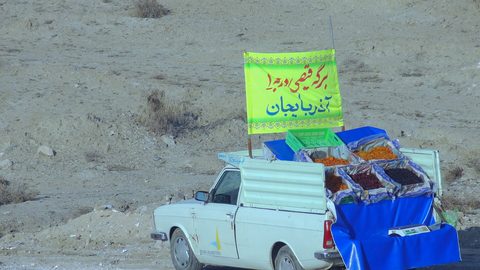 How Much Money to Bring for an Iran Trip in Cash
How to calculate the cash you must carry for Iran, where no international cards work and every rial is exchanged from pristine dollars or euros.
How Much Money to Bring for an Iran Trip in Cash
How to calculate the cash you must carry for Iran, where no international cards work and every rial is exchanged from pristine dollars or euros.
-
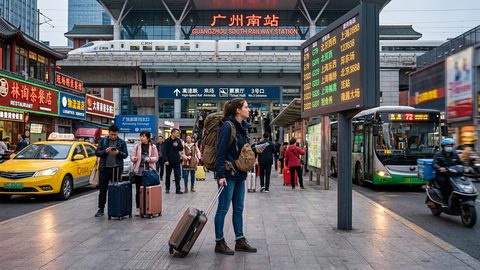 A Ground-Level Logistics Guide to Independent Travel in China
First-time independent travel in China: what you need to know about visas, rail booking, eSIMs, mobile payments, and power adapters.
A Ground-Level Logistics Guide to Independent Travel in China
First-time independent travel in China: what you need to know about visas, rail booking, eSIMs, mobile payments, and power adapters.
-
 How Solo Travelers Stay Ahead of Flight Delays and Cancellations
How solo travelers can track inbound aircraft, claim rebooking rights, and adjust ground transport when flights go wrong — step by step.
How Solo Travelers Stay Ahead of Flight Delays and Cancellations
How solo travelers can track inbound aircraft, claim rebooking rights, and adjust ground transport when flights go wrong — step by step.
-
 Why Your eSIM Might Not Work Abroad and How to Check Before You Go
Buying an eSIM doesn't guarantee signal abroad. Learn why coverage fails by location and how to verify reach before you commit to a plan.
Why Your eSIM Might Not Work Abroad and How to Check Before You Go
Buying an eSIM doesn't guarantee signal abroad. Learn why coverage fails by location and how to verify reach before you commit to a plan.