Shopping in Berlin for Markets, Streets, and Things That Are Actually Local
Berlin shopping is flea markets, independent boutiques in restored courtyards, and food halls, not just high-street chains. Here is where to find what is local.
Shopping in Berlin: Markets, Streets, and Things That Are Actually Local
Sunday morning at Mauerpark flea market, the crowd parts around a man carrying a life sized porcelain deer under one arm and a 1960s Bakelite telephone under the other. This is how Berlin shops. The city has no single centre you can walk across in an afternoon. Shopping here means choosing a district and committing to its character: flea markets on former death strips, independent designers in Art Nouveau courtyards, Turkish groceries in Kreuzberg, a department store that occupies 60,000 square metres over eight floors. The question is where Berliners actually shop and what, among all those stalls and shelves, is genuinely local.
Berlin Markets Guide
Flea Markets
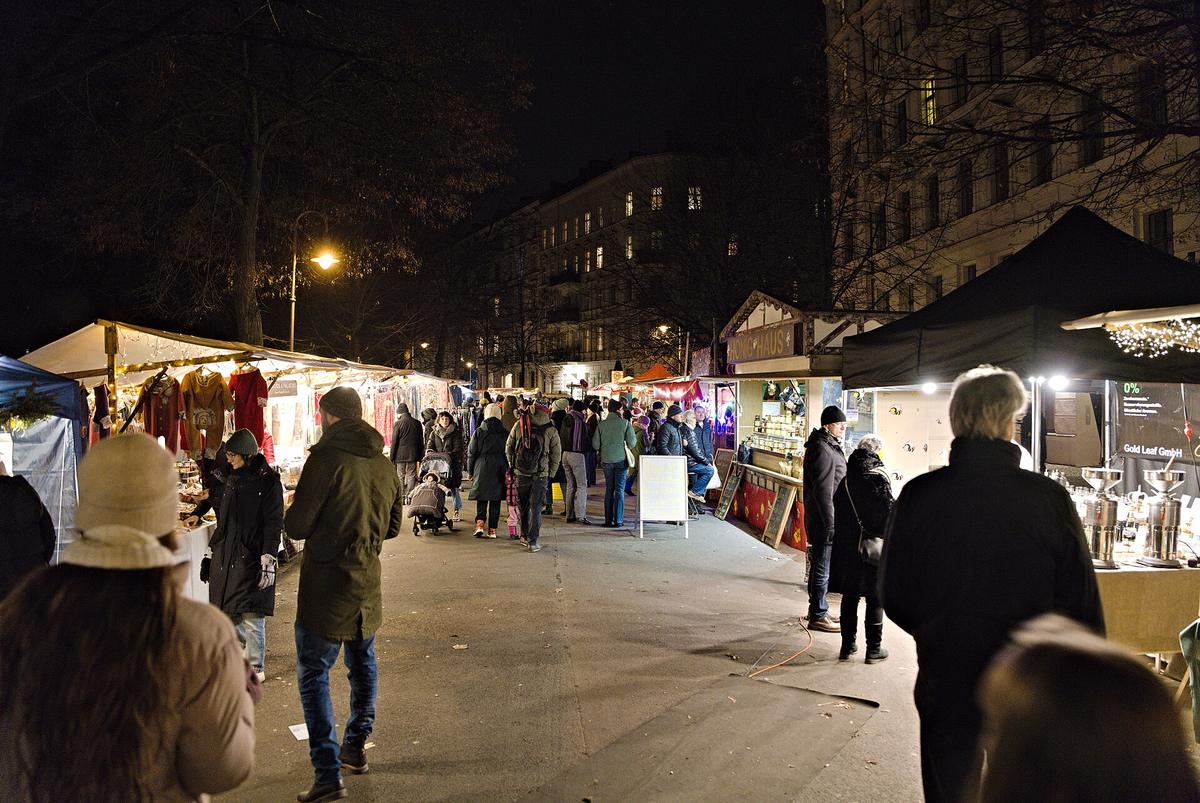
Berlin markets fall into two categories: the weekly produce markets that anchor neighbourhood life, and the flea markets where the city's history surfaces in secondhand form. The most famous is Mauerpark in Prenzlauer Berg, held every Sunday on a strip of land that was once part of the Berlin Wall's death strip. Arrive by 10:00 for the vintage clothing and vinyl records. By 11:00, the crowd is dense enough that you move shoulder to shoulder between tables of East German memorabilia, mismatched teacups, and leather jackets that smell like someone else's 1980s. Bring cash. Vendors do not accept card payment.
Boxhagener Platz in Friedrichshain is smaller and less overwhelmed by tourists, strong on records and vintage denim. Straße des 17. Juni in Tiergarten runs longer than any other flea market in the city, but its location near the tourist trail means higher prices.
Food Markets
Markthalle Neun in Kreuzberg is the anchor for food. Thursday evening is Street Food Thursday: a dozen cuisines under one roof. Sunday is the weekly produce market. Saturday morning at the Maybachufer market, on the Neukölln side of the Landwehrkanal, delivers Turkish and Middle Eastern produce. Olives, cheese, flatbread, fresh herbs. The Kollwitzplatz market in Prenzlauer Berg runs Saturdays and is organic focused. Prices match the affluence of the neighbourhood.

Berlin Local Products
What to Buy
Most items sold as Berlin souvenirs in Mitte shops are mass produced elsewhere: Brandenburg Gate magnets made in China, currywurst keychains, beer steins that could be from any German city. What is actually local requires more effort. Berlin's contemporary art and design scene is the real export. Walk the Hackesche Höfe courtyards, a warren of restored Art Nouveau courtyards off Rosenthaler Straße, and you will find independent shop after independent shop selling work by local designers: jewellery, ceramics, screenprinted posters, stationery. The boutiques around Auguststraße and Linienstraße in Mitte form the city's primary district for galleries and contemporary art sales. A print from a living Berlin artist costs less than a museum poster and carries more meaning.
What to Eat
Food products that are genuinely Berlin include döner kebab, said to have been invented here in a bread pocket, though you eat it, not pack it. Currywurst is the thing to order at Konnopke's Imbiss under the U Bahn viaduct. Berliner Pfannkuchen are jam filled doughnuts, not pancakes, available year round at any bakery. Königsberger Klopse, veal meatballs in a creamy caper sauce, are a classic Berliner pub dish you can find on menus at old style restaurants in Charlottenburg and Schöneberg. For something you can carry home, look for mustard from the city's small batch producers, jars of pickled vegetables from Turkish grocers, or a bottle of beer from a local brewery like Berliner Kindl or a smaller craft label.
Berlin Shopping Streets
West: Kurfürstendamm and Charlottenburg
Berlin shopping streets are not interchangeable. Each district has a main drag and each main drag has a different purpose. Kurfürstendamm in Charlottenburg is the grand western boulevard, home to KaDeWe, the largest department store by retail floor area in the city. KaDeWe occupies 60,000 square metres over eight floors. Its food hall on the sixth and seventh floors is worth the trip even if you buy nothing else. The luxury international brands cluster on Kurfürstendamm and the side streets Fasanenstraße and Bleibtreustraße. Kantstraße is the primary district for Asian food shopping: Chinese, Japanese, Korean, and Thai groceries with ingredients you will not find elsewhere in the city.
East: Mitte and Friedrichshain
For international chain stores and mid range fashion, head to Friedrichstraße in Mitte or the Alexanderplatz area, which is the shopping street with the highest footfall in former East Berlin. Streetwear and sneaker resale concentrates around Münzstraße and Alte Schönhauser Straße. Boxhagener Platz in Friedrichshain is the primary district for vintage clothing and vinyl records, with record stores and secondhand shops radiating off the square.
South: Kreuzberg Browsing
Bergmannkiez in Kreuzberg is for browsing. The Bergmannstraße and Graefestraße area has a high concentration of independent boutiques selling vintage clothing, secondhand furniture, and local designers. This is not a power shopping street. It is a street where you duck into a shop, exit half an hour later with a single item, and then sit at a pavement cafe to watch the neighbourhood.

Berlin Flea Markets
Sunday Rules
The Sundays only rule applies to nearly every Berlin flea market, and the Sunday trading laws apply to nearly every shop. Most shops in Berlin are closed on Sunday. The exceptions: some shops at main train stations, shops in tourist zones like Alexanderplatz and Kurfürstendamm, and any späti, the late night corner shops that stay open when everything else has shut. If you arrive on a Sunday expecting to browse a department store, you will be standing outside a locked door. Plan your shopping Monday through Saturday. Use Sunday for the flea markets.
The Big Three
Mauerpark is the largest and most chaotic. It runs every Sunday from around 09:00, weather permitting. The main field holds the vendors. The adjacent amphitheatre hosts karaoke in the afternoon, which draws a crowd as large as the market itself. Boxhagener Platz starts at 10:00, smaller scale, stronger on household vintage and books. The Tiergarten flea market runs along Straße des 17. Juni, the longest in the city, but its location near the tourist trail means higher prices and less curated goods. Cash is mandatory at all of them.
Common Questions
What is the best day for shopping in Berlin?
Saturday is the best day for both shops and markets. Shops are open regular hours, weekly produce markets run in most neighbourhoods, and the major flea markets operate on Sunday only, so Saturday lets you cover everything except the flea markets.
Are Berlin shops open on Sunday?
Most shops are closed on Sunday. Exceptions include some shops at Berlin Brandenburg Airport, shops at main train stations, and spätis, the late night corner shops. Sunday is best spent at flea markets like Mauerpark and Boxhagener Platz.
Where can I buy authentic Berlin souvenirs?
Avoid the mass produced Berlin themed merchandise on Unter den Linden and Alexanderplatz. Buy from independent designers in Hackesche Höfe courtyards, prints from galleries on Auguststraße, or local food products like Berliner mustard, pickled vegetables from Turkish grocers, and craft beer from local breweries.
How much cash should I carry for flea markets?
Carry at least €50 in small denominations. Most flea market vendors do not accept card payment. ATMs are available in the surrounding neighbourhoods but lines can be long on Sunday mornings.
Which Berlin shopping street has the most luxury brands?
Kurfürstendamm in Charlottenburg is the primary district for luxury international brands, along with the side streets Fasanenstraße and Bleibtreustraße. KaDeWe, the largest department store in Berlin at 60,000 square metres, is located on Tauentzienstraße just off Kurfürstendamm.
Where do Berliners buy vintage clothing?
The primary district for vintage and second hand clothing is Friedrichshain around Boxhagener Platz and Gabriel Max Straße, and Kreuzberg around Bergmannstraße. Neukölln along Weserstraße also has a dense cluster of vintage shops.
What is the largest shopping centre in Berlin?
The largest shopping centre by number of shops is Gropius Passagen in Britz, Neukölln, with approximately 170 shops. The largest by retail floor area is Eastgate Berlin in Marzahn Hellersdorf, at approximately 32,000 square metres. Neither is a tourist destination.
Read next
-
 Berlin Hotels What the Price Bands Actually Get You
Berlin hotel prices cluster into distinct bands, and what you get for your money varies more by district and timing than by star rating.
-
 Where to Stay in Berlin by District and What Each Costs You
Where you stay in Berlin defines your trip more than in most cities. Each district has a distinct personality, price band, and real trade-off.
-
 Berlin Flights Flying Into BER Airport and Getting to the City
Berlin Brandenburg Airport is Berlin's sole airport. Here are the rail options—FEX, RE7, and S9—and the ticket rules for reaching the city centre.
-
 Berlin Things to Do Ordered by Whether It Is Worth the Time
Berlin's sights range from free and life-changing to time-consuming and skippable. Here is how to sort them by what actually repays the visit.
-
 When to Visit Berlin and What Each Season Does to the City
Berlin's seasons change more than the weather. They determine whether you get lakeside bars and street life or trade fair crowds and closed independent venues.
-
 Getting Around Berlin Without Wasting Half the Trip
Berlin is too sprawling to walk, and the BVG network is the only way to move efficiently. The catch is ticket validation, and getting it wrong costs you.
-
 Germany Travel Guide for People Who Like Things to Actually Work
Germany is a federation of 16 states with distinct identities, laws, and holiday calendars. This guide explains the structure before you plan a trip.
-
 Staying Connected in Germany With eSIM, Local SIM, or Roaming
Mobile data in Germany means navigating rural black spots, scarce free Wi-Fi, and mandatory passport registration for local SIM cards.
-
 When to Visit Germany and What Each Season Actually Delivers
Germany's travel seasons are defined by school holidays, trade fairs, and Christmas markets. Here is when to go and when to avoid.