Germany Public Holidays by State and Why the Day Depends
Public holidays in Germany vary by federal state. What is closed in Bavaria may be open in Berlin, and Sundays shut almost everything down.
The Days Germany Closes and Why it Depends on the State
You booked a Monday morning at the Reichstag, but your rental car is stuck outside a shuttered supermarket and the bakery will not sell you bread. The problem is that Germany’s public holidays differ so sharply by state that a Tuesday in Munich can be a full shopping day while the same Tuesday in Münster is a ghost town. Eight of Germany’s 16 federal states observe holidays the others ignore, and Sunday closures apply everywhere, regardless of what day it is.
A road trip from Hamburg to Bavaria crosses three holiday zones. Know which days shut which states, and which days shut everything nationwide, before you book anything.

German Public Holiday Calendar: the National Dates That Close Everything
Nine Nationwide Shutdown Days
Nine nationwide public holidays apply in every federal state. On these days, government offices, banks, post offices, and nearly all supermarkets and retail stores close. Petrol stations, pharmacies on emergency rota, restaurants, and museums stay open. Public transport runs on a reduced Sunday schedule. Bakeries may open for morning hours.
The fixed national dates are 1 January (Neujahr), 1 May (Tag der Arbeit), 3 October (Tag der Deutschen Einheit), 25 December (Erster Weihnachtstag), and 26 December (Zweiter Weihnachtstag). The moveable religious dates are Karfreitag (Good Friday, the Friday before Easter Sunday), Ostermontag (Easter Monday), Christi Himmelfahrt (Ascension Day, 39 days after Easter Sunday), and Pfingstmontag (Whit Monday, 50 days after Easter Sunday). The exact dates change annually. The Standing Conference of the Ministers of Education and Cultural Affairs (Kultusministerkonferenz) publishes a multi-year calendar four to five years in advance; check their schedule for the year you travel.
Easter and Pfingsten Gridlock
Easter weekend and Pfingstmontag create two of the worst motorway gridlock periods of the year. Germans take these as long weekends, and the autobahn sections around major cities and the Ruhr Valley become parking lots from Thursday afternoon through Monday evening. Avoid long-distance driving on these windows if you can.
Germany Sunday Closures: the Weekly Shutdown That Surprises Visitors
Sundays in Germany mean almost all retail is closed. Supermarkets, department stores, and most bakeries are shuttered. Only petrol stations, train station shops (Hauptbahnhof convenience stores), and some bakeries in tourist centres open. This is law, not custom. A Sunday in a small town can leave you without a sandwich unless you bought it Saturday.
The rule applies to all 16 states. Even the Sunday-opening exceptions in Berlin’s tourist zones are limited to bakeries and a handful of shops in main train stations. If you arrive on a Sunday, buy food and cash at the airport or Hauptbahnhof before you leave the station. Public toilets are coin-operated; the Sanifair voucher system gives you a small credit toward a purchase at the attached shop.
| Holiday | Date / Timing | Observing States |
|---|---|---|
| Heilige Drei Könige (Epiphany) | 6 January (fixed) | Baden-Württemberg, Bavaria, Saxony-Anhalt |
| Internationaler Frauentag (Women’s Day) | 8 March (fixed) | Berlin, Mecklenburg-Vorpommern |
| Fronleichnam (Corpus Christi) | 60 days after Easter (annual, moveable) | Baden-Württemberg, Bavaria, Hesse, North Rhine-Westphalia, Rhineland-Palatinate, Saarland, parts of Saxony and Thuringia |
| Mariä Himmelfahrt (Assumption Day) | 15 August (fixed) | Saarland, parts of Bavaria |
| Weltkindertag (Children’s Day) | 20 September (fixed) | Thuringia |
| Reformationstag (Reformation Day) | 31 October (fixed) | Brandenburg, Bremen, Hamburg, Mecklenburg-Vorpommern, Lower Saxony, Saxony, Saxony-Anhalt, Schleswig-Holstein, Thuringia |
| Allerheiligen (All Saints’ Day) | 1 November (fixed) | Baden-Württemberg, Bavaria, North Rhine-Westphalia, Rhineland-Palatinate, Saarland |
| Buß- und Bettag (Day of Repentance) | Wednesday before 23 November (annual, moveable) | Saxony |
Germany Closures Dates: How Federal Borders Change Your Plan
The North-South Religious Divide
The table above is your pre-trip checklist. The critical distinction is between the Protestant-majority north and the Catholic-majority south and west. Allerheiligen (1 November) closes shops and attractions in Baden-Württemberg, Bavaria, North Rhine-Westphalia, Rhineland-Palatinate, and Saarland. In Berlin, Hamburg, and the north it is a normal working day. Reformationstag (31 October) is the reverse: it is a public holiday in nine northern and eastern states but not in Bavaria, Baden-Württemberg, or most of Hesse.
Fronleichnam (Corpus Christi) is observed in six southern and western states plus small parts of Saxony and Thuringia. Buß- und Bettag (Day of Repentance and Prayer) exists only in Saxony. Internationaler Frauentag (8 March) is a public holiday only in Berlin and Mecklenburg-Vorpommern. Weltkindertag (20 September) is observed only in Thuringia. If your itinerary crosses state lines, check each leg. A drive from Bavaria (Allerheiligen closed) to Saxony (Allerheiligen open) on 1 November means the Bavarian leg shuts down; buy supplies and see sights before crossing the border.
School Holidays and Peak Season
School holidays add another variable. The Sommerferien (summer holidays) are six weeks, rotated across states between late June and early September. The Kultusministerkonferenz publishes the schedule years ahead. During Sommerferien, hotel prices spike and attractions are more crowded. The Weihnachtsferien (Christmas holidays) are roughly two weeks across all states. The week between Christmas and New Year is the worst time to visit: many attractions close entirely, and the atmosphere becomes family-only. Avoid that window if your trip depends on museums and restaurants.
Oktoberfest weeks in Munich (late September to early October) inflate accommodation across Bavaria, not just in Munich. Easter weekend brings motorway gridlock. Heavy traffic on bridging days clogs routes to the Baltic Coast, the Bavarian Alps, and the Harz Mountains. On those days, plan morning departures before 07:00 or skip the road entirely and take regional trains.


What You Need to Know About the Pfingsten Bridging Day Chaos
Pfingstmontag is a nationwide holiday. Most Germans take the Friday before it off, creating a four-day weekend. The autobahn from the Ruhr Valley south toward the Alps becomes a parking lot on Thursday evening and Friday morning. The return traffic on Monday evening is equally bad. If you must drive, leave at 05:00 or wait until 20:00. The alternative is the regional train network; buy a Lander-Ticket for unlimited travel within one state for a day, valid on all regional and S-Bahn trains, not on ICE.
On any public holiday, petrol stations remain open but expect queues. Pharmacies operate an emergency rota; the address of the nearest open pharmacy is posted on the door of any closed one. Cash is mandatory at most petrol stations and rural shops. Card refusal is common and not signposted. Carry at least EUR 100 in small notes.
The One Mistake That Derails a German Trip
The common mistake is trying to cover Berlin, Munich, the Rhine, and Neuschwanstein in one week by train. You burn half the trip in transit and miss the regional depth that makes Germany worth visiting. The same logic applies to holidays: a traveller who lands in Frankfurt on 31 October and drives south to Bavaria finds Reformationstag is a working day in Hesse (shops open) but Allerheiligen on 1 November shuts down Bavaria (everything closed). The holiday switch at the state border costs you a day of sightseeing.
Book your itinerary around the holiday calendar of each state you visit. If you are in a Catholic state on Allerheiligen or Fronleichnam, plan for a quiet day of walking, hiking, or visiting museums that stay open. If you are in Berlin on 8 March or 3 October, expect full closures and reduced transport. The single thing that most often goes wrong: a traveller arrives at a supermarket on a Sunday or public holiday with no cash, no food, and no backup, then cannot buy anything until the next working day.
Common Questions
How many public holidays does Germany have per year?
Germany has nine nationwide holidays plus up to five additional regional holidays depending on the state, for a total of nine to fourteen per year. Bavaria and North Rhine-Westphalia have the most. Berlin has the fewest.
Do German shops open on Sunday if it is a holiday weekend?
No. Sunday closures are a separate law that overrides any seasonal exceptions. Even on a holiday weekend, most retail stays closed on Sunday. The only reliable Sunday shopping is at Hauptbahnhof shops and petrol station convenience stores.
What happens when a public holiday falls on a Tuesday or Thursday?
Many Germans take the Monday or Friday off, creating a Brückentag (bridging day). This causes heavier traffic on the autobahn and higher hotel demand. The site or museum you planned to visit on the bridging day is open, but the roads will be congested from Thursday through Monday.
Are museums open on public holidays in Germany?
Many museums open on public holidays, but not all. Check individual museum websites. The Reichstag dome, for example, requires mandatory advance online booking and may have reduced hours on holidays. Miniatur Wunderland in Hamburg requires booking a time slot days ahead regardless of the date.
Can I buy groceries on a public holiday in Germany?
Not at supermarkets or bakeries. Petrol stations sell limited groceries and snacks. Major train station shops (Hauptbahnhof) often have a Rewe or Edeka open with full selection, but these are only in large cities. In rural areas, you must plan ahead.
Is 31 October a public holiday across all of Germany?
No. 31 October (Reformationstag) is a public holiday in Brandenburg, Bremen, Hamburg, Mecklenburg-Vorpommern, Lower Saxony, Saxony, Saxony-Anhalt, Schleswig-Holstein, and Thuringia. It is a normal working day in Bavaria, Baden-Württemberg, Hesse, North Rhine-Westphalia, Rhineland-Palatinate, and Saarland. In the states where it is not a holiday, shops and attractions operate normally.
Do public holidays affect Deutsche Bahn train schedules?
Yes. On public holidays, Deutsche Bahn runs long-distance ICE trains on a Sunday schedule, which means reduced frequency. Regional trains also run a Sunday schedule. Check the DB Navigator app for exact times. A Flexpreis ticket costs up to three times the Sparpreis; buy the Sparpreis in advance and stay on the booked train.
Read next
-
 Staying Connected in Germany With eSIM, Local SIM, or Roaming
Mobile data in Germany means navigating rural black spots, scarce free Wi-Fi, and mandatory passport registration for local SIM cards.
Staying Connected in Germany With eSIM, Local SIM, or Roaming
Mobile data in Germany means navigating rural black spots, scarce free Wi-Fi, and mandatory passport registration for local SIM cards.
-
 When to Visit Germany and What Each Season Actually Delivers
Germany's travel seasons are defined by school holidays, trade fairs, and Christmas markets. Here is when to go and when to avoid.
When to Visit Germany and What Each Season Actually Delivers
Germany's travel seasons are defined by school holidays, trade fairs, and Christmas markets. Here is when to go and when to avoid.
-
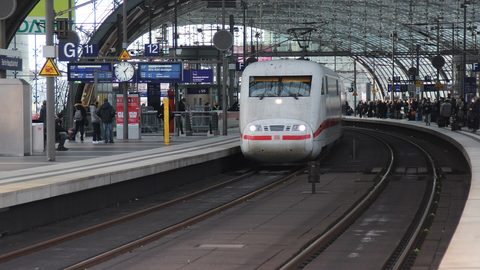 Getting Around Germany Without Falling for the Flexpreis Trap
How to use Germany's train system, avoid a €60 fine for the wrong ticket, and understand the difference between flexible and advance fares.
Getting Around Germany Without Falling for the Flexpreis Trap
How to use Germany's train system, avoid a €60 fine for the wrong ticket, and understand the difference between flexible and advance fares.
-
 Who Needs a Visa for Germany and How the Application Actually Works
A clear breakdown of who needs a visa to enter Germany, who is exempt, and the step-by-step process for a Schengen visa application.
Who Needs a Visa for Germany and How the Application Actually Works
A clear breakdown of who needs a visa to enter Germany, who is exempt, and the step-by-step process for a Schengen visa application.
-
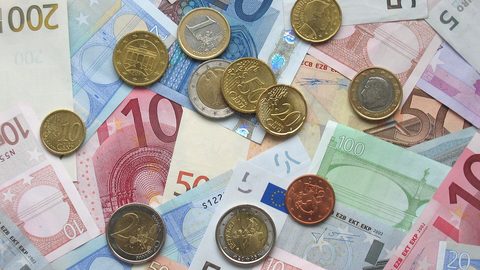 Cash Is King in Germany and Your Card Will Often Be Useless
Germany remains a cash-first economy where many restaurants and shops refuse cards. Here is exactly where you need physical euros.
Cash Is King in Germany and Your Card Will Often Be Useless
Germany remains a cash-first economy where many restaurants and shops refuse cards. Here is exactly where you need physical euros.
-
 Is Germany Safe for Travelers and What Are the Actual Risks
Germany is a safe country, but petty theft at markets and fines on trains are real risks. Here is what to actually watch for.
Is Germany Safe for Travelers and What Are the Actual Risks
Germany is a safe country, but petty theft at markets and fines on trains are real risks. Here is what to actually watch for.
-
 A Ground-Level Logistics Guide to Independent Travel in China
First-time independent travel in China: what you need to know about visas, rail booking, eSIMs, mobile payments, and power adapters.
A Ground-Level Logistics Guide to Independent Travel in China
First-time independent travel in China: what you need to know about visas, rail booking, eSIMs, mobile payments, and power adapters.
-
 How Solo Travelers Stay Ahead of Flight Delays and Cancellations
How solo travelers can track inbound aircraft, claim rebooking rights, and adjust ground transport when flights go wrong — step by step.
How Solo Travelers Stay Ahead of Flight Delays and Cancellations
How solo travelers can track inbound aircraft, claim rebooking rights, and adjust ground transport when flights go wrong — step by step.
-
 Why Your eSIM Might Not Work Abroad and How to Check Before You Go
Buying an eSIM doesn't guarantee signal abroad. Learn why coverage fails by location and how to verify reach before you commit to a plan.
Why Your eSIM Might Not Work Abroad and How to Check Before You Go
Buying an eSIM doesn't guarantee signal abroad. Learn why coverage fails by location and how to verify reach before you commit to a plan.