Your France Transport Guide When Distance Deceives You
How to get around France by train and car, including TGV seat rules, paper ticket validation, motorway tolls, and where the rail map misleads.
The Map Lies About Distance
Look at a map of France and a straight line between two regional towns looks like an easy afternoon drive. The reality is different. The rail network is radial, centred on Paris. That direct line on the map means nothing because no train service exists. You have two options: use the SNCF backbone for long hauls, or accept that small town France requires a car you can actually park. This is a practical France transport guide, built on how the system behaves, not how it looks on a screen.
The French road and rail network is efficient where it was designed to be efficient and absent where it was not. Understanding that distinction is the difference between a holiday that flows and one that burns half its days in transit.
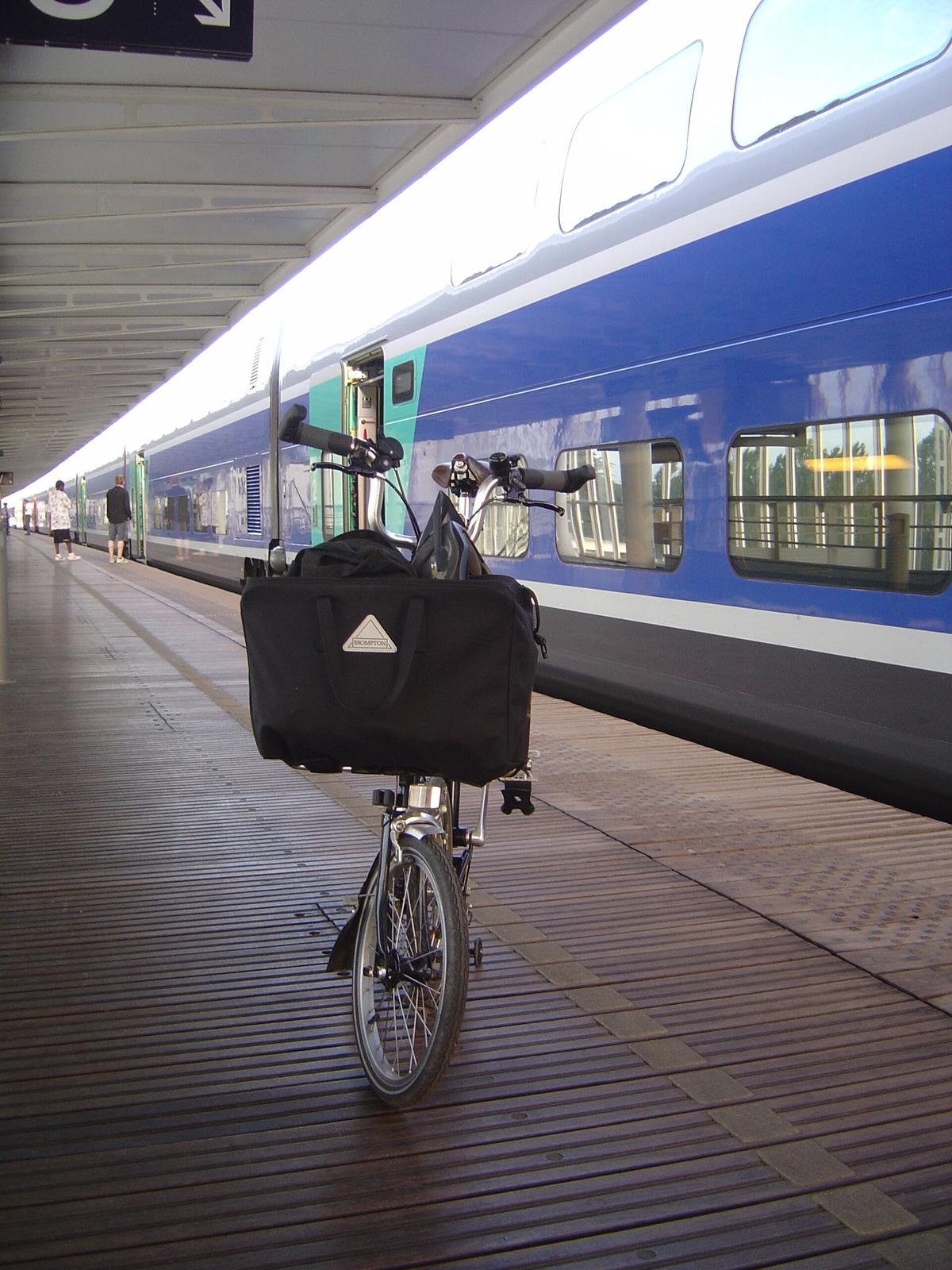

TGV Train France: the Backbone and the Trap
The TGV (Train à Grande Vitesse) runs at 320 km/h on dedicated LGV lines and connects major cities with genuine speed. Paris to Lyon in two hours. Paris to Marseille in just over three. The speed is real. The trap is the reservation system.
Every TGV Ticket Ties You To One Train
A TGV ticket is nominative. It is linked to your name and to a specific train, date, and seat. Miss that train and the ticket is worthless. You buy a new one at the price available at that moment, which will be higher than what you paid. This is not a flexible rail system. Treat your departure time as non negotiable.
Yield Management Means Early Birds Pay Less
SNCF uses yield management. The cheapest allocation sells out first. A TGV ticket bought three months ahead costs a fraction of the walk-up fare. The same seat bought the day before departure can cost several times more. Book as early as your schedule allows. The SNCF Connect app and website are the primary purchase channels. Trainline and Rail Europe are alternatives but add a small fee.
Paper Tickets Must Be Validated
If you buy a paper TER ticket from a machine or counter, validate it in the yellow compositeurs on the platform before boarding. Forgetting this step means a fine, even if you hold a valid ticket. E-tickets displayed on your phone do not require validation and are accepted on all TGV, Intercités, and most TER services.
SNCF Connect App: What Works and What Does Not
The SNCF Connect app is your primary tool for tickets, schedules, and real time information. Download it before you arrive and set up an account. It stores your e-tickets and handles the barcode that conductors scan.
The app has limitations. It cannot book bicycle reservations for TGV services, which require a paid reservation and a separate phone call or station visit. It also fails to show some TER schedules accurately in rural regions, where the data fed to the app lags behind actual service changes. For backup, use the station departure boards and confirm with a station agent when you are on the platform.
Offline maps are essential because rural connectivity is patchy. Free Wi Fi is common in cities but disappears once you leave the urban core.
France Rail Pass: Who it Works for and Who Loses Money
The France Pass, available to non European residents through Eurail and to European residents through Interrail, offers a fixed number of travel days within a validity period. Pricing and validity windows change annually, so check the official Eurail or Interrail sites for the current figures.
The pass works well if you take a TGV or Intercités journey on most of your travel days. It fails if you make short hops on TER trains that cost a few euros each. TER tickets are cheap. A pass covering seven days costs far more than seven single TER tickets. Do the math on your specific itinerary before buying.
The critical hidden cost: TGV and Intercités services require a supplementary seat reservation even with a rail pass. Those reservations cost a band of roughly €10 to €20 each, set by SNCF, and sell out on popular routes during peak season. Check current reservation fees on the SNCF Connect app before you commit. Factor those into your budget and book them early.
Driving in France Tolls: What the Motorway Actually Costs
France has approximately 11,800 km of autoroutes, and the majority are tolled. You pay at péage plazas by card or cash. An electronic toll tag (télépéage) is available via subscription and saves time at the barrier, but the subscription process is impractical for a short visit. Stick with card payment and keep a small cash reserve as backup for older machines that reject foreign cards.
Toll costs add up. A drive from Paris to Nice runs roughly €85 in tolls one way. A shorter trip like Lyon to Avignon costs about €25. Budget €15 to €20 per 100 km of autoroute driving. The speed limit in dry conditions is 130 km/h, dropping to 110 km/h in rain. Rural single carriageway roads are limited to 80 km/h since 2018, enforced by automated cameras.
What You Must Carry In The Car
A reflective safety vest for each occupant, a warning triangle, and an unused breathalyser. The breathalyser requirement is still law, though the penalty for its absence was dropped. Carry it anyway. A Crit'Air vignette is compulsory in permanent low emission zones (ZFE m) in Paris, Lyon, Grenoble, and other cities. Order it from certificat-air.gouv.fr before you leave. It costs a few euros and takes three weeks to arrive by post.
When You Need A Car And When You Do Not
You need a car in the Dordogne, the Lot, Brittany outside the major towns, the Luberon, and anywhere you plan to visit a medieval hill village with no train station. You do not need a car in Paris, Lyon, or Strasbourg, where public transport covers everything. You also do not need a car on the Côte d'Azur between Cannes and Menton, where the TER runs along the coast and parking costs a steep daily rate set by municipal car parks.


What Goes Wrong and What to Do at 1am
Strikes (grèves) are a fact of life. Transport operators must declare participation 48 hours in advance, and SNCF publishes affected train lists on sncf.com by 17:00 the day before. When a strike hits, long distance options collapse. Your fallbacks are FlixBus and BlaBlaCar Bus from Paris Bercy (Gare Routière de Paris Bercy) and Paris Gallieni, and the BlaBlaCar ridesharing platform for intercity trips.
If your TGV is cancelled at the platform, do not wait for SNCF to rebook you. Open BlaBlaCar immediately. A driver heading the same direction will often have a seat within an hour. Coaches are slower but reliable. A Paris to Lyon coach takes about six hours versus two by train, but it moves when the trains do not.
Domestic flights work for routes where rail exceeds four to five hours. Air France, Transavia France, easyJet, and Volotea cover Paris to Nice, Paris to Toulouse, and connections to Corsica. Book ahead during strike periods because seats vanish fast.
Who This Transport System Suits and Who it Frustrates
The French transport system suits slow travellers who spend a week in one region and use the TGV for a single long transfer. It suits road trippers comfortable with tolls and manual transmissions. It suits anyone who builds a 60 minute buffer between connections at Paris stations.
It does not suit a five day multi country blitz that tries to hit Paris, Nice, and Mont Saint Michel. That itinerary burns half your trip in transit and collapses the first time a strike or a sold out TGV derails your schedule. The single thing that most often goes wrong is trying to see too much. Pick one or two adjacent regions and treat the rest as a reason to return.
Common Questions
Do I need a Crit'Air sticker to drive in France?
Yes, in permanent low emission zones (ZFE m) in Paris, Lyon, Grenoble, and several other cities. Order it from certificat-air.gouv.fr at least three weeks ahead. The sticker costs a few euros plus postage and is attached to your windscreen.
Can I use my foreign driving licence in France?
EU and EEA licences are valid indefinitely. Most non EU licences are valid for 12 months from the date of first residence permit or long stay visa entry, after which you need to exchange it or pass the French test.
What happens if I miss my TGV because of a late connection?
SNCF does not guarantee connection protection unless both trains are on the same ticket. If booked separately, you buy a new ticket. Allow at least 60 minutes between arrival and departure at Paris stations.
Are ferries from the mainland to Corsica reliable?
Yes. Corsica Linea, La Méridionale, and Corsica Ferries run from Marseille, Toulon, and Nice. Sailing time is 5 to 7 hours depending on vessel and route. Book vehicle space weeks ahead in July and August.
Read next
-

 Staying Connected in France With eSIM, Local SIM or Roaming
Compare eSIM, local French SIM cards, and roaming for reliable data across France, from Paris to the signal-poor Gorges du Verdon.
Staying Connected in France With eSIM, Local SIM or Roaming
Compare eSIM, local French SIM cards, and roaming for reliable data across France, from Paris to the signal-poor Gorges du Verdon.
-
 Best Time to Visit France When You Want the Place to Yourself
When to visit France based on crowds, closures, and regional rhythms—not just average temperatures and rainfall charts.
Best Time to Visit France When You Want the Place to Yourself
When to visit France based on crowds, closures, and regional rhythms—not just average temperatures and rainfall charts.
-
 France Visa Requirements for Schengen and Non-Schengen Passports
Who needs a visa for France, who does not, and the step-by-step process for a French short-stay visa application.
France Visa Requirements for Schengen and Non-Schengen Passports
Who needs a visa for France, who does not, and the step-by-step process for a French short-stay visa application.
-
 Cash or Card in France When the Restaurant Terminal Says Non
How to pay in France: where cards work, where cash still rules, and why your American Express might get refused at the boulangerie.
Cash or Card in France When the Restaurant Terminal Says Non
How to pay in France: where cards work, where cash still rules, and why your American Express might get refused at the boulangerie.
-
 France Safety Advice Without the Internet Panic Spiral
Real safety risks in France—pickpocketing, scams, and strike disruption—separated from the internet panic spiral, with practical advice.
France Safety Advice Without the Internet Panic Spiral
Real safety risks in France—pickpocketing, scams, and strike disruption—separated from the internet panic spiral, with practical advice.
-
 What a Trip to France Actually Costs Shaped by Region and Season
How trip costs in France shift by region and season, from Parisian prix-fixe lunches to the Côte d'Azur's August premium on every bed and table.
What a Trip to France Actually Costs Shaped by Region and Season
How trip costs in France shift by region and season, from Parisian prix-fixe lunches to the Côte d'Azur's August premium on every bed and table.
-
 A Ground-Level Logistics Guide to Independent Travel in China
First-time independent travel in China: what you need to know about visas, rail booking, eSIMs, mobile payments, and power adapters.
A Ground-Level Logistics Guide to Independent Travel in China
First-time independent travel in China: what you need to know about visas, rail booking, eSIMs, mobile payments, and power adapters.
-
 How Solo Travelers Stay Ahead of Flight Delays and Cancellations
How solo travelers can track inbound aircraft, claim rebooking rights, and adjust ground transport when flights go wrong — step by step.
How Solo Travelers Stay Ahead of Flight Delays and Cancellations
How solo travelers can track inbound aircraft, claim rebooking rights, and adjust ground transport when flights go wrong — step by step.
-
 Why Your eSIM Might Not Work Abroad and How to Check Before You Go
Buying an eSIM doesn't guarantee signal abroad. Learn why coverage fails by location and how to verify reach before you commit to a plan.
Why Your eSIM Might Not Work Abroad and How to Check Before You Go
Buying an eSIM doesn't guarantee signal abroad. Learn why coverage fails by location and how to verify reach before you commit to a plan.