Who Needs a Visa for France and How the Application Works
Who needs a visa for France, who does not, and the step-by-step process for a French short-stay visa application.
Whether you need a visa to enter France depends entirely on which passport you hold. Citizens of the EU, the EEA, or Switzerland do not need a visa for any length of stay. The same applies to citizens of Andorra, Monaco, San Marino, and the Vatican City. For everyone else, the answer splits into two groups: visa-free entry for short stays (up to 90 days in any 180-day period) and a mandatory Schengen short-stay visa for stays under 91 days.
Who Can Enter France Without a Schengen Visa
France applies the standard Schengen visa-free list. Citizens of the following countries can enter for tourism, business, or family visits without applying beforehand, provided they stay no more than 90 days in any 180-day window: Albania, Antigua and Barbuda, Argentina, Australia, Bahamas, Barbados, Bosnia and Herzegovina, Brazil, Brunei, Canada, Chile, Colombia, Costa Rica, Dominica, El Salvador, Georgia, Grenada, Guatemala, Honduras, Hong Kong (SAR passport), Israel, Japan, Kiribati, Macao (SAR passport), Malaysia, Marshall Islands, Mauritius, Mexico, Micronesia, Moldova, Montenegro, New Zealand, Nicaragua, North Macedonia, Palau, Panama, Paraguay, Peru, Saint Kitts and Nevis, Saint Lucia, Saint Vincent and the Grenadines, Samoa, Serbia, Seychelles, Singapore, Solomon Islands, South Korea, Taiwan (passport with national ID number), Timor-Leste, Tonga, Trinidad and Tobago, Tuvalu, Ukraine, United Arab Emirates, United Kingdom, United States, Uruguay, Vanuatu, Venezuela.
British citizens who are not EU nationals fall into this group post-Brexit. The same 90/180 rule applies to them. At the border, non-EU visa-free travellers must present a travel document issued within the previous 10 years and valid for at least 3 months beyond the intended departure date from the Schengen area. Border officials may also request proof of onward travel, accommodation (hotel booking, invitation letter, or attestation d'accueil), and evidence of sufficient financial means. The French government sets the daily financial thresholds. Without a hotel booking, the requirement is a band around EUR 120 per day. With a hotel booking, it drops to a band around EUR 65 per day. If you have an attestation d'accueil, it is a band around EUR 32.50 per day. Check France-Visas (france-visas.gouv.fr) for the current published rates before you travel.

| Visa Category | Nationalities |
|---|---|
| Visa Required for All Short Stays | Afghanistan, Algeria, Angola, Armenia, Azerbaijan, Bahrain, Bangladesh, Belarus, Belize, Benin, Bhutan, Bolivia, Botswana, Burkina Faso, Burundi, Cambodia, Cameroon, Cape Verde, Central African Republic, Chad, China, Comoros, Congo, Côte d'Ivoire, Cuba, Democratic Republic of the Congo, Djibouti, Dominican Republic, Ecuador, Egypt, Equatorial Guinea, Eritrea, Eswatini, Ethiopia, Fiji, Gabon, Gambia, Ghana, Guinea, Guinea-Bissau, Guyana, Haiti, India, Indonesia, Iran, Iraq, Jamaica, Jordan, Kazakhstan, Kenya, Kosovo, Kuwait, Kyrgyzstan, Laos, Lebanon, Lesotho, Liberia, Libya, Madagascar, Malawi, Maldives, Mali, Mauritania, Mongolia, Morocco, Mozambique, Myanmar, Namibia, Nauru, Nepal, Niger, Nigeria, North Korea, Oman, Pakistan, Papua New Guinea, Philippines, Qatar, Russia, Rwanda, São Tomé and Príncipe, Saudi Arabia, Senegal, Sierra Leone, Somalia, South Africa, South Sudan, Sri Lanka, Sudan, Suriname, Syria, Tajikistan, Tanzania, Thailand, Togo, Tunisia, Turkey, Turkmenistan, Uganda, Uzbekistan, Vietnam, Yemen, Zambia, Zimbabwe |
| Visa Not Available On Arrival | None. France does not issue visas on arrival at any border crossing point. |
| E-Visa Not Available | None. France has no standalone e-visa system. The online application at France-Visas is a prerequisite for an in-person appointment, not a visa you receive by email. |
Schengen Visa France: the Application Process
For citizens who need a visa, the process goes through a single official portal: France-Visas (france-visas.gouv.fr). Submit the online form there first. After submission, book an in-person appointment at the French consular post covering your country of residence. Many posts outsource appointment management to TLScontact or VFS Global. Attend the appointment to provide biometric data (facial image and ten fingerprints) if you are submitting a first Schengen visa request after 2015. The French consulate handles the visa processing. Service providers handle the paperwork logistics.
Documents You Must Bring
The standard short-stay request requires a completed form, a travel document valid for at least 3 months beyond your intended departure date and issued within the previous 10 years, two recent photographs, round-trip flight reservations, proof of accommodation for the entire stay, travel health insurance with minimum coverage of EUR 30,000 for medical emergencies and repatriation valid across the entire Schengen area, and proof of sufficient financial means. If you are visiting family, you need an invitation letter (attestation d'accueil) from your host, validated by the local French town hall. If employed, submit a letter from your employer. If self-employed, provide business registration documents and recent bank statements.
Processing Time And Appointment Availability
Processing times vary by consulate and season. Expect 15 calendar days from the date of submission at the consulate. During peak periods (spring and summer), that can stretch to 30 days. Appointments at busy posts can be booked several weeks out. Apply at least 4 to 6 weeks before your planned departure. The short-stay Schengen visa permits a maximum stay of 90 days in any 180-day period and is valid for travel across all 27 Schengen member states. It does not automatically allow travel to French overseas departments and regions (Guadeloupe, French Guiana, Martinique, Mayotte, Reunion). Those territories require a separate DROM-specific visa endorsement unless your Schengen visa carries that endorsement.
ETIAS France: What Changes in 2027
Starting in 2027, visa-exempt non-EU citizens (including travellers from the United Kingdom, the United States, Canada, Australia, and New Zealand) will need to obtain an ETIAS travel authorisation before flying to France or any other Schengen country. ETIAS stands for the European Travel Information and Authorisation System. It is not a visa. It is a pre-screening authorisation that you apply for online before travel. The implementing body is the European Union Agency for the Operational Management of Large-Scale IT Systems (eu-LISA). The ETIAS validity period is 3 years or until your travel document expires, whichever comes first. The permitted stay remains 90 days in any 180-day period within the Schengen area. The application costs roughly EUR 7. Most requests are processed within minutes, but allow up to 96 hours in case of manual review. You do not need an ETIAS if you hold a valid Schengen visa or a residence permit from a Schengen state.
France Short Stay Visa: What Happens at the Border
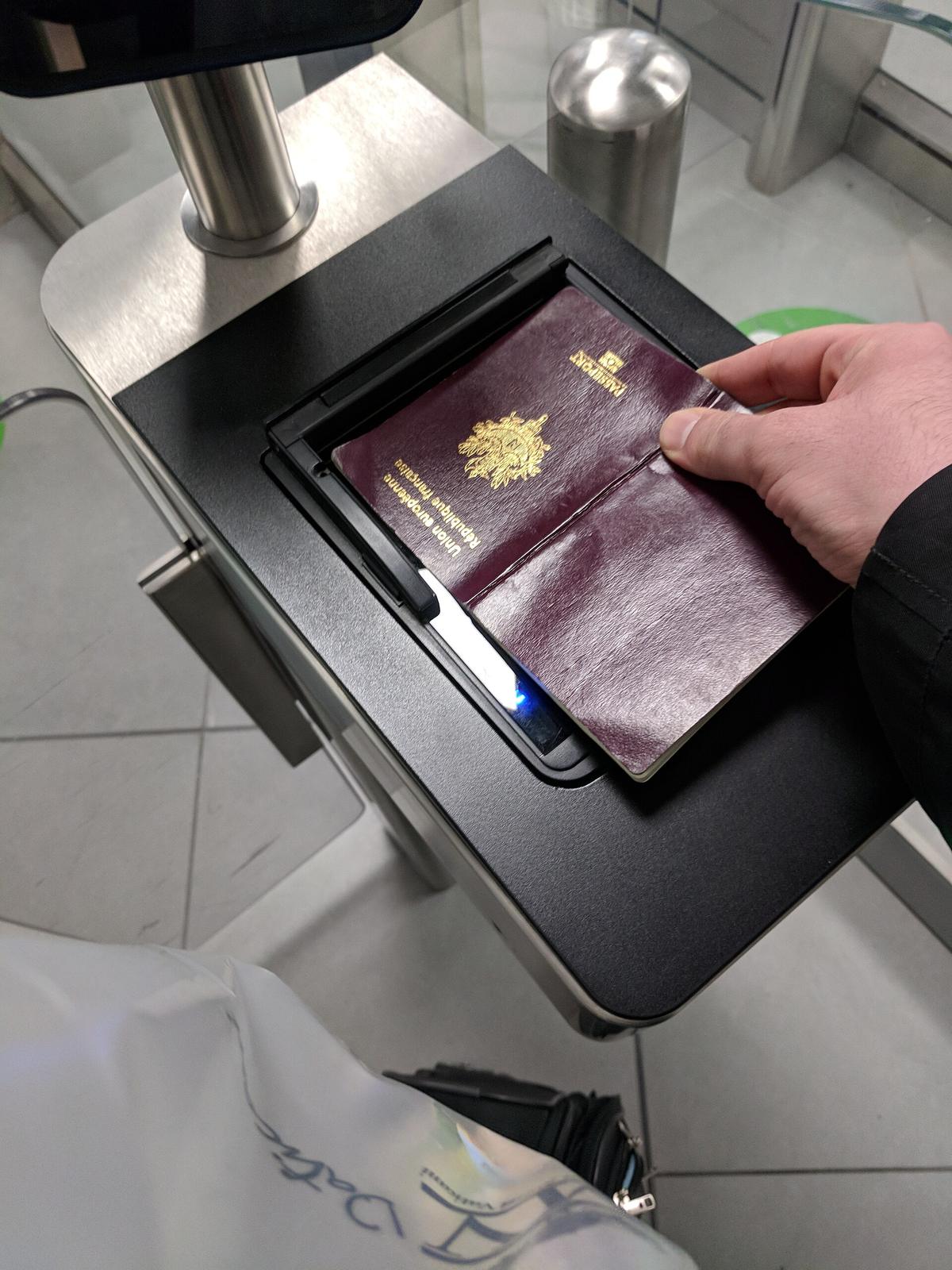
At French border control, all non-EU travellers are checked. From late 2025, the Schengen Entry/Exit System (EES) will replace manual passport stamping. EES, also implemented by eu-LISA, records your facial image and four fingerprints on entry and exit across Schengen external borders. Until then, non-EU visa-free citizens receive a stamp on entry and exit. Visa-required citizens have their visa validity and conditions verified, plus a stamp. All travellers are checked against the Schengen Information System (SIS) for alerts including refused entry, criminal records, or missing persons alerts.
French internal land borders with Italy, Spain, Belgium, Luxembourg, Germany, Switzerland, and Andorra are normally open, but the French government may temporarily reintroduce checks under Schengen Borders Code Articles 25 to 28. These checks happen without warning. Carry your travel document or national ID card at all times when crossing these borders. The Channel ports and Eurostar terminals (Paris Gare du Nord, Lille Europe) maintain juxtaposed controls: UK border checks happen on French soil, and French border checks happen on UK soil.

Long Stays and Beyond 90 Days
Any stay exceeding 90 days requires a long-stay visa (visa de long séjour) for all non-EU/EEA/Swiss citizens. Long-stay visa categories include visitor, student, work, family reunion, talent passport, and working holiday. Working holiday visas are available for citizens of Argentina, Australia, Brazil, Canada, Chile, Colombia, Ecuador, Hong Kong, Japan, Mexico, New Zealand, Peru, Russia, South Korea, Taiwan, and Uruguay. After arrival, certain long-stay visa categories must be validated online with the French Office of Immigration and Integration (OFII) within 3 months of arrival. The long-stay visa for stays of 4 to 12 months functions as a residence permit (VLS-TS). For stays beyond 12 months, you must apply for a separate carte de séjour at the local prefecture. Visa overstay penalties include a fine, a removal order, and an entry ban to the Schengen area for up to 3 years. Overstays exceeding 90 days can result in an entry ban up to 5 years.
The most common failure travellers make is assuming visa-free means no paperwork at the border. It does not. The French border officer can ask for proof of onward travel, accommodation, and funds on any visa-free entry. Book your return ticket before you fly. Book accommodation for every night of your stay. Keep a printed copy of your flight itinerary, hotel confirmations, and a bank statement showing sufficient funds. If you cannot produce any of these on request, you can be refused entry. That decision is documented in a written decision stating the grounds, and you have the right to appeal to the Tribunal administratif with territorial jurisdiction. Avoid that scenario by carrying a printed dossier in your hand luggage, not on your phone.
France visa requirements suit organised travellers who plan ahead and respect documentation rules. They do not suit spontaneous trip planners who book flights first and figure out paperwork later. A visa appointment booked two weeks before departure at a consulate without slots is a trip that does not happen.
Common Questions
How do I know if my passport allows visa-free entry to France?
Check the list of visa-free nationalities in the table above. If your country is not listed, you need a Schengen short-stay visa. If your country is listed but you hold a non-biometric travel document or one issued more than 10 years ago, you may be refused entry even if your nationality is visa-free.
Can I apply for a French Schengen visa online and get it by email?
No. France does not have a standalone e-visa system. You must submit the request online at France-Visas, then attend an in-person appointment at the consulate or its service provider (TLScontact or VFS Global) to submit biometric data and original documents.
What is the 90/180 day rule for France?
You can stay in the Schengen area for a maximum of 90 days in any rolling 180-day period. This applies to both visa-free entrants and those with a short-stay Schengen visa. The count includes days spent in any Schengen country, not just France.
Will the ETIAS requirement affect my existing Schengen visa?
No. If you hold a valid Schengen visa or a residence permit from a Schengen state, you do not need an ETIAS. The ETIAS requirement applies only to visa-exempt citizens who currently travel without any authorisation.
What documents do I need at the French border as a visa-free traveller?
Border officials may request your travel document (valid for 3 months beyond departure, issued within 10 years), proof of onward travel, proof of accommodation, and proof of sufficient financial means. The French government publishes the financial thresholds on France-Visas. Check the official site before you travel.
How long does it take to get a French Schengen visa?
Standard processing is 15 calendar days. During peak season, it can take up to 30 days. Apply at least 4 to 6 weeks before your trip. Appointment availability at busy consulates can add another 2 to 4 weeks.
Can I travel to French overseas territories with a Schengen visa?
Not automatically. French overseas departments (Guadeloupe, French Guiana, Martinique, Mayotte, Reunion) require a separate DROM-specific short-stay visa unless your Schengen visa carries a DROM endorsement. French overseas collectivities (French Polynesia, New Caledonia, Saint Barthélemy, Saint Martin, Saint Pierre and Miquelon, Wallis and Futuna) require separate visas entirely.
Read next
-

 Staying Connected in France With eSIM, Local SIM or Roaming
Compare eSIM, local French SIM cards, and roaming for reliable data across France, from Paris to the signal-poor Gorges du Verdon.
Staying Connected in France With eSIM, Local SIM or Roaming
Compare eSIM, local French SIM cards, and roaming for reliable data across France, from Paris to the signal-poor Gorges du Verdon.
-
 Best Time to Visit France When You Want the Place to Yourself
When to visit France based on crowds, closures, and regional rhythms—not just average temperatures and rainfall charts.
Best Time to Visit France When You Want the Place to Yourself
When to visit France based on crowds, closures, and regional rhythms—not just average temperatures and rainfall charts.
-
 Getting Around France by TGV, TER, and a Car You Can Actually Park
How to get around France by train and car, including TGV seat rules, paper ticket validation, motorway tolls, and where the rail map misleads.
Getting Around France by TGV, TER, and a Car You Can Actually Park
How to get around France by train and car, including TGV seat rules, paper ticket validation, motorway tolls, and where the rail map misleads.
-
 Cash or Card in France When the Restaurant Terminal Says Non
How to pay in France: where cards work, where cash still rules, and why your American Express might get refused at the boulangerie.
Cash or Card in France When the Restaurant Terminal Says Non
How to pay in France: where cards work, where cash still rules, and why your American Express might get refused at the boulangerie.
-
 France Safety Advice Without the Internet Panic Spiral
Real safety risks in France—pickpocketing, scams, and strike disruption—separated from the internet panic spiral, with practical advice.
France Safety Advice Without the Internet Panic Spiral
Real safety risks in France—pickpocketing, scams, and strike disruption—separated from the internet panic spiral, with practical advice.
-
 What a Trip to France Actually Costs Shaped by Region and Season
How trip costs in France shift by region and season, from Parisian prix-fixe lunches to the Côte d'Azur's August premium on every bed and table.
What a Trip to France Actually Costs Shaped by Region and Season
How trip costs in France shift by region and season, from Parisian prix-fixe lunches to the Côte d'Azur's August premium on every bed and table.
-
 A Ground-Level Logistics Guide to Independent Travel in China
First-time independent travel in China: what you need to know about visas, rail booking, eSIMs, mobile payments, and power adapters.
A Ground-Level Logistics Guide to Independent Travel in China
First-time independent travel in China: what you need to know about visas, rail booking, eSIMs, mobile payments, and power adapters.
-
 How Solo Travelers Stay Ahead of Flight Delays and Cancellations
How solo travelers can track inbound aircraft, claim rebooking rights, and adjust ground transport when flights go wrong — step by step.
How Solo Travelers Stay Ahead of Flight Delays and Cancellations
How solo travelers can track inbound aircraft, claim rebooking rights, and adjust ground transport when flights go wrong — step by step.
-
 Why Your eSIM Might Not Work Abroad and How to Check Before You Go
Buying an eSIM doesn't guarantee signal abroad. Learn why coverage fails by location and how to verify reach before you commit to a plan.
Why Your eSIM Might Not Work Abroad and How to Check Before You Go
Buying an eSIM doesn't guarantee signal abroad. Learn why coverage fails by location and how to verify reach before you commit to a plan.