Your Finland Transport Guide for Trains Buses and the Gaps Between
Finland's long-distance network splits between VR trains and Matkahuolto buses with no integrated ticket. This page explains the connections and the gaps.
VR trains and Matkahuolto buses do not share a ticket machine. This guide explains what connects where, and where the gaps are. Buy a train ticket on the VR app. Buy a bus ticket on the Matkahuolto app or website. The two never meet. A journey from Helsinki to a small Lakeland village demands two separate purchases, two separate schedules, and a transfer window that can snap shut if the train runs late. The state railway, VR, handles the spine of the country. Matkahuolto, an alliance of bus operators, fills the capillaries. The friction is real. It matters most in rural Finland and the far north, where a bus may run once in the morning and once in the late afternoon. Miss it, and you wait until tomorrow.
VR Train Finland Seat Reservation: How it Works
Every VR Intercity train requires a seat reservation on top of your ticket. The reservation is mandatory even on a standard fare. You cannot board an Intercity train without one. The exceptions are the slow regional trains on the capital's commuter lines, which do not require reservations, but those trains do not reach the north. The VR Matkalla mobile app sells both the ticket and the reservation together. Station ticket machines and R-kioski convenience stores also sell them. Buy online at least a day ahead for popular departures, especially Friday afternoons and the start of school holidays. A reserved seat is tied to a specific carriage and seat number, so arrive on the platform early enough to find your car before the train departs.
Helsinki to Rovaniemi: The Overnight Sleeper
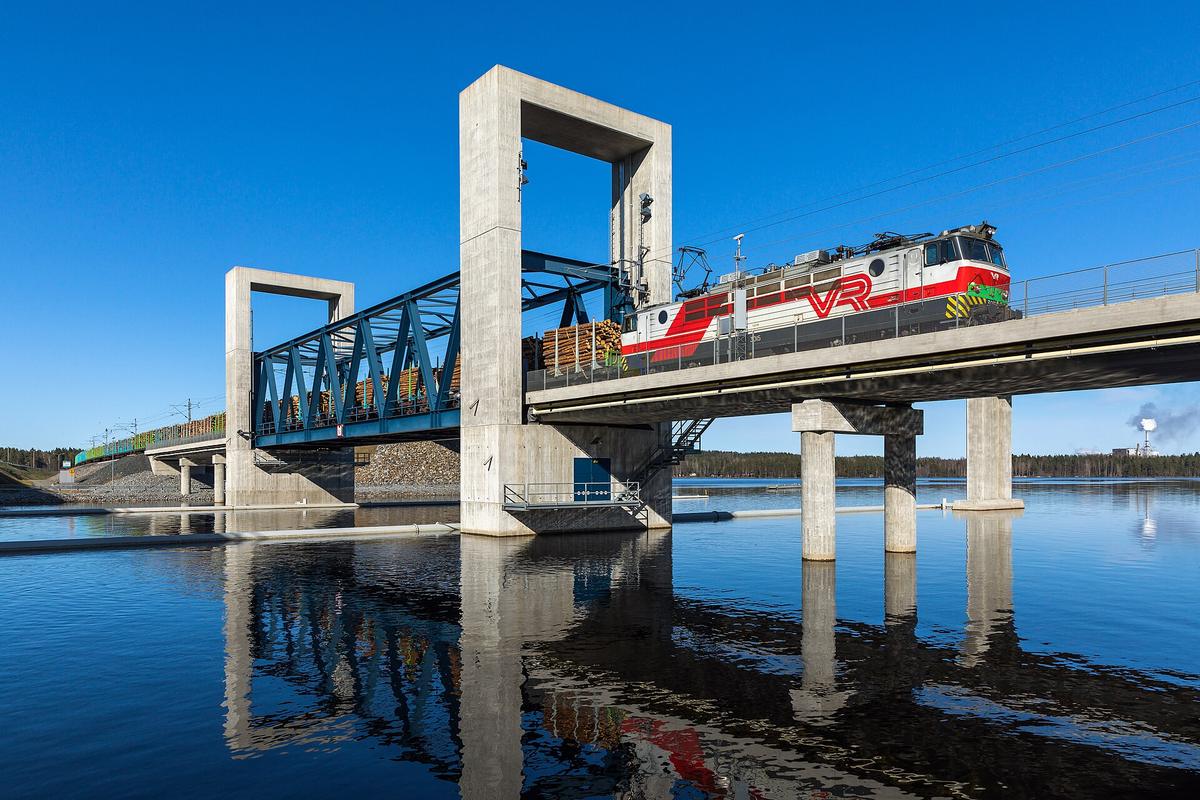
The Helsinki to Rovaniemi train is the backbone of northern access by rail. The journey takes 8 to 12 hours, depending on the service. The overnight sleeper departs the capital in the evening and arrives in Rovaniemi the following morning. Book an en-suite sleeper cabin with a private WC and shower if you want to arrive rested; the standard 2-berth sleeper cabin shares a toilet at the end of the corridor. Both options require a supplement beyond the seat reservation. The same night train continues to Kemijärvi, and a separate service runs to Kolari. Car-carrier wagons are available on the Helsinki to Rovaniemi route, allowing you to bring a vehicle and save the drive through the darker southern half of the country. Book the car slot weeks ahead in summer and during February and March, when ski demand peaks in the far north.

Matkahuolto Bus Network Finland: the Rural Reality
Matkahuolto is not a single bus company. It is a platform shared by regional operators. The Matkahuolto app and website sell tickets for all participating operators, and the system reaches every municipality that lacks a rail station. The key fact is frequency. On major intercity corridors, such as Helsinki to Turku or Tampere to Vaasa, buses run hourly or better. On rural roads in Eastern Finland, Kainuu, and the far north, a bus may run once in the morning and once in the late afternoon. Some routes run only on school days. The Onnibus express service competes with VR on the busiest intercity routes, with lower prices, but Onnibus does not serve small towns. For a journey from a railhead like Joensuu to a national park trailhead, you book a Matkahuolto connection and you plan your entire day around that single departure time. If you miss it, no alternative appears until the next day.
How to Use Matkahuolto Tickets
Tickets are dated for a specific departure. Flexible tickets cost more and let you switch to an earlier or later bus on the same route if seats are free. Validate your mobile ticket before boarding, and keep your phone charged. Paper tickets from an R-kioski require no validation. The system does not let you transfer a ticket to a different route. If you need to combine a VR train with a Matkahuolto bus at a junction like Mikkeli or Kuopio, buy the two tickets separately and leave a gap of at least 45 minutes between scheduled arrival and departure. Delays on one system do not carry to the other.
Driving in Lapland Winter: Laws, Risks and Reindeer
Winter tyres are mandatory in Finland from 1 November to 31 March if road or weather conditions require them. Studded tyres are permitted in that same window or until Easter Monday if later. Beyond the law, the practical rule is that you do not drive in the far north in December, January or February without studded tyres. The roads are snow-packed or icy for months. Dipped headlights are mandatory at all times, day and night, year round. The blood alcohol limit for driving is 0.5 g per litre, or 0.05 percent. The aggravated limit of 1.2 g per litre carries heavier penalties.
Reindeer on the Road
Reindeer roam freely across northern Finland. They do not respect road edges. Collisions peak in the dark months of polar night, roughly late November to mid-January, when continuous darkness reduces visibility. Drive at or below the posted speed limit on forest roads and watch for the reflective collars some animals wear. If you hit a reindeer, report it to the local reindeer cooperative and the police. Do not leave the animal injured. The cooperative will handle the recovery.
Fuel Stops and Distances
Distances between service stations on northern roads can exceed 100 kilometres. Many rural petrol stations close by 6 pm. In the far north, that means a fuel stop you planned for 5:30 pm may already be shuttered. Fill up when you see a station open, not when your gauge reads empty. The Helsinki to Ivalo road distance is a full day of driving in summer and longer in winter. The polar night effect in the far north, from late November to mid-January, means you drive in darkness for nearly the entire trip. Continuous daylight from late May to late July eliminates that hazard north of the Arctic Circle, and 24 hour driving becomes feasible.
Domestic Flights and Coastal Ferries
Domestic flights are the fallback when road and rail run thin. Helsinki to Ivalo takes 1 hour 40 minutes; Helsinki to Rovaniemi takes 1 hour 15 minutes. Finnair, Norwegian and regional carriers serve the main hubs: Oulu, Rovaniemi, Kittilä, Ivalo, Kuopio, Vaasa, Tampere, Turku, Mariehamn. In deep winter, when rural coach services are reduced, flights become the primary visitor access to northern destinations. Book flights to Kittilä or Ivalo rather than Rovaniemi if your destination is further north, because the coach connection from Rovaniemi airport northward is thin. Finferries operates the archipelago ferries in the Turku and Åland archipelagos. The Turku Archipelago Trail, a ring road by car or bike, involves multiple ferry crossings; a straight line journey of 50 kilometres can take 4 to 6 hours because of the ferry schedules. Ålandstrafiken handles ferry and bus services within the Åland Islands. Ice roads in the Archipelago Sea open only when ice thickness reaches safe levels. Some ferry routes are replaced by hovercraft in deep winter. Schedules are published annually by Finferries.

The Gaps: What the Network Does Not Do
No passenger rail services run north of Rovaniemi or east of Joensuu and Nurmes. The rail system spans roughly 5,900 kilometres, of which about 60 percent is electrified. The unelectrified lines rely on diesel locomotives. The coach network covers all municipalities, but frequency in the rural north and Kainuu is low enough that a missed connection strands you. The HSL app covers the capital region only. For Tampere, use the Nysse app; for Turku, use Föli. Smaller cities may not have a unified mobile ticketing system at all. The Lake District requires a combination of rail to a major town such as Mikkeli, Savonlinna or Kuopio, and then a coach or rental car for lake by lake movement. Point to point journeys around lakes often require detours of 50 to 100 kilometres because the water bodies block the direct line. The spring thaw from April to early May disrupts gravel roads with mud and weight restrictions. Roughly a quarter of the public road network is unpaved gravel or forest roads. A rental car in late April may encounter closures that a satnav does not predict.
Alcohol and Service Hours
Alcohol above 5.5 percent ABV is sold only in state run Alko stores. Alko closes by 8 pm on weekdays, 6 pm on Saturdays, and is closed on Sundays. Rural petrol stations and cafés close by 6 pm, leaving long stretches of highway without open services after early evening. Public toilets at rest stops and stations cost 1 to 2 euros via mobile payment or coin, and free toilets are rare outside shopping centres. The combination of early closing times and sparse facilities means you plan your refuel, your food stop and your bathroom break before you leave a town, not after.
Who This Transport System Suits and Who Should Skip it
The system suits self-sufficient road trippers who carry their own food and fuel strategy, wilderness hikers who can adapt their itinerary to a single daily bus, and aurora chasers who book flights and transfers ahead. It does not suit travellers who need spontaneous nightlife, cheap street food, or a high frequency urban transit experience. A common mistake is booking a capital only trip with a single rushed overnight train to the north, spending two of four nights in transit and seeing neither the south nor the north properly. Minimum 7 days is the realistic floor. Less than that forces a Helsinki only trip that misses the defining lakes, forests and sauna culture. The transport system works if you work with its schedule, not against it. The one thing that most often goes wrong is underestimating the gap between the train arrival and the next bus departure, especially on rural routes where that gap is 23 hours.
Common Questions
Do I need a seat reservation on every VR train?
Every VR Intercity train requires a seat reservation. Regional commuter trains in the Helsinki area do not, but those trains do not reach the north or the Lake District. Buy the reservation at the same time as your ticket.
Can I use the same ticket for a VR train and a Matkahuolto bus?
No. VR and Matkahuolto are separate systems. You buy a train ticket from VR and a bus ticket from Matkahuolto or Onnibus. There is no integrated ticket for the two.
How often do buses run in rural Lapland?
On many northern routes, buses run once in the morning and once in the afternoon. Some routes operate only on school days. Check the Matkahuolto schedule before booking accommodation.
Are winter tyres really mandatory in Finland?
Winter tyres are mandatory from 1 November to 31 March if weather or road conditions require them. Studded tyres are permitted in that period. Driving without them in snow or ice is illegal.
Read next
-

 Staying connected in Finland with eSIM, local SIM or roaming
Finland has blanket 4G and 5G signal even on remote Lapland fells. The question is not whether you will get a connection but whether you want to pay roaming r
Staying connected in Finland with eSIM, local SIM or roaming
Finland has blanket 4G and 5G signal even on remote Lapland fells. The question is not whether you will get a connection but whether you want to pay roaming r
-
 Best Time to Visit Finland, Midnight Sun, Mosquitoes and the Grey Slush Window
Finland's seasons are defined by light and ground conditions, not just temperature. This page explains each season honestly, including the November window to avoid.
Best Time to Visit Finland, Midnight Sun, Mosquitoes and the Grey Slush Window
Finland's seasons are defined by light and ground conditions, not just temperature. This page explains each season honestly, including the November window to avoid.
-
 Finland Visa Requirements and the Schengen Application Process
Finland is part of the Schengen area. This page explains who needs a visa, how to apply through Migri, and what to expect at Helsinki-Vantaa border control.
Finland Visa Requirements and the Schengen Application Process
Finland is part of the Schengen area. This page explains who needs a visa, how to apply through Migri, and what to expect at Helsinki-Vantaa border control.
-
 Money in Finland, Cards, Euros and When You Still Need Coins
Finland runs on contactless cards and euros, but public toilets, locker rooms, and some rural services still need coins. Here is what actually works.
Money in Finland, Cards, Euros and When You Still Need Coins
Finland runs on contactless cards and euros, but public toilets, locker rooms, and some rural services still need coins. Here is what actually works.
-
 Is Finland Safe, Reading Travel Advice Without the Hype
Finland is safe from violent crime, but winter cold, icy streets, and remote Lapland trails pose real risks. This page focuses on what actually matters.
Is Finland Safe, Reading Travel Advice Without the Hype
Finland is safe from violent crime, but winter cold, icy streets, and remote Lapland trails pose real risks. This page focuses on what actually matters.
-
 What a trip to Finland really costs and how the money flows
Finland is expensive in ways that catch travellers off guard, from Alko alcohol rules to €2 public toilets, but the costs are predictable once you understand
What a trip to Finland really costs and how the money flows
Finland is expensive in ways that catch travellers off guard, from Alko alcohol rules to €2 public toilets, but the costs are predictable once you understand
-
 How Solo Travelers Stay Ahead of Flight Delays and Cancellations
How solo travelers can track inbound aircraft, claim rebooking rights, and adjust ground transport when flights go wrong — step by step.
How Solo Travelers Stay Ahead of Flight Delays and Cancellations
How solo travelers can track inbound aircraft, claim rebooking rights, and adjust ground transport when flights go wrong — step by step.
-
 Why Your eSIM Might Not Work Abroad and How to Check Before You Go
Buying an eSIM doesn't guarantee signal abroad. Learn why coverage fails by location and how to verify reach before you commit to a plan.
Why Your eSIM Might Not Work Abroad and How to Check Before You Go
Buying an eSIM doesn't guarantee signal abroad. Learn why coverage fails by location and how to verify reach before you commit to a plan.