Finland Currency and Payment Tips for Cards Euros and the Occasional Coin
Finland runs on contactless cards and euros, but public toilets, locker rooms, and some rural services still need coins. Here is what actually works.
Many travellers assume a country that uses the euro is simple to navigate financially. Finland adds a twist: it is almost entirely cashless, but the exceptions matter. Understanding Finland currency and payment means knowing that your contactless card works at a reindeer-herder’s smokehouse stall in Inari but will not open a public toilet in a Helsinki park. The core system is straightforward. The edge cases are what trip people up.
Finland adopted the euro (EUR, €) in 2002, replacing the Finnish markka at a fixed rate of 1 EUR = 5.94573 FIM. No markka is in circulation; you cannot spend it anywhere. Every price you see is in euros, and every transaction runs through a card terminal. The failure case is not that a business takes only cash. It is that a business takes only card and your foreign card triggers a fee, or that you need coins for something not attached to a terminal at all.
Your Visa or Mastercard contactless card plus Apple Pay or Google Pay on your phone will handle 95% of what you do in Finland. The remaining 5% requires a few euro coins and an awareness of the local mobile-payment app landscape.
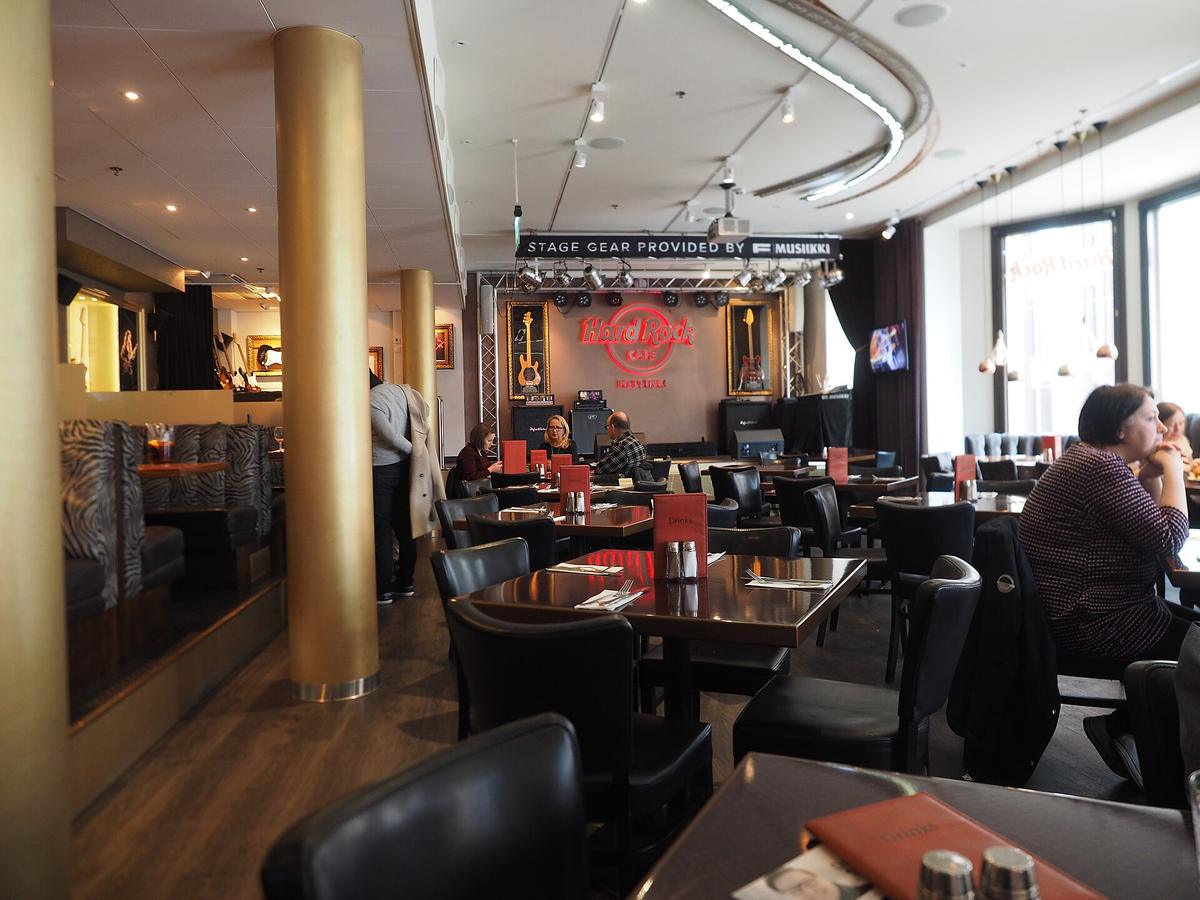

Using Euros in Finland
What You Actually Carry
Bring a mix of payment options. A contactless debit or credit card (Visa or Mastercard, ideally with no foreign transaction fee) is the primary tool. A phone set up with Apple Pay or Google Pay works identically at the same terminals. A small stash of coins covers the gaps.
Where Cash Still Works
Most supermarkets (K-Citymarket, Prisma, S-market, Lidl) accept cash. Larger retailers do too. But some cafes, bars, and market stalls in Helsinki operate cashless only. The rule of thumb: if it is a permanent business with a terminal, it may take cash. If it is a pop up, a market tent, or a small food truck, expect it to be card only.
The real cash requirement is infrastructure. Public toilets at rest stops, railway stations, and some city parks charge €1–2 and accept only coins or a Finnish mobile payment app. Unattended fuel pumps in remote areas sometimes require coins or a specific app. Locker rentals at swimming halls and museums may take only a €1 or €2 coin. Carry at least three of each.
Alko: Card Only
Alko, the state monopoly that sells all alcohol above 5.5% ABV, does not accept cash. Cards only. Alko stores close by 8pm weekdays, 6pm Saturdays, and are closed entirely on Sundays. Budget your alcohol purchases around these hours because no supermarket sells wine or spirits.
Cash vs Card Finland
The default choice in Finland is card. Cash is backup. This reverses the assumption many visitors from cash-heavy countries bring. If you present cash at a Helsinki cafe, the barista can take it but may look surprised. If you present cash at a small rural café that has gone cashless, the barista cannot take it at all.
Where Card Dominates
Every taxi accepts card. Every hotel, hostel, and Airbnb takes card. Every VR train accepts card onboard and at ticket machines. Every museum, national park visitor centre, and ferry takes card. Even the reindeer sleigh ride operator in Saariselkä will tap your phone on a portable terminal.
Where Cash Appears
Cash use rises slightly in two windows: midsummer (late June) and the Christmas holiday period, especially in rural Lapland and remote summer cottage areas where mobile connectivity can be patchy. If you are island hopping in the Archipelago Sea or staying in a cottage in Kainuu, having some cash for a farm stand or a tiny village kiosk is prudent. But do not carry large amounts. Finland is safe, and a brick of unused euros is just a foreign exchange loss at the end of the trip.
Finland ATM Fees
How Otto ATMs Work
Otto is the sole ATM network in Finland, operated by Automatia, a joint venture of the major Finnish banks. Otto ATM cash withdrawal fees for foreign cards vary by your card issuer. Otto itself does not add a surcharge. Your home bank decides the fee. Call your bank before departure to confirm the charge and daily withdrawal limit.
Minimum Withdrawals and Denomination
Otto machines have no fixed minimum withdrawal. Most dispense multiples of €10 or €20 depending on the machine. Select the exact amount you need. Withdrawing a larger sum to avoid multiple fees is fine; withdrawing a large sum because you cannot get a small one is not a problem that arises often.
Dynamic Currency Conversion at ATMs
The ATM will offer to convert the withdrawal to your home currency on screen. This is Dynamic Currency Conversion (DCC). Decline it. The exchange rate DCC uses is unfavourable. If you accept, you pay roughly 4–8% more than the market rate for the convenience of seeing the amount in your home currency. Choose to be charged in euros (EUR) instead.
Same Trap at Point of Sale
The same DCC offer appears at some merchant card terminals. The machine asks if you want to pay in euros or your home currency. Select euros. Your bank will convert at its own rate, which is almost always better than the DCC rate.
ATM Availability Outside Cities
ATMs are abundant in Helsinki, Tampere, Turku, and the major Lapland resort hubs (Rovaniemi, Levi, Ylläs). In rural Lapland, distances between Otto ATMs can exceed 100 kilometres. In Åland, an Otto ATM exists in Mariehamn but is limited elsewhere on the islands. Do not arrive in a remote area without cash assuming you can find an ATM within a short drive. Plan your cash withdrawals before you leave the last town with a bank.
Tipping in Finland
Finland is a no tipping culture. Service charges are never added to a bill. Tipping is not expected in any situation. That said, the practice is not offensive; it is simply rare.
Restaurants, Bars and Cafes
No service charge is included. Rounding up the bill or leaving 5–10% is appreciated by staff but never required. Tip jars are uncommon. If the service was poor, do not tip. If it was fine, pay the stated price. If it was excellent, rounding up is a kind gesture but no one will chase you for it.
Taxis
No tipping expected. Some passengers round up to the nearest euro. That is the ceiling of the custom. A taxi driver in Helsinki will not be offended by a tip, but they also will not expect one.
Hotel Staff and Tour Guides
No tipping expected. If a porter carries bags or housekeeping does an exceptional job, a small gratuity is at your discretion. Tour guides do not expect a tip; if the guide provided outstanding service, a tip is your choice, not a social obligation.
Mobile Payments and the Digital Edge
Finland has blanket 4G/5G coverage even in remote Lapland fells. This makes mobile payments reliable across the country. Apple Pay and Google Pay work at every terminal that accepts contactless cards, which is nearly all of them.
A Finnish mobile payment app called Siirto existed for person to person transfers but has been largely superseded by MobilePay, which is widely used among locals. For a short visit, you do not need to install a local payment app. Your phone wallet is sufficient for the card paying side. The exception is some unattended services (toilets, lockers, fuel pumps) that require a Finnish mobile app for payment. If you encounter one and have no coins, you may be stuck. This is the coin argument again. Carry the coins.
Physical Prepaid SIM Registration
A separate but financial adjacent detail: if you buy a physical prepaid SIM card in Finland, registration requires your passport. eSIMs from Elisa and Telia are widely available and do not require a store visit. If you want a physical SIM, bring your passport to the R kioski or supermarket customer service desk. Without your passport, you cannot activate the SIM. This is a legal requirement, not a store policy.
Common Questions
Can I use my credit card everywhere in Finland?
Almost everywhere. Card terminals are universal in cities, towns, and most rural areas. The exceptions are a small number of cashless businesses, public toilets, unattended fuel pumps, and rental lockers. Your card will fail at these, not because the business rejects cards, but because there is no terminal to use.
What is the best way to get euros before or in Finland?
The cheapest way is to withdraw from an Otto ATM with a card that reimburses foreign ATM fees. Avoid airport currency exchange desks. Bringing some euros from home is fine but unnecessary unless you arrive at a small airport outside ATM hours. Helsinki Vantaa has Otto ATMs in the arrival hall.
Do I need to tip in Finland?
No. Tipping is not expected in restaurants, bars, cafes, taxis, hotels, or for tour guides. Rounding up is appreciated for excellent service but is not a social requirement.
Are there any hidden fees I should know about?
The main hidden fee is Dynamic Currency Conversion (DCC) at ATMs and point of sale terminals. Always decline the conversion and pay in euros. Your bank’s conversion rate is better. Also check with your bank about foreign transaction fees before departure.
What happens if I only have cash and a business is card only?
You cannot complete the transaction. Some card only businesses in Finland do not accept cash by law or policy. You must find a bank or an Otto ATM to deposit the cash, or use the cash at a different business that accepts it. Avoid this situation by always carrying at least one card.
Read next
-
 Staying connected in Finland with eSIM, local SIM or roaming
Finland has blanket 4G and 5G signal even on remote Lapland fells. The question is not whether you will get a connection but whether you want to pay roaming r
Staying connected in Finland with eSIM, local SIM or roaming
Finland has blanket 4G and 5G signal even on remote Lapland fells. The question is not whether you will get a connection but whether you want to pay roaming r
-
 Best Time to Visit Finland, Midnight Sun, Mosquitoes and the Grey Slush Window
Finland's seasons are defined by light and ground conditions, not just temperature. This page explains each season honestly, including the November window to avoid.
Best Time to Visit Finland, Midnight Sun, Mosquitoes and the Grey Slush Window
Finland's seasons are defined by light and ground conditions, not just temperature. This page explains each season honestly, including the November window to avoid.
-
 Getting Around Finland, VR Trains, Matkahuolto Buses and the Gaps
Finland's long-distance network splits between VR trains and Matkahuolto buses with no integrated ticket. This page explains the connections and the gaps.
Getting Around Finland, VR Trains, Matkahuolto Buses and the Gaps
Finland's long-distance network splits between VR trains and Matkahuolto buses with no integrated ticket. This page explains the connections and the gaps.
-
 Finland Visa Requirements and the Schengen Application Process
Finland is part of the Schengen area. This page explains who needs a visa, how to apply through Migri, and what to expect at Helsinki-Vantaa border control.
Finland Visa Requirements and the Schengen Application Process
Finland is part of the Schengen area. This page explains who needs a visa, how to apply through Migri, and what to expect at Helsinki-Vantaa border control.
-
 Is Finland Safe, Reading Travel Advice Without the Hype
Finland is safe from violent crime, but winter cold, icy streets, and remote Lapland trails pose real risks. This page focuses on what actually matters.
Is Finland Safe, Reading Travel Advice Without the Hype
Finland is safe from violent crime, but winter cold, icy streets, and remote Lapland trails pose real risks. This page focuses on what actually matters.
-
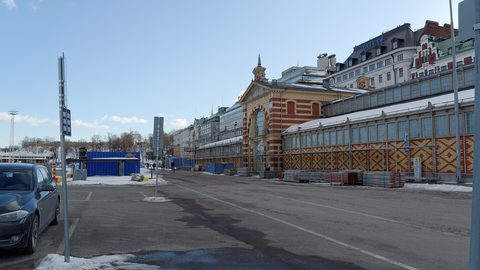 What a trip to Finland really costs and how the money flows
Finland is expensive in ways that catch travellers off guard, from Alko alcohol rules to €2 public toilets, but the costs are predictable once you understand
What a trip to Finland really costs and how the money flows
Finland is expensive in ways that catch travellers off guard, from Alko alcohol rules to €2 public toilets, but the costs are predictable once you understand
-
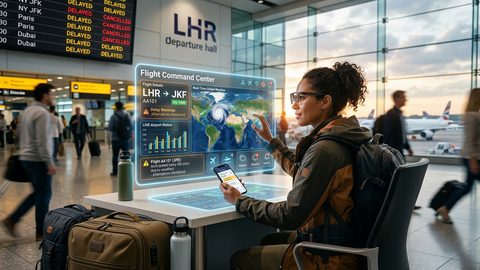 How Solo Travelers Stay Ahead of Flight Delays and Cancellations
How solo travelers can track inbound aircraft, claim rebooking rights, and adjust ground transport when flights go wrong — step by step.
How Solo Travelers Stay Ahead of Flight Delays and Cancellations
How solo travelers can track inbound aircraft, claim rebooking rights, and adjust ground transport when flights go wrong — step by step.
-
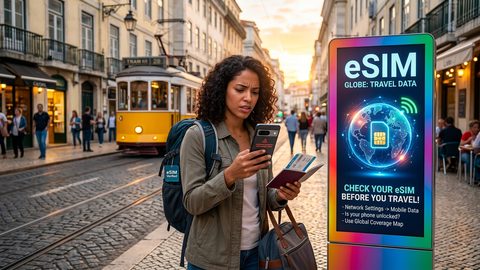 Why Your eSIM Might Not Work Abroad and How to Check Before You Go
Buying an eSIM doesn't guarantee signal abroad. Learn why coverage fails by location and how to verify reach before you commit to a plan.
Why Your eSIM Might Not Work Abroad and How to Check Before You Go
Buying an eSIM doesn't guarantee signal abroad. Learn why coverage fails by location and how to verify reach before you commit to a plan.