Is UAE Safe for Tourists Without the Usual Exaggerations
Genuine safety concerns in the UAE: strict laws on photography, alcohol, and public behaviour, not violent crime, are what visitors need to understand.
UAE Safety Advice Without the Hype
You land at Dubai International, the air conditioning hits you like a wall, and every official sign is in Arabic and English. The hotel concierge smiles. The taxi driver uses a meter. Nothing feels dangerous. That is exactly when visitors trip over the rules they did not know existed. The question is UAE safe for tourists gets two very different answers depending on whether you mean safe from violent crime or safe from legal trouble. Violent crime statistics are genuinely low. The legal and cultural risks that land travellers in police stations, deportation lines, or a ruined trip are a separate category entirely. Safety here is a matter of knowing the rules rather than fearing crime. Here is what to watch for.
Is UAE Safe for Tourists? Separating Crime from Legal Risk
Bag theft is rare. Assault is rare. Street scams exist but are limited to taxi overcharging near malls and fake tour operators offering desert safaris without a licence. The United Kingdom Foreign, Commonwealth & Development Office, the United States Department of State, the Government of Canada, and the Australian Department of Foreign Affairs and Trade all issue annual travel advisories for the UAE. Every one of them notes a terrorism risk and a regional conflict risk linked to the proximity of the Strait of Hormuz. None of them put the UAE in the highest category for violent crime. The real safety problem is not someone taking your wallet. It is taking a photograph of the wrong building, having a drink on a beach after sunset, or making a hand gesture in a traffic dispute. Those actions carry criminal penalties that can include arrest, fines, and deportation.

UAE Strict Laws Tourists Need to Know Before They Arrive
The UAE operates under federal law that applies to visitors the same way it applies to residents. Ignorance is not a defence. The 2021 federal law reforms decriminalised unmarried cohabitation and unmarried pregnancy, which removes two of the older risks. What remains is a list of behaviours that would be minor annoyances elsewhere and are criminal offences here.
Drug Policy Is Zero Tolerance
Trace amounts of narcotics in your bloodstream from consumption before you boarded the plane can lead to prosecution. The UAE Ministry of Health publishes a list of prohibited substances. Check it before you pack any prescription medication. Controlled substances require prior approval from the Ministry of Health.
Swearing and Rude Gestures Are Criminal Offences
A raised middle finger in traffic, an insult shouted across a car park, or a heated argument in a public space can result in a fine or imprisonment. Social media defamation, insulting religion, and criticising the government online carries the same risk. The UAE takes digital behaviour as seriously as physical behaviour.
What Happens at the Border
Unpaid traffic fines can prevent you from leaving the country. The system links traffic enforcement to border control. If you rent a car and accumulate fines, settle them before you fly out.
Dubai Public Behaviour Rules That Catch Visitors Out
Public spaces in Dubai and across the UAE require a level of formality that the glossy brochures do not show. The dress code in malls, government buildings, and public areas expects shoulders and knees covered. On hotel beaches and designated beach clubs, swimwear is acceptable. Topless sunbathing is prohibited everywhere. Public display of affection is tolerated only at the level of holding hands. Kissing and overt intimacy attract police attention. During Ramadan, eating, drinking, and smoking in public during daylight hours is prohibited, licensed venue service is restricted, and live entertainment is limited. The call to prayer five times daily is loud and pervasive. Light sleepers in non-soundproofed apartments will be woken at dawn.
Weekend Days and Friday Disruption
Weekend days are Saturday and Sunday, but Friday remains a holy day. Many attractions and shops open late afternoon on Friday, disrupting morning plans you might have made based on weekday hours.
UAE Photography Restrictions Most Tourists Ignore
Photography restrictions in the UAE are stricter than in almost any other major tourist destination. You cannot photograph government buildings, military sites, palaces, or airports. Doing so can lead to arrest. Photographing local people without consent, especially Emirati women, is a serious offence. Drone use is heavily restricted and requires prior registration and a permit from the General Civil Aviation Authority. Flying a drone without that permit risks confiscation and legal action. The safe rule: photograph the Burj Khalifa, the Sheikh Zayed Grand Mosque, and the sand dunes. Keep your camera down when you see a security checkpoint, a government facade, or a person who has not given you permission.
Drinking Laws in the United Arab Emirates: Where You Can and Cannot Drink
Licensed drinks are available only in hotel bars and restaurants. Drinking outside those venues or being intoxicated in public is a criminal offence. The blood alcohol limit for drivers is 0.0%. Zero tolerance. A single drink before driving puts you at risk of arrest, fine, licence suspension, and deportation. Tourists can purchase drinks in licensed venues without a personal licence. Residents need one. Sharjah city has zero licensed venues. If you stay in Sharjah, you cannot buy a drink anywhere within the emirate. Plan your accommodation accordingly. The practical failure case: you finish a beach club evening in Dubai Marina, walk to the street to find a taxi, and your behaviour on the street is what the police see. Keep drinking inside the venue. Use a taxi from the venue door to your hotel door.
| Legal Risk You Could Face | What It Costs You | How Common It Is Among Tourists |
|---|---|---|
| Photographing a government building | Arrest, fine, possible deportation | Moderate; many visitors do not know the rule |
| Public intoxication after a licensed bar visit | Arrest, fine, possible deportation | Moderate; happens at beach clubs and bars |
| Drink driving (one beer) | Arrest, fine, licence suspension, deportation | Low; most tourists use taxis or apps |
| Street theft or assault | Loss of property, injury | Very low; violent crime statistics are genuinely low |
| Social media defamation or swearing in public | Fine or imprisonment | Low but rising as more visitors post content |
Solo Female Travel UAE: Practical Advice Without Scare Tactics
Solo female travel in the UAE is safe in the sense that violent crime is rare and the public transport system in Dubai is functional. The risks are the same legal and cultural restrictions every visitor faces, plus a social dynamic that can feel stifling. Women travelling alone will be treated with a formal distance in most settings. The dress code expectation of covered shoulders and knees applies to everyone, but women who deviate from it receive more attention. The photography restriction around local people matters here too: men may ask for photographs, and you have every right to refuse. The practical failure case is the solo traveller who books a non-hotel apartment in a residential building and finds herself in a neighbourhood with no taxis on the street and no nearby licensed venue. Use the Careem or Uber app for all transport. Stay in hotel areas like Downtown Dubai, Dubai Marina, or Saadiyat Island in Abu Dhabi. Avoid accommodation in Sharjah if you want to eat or drink in hotel venues alone without friction. The UAE is not for solo female travellers wanting to party freely. It works well for a woman who wants a predictable, resort-style holiday or a cultural trip with structured days.
The VoIP Ban and Connectivity Trap
WhatsApp voice and video calls are blocked in the UAE. FaceTime, Skype, and Snapchat calls also do not work without a VPN, which is technically illegal to use. SIM cards from du and Etisalat are available at the airport on presentation of a passport. Tourist packs with generous data cost in the range of AED 100 to 200. You can send text messages, use messaging apps for text, and browse the internet. You cannot make free internet calls. The workaround: use a hotel landline for international calls, or accept that your video call with family will happen over a data connection that may be slow. The failure case: you arrive assuming your phone will work the same way it does at home and find you cannot call your hotel from the airport because the app-based taxi service will not connect, leaving you stranded without a plan.
What to Do If Something Goes Wrong
Emergency services number is 999 for police, 998 for ambulance, and 997 for fire. The police non-emergency contact is 901. Dubai has a tourist police line at 800 2626; Abu Dhabi's is 800 4438. If you lose your passport, file a police report first, then contact your embassy or consulate. If you are arrested, you have the right to contact your embassy. Do not argue with police. Do not try to explain your behaviour as culturally acceptable where you come from. The UAE legal system does not accept that defence. The single most practical thing you should do before you leave home: check the UAE Ministry of Health prohibited drugs list against every medication you carry, including over the counter pills, and carry a printed copy of your prescription with the generic name, not the brand name.
Common Questions
Can I drink in a hotel bar as a tourist?
Yes. Licensed drinks are served in hotel bars and restaurants. You do not need a personal licence as a tourist. Drinking outside these venues or being intoxicated in public is a criminal offence.
Is it safe to walk alone at night in Dubai?
Yes, in most central areas. Dubai has low violent crime statistics. Stick to well-lit areas like Dubai Marina, Downtown Dubai, and JBR. Use a taxi or ride-hail app after midnight. Deira and older areas are less well-lit but not high risk.
Can I be arrested for taking a photograph of a building?
Yes, if that building is a government building, military site, palace, or airport. Photography of those structures is prohibited. Photographing local people without consent, especially Emirati women, can also lead to arrest.
What happens if I am caught with drugs in the UAE?
Zero tolerance applies. Trace amounts in your bloodstream from before travel can lead to prosecution. Penalties include imprisonment and deportation. Check the UAE Ministry of Health prohibited list before you pack any prescription medication.
Do I need a visa to enter the UAE?
That depends on your nationality. Many nationalities receive a free 30 day or 90 day visa on arrival. Check your government travel advisory for current entry requirements before you book.
Can I use WhatsApp to call home?
No. WhatsApp voice and video calls are blocked. FaceTime, Skype, and Snapchat calls also do not work. Text messaging on those apps works. Using a VPN to bypass the block is technically illegal.
Is it safe for a woman to travel alone to the UAE?
Yes, with the same caveats that apply to all visitors. Violent crime is rare. The legal and cultural restrictions on public behaviour, dress, and licensed venues apply equally. Avoid non-hotel apartments in residential areas. Use ride-hail apps. Stay in hotel districts.
Read next
-
 Staying connected in the United Arab Emirates with eSIM, local SIM, or roaming
How to get mobile data across the UAE with eSIM, local SIM from du or Etisalat, or roaming, and why WhatsApp calls stay blocked regardless.
Staying connected in the United Arab Emirates with eSIM, local SIM, or roaming
How to get mobile data across the UAE with eSIM, local SIM from du or Etisalat, or roaming, and why WhatsApp calls stay blocked regardless.
-
 Best Time to Visit the UAE and What Each Season Actually Does
The UAE's seasons explained honestly: when outdoor dining and desert activities are pleasant, when the summer heat becomes dangerous, and how Ramadan affects travel.
Best Time to Visit the UAE and What Each Season Actually Does
The UAE's seasons explained honestly: when outdoor dining and desert activities are pleasant, when the summer heat becomes dangerous, and how Ramadan affects travel.
-
 Getting Around the Emirates Without a Car
How to move between Dubai, Abu Dhabi, and the other emirates by bus, taxi, and ride-hailing app, and why there is no train network.
Getting Around the Emirates Without a Car
How to move between Dubai, Abu Dhabi, and the other emirates by bus, taxi, and ride-hailing app, and why there is no train network.
-
 UAE Visa Rules and Who Gets Entry on Arrival
Which nationalities get a UAE visa on arrival at Dubai or Abu Dhabi airports, who must apply in advance, and how the entry process actually works.
UAE Visa Rules and Who Gets Entry on Arrival
Which nationalities get a UAE visa on arrival at Dubai or Abu Dhabi airports, who must apply in advance, and how the entry process actually works.
-
 UAE Dirham, Cards and Where Cash Still Wins
How the UAE dirham works, where cards dominate in Dubai and Abu Dhabi, and the specific situations where you still need cash.
UAE Dirham, Cards and Where Cash Still Wins
How the UAE dirham works, where cards dominate in Dubai and Abu Dhabi, and the specific situations where you still need cash.
-
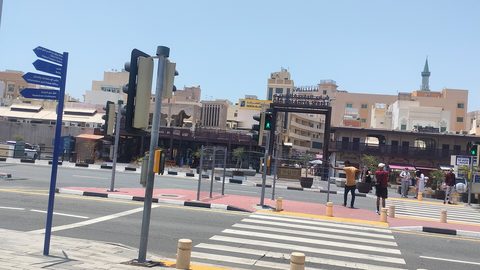 What a trip to the United Arab Emirates actually costs and where the money goes
How a UAE travel budget actually breaks down across accommodation, transport, food, and attractions, and why the same itinerary can feel reasonable or ruinous.
What a trip to the United Arab Emirates actually costs and where the money goes
How a UAE travel budget actually breaks down across accommodation, transport, food, and attractions, and why the same itinerary can feel reasonable or ruinous.
-
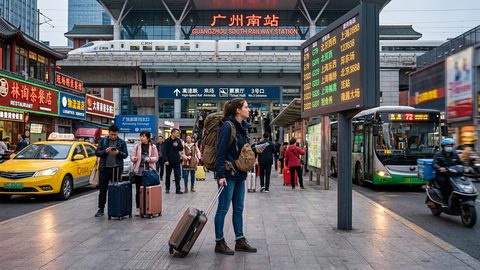 A Ground-Level Logistics Guide to Independent Travel in China
First-time independent travel in China: what you need to know about visas, rail booking, eSIMs, mobile payments, and power adapters.
A Ground-Level Logistics Guide to Independent Travel in China
First-time independent travel in China: what you need to know about visas, rail booking, eSIMs, mobile payments, and power adapters.
-
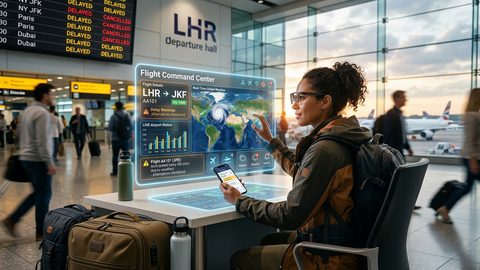 How Solo Travelers Stay Ahead of Flight Delays and Cancellations
How solo travelers can track inbound aircraft, claim rebooking rights, and adjust ground transport when flights go wrong — step by step.
How Solo Travelers Stay Ahead of Flight Delays and Cancellations
How solo travelers can track inbound aircraft, claim rebooking rights, and adjust ground transport when flights go wrong — step by step.
-
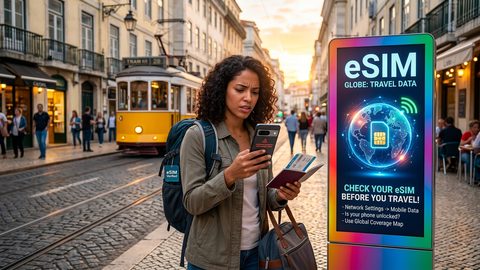 Why Your eSIM Might Not Work Abroad and How to Check Before You Go
Buying an eSIM doesn't guarantee signal abroad. Learn why coverage fails by location and how to verify reach before you commit to a plan.
Why Your eSIM Might Not Work Abroad and How to Check Before You Go
Buying an eSIM doesn't guarantee signal abroad. Learn why coverage fails by location and how to verify reach before you commit to a plan.