UAE Inter-City Transport Options the Map Does Not Show You
How to move between Dubai, Abu Dhabi, and the other emirates by bus, taxi, and ride-hailing app, and why there is no train network.
Moving Around the United Arab Emirates and What the Map Oversells
The Hard Truth About Inter-City Travel
No train connects the emirates. The 140 km Dubai to Abu Dhabi commute catches people out constantly. Your inter-city options narrow to two: a private car or an inter-city bus. That is the hard truth. The map makes Dubai and Abu Dhabi look like a quick hop, but without a rail link the trip takes over two hours by bus and can stretch past three when traffic spikes at peak periods or during major events. You waste half a day on an unplanned commute if you treat the distance like a metro ride.
The backbone of movement here is the private car. Visitors who rent one need a valid home country driving licence plus an International Driving Permit for most nationalities. The minimum age is 21. Fuel is widely available as unleaded 95 and 98 octane. The road network is multi-lane highway, with the Abu Dhabi to Dubai corridor running eight to ten lanes. That sounds generous, but the traffic volume is punishing. The 20 km from Dubai to Sharjah can take over two hours during weekday peak commuting. The morning crush flows toward Dubai from Sharjah and the northern emirates, and the evening jam flows back. Weekend days are Saturday and Sunday, but Friday remains a holy day, so Friday morning traffic is light while Thursday evening and Friday evening towards sundown are heavy.
Taxis and Ride-Hail Across the Country
The fallback is the taxi and ride-hail system. Outside central Dubai you cannot reliably hail a taxi on the street. Use the Careem or Uber app. Both platforms operate nationwide. Taxis are metered with a flag fall and per-kilometre rate. A fixed surcharge applies when crossing an emirate boundary. That surcharge pushes a one-way taxi from Dubai to Abu Dhabi to AED 250 to 350. Payment is cash, card, a Nol Card in Dubai taxis, or a Hafilat Card in Abu Dhabi taxis. Do not look for a domestic flight as a shortcut. There are none.
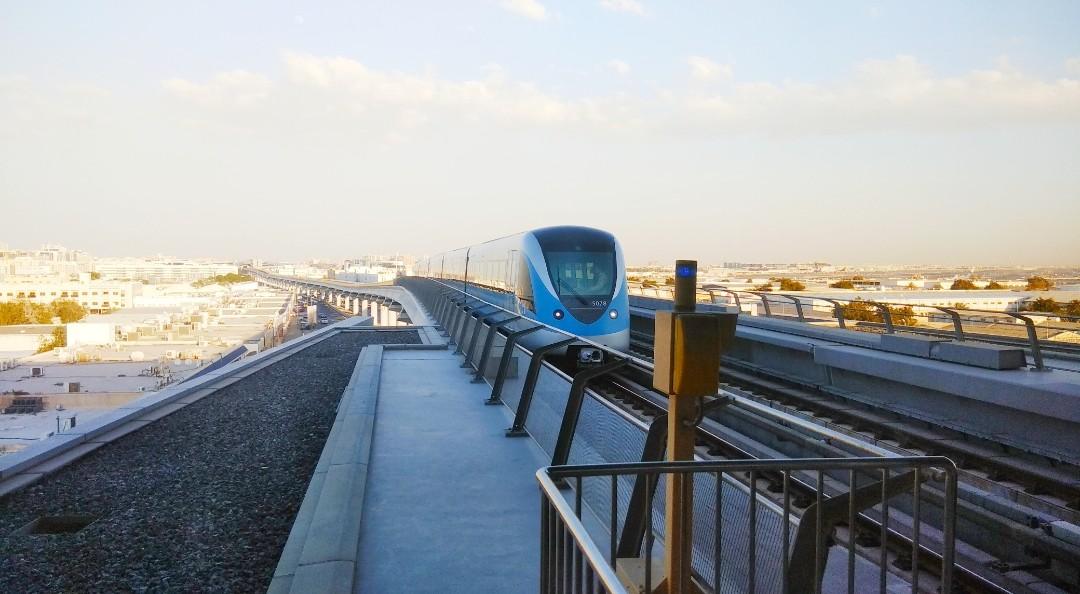

Dubai to Abu Dhabi Bus
The most practical inter-city bus route is the Dubai to Abu Dhabi line, operated by RTA intercity services. The bus departs from Ibn Battuta Bus Station on the western edge of Dubai, near the end of the Dubai Metro Red Line. From there it runs to Abu Dhabi Central Bus Station. The journey takes over two hours. Tickets are valid for a specific departure, not an open period. On RTA routes you pay with a Nol Card or cash to the driver. Emirates Transport runs parallel routes and sells tickets at bus stations.
Do not assume you can hop on immediately. Buses run regularly but the schedule is not a metro frequency, especially outside peak hours. Arrive at Ibn Battuta early. Top up your Nol Card before you get there. Budget for a wait. In the opposite direction the Abu Dhabi Central Bus Station departure is the same deal. The bus is air-conditioned, comfortable, and costs a fraction of the taxi. It is not fast.
There is no other direct public transport from Dubai to Abu Dhabi. The idea that the two cities are connected by a quick ride is the single most common mistake visitors make. Treat the bus as a planned trip, not a spontaneous move.
Nol Card vs Hafilat Card
Dubai uses the Nol Card. Abu Dhabi uses the Hafilat Card. They are not interchangeable. A visitor who loads money onto a Nol Card in Dubai and then tries to board an Abu Dhabi bus will be refused. The same problem in reverse: Hafilat Card credit is useless on the Dubai Metro, tram, or bus. This trips up travellers constantly.
Nol Card For Dubai
The Nol Card is a contactless smart card issued by the Roads and Transport Authority (RTA) of Dubai. It works on the Dubai Metro Red and Green lines, the Dubai Tram, RTA buses, water transport, and some taxis. The card types are a Red Ticket, a single-use paper ticket or day pass; a Silver Card, anonymous stored value; a Gold Card for premium cabin access on the Metro; and a Blue Card, which is personalised. Buy them at ticket vending machines in stations, RTA service centres, or authorised sales agents. The card itself is undated, but stored credit has an expiry period from the last top-up. Check the balance regularly.
Hafilat Card For Abu Dhabi
The Hafilat Card is issued by Abu Dhabi Mobility, the Integrated Transport Centre. It covers only Abu Dhabi buses. Buy it at ticket vending machines at Abu Dhabi bus stations and authorised retailers. There is a simple anonymous stored-value version and a personalised version. You cannot use it on the Dubai Metro. You cannot use it on Sharjah buses. If you plan to move between emirates, you need both cards. Or you use cash for one side.
Careem Taxi App UAE
Careem is the ride-hail platform that works across every emirate. Uber operates alongside it. Both are essential outside central Dubai where street hailing is unreliable. The Careem app lets you book a taxi, a premium car, or a larger vehicle. Payment goes through the app by card or you can pay cash to the driver. In Dubai the minimum flag fall starts around AED 12 during the day, and the per-kilometre rate adds up fast. For inter-emirate trips the system adds a fixed boundary surcharge automatically.
When You Must Use The App
In Downtown Dubai, Dubai Marina, and Deira you can flag a taxi from the street most of the time, though not on every corner. On Saadiyat Island, Yas Island, in Al Ain, Liwa Oasis, Ras Al Khaimah, and Sharjah the chance of seeing an empty taxi pass by is low. Open the Careem app, set your pickup, and wait. The failure case is being stranded at 1 am after an event with no cars showing on the app. Budget for surge pricing during peak hours after midnight and on Friday evenings. If the app shows no cars, call a local taxi dispatch number. Keep a taxi company number saved in your phone for each emirate you visit.
No Train Network Emirates
There is no national rail network. The Dubai Metro is a driverless, fully grade-separated system but it operates only within Dubai. The Red Line runs from Rashidiya to UAE Exchange and the Green Line runs from Creek to Etisalat by e&, both entirely within Dubai boundaries. The Dubai Tram runs 11 stations along Al Sufouh and Dubai Marina, also only within Dubai. No train crosses a border. No train from Dubai to Abu Dhabi exists. No train from Dubai to Sharjah, Ras Al Khaimah, or Fujairah exists. A high-speed railway has been discussed for years but no passenger service is operational.
The bus network is all you have for inter-emirate travel without a car. Each emirate runs its own bus authority. Sharjah uses the Sayer Card. Ras Al Khaimah uses the Masaar Card. None of these cards work in another emirate. You pay cash, buy a local card, or use a ride-hail app for each crossing.

.jpg)
UAE Inter-Emirate Travel Times
The distances are manageable on a map. The travel times are not. Here are the real times from the research, not optimistic estimates. Dubai city to Sharjah city is 20 km but takes over two hours during weekday peak commuting in the morning and evening. Dubai city to Abu Dhabi city is 140 km and takes over two hours by bus, over three during peak periods or major events. Dubai city to Ras Al Khaimah city is 110 km and without a car requires a bus to a border stop then a local taxi, adding hours to the journey. Dubai city to Fujairah city is 120 km and the same problem applies. Dubai city to Al Ain is 130 km. Abu Dhabi to Al Ain is 160 km and takes about 1.5 hours by car. Abu Dhabi to Liwa Oasis is 220 km and takes about 2.5 hours by car.
The short-looking distance that is not short is Dubai to Sharjah. Twenty kilometres, two hours. The other deceptive distance is Dubai to Abu Dhabi. The corridor is eight to ten lanes of highway but the sheer volume of vehicles means speed drops at nearly every time of day except between midnight and 4 am. Fog season from December to February adds dense morning fog that causes multi-vehicle incidents and road closures. Sandstorms are possible year-round. Do not plan a tight schedule that depends on a two-hour drive being exactly two hours.
Inter-Emirate Taxi and Bus Strategy
If you do not rent a car, build your trip around a single emirate and take planned excursions by bus or Careem taxi to the others. A seven-day minimum split lets you stay in Dubai for several days, then move to Abu Dhabi for the rest, without constant repacking. For excursions like Al Ain from Abu Dhabi, the 1.5-hour drive by hired taxi is your best option. For Liwa Oasis from Abu Dhabi, the 2.5-hour drive requires a car or a very expensive taxi. For Hatta from Dubai, the 1.5-hour drive demands a car. For Jebel Jais from Ras Al Khaimah city, the 45-minute drive needs a car or a Careem. There is no bus to the summit of Jebel Jais.
Visitors who try to visit four emirates in a weekend waste half their trip in transit. Pick two emirates maximum. Use the bus for the Dubai to Abu Dhabi leg. Use Careem for everything else. Keep a taxi dispatch number saved for emergencies. Do not assume the bus runs late at night. Check the schedule for that specific route before you go.
What the Transport System Costs
The Dubai Metro Red Line from Dubai International Airport to the city centre takes 25 minutes. A taxi from the airport to Downtown takes 30 minutes. The Abu Dhabi A1 bus from Abu Dhabi International Airport to the city centre takes 45 minutes. A taxi takes 30 minutes. The Sharjah airport to Dubai taxi takes 30 to 60 minutes depending on traffic. A one-way inter-emirate taxi from Dubai to Abu Dhabi costs AED 250 to 350. The water transport in Dubai, the abras across Dubai Creek, costs AED 1. The Dubai Ferry and Water Taxi cost more but work on the Nol Card.
Common Questions
Can I use a Nol Card on Abu Dhabi buses?
No. The Nol Card works only on Dubai Metro, tram, bus, water transport, and some Dubai taxis. Abu Dhabi requires the Hafilat Card. The two cards are not interchangeable.
Is there a train from Dubai to Abu Dhabi?
No. There is no national rail network connecting the emirates. The Dubai Metro operates only inside Dubai. The only inter-emirate public transport option without a car is the bus or a taxi.
What is the cheapest way to get from Dubai to Abu Dhabi?
The inter-city bus from Ibn Battuta Bus Station to Abu Dhabi Central Bus Station costs a few dirhams. It takes over two hours. A taxi costs AED 250 to 350. The bus is the cheapest option.
Can I hail a taxi on the street in Abu Dhabi?
In central Abu Dhabi you can sometimes hail a taxi. Outside the city centre, on Yas Island, Saadiyat Island, and in Al Ain, street hailing is unreliable. Use the Careem or Uber app.
Read next
-
 Staying connected in the United Arab Emirates with eSIM, local SIM, or roaming
How to get mobile data across the UAE with eSIM, local SIM from du or Etisalat, or roaming, and why WhatsApp calls stay blocked regardless.
Staying connected in the United Arab Emirates with eSIM, local SIM, or roaming
How to get mobile data across the UAE with eSIM, local SIM from du or Etisalat, or roaming, and why WhatsApp calls stay blocked regardless.
-
 Best Time to Visit the UAE and What Each Season Actually Does
The UAE's seasons explained honestly: when outdoor dining and desert activities are pleasant, when the summer heat becomes dangerous, and how Ramadan affects travel.
Best Time to Visit the UAE and What Each Season Actually Does
The UAE's seasons explained honestly: when outdoor dining and desert activities are pleasant, when the summer heat becomes dangerous, and how Ramadan affects travel.
-
 UAE Visa Rules and Who Gets Entry on Arrival
Which nationalities get a UAE visa on arrival at Dubai or Abu Dhabi airports, who must apply in advance, and how the entry process actually works.
UAE Visa Rules and Who Gets Entry on Arrival
Which nationalities get a UAE visa on arrival at Dubai or Abu Dhabi airports, who must apply in advance, and how the entry process actually works.
-
 UAE Dirham, Cards and Where Cash Still Wins
How the UAE dirham works, where cards dominate in Dubai and Abu Dhabi, and the specific situations where you still need cash.
UAE Dirham, Cards and Where Cash Still Wins
How the UAE dirham works, where cards dominate in Dubai and Abu Dhabi, and the specific situations where you still need cash.
-
 UAE Safety Advice Without the Hype
Genuine safety concerns in the UAE: strict laws on photography, alcohol, and public behaviour, not violent crime, are what visitors need to understand.
UAE Safety Advice Without the Hype
Genuine safety concerns in the UAE: strict laws on photography, alcohol, and public behaviour, not violent crime, are what visitors need to understand.
-
 What a trip to the United Arab Emirates actually costs and where the money goes
How a UAE travel budget actually breaks down across accommodation, transport, food, and attractions, and why the same itinerary can feel reasonable or ruinous.
What a trip to the United Arab Emirates actually costs and where the money goes
How a UAE travel budget actually breaks down across accommodation, transport, food, and attractions, and why the same itinerary can feel reasonable or ruinous.
-
 A Ground-Level Logistics Guide to Independent Travel in China
First-time independent travel in China: what you need to know about visas, rail booking, eSIMs, mobile payments, and power adapters.
A Ground-Level Logistics Guide to Independent Travel in China
First-time independent travel in China: what you need to know about visas, rail booking, eSIMs, mobile payments, and power adapters.
-
 How Solo Travelers Stay Ahead of Flight Delays and Cancellations
How solo travelers can track inbound aircraft, claim rebooking rights, and adjust ground transport when flights go wrong — step by step.
How Solo Travelers Stay Ahead of Flight Delays and Cancellations
How solo travelers can track inbound aircraft, claim rebooking rights, and adjust ground transport when flights go wrong — step by step.
-
 Why Your eSIM Might Not Work Abroad and How to Check Before You Go
Buying an eSIM doesn't guarantee signal abroad. Learn why coverage fails by location and how to verify reach before you commit to a plan.
Why Your eSIM Might Not Work Abroad and How to Check Before You Go
Buying an eSIM doesn't guarantee signal abroad. Learn why coverage fails by location and how to verify reach before you commit to a plan.