Navigating Netherlands Public Holidays Closures Like a Local
King's Day shuts transport. Christmas closes nearly everything. Many shops close Sundays outside big cities. Here are the dates to plan around.
You cannot plan a trip to the Netherlands around what stays open without first knowing which days shut it down. A smooth afternoon in Utrecht or a wasted morning walking between locked doors. The difference is 20 minutes of calendar checking. Here is the exact list of Dutch public holidays, what closes on each, and which ones move around the calendar and catch visitors out.
The Netherlands has ten statutory public holidays set by law. But no law requires any business to close. That ambiguity is what makes closures confusing: the same date can be a full shutdown in one town and a normal retail day in the next, depending on local ordinances and the day of the week. The government and most private employers treat these days as days off. Shops, museums, and transport each follow their own rules.

Netherlands Public Holidays Closures: What Shuts and What Stays Open
Dutch public holidays divide into two categories: fixed dates that never move, and religious observances that drift with the lunar calendar. Every one of them affects travel differently.
Fixed-Date Holidays
New Year's Day (1 January): Nearly all shops and supermarkets closed. Museums in major cities often open from 11:00 or 12:00, but smaller-town museums stay shut. Public transport runs a reduced timetable. Trains from Schiphol to Centraal Station run at roughly half the usual frequency.
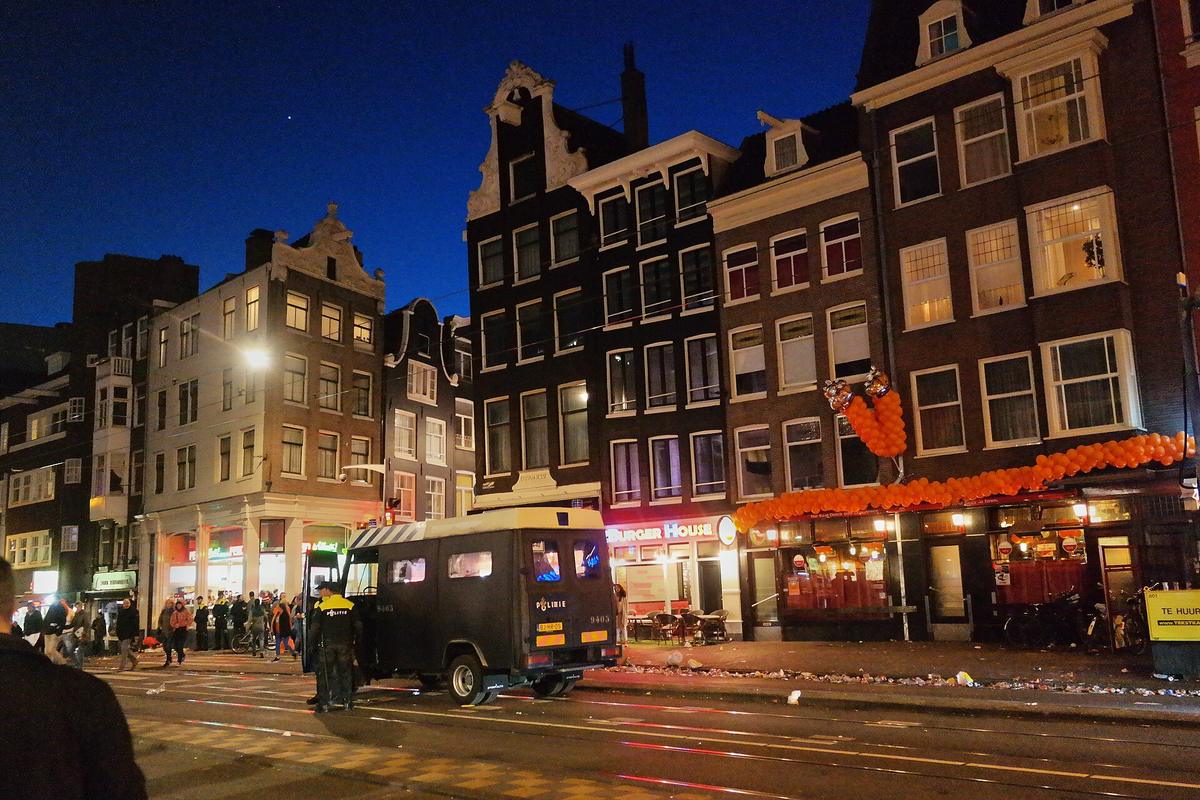
King's Day (27 April; 26 April if 27 April is a Sunday): This is the biggest nationwide event and the most disruptive. Supermarkets open reduced hours; non-food shops are nearly always closed. City-centre transport is reduced or rerouted due to crowds. Intercity trains into the capital sell out weeks in advance. If you dislike crushing crowds and sold-out transport, avoid the King's Day weekend entirely. The date shifts by one day when 27 April falls on a Sunday, moving to the 26th.
Liberation Day (5 May): An official public holiday only in lustre years. In non-lustre years most businesses open normally, many government offices close, and shops run usual hours. Check whether your year qualifies before planning around it.
Christmas Day (25 December) and Boxing Day (26 December): Near-total retail closure both days. Nearly all shops, supermarkets, and businesses shut. Museums in larger cities often open on Boxing Day but close on Christmas Day. Public transport runs a strongly reduced timetable; some regional services stop entirely.
Moveable Holidays
These dates change every year because they are tied to Easter, which falls on the first Sunday after the first ecclesiastical full moon on or after 21 March. The 2026 dates are listed below, but the rule applies every year.
Good Friday: A day off for some employees but not all. Many offices close. Shops keep patchy hours: some open, some shut. The Anne Frank House and Rijksmuseum open normally; smaller museums may close.
Easter Sunday: Falls on a Sunday, so most shops are closed by shopping-hours law regardless. Municipalities may permit opening in designated tourist areas, but do not count on it outside the centre of the capital or Rotterdam.
Easter Monday: Many businesses and shops close. Supermarkets in tourist districts may open reduced hours. Museums tend to stay open. Book a museum ticket for this day; galleries are quiet and queues are short.
Ascension Day (39 days after Easter): Many businesses and shops closed. City museums open, suburban retail closed.
Whit Sunday (49 days after Easter): Falls on a Sunday; most shops closed by law.
Whit Monday (50 days after Easter): Many businesses and shops closed.
| Holiday | 2026 Date | Shops | Supermarkets | Museums | Public Transport |
|---|---|---|---|---|---|
| New Year's Day | 1 January 2026 | Closed | Closed | Open from 11:00 in major cities | Reduced timetable |
| Good Friday | 3 April 2026 | Patchy | Patchy | Open | Normal or reduced |
| Easter Sunday | 5 April 2026 | Closed | Closed in most areas | Open | Reduced |
| Easter Monday | 6 April 2026 | Many closed | Reduced hours | Open | Reduced |
| King's Day | 27 April 2026 | Most closed | Reduced hours | Most open | Reduced in city centres |
| Liberation Day | 5 May 2026 | Open (non-lustre year) | Open | Open | Normal |
| Ascension Day | 14 May 2026 | Many closed | Reduced hours | Open | Reduced |
| Whit Sunday | 24 May 2026 | Closed | Closed in most areas | Open | Reduced |
| Whit Monday | 25 May 2026 | Many closed | Reduced hours | Open | Reduced |
| Christmas Day | 25 December 2026 | Nearly all closed | Closed | Most closed | Reduced |
| Boxing Day | 26 December 2026 | Nearly all closed | Closed | Many open | Reduced |
Dutch Public Holidays List: Which Ones Actually Affect Your Trip
The full list includes ten dates. Not all of them disrupt travel equally. Liberation Day in a non-lustre year is essentially a normal day. Easter and Whit Sunday fall on a Sunday, so the closure is the same as any other Sunday. The dates that create real problems for visitors are King's Day, Christmas Day, Boxing Day, and Easter Monday. Those are weekdays with nationwide closure patterns that catch travellers arriving from countries with different shopping-hour cultures.
Shops Closed Sunday: the Weekly Pattern That Changes Everything
The Sunday closure pattern is not a public holiday, but it affects more visitor days than any single one. The default legal position: the shopping-hours law restricts Sunday opening across the country. Municipalities may permit it, and in practice the major city centres of the capital, Rotterdam, Utrecht, and The Hague allow it. Outside those centres, and in smaller towns like Giethoorn, Leiden, or Maastricht, most shops stay shut all day.
Supermarkets close by 18:00 on Saturday and do not reopen until Monday morning in many residential areas. You arrive on a Sunday at Schiphol and need groceries. The Albert Heijn in the airport terminal stays open. The same supermarket in a neighbourhood 10 minutes away by train will be locked. Carry a contactless card and coins for public toilets. On Sunday afternoons outside city cores, finding a coffee shop that is open can take 20 minutes of walking.
,_Wale_Street_--_2024_--_3544.jpg)
King’s Day Date and Why You Should Book Around it
King's Day is 27 April every year, or 26 April when the 27th is a Sunday. In 2026 it falls on a Monday. That means the entire preceding weekend becomes a de facto break. The travel impact on that weekend is severe. Train services from other cities into the capital sell out two to three weeks in advance. Hotels charge peak rates. The free outdoor market that turns every street into a flea market pulls roughly a million people into the centre alone.
If you want to experience it, book train tickets the moment they go on sale. Arrive in the city before 09:00. Accept that you will move at walking pace through most central streets after 11:00. If you dislike crushing crowds and sold-out transport, skip the entire weekend. Plan your trip for mid-May instead, when the tulips are still in bloom, Ascension Day and Whit Monday are the only interruptions, and the streets are half empty.
Avoid the Weekend Trap: What Transport Does on a Public Holiday Weekend
Public transport on public holidays runs a reduced timetable. Intercity trains depart every 30 minutes instead of every 10 to 15 minutes on core routes like the capital to Rotterdam or Utrecht to Schiphol. On King's Day, city-centre services are reduced due to events. On Christmas Day and Boxing Day, some regional services stop entirely. Download the 9292 app. Check it the night before because the printed timetable will not apply.
The failure case: arriving at a train station on a holiday afternoon expecting a 15-minute wait and finding an hour. This happens most on Boxing Day, when visitors assume the day after Christmas is a normal shopping day. It is not. Nearly all shops, supermarkets, and businesses are closed. Trains run a skeleton schedule. Check the 9292 app, or budget for a taxi. A short city transfer costs roughly €30 to €50.
Common Questions
What is the difference between a public holiday and a statutory holiday in the Netherlands?
The terms are used interchangeably for the ten statutory dates. The key distinction: no law requires businesses to close on any of them. Closure depends on local municipal ordinances and employer policy. That is why Good Friday is a day off for some workers and not others.
Are shops open on Sunday in the capital?
Many shops in the centre are open on Sunday under municipal permit. The Kalverstraat, Negen Straatjes, and museum quarter shopping streets operate normally. Outside the city centre, and in most other Dutch cities, expect closures.
Is King's Day worth the crowds?
If you enjoy street markets, live music, and the biggest party of the Dutch year, yes. If you want to visit museums and see the city at a normal pace, no. The Rijksmuseum and Van Gogh Museum remain open but queues are extreme.
Do museums close on Christmas Day?
Most museums close. The Rijksmuseum, Van Gogh Museum, and Anne Frank House are all shut. On Boxing Day, many museums in larger cities open with reduced hours.
What is a lustre year for Liberation Day?
A lustre year ends in 0 or 5. Only in those years is Liberation Day (5 May) an official public holiday. In non-lustre years, most businesses operate normally.
How far ahead do King's Day trains sell out?
Intercity trains into the capital on King's Day weekend sell out two to three weeks in advance. Book through the NS website or app as early as possible. Regional sprinter trains may still have space but run reduced schedules.
Can I use my contactless bank card on holiday trains?
Yes. Contactless OVpay with any debit or credit card works on all NS trains and most regional operators. The main friction: failing to check in on a separate card reader when transferring between train operators like NS to Arriva. That can result in an incorrect charge.
Read next
-
 Staying Connected in The Netherlands With eSIM, Local SIM or Roaming
Compare eSIM, local SIM, and roaming options for The Netherlands, where 5G coverage is near-universal but NS train Wi-Fi has limits.
Staying Connected in The Netherlands With eSIM, Local SIM or Roaming
Compare eSIM, local SIM, and roaming options for The Netherlands, where 5G coverage is near-universal but NS train Wi-Fi has limits.
-
 When to Visit the Netherlands and What Each Season Actually Does to Your Trip
April brings tulips and King's Day crowds. July and August are warmest but rainy. Winter closes many small-town attractions. Choose your season by the trade-offs.
When to Visit the Netherlands and What Each Season Actually Does to Your Trip
April brings tulips and King's Day crowds. July and August are warmest but rainy. Winter closes many small-town attractions. Choose your season by the trade-offs.
-
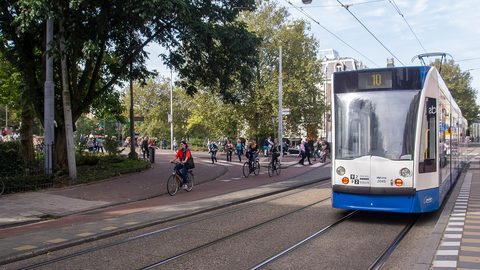 Moving Around the Netherlands by Train, Bike, and the Gaps the Map Oversells
Dutch trains are excellent, but checking in on the wrong card reader when changing operators can get you fined. Here is how the system works.
Moving Around the Netherlands by Train, Bike, and the Gaps the Map Oversells
Dutch trains are excellent, but checking in on the wrong card reader when changing operators can get you fined. Here is how the system works.
-
 Who Needs a Visa for the Netherlands and How the Application Actually Works
Whether you need a visa for the Netherlands depends on your passport. Here is the Schengen application process, required documents, and realistic timelines.
Who Needs a Visa for the Netherlands and How the Application Actually Works
Whether you need a visa for the Netherlands depends on your passport. Here is the Schengen application process, required documents, and realistic timelines.
-
 Paying for Things in the Netherlands Without Your Card Getting Declined
Many Dutch shops refuse Visa and Mastercard. Here is why, where cards work, where cash still matters, and how OVpay changes transport payments.
Paying for Things in the Netherlands Without Your Card Getting Declined
Many Dutch shops refuse Visa and Mastercard. Here is why, where cards work, where cash still matters, and how OVpay changes transport payments.
-
 Reading Safety Advice About the Netherlands Without Being Misled by It
The Netherlands is safe by every statistic, but bicycle-path collisions and pickpocketing on Amsterdam trams are the real visitor risks to understand.
Reading Safety Advice About the Netherlands Without Being Misled by It
The Netherlands is safe by every statistic, but bicycle-path collisions and pickpocketing on Amsterdam trams are the real visitor risks to understand.
-
 A Ground-Level Logistics Guide to Independent Travel in China
First-time independent travel in China: what you need to know about visas, rail booking, eSIMs, mobile payments, and power adapters.
A Ground-Level Logistics Guide to Independent Travel in China
First-time independent travel in China: what you need to know about visas, rail booking, eSIMs, mobile payments, and power adapters.
-
 How Solo Travelers Stay Ahead of Flight Delays and Cancellations
How solo travelers can track inbound aircraft, claim rebooking rights, and adjust ground transport when flights go wrong — step by step.
How Solo Travelers Stay Ahead of Flight Delays and Cancellations
How solo travelers can track inbound aircraft, claim rebooking rights, and adjust ground transport when flights go wrong — step by step.
-
 Why Your eSIM Might Not Work Abroad and How to Check Before You Go
Buying an eSIM doesn't guarantee signal abroad. Learn why coverage fails by location and how to verify reach before you commit to a plan.
Why Your eSIM Might Not Work Abroad and How to Check Before You Go
Buying an eSIM doesn't guarantee signal abroad. Learn why coverage fails by location and how to verify reach before you commit to a plan.