Your Netherlands Train Travel Guide for Journeys That Actually Work
Dutch trains are excellent, but checking in on the wrong card reader when changing operators can get you fined. Here is how the system works.
How to Get Around the Netherlands Without Making the Train Transfer Mistake
The single biggest mistake visitors make on the Dutch rail network is failing to check out from one operator and check in on a different card reader before transferring trains. That error triggers a fine or a charge that covers an entire route you did not ride. This guide explains exactly how to use the NS rail network, where the gaps are, and how to avoid the penalty.
The country is compact. You can cross from Amsterdam to Maastricht in under three hours by Intercity train. But compact does not mean simple. The rail system is operated by multiple companies under a single payment system that punishes small mistakes. Learn the check-in rule. Plan with the right app. Understand where the bike beats the train.
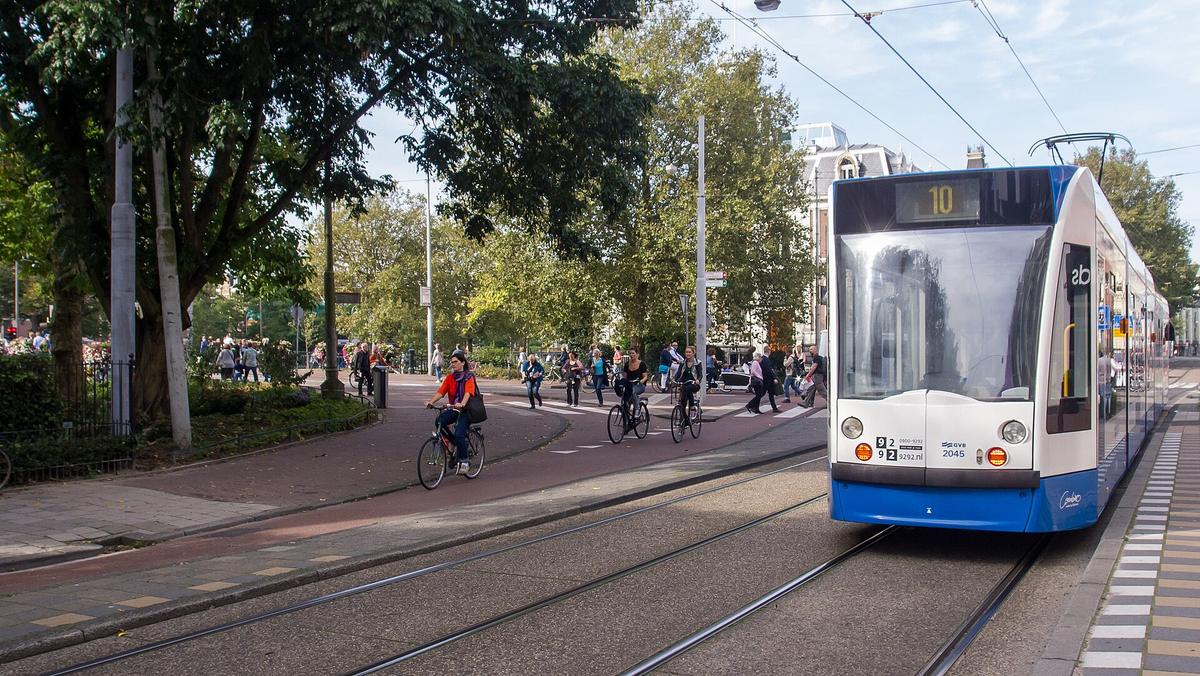
.jpg)
The NS Train Network Netherlands Relies on
Nederlandse Spoorwegen, or NS, runs the national rail network. NS Intercity trains connect every major city every 10 to 15 minutes on core corridors: Amsterdam to Utrecht to Eindhoven, Amsterdam to Rotterdam to Breda, and Amsterdam to The Hague to Rotterdam. Sprinters stop at every station along the same routes and run every 15 to 30 minutes on secondary lines.
The rail network covers all mainland provinces. There is no rail service to the Wadden Islands of Texel, Vlieland, Terschelling, Ameland, or Schiermonnikoog. You reach those by ferry from ports like Den Helder, Harlingen, Holwerd, and Lauwersoog. The NS app or website (ns.nl) plans rail-only journeys, but for journeys that combine train, bus, tram, or ferry you need 9292.
Regional Operators and the Transfer Trap
Regional lines are run by Arriva, Breng (a brand of Connexxion), Keolis (Blauwnet), and Qbuzz (R-net). These operators run trains on routes NS does not cover, mostly in the north and east. When you transfer from an NS train to an Arriva train, you must check out on the NS reader and then check in on the Arriva reader. The readers are usually on different poles or platforms. Skip the second check in and the system treats you as if you never ended the trip. You will be charged the maximum fare for the NS portion plus a fine. The same rule applies for transferring to a bus, tram, or metro.
OVpay Check in Check Out: How Contactless Payment Works
OVpay lets you tap any contactless debit or credit card, including Maestro, V PAY, Mastercard, and Visa, plus mobile wallets, directly on the card reader at station gates or platform posts. Do that before boarding and tap out at your destination. The system calculates the fare based on the distance you travelled.
You do not need a separate OV chipkaart to use OVpay. You do not need an account. Your bank statement serves as your receipt and transaction history. If you plan to use public transport frequently over several days, buy an anonymous OV chipkaart from an NS ticket machine. The card itself costs a few euros, and you must load a minimum balance set by NS for rail trips. The chipkaart holds your balance and avoids the surcharge per ticket that applies to single-use paper chipcards. That surcharge changes; check NS.nl for the current figure.
What Goes Wrong
Visitors forget to tap out. The system then locks the card and charges a maximum fare, often over €20, because it cannot close the journey. You can resolve this online at ovpay.nl or at an NS service desk, but that takes time. Another common failure: tapping a contactless card that the reader does not accept. Some older regional buses and trams still reject Visa or Mastercard. Carry a Maestro debit card as backup or keep coins for a paper ticket from the driver, though many buses now refuse cash entirely.
Dutch Public Transport 9292 App: the Essential Planning Tool
The 9292 app covers every public transport mode in the Netherlands: NS trains, regional trains, buses operated by Arriva, Connexxion, EBS, Keolis, Qbuzz, RET in Rotterdam, GVB in Amsterdam, HTM in The Hague, and U OV in Utrecht. Enter your start point and destination and 9292 gives door to door travel time, transfer points, platform numbers, and real time departure data. It works offline if you load the route before you leave your hotel.
Do not rely on Google Maps for Dutch public transport. Google Maps sometimes misses regional bus connections and does not display the operator transfer check in warnings. 9292 also shows planned engineering works, which NS concentrates on weekends and public holidays. If you travel on a Sunday, check 9292 the night before for replacement bus services.
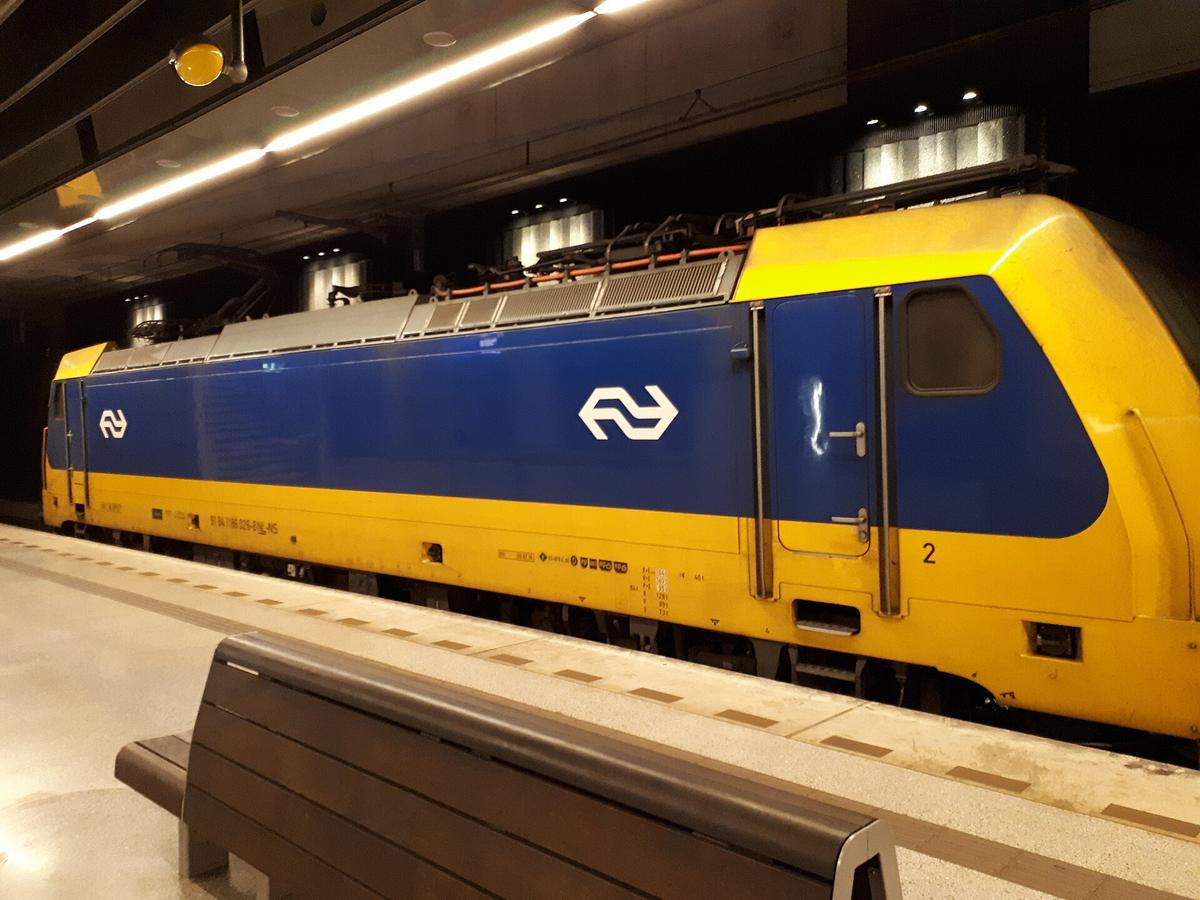

Cycling Between Dutch Cities: Not a Leisure Activity
The Netherlands has a nationwide cycle path network. It connects every town, runs through every forest and polder, and is separate from car traffic. Cycling between cities is practical, not a holiday gimmick. You can ride from Amsterdam to Haarlem in under an hour on a smooth, flat, signposted route. Rotterdam to Delft takes 45 minutes. Utrecht to Amersfoort takes about an hour.
Rent a bike from a local shop or use OV fiets, the national rental scheme. OV fiets requires a personal OV chipkaart with the OV fiets subscription activated. The subscription costs a nominal annual fee, but you must activate it at an NS service desk or online. The rental costs a few euros per 24-hour period. Bikes are available at over 300 locations, mostly train stations. Return the bike to the same station where you picked it up.
Do not cycle on red paths designed for walking. Bicycle priority is absolute in the Netherlands. Step onto a cycle path and you risk getting hit by a rider who will not stop and will shout at you for being on it. Walkers stay on the pavement. Cyclists stay on the red asphalt. That rule is non negotiable.
Carrying Your Bike on the Train
You can bring a non-folding bike on NS trains outside peak hours: 09:00 to 16:00 and 18:30 to 06:30 on weekdays, plus all day on weekends and public holidays. Peak hours are 06:30 to 09:00 and 16:00 to 18:30 on weekdays. You need a bicycle supplement ticket, available from NS ticket machines for a few euros. Folding bikes are free and can travel anytime if folded and bagged.
What Fails at Night and in the Countryside
Night services are thin. NS Nachtnet runs hourly on core routes on Friday and Saturday nights only. During the week, most trains stop running by midnight. If you are out in a small town after 23:00, you may not get back to your hotel until morning. Budget for a taxi or check 9292 for the last bus, which often runs earlier than the last train.
Rural areas without rail rely on buses. The bus network covers every municipality, but frequencies drop to one per hour on Sundays and after 20:00 on weekdays. A place like Giethoorn or the Friesland lakes looks close on a road map. The reality is a 40-minute bus ride from the nearest station, timed to connect with a train that runs every half hour. If you miss the connection, you wait an hour.
The distances that look short on a map are not. Amsterdam to Leeuwarden is about 140 kilometres by road but takes over two hours by train because the route is not direct. Rotterdam to Middelburg is 120 kilometres but the train takes one hour 45 minutes because of the Zeeland bridges and tunnels. The Hague to Texel is 120 kilometres by road to Den Helder, then a 20-minute ferry, totalling 2.5 hours. Plan for the real travel time, not the distance.
Common Questions
Do I need a separate ticket for each train operator?
No. One OVpay contactless card or OV chipkaart works across all operators. The friction is the check in and check out on different readers when transferring between operators. Tap out of NS, tap into Arriva. Miss that step and you get fined.
Is the NS night train running every night?
No. Nachtnet runs hourly on core routes on Friday and Saturday nights only. Weekday night service is very limited. After midnight, plan for a taxi or check if a bus route still runs. Most services stop by 01:00.
Can I buy a ticket on the bus with a credit card?
Some buses accept contactless Mastercard and Visa. Many still do not. Always carry a Maestro debit card or an OV chipkaart with balance. Cash is increasingly refused on buses. The driver may not sell a paper ticket at all.
How does OV fiets work if I do not have a Dutch bank account?
You need a personal OV chipkaart, which you can buy at an NS ticket machine or service desk. Activate the OV fiets subscription at an NS desk or online. The subscription costs a nominal annual fee. Rental is billed to your card. No Dutch bank account required.
Read next
-

 Staying Connected in The Netherlands With eSIM, Local SIM or Roaming
Compare eSIM, local SIM, and roaming options for The Netherlands, where 5G coverage is near-universal but NS train Wi-Fi has limits.
Staying Connected in The Netherlands With eSIM, Local SIM or Roaming
Compare eSIM, local SIM, and roaming options for The Netherlands, where 5G coverage is near-universal but NS train Wi-Fi has limits.
-
 When to Visit the Netherlands and What Each Season Actually Does to Your Trip
April brings tulips and King's Day crowds. July and August are warmest but rainy. Winter closes many small-town attractions. Choose your season by the trade-offs.
When to Visit the Netherlands and What Each Season Actually Does to Your Trip
April brings tulips and King's Day crowds. July and August are warmest but rainy. Winter closes many small-town attractions. Choose your season by the trade-offs.
-
 Who Needs a Visa for the Netherlands and How the Application Actually Works
Whether you need a visa for the Netherlands depends on your passport. Here is the Schengen application process, required documents, and realistic timelines.
Who Needs a Visa for the Netherlands and How the Application Actually Works
Whether you need a visa for the Netherlands depends on your passport. Here is the Schengen application process, required documents, and realistic timelines.
-
 Paying for Things in the Netherlands Without Your Card Getting Declined
Many Dutch shops refuse Visa and Mastercard. Here is why, where cards work, where cash still matters, and how OVpay changes transport payments.
Paying for Things in the Netherlands Without Your Card Getting Declined
Many Dutch shops refuse Visa and Mastercard. Here is why, where cards work, where cash still matters, and how OVpay changes transport payments.
-
 Reading Safety Advice About the Netherlands Without Being Misled by It
The Netherlands is safe by every statistic, but bicycle-path collisions and pickpocketing on Amsterdam trams are the real visitor risks to understand.
Reading Safety Advice About the Netherlands Without Being Misled by It
The Netherlands is safe by every statistic, but bicycle-path collisions and pickpocketing on Amsterdam trams are the real visitor risks to understand.
-
 What a Trip to The Netherlands Costs, Shaped by How You Travel
Understand the shape of Netherlands travel costs: where money goes, why accommodation spikes unpredictably, and how to budget without a fixed daily figure.
What a Trip to The Netherlands Costs, Shaped by How You Travel
Understand the shape of Netherlands travel costs: where money goes, why accommodation spikes unpredictably, and how to budget without a fixed daily figure.
-
 A Ground-Level Logistics Guide to Independent Travel in China
First-time independent travel in China: what you need to know about visas, rail booking, eSIMs, mobile payments, and power adapters.
A Ground-Level Logistics Guide to Independent Travel in China
First-time independent travel in China: what you need to know about visas, rail booking, eSIMs, mobile payments, and power adapters.
-
 How Solo Travelers Stay Ahead of Flight Delays and Cancellations
How solo travelers can track inbound aircraft, claim rebooking rights, and adjust ground transport when flights go wrong — step by step.
How Solo Travelers Stay Ahead of Flight Delays and Cancellations
How solo travelers can track inbound aircraft, claim rebooking rights, and adjust ground transport when flights go wrong — step by step.
-
 Why Your eSIM Might Not Work Abroad and How to Check Before You Go
Buying an eSIM doesn't guarantee signal abroad. Learn why coverage fails by location and how to verify reach before you commit to a plan.
Why Your eSIM Might Not Work Abroad and How to Check Before You Go
Buying an eSIM doesn't guarantee signal abroad. Learn why coverage fails by location and how to verify reach before you commit to a plan.