Picking the Best Month to Visit Netherlands Without the Guesswork
April brings tulips and King's Day crowds. July and August are warmest but rainy. Winter closes many small-town attractions. Choose your season by the trade-offs.
The Netherlands Through the Year: Tulip Crowds, Summer Rain, and Winter Closures
You are standing on a bridge over a canal at 8:30 on a late April morning. The air smells of hyacinths and diesel. A tour boat idles below. Fifty people queue for a waffle stand that does not open until nine. Behind you, a bicycle bell rings twice, then a third time, harder. You are in the Dutch capital, you have paid a peak-season rate for a room the size of a train compartment, and you are about to learn that the best month to visit netherlands depends entirely on what you are willing to trade. The country does not have a perfect window. It has four different compromises, each with its own costs, closures, and crowd patterns.
What a Season Actually Does to Your Trip
No single month delivers everything. If you want tulips, you accept peak hotel rates and King's Day crowds. If you want warm weather, you bring a waterproof jacket and accept that a sudden squall can empty a terrace in two minutes. If you want solitude, you visit when half the small-town attractions are shut. The trade-offs affect what you can book, how much you pay, and whether you spend your afternoon cycling through a polder or staring at a closed door.

April and May: Tulip Season and King’s Day Crowds
What The Brochures Leave Out
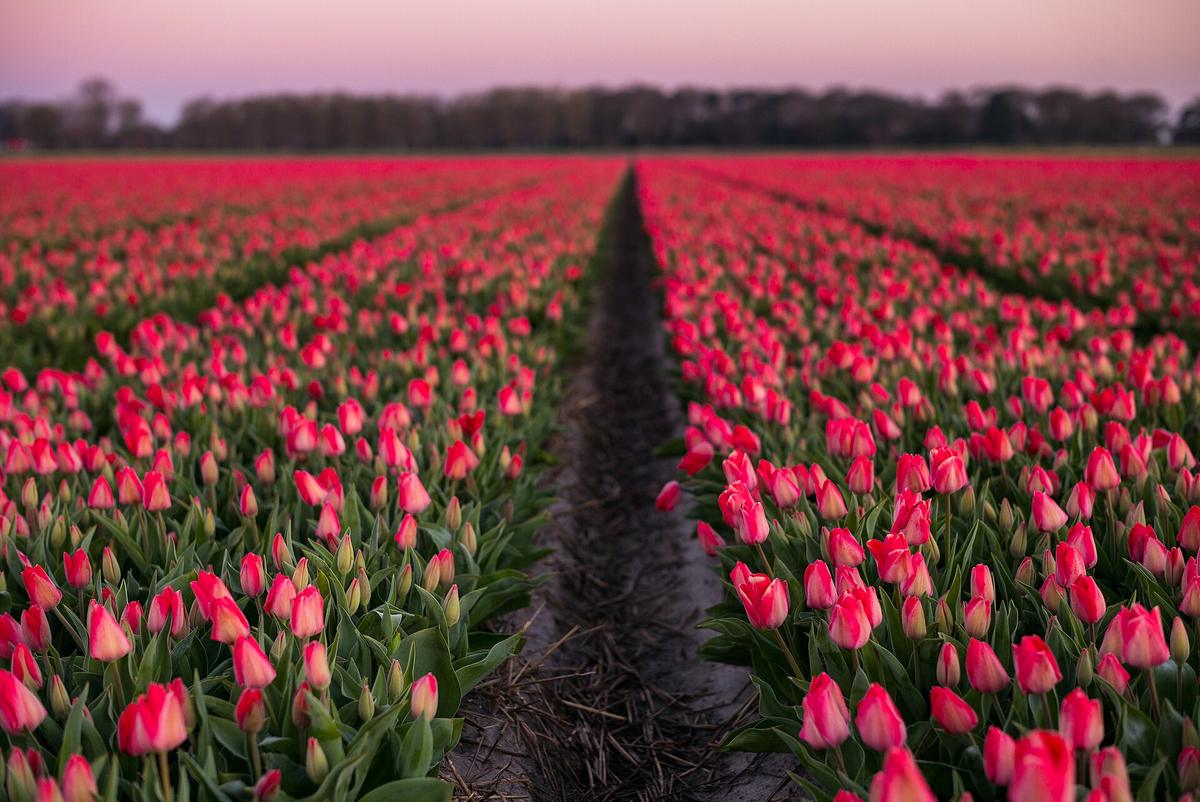
April is the month most visitors picture: the Bollenstreek between Haarlem and Leiden turns into striped colour, Keukenhof Gardens opens its timed slots from mid-March to mid-May, and the country celebrates King's Day on 27 April (or 26 April if the 27th falls on a Sunday). The experience is spectacular. The tulip fields peak around mid-April, and the combination of fresh flowers, long daylight, and mild temperatures makes cycling through the bulb region feel like riding through a postcard.
Here is what the brochures leave out. Hotels in the capital, Leiden, and Haarlem charge peak-season rates from early April through mid-May. A standard room that goes for a low-season rate in February can more than double in late April. King's Day weekend means sold-out trains, streets so dense you cannot walk at a normal pace, and public toilets that require both a coin and a twenty-minute queue. If you dislike crowds, avoid that weekend entirely. The secondary cost is time: Keukenhof sells out its timed entry slots weeks ahead, and the Anne Frank House releases tickets six weeks in advance that vanish in hours. You cannot decide to visit on a whim.
How To See The Flowers Without The Crush
The consolation is the country at its most exuberant. The Van Gogh Museum and Rijksmuseum require advance booking but reward it with manageable crowds if you go early. The Mauritshuis in The Hague offers a quieter alternative to the museum queues in the capital. If you want the flowers without the crush, visit in the first week of May, after King's Day but while Keukenhof is still open and the bulb fields are still in bloom. Rates drop slightly, and the crowds thin by a third.
| Season | What You Get | What It Costs You |
|---|---|---|
| April–May | Tulips, King's Day energy, 14–17°C, long daylight | Peak hotel rates, crushing crowds, sold-out attractions, highest nightly rates in the capital |
| July–August | Warmest weather (19–22°C), open-air festivals, beach season | Sudden rain and wind, peak rates, crowded trains, advance booking required everywhere |
| September–October | Milder crowds, lower rates, autumn colours, quieter museums | Wetter weather, shorter days, some beach pavilions closed, trade fair price spikes |
| November–February | Lowest rates, near-empty museums, Sinterklaas and Christmas markets | Cold (2–7°C), short daylight (7.5 hours in December), many smaller-town attractions closed late December–early January |
Dutch Summer Weather: the Rain That Arrives Without Warning
What July And August Deliver
July and August bring the warmest temperatures of the year, 19-22°C, and the main holiday season. Open-air festivals run across the calendar: concerts in Amsterdam's Vondelpark, theatre in Utrecht's Binnenstad, classical music in the Maastricht caves. The North Sea beaches of Zeeland and Noord-Holland reach their swimming temperature of around 18°C in August. Families arrive in force. The country feels relaxed, sociable, and full.
Now the failure case. Dutch summer weather is not stable. A clear sky can produce a rain squall within fifteen minutes, driven by the prevailing southwest wind. You will see locals step into a shower, wait two minutes, and step out again into sun. The wind never stops entirely, even on a warm day. A terrace lunch requires a jacket within reach. The bicycle remains the best way to move, but you will cycle into a headwind more often than you expect.
Booking Pressure In Peak Season
Booking is the other friction. July and August are peak season everywhere. Hotels in the capital, Rotterdam, and Utrecht charge their highest rates. The NS railway runs full trains, especially on weekends and during the morning rush toward the coast. You must book the Rijksmuseum, Van Gogh Museum, and Anne Frank House weeks ahead. The Efteling in Kaatsheuvel, Europe's third-busiest theme park, sells out its online tickets in summer. Arrive without reservations and you queue for hours or miss the attraction entirely.
Autumn: Quieter, Wetter, and a Hidden Price Surge
The Hidden Pricing Spike
September and October are the shoulder season. The weather turns: average rainfall increases, fog becomes more frequent inland and near water, and daylight drops from roughly 13 hours in September to 10 hours by late October. The crowds thin. You can walk into the Rijksmuseum without a pre-booked slot on a weekday. Hotel rates drop compared to summer.
The catch is a pricing spike that catches visitors off guard. Major trade fairs at Amsterdam RAI and Utrecht Jaarbeurs, concentrated in March and September, drive hotel prices up unpredictably. A room that costs a moderate sum on a quiet Tuesday can jump to several times that when a medical equipment expo is running. Check the RAI and Jaarbeurs event calendars before you book. If a fair coincides with your dates, shift your trip by a week or stay outside the direct city centres. Leiden and Haarlem are less affected.
Why Early October Works
Autumn is also the season for mussels. The Zeeland mussel season runs from July to April, but autumn is the peak: Zeeuwse mosselen steamed with white wine and vegetables appear on every menu. The Afsluitdijk and Delta Works offer dramatic skies and low wind. The Veluwe's heathlands turn purple in September. If you want the best balance of moderate prices, manageable weather, and open attractions, the first half of October is your window.
Winter: Low Season and the Attraction Shutdown
The Two-Week Closure Window
November through February is the cheapest time to visit. A double room in the Canal Belt can drop to a low-season rate. The Rijksmuseum and Van Gogh Museum are nearly empty on weekday mornings. The Mauritshuis feels like a private viewing. Sinterklaas arrives in mid-November, and the Christmas period on 25 and 26 December is family-oriented, with reduced public transport. Oliebollen street kiosks appear from November through January. The entire country slows down.
The problem is that Netherlands winter closures attractions in smaller towns shut entirely from late December to early January. This is not a one-off holiday closure. Many museums outside the major cities, in Limburg, Friesland, Zeeland, close for the full two-week period between Christmas and early January. Kinderdijk's windmills operate on reduced hours. The Kröller-Müller Museum in the Veluwe requires you to book park entry separately and runs a limited service. Giethoorn's punt boats stop running. If your itinerary relies on visiting small-town attractions, check individual websites in November. A closed door is a wasted journey.
Working With The Light
Daylight is the other constraint. In late December, the sun rises around 8:45 and sets around 16:30, giving you roughly 7.5 hours of usable light. Plan your outdoor activities, cycling the LF routes, visiting the Delta Works, walking the dunes, for the middle of the day. The upside is that you can cover a two-city split (the capital plus Utrecht or Rotterdam) with one day-trip inside four days, leaving the rest of a week for regional exploration. The downside is that the country's famous directness, which can feel abrupt in summer, feels sharper in winter when the weather is grey and everyone is moving fast.

King’s Day: When the City Overflows
King's Day on 27 April is the Netherlands' biggest public event. The entire country turns orange. The streets of the capital fill with street markets, live music, and boat parties on the canals. The atmosphere is genuinely festive. It is also the single most crowded day of the year. Trains into Centraal run packed from early morning. The city's population effectively doubles. Bicycle traffic becomes impassable in the centre. Public toilets are scarce, and the paid ones, set by the city at a small coin fee, have long queues.
Book accommodation six months ahead and accept that you will pay peak rates. Arrive by 08:00 if you want to see the free street markets before they are stripped. Bring cash. Many market stalls do not accept cards. If you dislike crowds, avoid the capital entirely on 27 April. Spend the day in Rotterdam, where the celebration is more relaxed, or in Utrecht, where the Binnenstad hosts a calmer version. The rest of the country celebrates, but the pressure is on the largest city.
The Unpredictable Hotel Spikes: Trade Fairs and What to Do About Them
Major trade fairs at Amsterdam RAI and Utrecht Jaarbeurs spike hotel prices without warning. March sees the biggest concentration, with fairs covering healthcare, technology, and hospitality. September is the second spike window. A hotel room that costs a standard rate on a normal night can jump sharply during a fair. The RAI is a 10-minute tram ride from Centraal; Jaarbeurs is adjacent to Utrecht Centraal station. Both events draw international visitors who fill the city centre hotels first, then the suburbs.
The fix is simple. Check the RAI and Jaarbeurs event calendars before you book your travel dates. If a fair overlaps with your intended visit, shift by a week or stay in a smaller city like Leiden, Delft, or Haarlem. All three are within 15-30 minutes by train and less affected by price surges. The NS railway makes commuting from a neighbouring city easy: 30 minutes from Leiden to Centraal, 20 minutes from Gouda to Utrecht Centraal. The trade fair price spike is the single most common reason a budget traveller overpays, and it is entirely avoidable.
Avoiding the December Shutdown Outside the Cities
If you plan to visit between late December and early January, limit your itinerary to the four largest cities: Amsterdam, Rotterdam, Utrecht, and The Hague. The smaller towns and rural attractions close. The Wadden Sea ferry operators, Rederij Doeksen and Wagenborg Passagiersdiensten, run reduced winter schedules. The Kröller-Müller Museum requires advance park entry and may close its sculpture garden. The Delta Works visitor centre in Zeeland operates limited hours. Giethoorn's car-free canal village is accessible on foot, but the punt boats that make it distinctive do not run.
The cities remain open. The capital's museums operate normal schedules. Rotterdam's architecture, including the Kubuswoningen cube houses, is accessible year-round. Utrecht's Domtoren offers panoramic views on clear days. The winter low season is the best time for a city-focused trip. It is the wrong window for a regional itinerary that includes Friesland, Zeeland, Limburg, or the Veluwe.
Who the Netherlands Actually Suits
The Netherlands suits slow travellers who enjoy cycling between small historic towns on the LF routes, art and design lovers chasing Vermeer at the Mauritshuis and modern architecture in Rotterdam, first-time Europe visitors wanting an easy English-friendly entry point with near-universal 4G and flawless train connections, and families seeking safe, manageable cities with interactive museums like the Nemo Science Museum. It does not suit travellers seeking dramatic wilderness or mountains, those on a tight budget who will find accommodation and dining consistently expensive across all seasons, nightlife-focused visitors looking for a hedonistic late-night party scene outside the capital, or people who prefer spontaneous unplanned road trips over structured ticketed itineraries. If you cannot book ahead, the Netherlands will frustrate you. If you plan, it rewards you with a country that works exactly as advertised, provided you arrive in the right season.
Common Questions
When is the best month to visit the Netherlands for tulips?
Mid-April is the peak of the tulip season in the Bollenstreek. Keukenhof Gardens is open from mid-March to mid-May, but the fields reach their most intense colour around the third week of April. Visit in the first week of May if you want to avoid King's Day crowds while still seeing flowers.
Does it rain every day in the Dutch summer?
No, but rain is possible on any day. The Netherlands has no dry season; average annual precipitation is around 850 mm, spread across all months. In July and August, expect sudden squalls that clear within minutes. Carry a light waterproof jacket and plan indoor alternatives for the afternoon.
Is King's Day worth the crowds?
If you enjoy street markets, live music, and the spectacle of an entire country wearing orange, yes. If you dislike dense crowds and sold-out transport, skip Amsterdam on 27 April. The celebration is nationwide, and cities like Rotterdam and Utrecht offer a less intense version.
Which attractions close in winter?
Many museums and attractions in smaller towns shut from late December to early January. This includes the Kröller-Müller Museum's sculpture garden, Kinderdijk's windmills on reduced hours, Giethoorn's punt boats, and reduced Wadden Sea ferry schedules. Amsterdam, Rotterdam, Utrecht, and The Hague remain fully operational.
How do trade fairs affect hotel prices?
Trade fairs at Amsterdam RAI and Utrecht Jaarbeurs, concentrated in March and September, can double or triple hotel rates. Check the event calendars before booking. Staying in Leiden, Haarlem, or Delft, all within 15-30 minutes by train, avoids the worst price surges.
Read next
-
 Staying Connected in The Netherlands With eSIM, Local SIM or Roaming
Compare eSIM, local SIM, and roaming options for The Netherlands, where 5G coverage is near-universal but NS train Wi-Fi has limits.
Staying Connected in The Netherlands With eSIM, Local SIM or Roaming
Compare eSIM, local SIM, and roaming options for The Netherlands, where 5G coverage is near-universal but NS train Wi-Fi has limits.
-
 Moving Around the Netherlands by Train, Bike, and the Gaps the Map Oversells
Dutch trains are excellent, but checking in on the wrong card reader when changing operators can get you fined. Here is how the system works.
Moving Around the Netherlands by Train, Bike, and the Gaps the Map Oversells
Dutch trains are excellent, but checking in on the wrong card reader when changing operators can get you fined. Here is how the system works.
-
 Who Needs a Visa for the Netherlands and How the Application Actually Works
Whether you need a visa for the Netherlands depends on your passport. Here is the Schengen application process, required documents, and realistic timelines.
Who Needs a Visa for the Netherlands and How the Application Actually Works
Whether you need a visa for the Netherlands depends on your passport. Here is the Schengen application process, required documents, and realistic timelines.
-
 Paying for Things in the Netherlands Without Your Card Getting Declined
Many Dutch shops refuse Visa and Mastercard. Here is why, where cards work, where cash still matters, and how OVpay changes transport payments.
Paying for Things in the Netherlands Without Your Card Getting Declined
Many Dutch shops refuse Visa and Mastercard. Here is why, where cards work, where cash still matters, and how OVpay changes transport payments.
-
 Reading Safety Advice About the Netherlands Without Being Misled by It
The Netherlands is safe by every statistic, but bicycle-path collisions and pickpocketing on Amsterdam trams are the real visitor risks to understand.
Reading Safety Advice About the Netherlands Without Being Misled by It
The Netherlands is safe by every statistic, but bicycle-path collisions and pickpocketing on Amsterdam trams are the real visitor risks to understand.
-
 What a Trip to The Netherlands Costs, Shaped by How You Travel
Understand the shape of Netherlands travel costs: where money goes, why accommodation spikes unpredictably, and how to budget without a fixed daily figure.
What a Trip to The Netherlands Costs, Shaped by How You Travel
Understand the shape of Netherlands travel costs: where money goes, why accommodation spikes unpredictably, and how to budget without a fixed daily figure.
-
 A Ground-Level Logistics Guide to Independent Travel in China
First-time independent travel in China: what you need to know about visas, rail booking, eSIMs, mobile payments, and power adapters.
A Ground-Level Logistics Guide to Independent Travel in China
First-time independent travel in China: what you need to know about visas, rail booking, eSIMs, mobile payments, and power adapters.
-
 How Solo Travelers Stay Ahead of Flight Delays and Cancellations
How solo travelers can track inbound aircraft, claim rebooking rights, and adjust ground transport when flights go wrong — step by step.
How Solo Travelers Stay Ahead of Flight Delays and Cancellations
How solo travelers can track inbound aircraft, claim rebooking rights, and adjust ground transport when flights go wrong — step by step.
-
 Why Your eSIM Might Not Work Abroad and How to Check Before You Go
Buying an eSIM doesn't guarantee signal abroad. Learn why coverage fails by location and how to verify reach before you commit to a plan.
Why Your eSIM Might Not Work Abroad and How to Check Before You Go
Buying an eSIM doesn't guarantee signal abroad. Learn why coverage fails by location and how to verify reach before you commit to a plan.