Japan Safety for Tourists Without the Sugarcoating
Japan's crime rate is genuinely low, but earthquakes, typhoons, and the rare nuisance on a crowded train are the risks that actually matter.
The woman next to you on the Tokyo subway has her handbag pinned between her knees, both hands gripping the overhead rail, and her eyes fixed on the digital screen showing the next station in Japanese. Nobody makes eye contact. Nobody speaks. The carriage is silent except for the automated announcement and the hum of the wheels. This is the environment where safety in Japan becomes a real question, because the quiet orderliness hides risks that look nothing like the ones you expect. The violent crime rate is genuinely low. The dangers that actually affect visitors are natural disasters, specific nightlife scams, and the kind of petty crime that leaves you stranded without your phone at 11pm in a suburb where no one speaks English.
Safety in Japan for Tourists Comes with a Real Downside
The Trap of a Low Crime Rate
Japan consistently reports one of the lowest violent crime rates in the developed world. The murder rate per capita is a fraction of what it is in most Western countries. You can walk through Shinjuku at 2am without the adrenaline spike that a similar walk in many cities would trigger. But that reputation becomes a trap when travellers assume it means no risks exist at all. The majority of incidents reported to foreign embassies are not muggings or assaults. They are drink spiking in Roppongi bars, theft of unattended bags at cafe tables, and losing a phone or wallet and having no way to get back to the hotel. The statistical safety of the country is real. What the statistics obscure is that the risks shift from violent crime to logistical vulnerability, and the consequences of a single mistake are far higher because the language barrier and the lack of public infrastructure magnify every small problem.
Japan Natural Disaster Preparedness is Not Optional
Earthquakes are not a hypothetical risk in Japan. The country experiences roughly 1,500 seismic events a year strong enough to be felt, and the J Alert system sends earthquake early warnings directly to compatible mobile phones. You do not need to sign up for this. The alert arrives as a loud chime and a screen-filling message. When it does, you have between a few seconds and roughly 30 seconds before shaking starts, depending on your distance from the epicentre. The action is immediate: drop, cover your head, hold onto something stable. Do not run outside. Do not use an elevator.
The App You Need Before You Land
Download the NERV app before you arrive. It taps into the same J Alert and Earthquake Early Warning systems and provides English language guidance during a quake, including tsunami warnings. The app also tracks typhoons, which hit during June through October, with peak intensity in August and September. Typhoons affect the entire archipelago but hit Okinawa and Kyushu hardest. When a typhoon warning is active, the Shinkansen stops running, convenience store shelves empty of bottled water, and the safest place is your hotel room. Listen to staff instructions.
Tsunami and Volcano Zones You Need to Know
The Pacific coast from Hokkaido to Kyushu carries tsunami risk, especially the Tohoku and Tokai regions. If you are staying coastal after a strong earthquake, do not wait for an official warning. Move inland or to high ground immediately. Active volcanoes are concentrated in Kyushu, Hokkaido, and central Honshu. The Japan Meteorological Agency issues access restrictions around crater areas as conditions change, and those restrictions can block hiking trails and onsen towns with no notice. Check the JMA website before you set out for any mountain hike.
Japan Pickpocketing Risk is Lower Than European Cities, but Unattended Items Disappear Fast
Pickpocketing exists in Japan, but the numbers are far lower than in Barcelona, Paris, or Rome. What happens instead is opportunistic theft of unattended items. A traveller sets their phone on the train seat while checking the map, looks up for two stops, and the phone is gone. A bag is placed on the floor beside a counter seat in a ramen shop while the owner orders, and by the time they turn around it has been lifted. The crowded morning trains on the Yamanote line, the Nakamise shopping street at Senso-ji, and the Shibuya scramble crossing are where this happens. Keep your bag zipped and in front of you, not behind. Do not put your phone in your back pocket. Do not set anything down, even for five seconds, in a busy area.
Japan Solo Female Travel Safety Requires One Specific Adaptation
Chikan and the Women Only Carriage
Solo female travellers face the same low violent crime rate as everyone else, but there is a category of harassment called chikan that specifically targets women on crowded trains. Chikan is the Japanese term for groping and unwanted touching on packed commuter lines, especially during morning rush hour between 7:00 and 9:00 and the evening rush after 17:00. The response from the rail operators is practical: every major train on the Tokyo Metro, JR lines, and private railways in urban areas has women only carriages, marked by pink signs on the platform and on the train doors. Use them during peak hours. They are not a tourist novelty. They are the standard defensive measure used by local commuters.
Night Precautions and the Paper Card
Beyond the train, the same solo female travel rules apply: avoid walking alone through Kabukicho and the back streets of Roppongi late at night, do not accept drinks from strangers in bars, and keep your accommodation address written in Japanese in your phone and on a card in your wallet in case the phone dies.
Drink Spiking in Roppongi and Kabukicho is a Documented Scam, Not Rumour
The bars in Roppongi and Kabukicho are where the majority of foreign embassy warnings about drink spiking are directed. The patterns are known: a stranger approaches a lone traveller or a small group and invites them to a bar. Once inside, the drinks either arrive pre spiked or are dosed at the table. The victim wakes up hours later with an inflated credit card bill, or no bill and no memory of the night. The scam targets anyone who looks unfamiliar with the area, regardless of gender. The preventative measure is simple: never accept an invitation to a bar from a stranger on the street. If you want to drink in these districts, choose a venue you have researched in advance, order directly from the bar, and watch your drink being poured. If you feel suddenly disoriented after one drink, leave immediately and go to a well lit convenience store or directly to your hotel. The emergency number for an ambulance is 119. For police, 110. For 24 hour multilingual assistance, call the Japan Helpline.


| Situation | Number or Action |
|---|---|
| Police emergency | 110 |
| Ambulance or fire | 119 |
| Multilingual emergency assistance (24hr) | Japan Helpline |
| Earthquake early warning trigger | No sign up needed. J Alert on compatible phones. |
| Evacuation route location (hotel) | Find the floor plan posted on the back of your room door on arrival |
| Lost phone or wallet at night | Go to the nearest koban (police box). Enter the station name into a taxi app. |
| Drink spiking suspicion | Leave the venue immediately. Call 119 or the Japan Helpline. |
The Biggest Practical Danger is Losing Your Phone or Wallet
The single most common crisis for tourists in Japan has nothing to do with crime or natural disasters. It is losing your phone, your wallet, or both. Without a phone you lose Google Maps, which is the only reliable navigation tool given the complexity of train station exits and the fact that most street addresses are not sequential but organised by block. Without a wallet you lose your IC card (Suica or PASMO), your cash, and your credit cards. Japan still runs on cash in rural areas, temples, and small restaurants, and many businesses do not accept foreign credit cards at all. The consequence of losing either item is not a quick fix. You cannot just board a bus and explain where you are going in English.
The solution is redundant systems. Carry a backup power bank because Google Maps drains battery fast. Keep a screenshot of your hotel address, the nearest major train station, and the emergency numbers. Put a physical note with your hotel name and address in Japanese in your wallet and in a separate pocket of your bag. Download the map of your primary city for offline use the moment you have Wi Fi at the airport. And register your IC card to your phone so that if you lose the physical card you can still tap through with your device.
What You Should Do Right Now, Before You Book
Download the NERV app and the offline Google Map of your first city. Save the Japan Helpline number into your phone contacts. Write your hotel name and address in Japanese on a physical card and put it in your wallet. Pack a backup power bank. And book a women only carriage on the Narita Express or Haruka if you are checking in alone after a long flight. That is the single thing that most often goes wrong: the phone dies during the airport transfer, the hotel booking confirmation is a screenshot buried in a photo folder, and you end up at 10pm in the wrong station with no working data and no printed address.
Common Questions
Is tap water safe to drink throughout Japan?
Yes. Tap water is safe to drink everywhere in Japan, including in rural areas and smaller towns. In remote mountain huts or unmanned train stations, posted warnings will appear if the water is untreated. Otherwise drink from the tap.
Do I need travel health insurance to enter Japan?
No, it is not a mandatory requirement to enter. But Japan has a universal healthcare system that does not cover visitors. If you are treated at a clinic or hospital, you pay in full at the time of service, and costs for a single emergency room visit can run into thousands of dollars. Travel health insurance is effectively mandatory in practice, even if not in law.
What medications are prohibited from being brought into Japan?
Common medications containing pseudoephedrine, such as many decongestants, and stimulant ADHD medications are prohibited from import. Prescription painkillers containing codeine have restrictions. Check the Japanese Ministry of Health, Labour and Welfare website before you pack. Over the counter pharmacies are widely available in urban areas but limited in rural ones.
Can I use my phone during an earthquake?
The J Alert system sends warnings to compatible mobile phones automatically. You do not need to sign up. After the shaking stops, use your phone to check the NERV app for tsunami warnings and evacuation routes. Do not use your phone while the shaking is happening. Focus on covering your head and holding steady.
What is the drink spiking risk in Roppongi?
Documented and ongoing. Strangers invite tourists to bars, the drinks are spiked, and the victim either wakes up with a large credit card charge or no memory of the night. Do not accept any invitation from a stranger on the street in Roppongi or Kabukicho. Only order drinks you watch being poured.
If I lose my wallet, what is the fastest way to get back to my hotel?
Go to the nearest koban (police box). Police officers can call a taxi for you. If you have your phone, use a taxi app. If you have no phone and no wallet, go to a convenience store like 7 Eleven, ask the staff to call a taxi, and ask the driver to take you to your hotel where you can pay at the front desk. Having your hotel address written in Japanese on a paper card in your bag is what saves you here.
Is Japan safe for a first time solo female traveller?
Yes, with the specific precautions outlined above. Use women only carriages on trains during rush hour. Avoid walking alone through Kabukicho and Roppongi at night. Do not accept drinks from strangers. Keep your hotel address in Japanese on you. The infrastructure and low crime rate make it one of the safest countries for solo female travel, provided you treat the chikan risk and the nightlife scams with the same seriousness you would treat pickpocketing in any major city.
Read next
-
 Staying Connected in Japan eSIM Pocket Wi-Fi or Local SIM Compared
Free public Wi‑Fi in Japan is a trap. The networks that exist under names like Japan Connected free Wi‑Fi and city‑specific SSIDs require a sign‑up portal tha
Staying Connected in Japan eSIM Pocket Wi-Fi or Local SIM Compared
Free public Wi‑Fi in Japan is a trap. The networks that exist under names like Japan Connected free Wi‑Fi and city‑specific SSIDs require a sign‑up portal tha
-
 Best Time to Visit Japan What Each Season Actually Does
Cherry blossoms and autumn leaves draw the crowds for good reason, but Golden Week gridlock and New Year shutdowns can break an itinerary.
Best Time to Visit Japan What Each Season Actually Does
Cherry blossoms and autumn leaves draw the crowds for good reason, but Golden Week gridlock and New Year shutdowns can break an itinerary.
-
 Getting Around Japan Trains IC Cards and What the Map Oversells
The Japan Rail Pass is no longer an automatic buy. How to calculate if it pays off, which trains it excludes, and how IC cards actually work across regions.
Getting Around Japan Trains IC Cards and What the Map Oversells
The Japan Rail Pass is no longer an automatic buy. How to calculate if it pays off, which trains it excludes, and how IC cards actually work across regions.
-
 Japan Visa Rules and the Application Process Explained
Which passport holders can enter Japan visa-free, what landing permission means at the border, and how the full visa application works for everyone else.
Japan Visa Rules and the Application Process Explained
Which passport holders can enter Japan visa-free, what landing permission means at the border, and how the full visa application works for everyone else.
-
 Cash and Cards in Japan How You Will Actually Pay for Things
Japan runs on cash more than its robot reputation suggests. Where cards work, where they do not, and how to keep enough yen on hand without carrying too much.
Cash and Cards in Japan How You Will Actually Pay for Things
Japan runs on cash more than its robot reputation suggests. Where cards work, where they do not, and how to keep enough yen on hand without carrying too much.
-
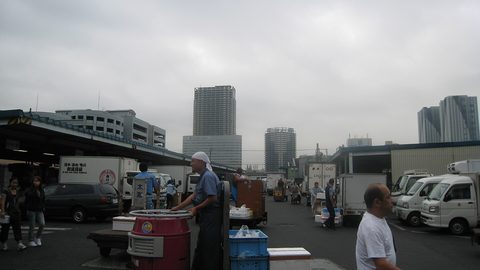 What a Trip to Japan Actually Costs and Where the Money Goes
A realistic breakdown of what Japan costs across budget, midrange, and high-end travel styles, and where the hidden expenses catch first-timers.
What a Trip to Japan Actually Costs and Where the Money Goes
A realistic breakdown of what Japan costs across budget, midrange, and high-end travel styles, and where the hidden expenses catch first-timers.
-
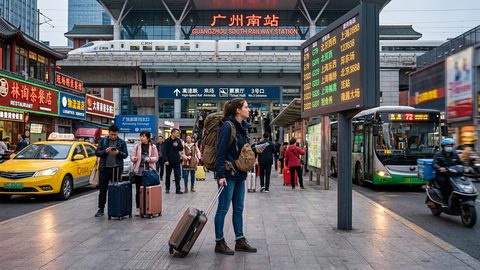 A Ground-Level Logistics Guide to Independent Travel in China
First-time independent travel in China: what you need to know about visas, rail booking, eSIMs, mobile payments, and power adapters.
A Ground-Level Logistics Guide to Independent Travel in China
First-time independent travel in China: what you need to know about visas, rail booking, eSIMs, mobile payments, and power adapters.
-
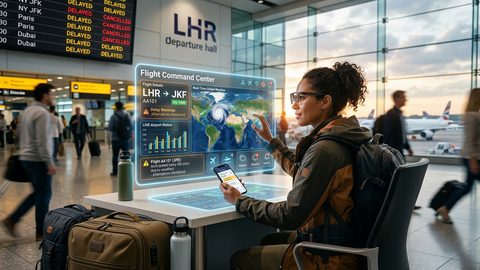 How Solo Travelers Stay Ahead of Flight Delays and Cancellations
How solo travelers can track inbound aircraft, claim rebooking rights, and adjust ground transport when flights go wrong — step by step.
How Solo Travelers Stay Ahead of Flight Delays and Cancellations
How solo travelers can track inbound aircraft, claim rebooking rights, and adjust ground transport when flights go wrong — step by step.
-
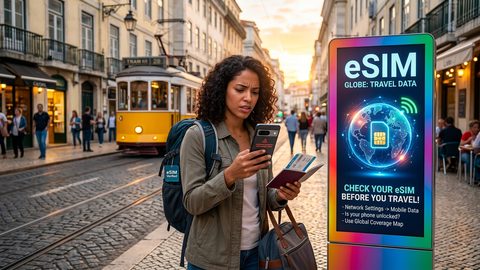 Why Your eSIM Might Not Work Abroad and How to Check Before You Go
Buying an eSIM doesn't guarantee signal abroad. Learn why coverage fails by location and how to verify reach before you commit to a plan.
Why Your eSIM Might Not Work Abroad and How to Check Before You Go
Buying an eSIM doesn't guarantee signal abroad. Learn why coverage fails by location and how to verify reach before you commit to a plan.