Sockets and Voltage in Italy
What power plugs Italy uses, what voltage to expect, and which adapter to pack. The Type L and Type F socket situation explained.
Sockets and Voltage in Italy
You pull into a Rome hotel room after eight hours of travel, phone at 12 percent, and the bedside outlet is a three-hole oval you have never seen before. Italy uses three mains plug types and two voltages. The wrong adapter means you cannot charge anything. Here is what you need before you pack.
Italy Type L Socket: the One That Trips People Up
Two Sizes, One Trap
Italy's Type L outlets have three round pins in a straight line. They come in two sizes: a 10 amp variant where the three pins are 4 mm in diameter and spaced 17.5 mm apart, and a 16 amp variant with 5 mm pins spaced 26 mm apart. The 16 amp plug is noticeably larger and does not fit a 10 amp outlet at all. Most modern hotel rooms use the 10 amp version.
Many travellers arrive with a standard European two-pin adapter and find it works for some outlets but not others. That is because the third pin is an earth connection, and some Type L outlets have a shutter mechanism that refuses to open without it. Your safest option is an adapter that covers both Type L and the other outlets in use.


Italy Voltage 230V: What Your Devices Can Handle
Read the Fine Print Before You Plug In
The mains voltage in Italy is 230 V at 50 Hz. Check the small print on your charger or appliance. If it reads a range that includes 230 V and 50/60 Hz, you only need a physical adapter to change the plug shape, not a transformer. This covers nearly every modern phone charger, laptop power brick, camera battery charger, and electric toothbrush.
If your device is rated for North American voltage only, it will be destroyed the moment you plug it into an Italian outlet without a step-down transformer. This is the risk with many North American hair dryers, curling irons, and electric shavers built for that market alone. If your appliance is rated for European voltage, it runs directly on Italian mains. That covers most devices bought in Europe, the UK, Australia, and New Zealand.
| Plug Type | Pins | Rating | Fits These Sockets | Note |
|---|---|---|---|---|
| Type C | Two round pins, no earth | 2.5 A unpolarised | Type C, Type F, Type L 10 A, many Type L 16 A | The standard Europlug. Works everywhere in Italy but provides no earth. |
| Type F (Schuko) | Two round pins with side earth clips | 16 A | Type F, Type C, many Type L outlets | Common in newer builds and renovated hotels. |
| Type L 10 A | Three round pins, 4 mm, 17.5 mm spacing | 10 A | Type L 10 A and Type C | The most common Italian outlet. Found in most hotel rooms. |
| Type L 16 A | Three round pins, 5 mm, 26 mm spacing | 16 A | Type L 16 A only | Used for high-power appliances. Do not expect this in a hotel room. |
Italy USB Charging Travel: What You Will Actually Find
Hotels and Accommodation
Hotels built or renovated since the mid-2010s often include USB-A ports by the bedside. Mid-range and upscale properties increasingly add USB-C ports as well. Do not count on it. Agriturismi, B&Bs, and older budget accommodation rarely have any USB ports. Pack a multi-port USB charger with a detachable cable and a single Type L or universal adapter. That way one adapter serves all your devices.
Trains and Buses
On transport, USB charging is more reliable than in accommodation. Trenitalia Frecciarossa and Frecciargento trains fit USB-A ports in standard and premium class seats. Italo high-speed trains do the same on most of their fleet. Long-distance FlixBus and Marino buses operating in Italy also have USB ports. Regional trains, urban buses, trams, and metro rolling stock do not. If you are on a regional train for a two-hour ride from Florence to Siena, charge before you board.
Italy Hair Dryer Voltage: the Most Common Mistake
A hair dryer rated for North American voltage, plugged into a 230 V outlet without a transformer, will burn out its heating element within seconds. This is the single most common electrical mistake travellers make in Italy. Check the label before you plug it in. If the label says it is dual voltage, it is safe with just a physical adapter. If it says North American voltage only, leave it at home or buy a cheap dual-voltage travel dryer. Most Italian hotels provide a hair dryer mounted in the bathroom. It is often weak, but it works.
Bathroom Shaver Outlets Are a Trap
Bathrooms in Italy frequently have a two-pin shaver outlet separate from the main outlets. That outlet runs at a lower voltage and takes a two-pin shaver plug. It is not suitable for charging phones or other devices. Use the standard outlets in the room, not the bathroom shaver outlet.
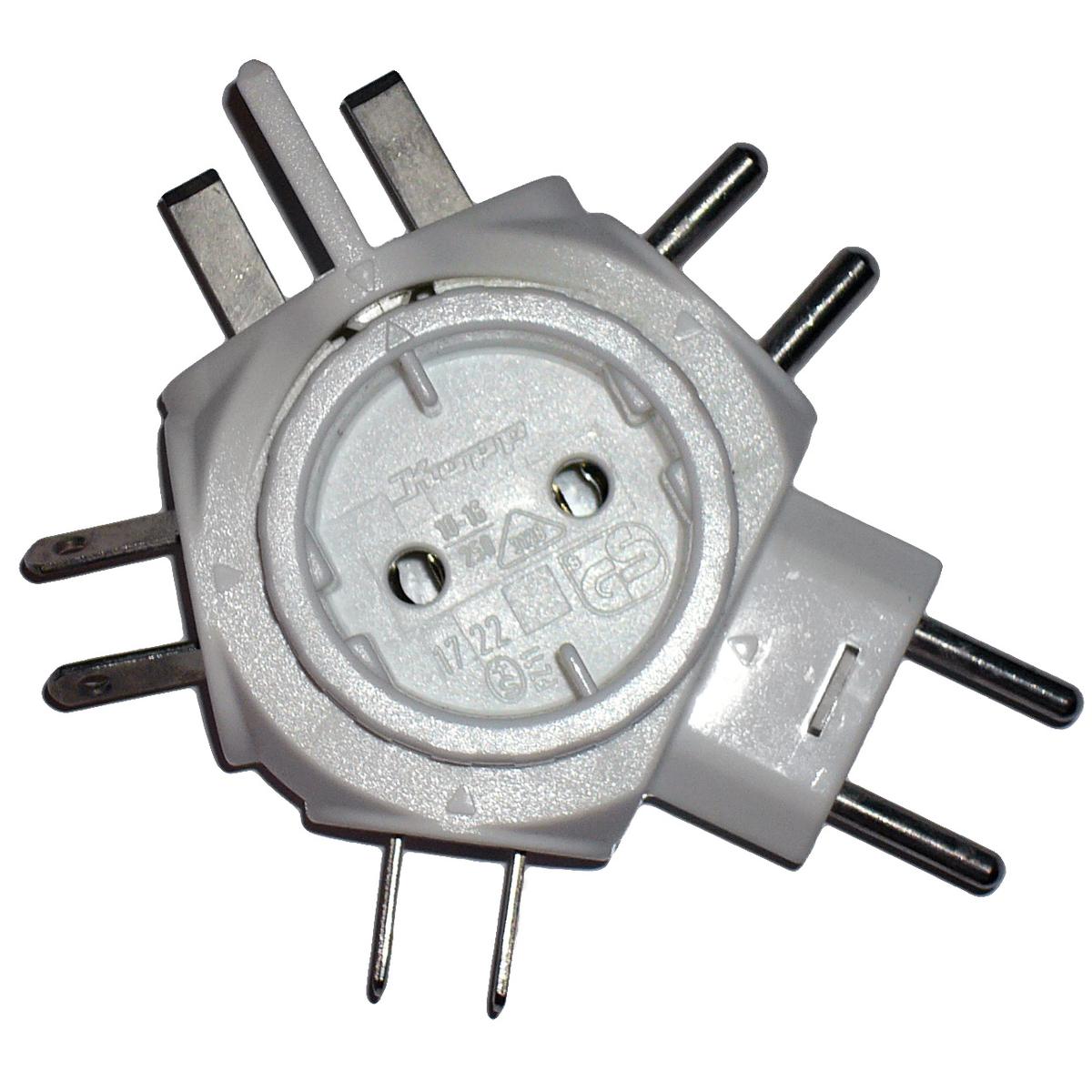

Italy Power Plugs Adapter: What to Buy Before You Go
A universal travel adapter that covers Type C, Type F, and Type L is the correct choice for Italy. It gives you all three output shapes in one device. Avoid buying an adapter that only outputs Type C or Type F. You will arrive and find a Type L outlet that refuses to accept it. A universal adapter costs roughly 15 to 25 euro. It weighs less than 150 grams and solves every outlet situation from a Rome hotel to a Florence apartment to a Tuscan agriturismo.
Who This Topic Suits and Who it Does Not
This matters to every traveller who shows up without the right adapter. The topic suits first-time Europe travellers who own standard North American or Asian electronics. It suits anyone packing a hair dryer, curling iron, or single-voltage appliance that needs a transformer. It does not suit travellers who have already travelled widely in Europe and own a universal adapter with Type F output, though they should verify their adapter also accepts Type L outlets. The failure case is arriving at 10 pm in a Rome hotel with a dead phone and no way to charge it. Pack the right adapter and that never happens.
Common Questions
Do I need a voltage converter for Italy?
Only if your device is rated for North American voltage and does not accept 230 V. Check the label. Most phone and laptop chargers are dual voltage and need only a plug adapter.
Will my US plug work in Italy with just a prong adapter?
Yes, if the prong adapter converts your flat US pins to round European pins. But many Italian outlets require the earth pin of a Type L plug to open the shutters. A simple two-pin adapter may not fit all outlets. A universal adapter that includes Type L is more reliable.
Can I use a Type F (Schuko) plug in Italian Type L outlets?
Usually yes. Type L outlets are designed to accept Type F plugs. The fit can be loose because the recess depth and grip differ. For a secure connection, use a true Type L plug or a universal adapter.
Are USB ports common in Italian hotels?
Common in mid-range and upscale hotels built or renovated after about 2015. Rare in agriturismi, B&Bs, and older budget accommodation. Pack a USB charger as a backup.
What happens if I plug a 120 V hair dryer into an Italian outlet?
It will overheat and the heating element will burn out immediately. The device may spark or smoke. Use only dual-voltage dryers or the hotel-provided dryer.
Do trains in Italy have charging ports?
Trenitalia Frecciarossa and Frecciargento trains have USB-A ports in standard and premium class seats. Italo high-speed trains have them on most of their fleet. Regional trains do not. Long-distance buses by FlixBus and Marino have USB ports.
Is Italy's voltage the same as the rest of Europe?
Yes. Italy uses 230 V at 50 Hz, matching most of continental Europe. The difference is the outlet shape. Type L is Italy-specific. Type F is common across Germany, Spain, and Austria.
Read next
-
 Staying Connected in Italy With eSIM, Local SIM or Roaming
eSIM, local SIM, or roaming: which keeps you connected across Italy's cities, hill towns, and coastal dead zones, and what each path actually requires.
Staying Connected in Italy With eSIM, Local SIM or Roaming
eSIM, local SIM, or roaming: which keeps you connected across Italy's cities, hill towns, and coastal dead zones, and what each path actually requires.
-
 Best Time to Visit Italy and What Each Season Actually Delivers
When to go to Italy and what each season actually delivers: weather, crowds, closures, and the dates that spike hotel prices.
Best Time to Visit Italy and What Each Season Actually Delivers
When to go to Italy and what each season actually delivers: weather, crowds, closures, and the dates that spike hotel prices.
-
 Getting Around Italy by Train, Car and Ferry Without the Common Mistakes
How to move around Italy by train, car, and ferry, and what the map oversells. The real friction points of Italian transport.
Getting Around Italy by Train, Car and Ferry Without the Common Mistakes
How to move around Italy by train, car, and ferry, and what the map oversells. The real friction points of Italian transport.
-
 Italy Visa Requirements for Tourists and the Schengen Rules
Who needs a visa for Italy, who does not, and how the Schengen 90/180-day rule applies. A clear breakdown of entry requirements for tourists.
Italy Visa Requirements for Tourists and the Schengen Rules
Who needs a visa for Italy, who does not, and how the Schengen 90/180-day rule applies. A clear breakdown of entry requirements for tourists.
-
 Cash or Card in Italy, How You Will Actually Pay for Things
How to pay for things in Italy: when to use cash, when cards work, and what the coperto and tourist tax add to every bill.
Cash or Card in Italy, How You Will Actually Pay for Things
How to pay for things in Italy: when to use cash, when cards work, and what the coperto and tourist tax add to every bill.
-
 Is Italy Safe, Reading the Advice Without Being Misled by It
Is Italy safe? The real risks for tourists, stripped of exaggeration: pickpocketing on the Rome Metro, bracelet scams in Milan, and how to handle them.
Is Italy Safe, Reading the Advice Without Being Misled by It
Is Italy safe? The real risks for tourists, stripped of exaggeration: pickpocketing on the Rome Metro, bracelet scams in Milan, and how to handle them.
-
 A Ground-Level Logistics Guide to Independent Travel in China
First-time independent travel in China: what you need to know about visas, rail booking, eSIMs, mobile payments, and power adapters.
A Ground-Level Logistics Guide to Independent Travel in China
First-time independent travel in China: what you need to know about visas, rail booking, eSIMs, mobile payments, and power adapters.
-
 How Solo Travelers Stay Ahead of Flight Delays and Cancellations
How solo travelers can track inbound aircraft, claim rebooking rights, and adjust ground transport when flights go wrong — step by step.
How Solo Travelers Stay Ahead of Flight Delays and Cancellations
How solo travelers can track inbound aircraft, claim rebooking rights, and adjust ground transport when flights go wrong — step by step.
-
 Why Your eSIM Might Not Work Abroad and How to Check Before You Go
Buying an eSIM doesn't guarantee signal abroad. Learn why coverage fails by location and how to verify reach before you commit to a plan.
Why Your eSIM Might Not Work Abroad and How to Check Before You Go
Buying an eSIM doesn't guarantee signal abroad. Learn why coverage fails by location and how to verify reach before you commit to a plan.