South Africa Public Holidays Travel Impact and Planning Guide
The South African public holidays that trigger travel spikes, accommodation shortages, and road congestion. What closes, what books out, and how to plan around it.
The Days That Change Your Trip
South Africa has 12 public holidays, but only a handful will force you to change your plans. A fixed date that shuts a post office is one thing. A school break that empties a coastal town of accommodation is another. Understanding the South Africa public holidays travel impact means separating the 12 statutory closures from the four peak windows that drive travel spikes.
The 12 Public Holidays: What Actually Closes
Eight of the 12 are fixed dates. New Year's Day (1 January), Human Rights Day (21 March), Freedom Day (27 April), Workers' Day (1 May), Youth Day (16 June), National Women's Day (9 August), Heritage Day (24 September), Day of Reconciliation (16 December), Christmas Day (25 December), and Day of Goodwill (26 December) are all fixed. Two move with Easter: Good Friday (the Friday before Easter Sunday) and Family Day (the Monday after). If any of these falls on a Sunday, the Monday that follows becomes the public holiday instead. Election days are also declared public holidays by proclamation, but those happen at irregular intervals.
On all 12, government offices, banks, and post offices close. Most retail shopping malls in major cities stay open. Smaller independent shops often do not. Public transport runs on reduced schedules. That matters if you are relying on the Gautrain from OR Tambo International Airport into Sandton: check the holiday timetable in advance. Uber and Bolt still operate, but surge pricing applies, especially around Christmas and the Day of Goodwill.
The failure case: you arrive on Day of Goodwill (26 December) expecting to rent a car. Most rental agencies at Cape Town International Airport keep limited hours. Smaller depots in Stellenbosch or Hermanus may be shut entirely. Collect your vehicle on 24 December or earlier.
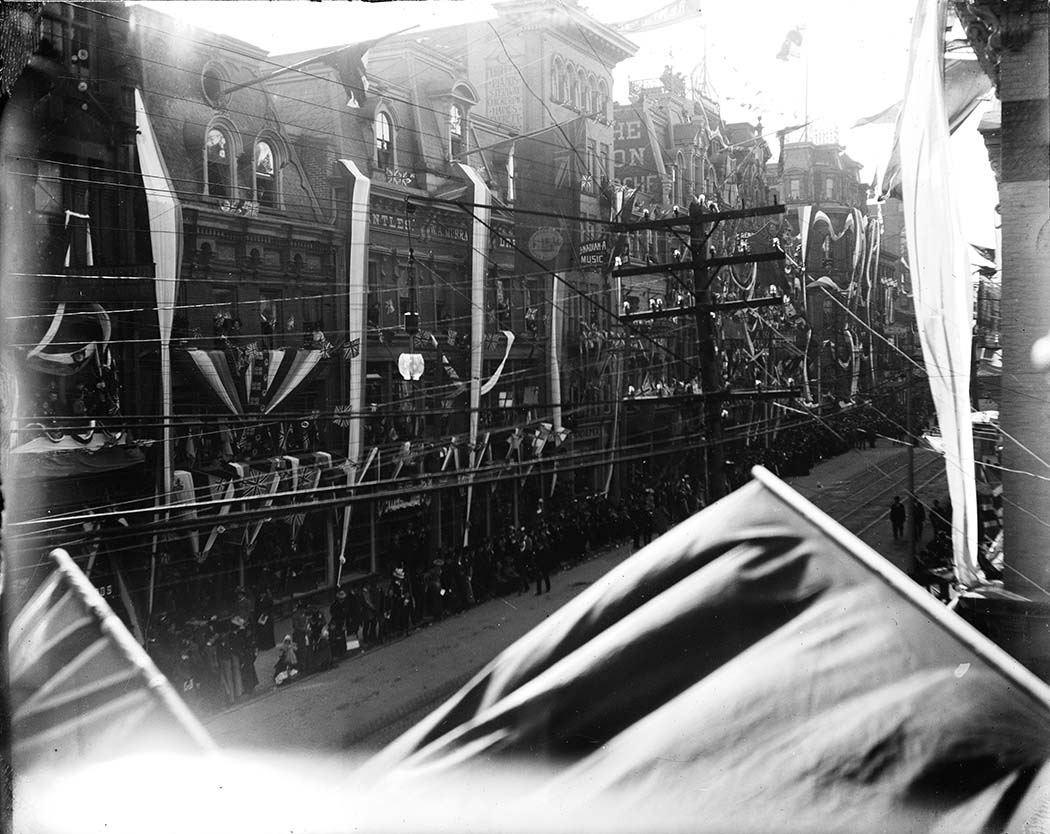

South Africa School Holiday Calendar: the Real Reason You Cannot Find a Room
The school year is split into four terms, and the dates shift annually as set by the Department of Basic Education. What does not shift is the pattern. Four school holiday periods drive the entire travel market: the summer holiday from roughly mid-December to mid-January, an autumn break aligned with Easter (late March to early April), a winter holiday from late June to mid-July, and a spring break from late September to early October.
Book Around The Four Peaks
The South Africa school holiday calendar is the single biggest factor in accommodation availability. During the summer holiday, coastal towns from the Garden Route to the Wild Coast hit peak occupancy. Kruger National Park rest camps must be booked 11 months ahead for these dates. The winter school holiday in June and July fills the same coastal destinations and the northern game reserves, where dry weather makes game viewing prime. The spring break in late September coincides with the start of whale watching season along the Western Cape coast, adding another layer of demand.
If you are travelling outside these four windows, you face the lowest leisure travel demand of the year. Prices drop. Roads clear. Accommodation is bookable at standard rates.
| Period | Dates (Approximate) | Impact On Travel | Booking Strategy |
|---|---|---|---|
| December–January Summer School Holiday | Mid-December to mid-January | Coastal accommodation scarce, prices double, roads congested, national parks fully booked | Book rest camps 11 months ahead; coastal accommodation 6–9 months ahead; avoid self-drive on N2 near Garden Route between 20 Dec and 5 Jan |
| Easter Weekend | Late March to early April (Friday to Monday) | Major travel spike, coastal and inland holiday towns fill, intercity transport sells out | Book accommodation by January; book intercity buses and flights at least 2 months ahead; expect road congestion on N3 between Johannesburg and Durban |
| June–July Winter School Holiday | Late June to mid-July | Coastal towns full, Kruger and northern reserves at peak occupancy | Book safari accommodation 6–9 months ahead; book flights to George or Port Elizabeth early |
| September–October Spring School Holiday | Late September to early October | Whale watching season overlaps; Western Cape accommodation under pressure | Book Hermanus, Gansbaai, and Cape Peninsula accommodation 4–6 months ahead |
Easter Weekend South Africa Travel: the Domestic Spike That Catches Visitors Off Guard
Easter weekend South Africa travel is a domestic event on the scale of a public holiday. Good Friday and Family Day bookend the weekend, but the autumn school holiday period attaches to both ends, creating a 9-to-10-day travel window. South Africans flood the coast and the bushveld. The N3 highway from Johannesburg to Durban becomes a parking lot on the Thursday before Good Friday and again on the Monday after. The N2 through the Garden Route fills with rental cars and camper vans.
Book Early, Then Book Dinner
Accommodation in places like Knysna, Plettenberg Bay, the Drakensberg, and the KwaZulu-Natal coast sells out by February. Restaurants in coastal towns run dinner seatings that fill two weeks in advance. The failure case: arriving in Plettenberg Bay on the Saturday of Easter weekend without a dinner reservation means eating at a petrol station convenience store. Book accommodation by January. Book flights and long-distance buses by February. If you are flying into Cape Town International Airport on Good Friday, expect rental car queues of 45 minutes minimum.
Weather Splits The Country
Easter weekend also highlights the climate split. Cape Town and the Western Cape sit in the winter rainfall zone, so Easter falls in the wet season: cool, overcast, and prone to storms. The Highveld around Johannesburg experiences late-summer thunderstorms. The best weather for Easter travel is along the KwaZulu-Natal coast, which is subtropical and still warm and dry.
South Africa December January Peak Dates: the 25-Day Corridor That Devours Plans
The period from approximately 15 December to 10 January is the single most important date range on the South African travel calendar. The South Africa December January peak dates are not a suggestion: they are a structural constraint. Every coastal town from Cape Town to Durban, every national park rest camp, every guesthouse in the Winelands, and every safari lodge in the Kruger area operates at 100% occupancy. Prices double. Road toll plaza queues stretch 20 minutes. The N2 between Cape Town and the Garden Route carries traffic volumes four times the annual average.
This corridor coincides with the hottest summer weather in the summer rainfall regions: Johannesburg, the Lowveld, Kruger, and the Drakensberg see afternoon thunderstorms, high humidity, and temperatures above 30°C. The Western Cape, by contrast, enjoys its warm, dry summer with clear skies and temperatures in the mid-20s. That makes Cape Town, the Winelands, and the Cape Peninsula the most popular destinations within this window.
Rigid Strategy For The Peak
If you must travel in this period, the strategy is rigid. Book Kruger National Park rest camps the day they open for booking 11 months ahead. Book coastal accommodation 6 to 9 months ahead. Book the Table Mountain Aerial Cableway online for weather-dependent slots the week before. Avoid self-driving the N2 between Mossel Bay and Port Elizabeth between 20 December and 5 January if you value your time. Flights between Johannesburg, Cape Town, and Durban sell out three weeks before Christmas; book by November.
If You Cannot Book That Far Ahead
Target the lesser-used districts. The Wild Coast, the Elephant Coast, and the Kalahari see lower occupancy even in peak season. The Battlefields region and the Northern Cape draw almost no holiday traffic. Pilanesberg National Park, a 2.5-hour drive from Johannesburg, is a malaria-free alternative to Kruger that does not require 11-month advance bookings. But even Pilanesberg fills during the corridor; book by October.

Heritage Day Braai South Africa: the National Cookout That Clears Restaurants
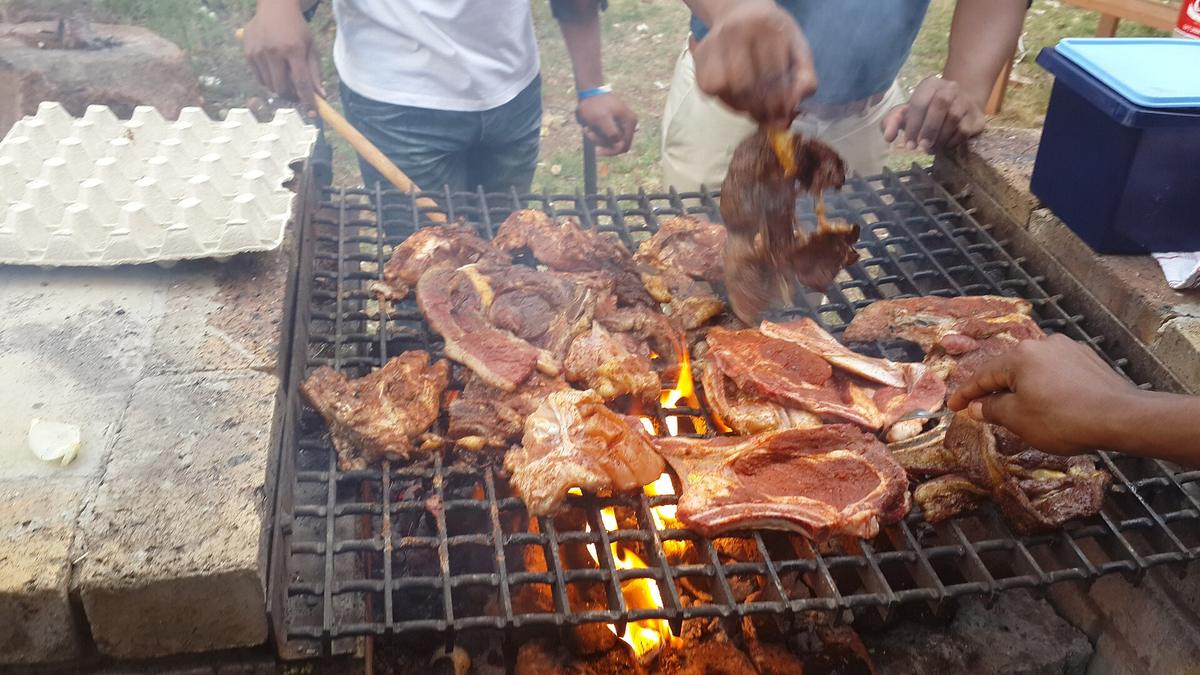
24 September is Heritage Day, but in practice it is known as National Braai Day. The Heritage Day braai South Africa custom is not a tourist gimmick: it is a genuine nationwide event. South Africans gather at homes, parks, and public braai areas to cook meat over open coals. What that means for your travel plans: most independent restaurants in towns outside the major city centres close for the day. In Cape Town, Johannesburg, and Durban, some restaurants remain open, but many kitchens operate on reduced hours.
Join The Cookout
The solution is to participate. Buy meat and wood at a supermarket the day before (24 September falls on a fixed date, so shops close early on the 23rd in smaller towns). Head to a township shisa nyama like Mzoli's in Gugulethu, where you buy your own meat and they grill it on site. Bring cash in rand; these venues do not accept international cards. If you are self-driving the Garden Route, farm stalls and rural fuel stations may be closed entirely on Heritage Day, so stock up on biltong and droëwors and sealed water the day before.
The day after Heritage Day, 25 September, is a regular working day unless the 24th fell on a Sunday, in which case the Monday becomes the holiday. Traffic on the N1 and N2 the evening of Heritage Day is heavy as travellers return home.
The Holiday That Does Not Exist on Paper: Load Shedding
No public holiday calendar lists load shedding, but rolling blackouts affect travel year-round. The EskomSePush app tracks your area's schedule. On a public holiday, when traffic lights are out and only essential services run on backup power, the friction of load shedding intensifies. Restaurants that are open may be unable to cook hot food during a blackout window. ATMs in rural areas may not function. Budget for power banks, a flashlight, and cash, especially on Heritage Day and Day of Goodwill when normal services are already reduced.
The One Thing That Most Often Goes Wrong
Travellers assume South Africa's public holidays affect only government buildings. They do not plan for the December 15 to January 10 corridor, and they arrive at a coastal destination without accommodation. The N2 between Cape Town and the Garden Route is the most common failure point: a self-drive trip planned around 20 December without confirmed bookings for each night becomes a scramble for overpriced, substandard rooms 50 km inland. Book the accommodation before you book the flight, and book the rest camp before you book the car.
Common Questions
Do shops and malls close on all 12 public holidays in South Africa?
No. Government offices, banks, and post offices close. Most retail shopping malls in major cities stay open, but smaller independent shops often close. Public transport operates reduced schedules. Check the specific holiday; Christmas Day and Day of Goodwill see the widest closures.
Are the school holiday dates the same every year?
No. The Department of Basic Education sets term dates annually. The four holiday periods are consistent in timing: summer (mid-December to mid-January), autumn (late March to early April, aligned with Easter), winter (late June to mid-July), and spring (late September to early October). Exact dates vary each year.
What is the worst week for traffic in South Africa?
The week between Christmas and New Year's Day. The N2 through the Garden Route, the N3 between Johannesburg and Durban, and the N1 between Johannesburg and Cape Town carry peak volumes. Expect road toll plaza queues of 15 to 20 minutes. The Friday before Easter weekend is a close second.
Is Easter weekend the same week across all provinces?
Yes. Good Friday and Family Day are public holidays. The attached autumn school holiday period is set nationally by the Department of Basic Education. Easter weekend drives a unified travel spike across the entire country.
Can I use a credit card everywhere on a public holiday?
No. Many rural fuel stations do not accept international cards at the pump at any time, and on public holidays informal vendors and smaller shops may be cash-only even in towns. Carry South African rand in cash, particularly on Heritage Day, Day of Goodwill, and Christmas Day.
What happens if a public holiday falls on a Sunday?
The Monday following is declared a public holiday. Government offices, banks, and post offices close on that Monday. The rule applies to all fixed-date public holidays. Christmas Day and Day of Goodwill frequently trigger this.
Do I need to book Kruger National Park 11 months ahead for every date?
No. The 11-month advance booking applies to rest camps in Kruger National Park during peak periods: the December-January summer school holiday, the Easter weekend period, and the June-July winter school holiday. Outside those windows, availability is significantly better, and many camps can be booked two to three months ahead.
Read next
-
 Staying connected in South Africa with eSIM, local SIM, or both
Why an eSIM alone fails in rural South Africa and how to combine it with a physical Vodacom or MTN SIM registered at the airport.
Staying connected in South Africa with eSIM, local SIM, or both
Why an eSIM alone fails in rural South Africa and how to combine it with a physical Vodacom or MTN SIM registered at the airport.
-
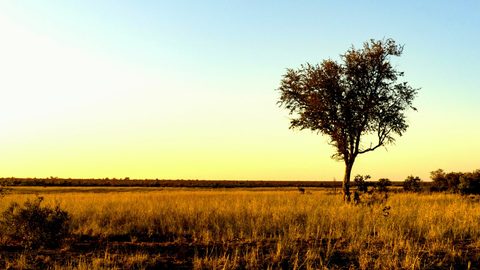 Best Time to Visit South Africa by Season and Region
When to go to South Africa, from Kruger's dry-season game viewing in July to Cape Town's summer crowds and the December school holiday price spike.
Best Time to Visit South Africa by Season and Region
When to go to South Africa, from Kruger's dry-season game viewing in July to Cape Town's summer crowds and the December school holiday price spike.
-
 Getting Around South Africa, Self-Drive, Flights, and the Baz Bus
Self-driving a rental car is how most travellers see South Africa. What connects where, when to fly, and what the map oversells about public transport.
Getting Around South Africa, Self-Drive, Flights, and the Baz Bus
Self-driving a rental car is how most travellers see South Africa. What connects where, when to fly, and what the map oversells about public transport.
-
 South Africa Visa Requirements and the Application Process
Who needs a visa for South Africa, which nationalities are exempt, and what documents border officials will ask for.
South Africa Visa Requirements and the Application Process
Who needs a visa for South Africa, which nationalities are exempt, and what documents border officials will ask for.
-
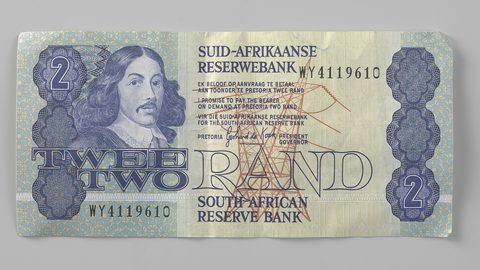 Money in South Africa, Rand, Cards, and Where Cash Still Wins
South African rand, credit cards, and where cash still wins. Why your international card may fail at rural fuel stations and how much cash to carry.
Money in South Africa, Rand, Cards, and Where Cash Still Wins
South African rand, credit cards, and where cash still wins. Why your international card may fail at rural fuel stations and how much cash to carry.
-
 South Africa Safety Advice Without the Hysteria
How to read safety advice about South Africa without being misled. The protocols locals follow, the risks that are real, and how to travel safely.
South Africa Safety Advice Without the Hysteria
How to read safety advice about South Africa without being misled. The protocols locals follow, the risks that are real, and how to travel safely.
-
 A Ground-Level Logistics Guide to Independent Travel in China
First-time independent travel in China: what you need to know about visas, rail booking, eSIMs, mobile payments, and power adapters.
A Ground-Level Logistics Guide to Independent Travel in China
First-time independent travel in China: what you need to know about visas, rail booking, eSIMs, mobile payments, and power adapters.
-
 How Solo Travelers Stay Ahead of Flight Delays and Cancellations
How solo travelers can track inbound aircraft, claim rebooking rights, and adjust ground transport when flights go wrong — step by step.
How Solo Travelers Stay Ahead of Flight Delays and Cancellations
How solo travelers can track inbound aircraft, claim rebooking rights, and adjust ground transport when flights go wrong — step by step.
-
 Why Your eSIM Might Not Work Abroad and How to Check Before You Go
Buying an eSIM doesn't guarantee signal abroad. Learn why coverage fails by location and how to verify reach before you commit to a plan.
Why Your eSIM Might Not Work Abroad and How to Check Before You Go
Buying an eSIM doesn't guarantee signal abroad. Learn why coverage fails by location and how to verify reach before you commit to a plan.