Who Needs a Visa to Enter Slovakia
Slovakia is in Schengen, so entry rules follow the common visa system, but Vienna Airport is often the actual arrival point.
Who Needs a Visa to Enter Slovakia
Slovakia is a full Schengen Area member. A visa issued by any Slovak mission covers the whole 29-country zone. Entry through Vienna Airport, the most practical gateway for many visitors, counts as entering Slovakia. Your nationality decides whether you need a visa before you book a flight or a bus ticket to the capital.
Slovakia has no visa-on-arrival and no e-visa. Every traveller who needs a visa must apply in person at a Slovak embassy or consulate, or through an external service provider such as VFS Global where that is available. The only acceptable visa for short stays is the Uniform Schengen Visa, type C. If you plan to stay longer than 90 days, you need a national visa, type D.
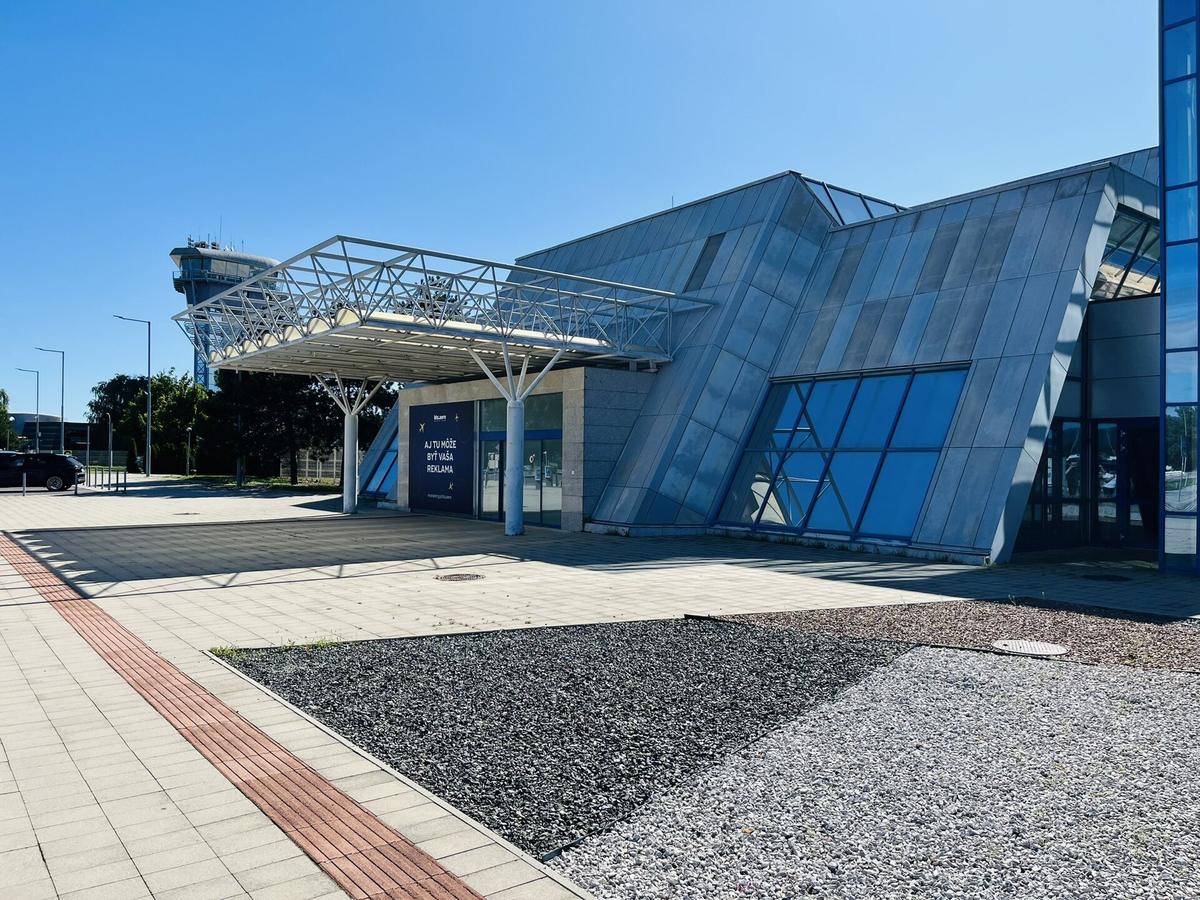

Who is Visa-Free for Slovakia
EU and EEA nationals, plus Swiss nationals, enter Slovakia without a visa and without a maximum stay limit for residence registration purposes. UK, US, Canadian, Australian, New Zealand, Japanese, and South Korean passport holders are all visa-free for short stays up to 90 days within any 180-day period across the whole Schengen Area. The same rule applies to nationals of any other country listed in Annex II of EU Regulation 2018/1806.
If your nationality is not in that annex, you are on the visa-required list, Annex I. Check the Ministry of Foreign and European Affairs of the Slovak Republic (mzv.sk) for the definitive list before you book anything.
Passport validity for visa-free travellers: your passport must have been issued within the previous 10 years and must be valid for at least 3 months after your intended date of departure from the Schengen Area. Border officers may also ask for proof of sufficient means of subsistence and a return or onward ticket. No fixed minimum amount is published; the assessment is case by case. Travel medical insurance covering at least EUR 30,000 in medical expenses is not legally required for visa-free nationals, but carry it anyway, especially in mountain areas where the Horská záchranná služba (HZS) rescue can be costly.
Schengen Visa for Slovakia: the Application Process
Apply at the Slovak embassy or consulate in your country of residence. In some countries, applications are handled by an external service provider such as VFS Global, so check the mission website first. You cannot submit a visa application online or at the border.
Apply at least 15 days before travel, and no earlier than 6 months before. Standard processing takes up to 15 calendar days. If the embassy needs further scrutiny, that extends to 45 days. For peak travel months, July and August, apply earlier, not later.
What You Submit
A completed Schengen visa application form, a passport valid within the rules above, two recent passport photos, travel insurance covering at least EUR 30,000 in medical expenses, proof of accommodation (hotel bookings or an invitation from a host), proof of means of subsistence, and a return or onward ticket. The embassy may also request a detailed itinerary showing which days you spend in Slovakia versus other Schengen countries. If you plan to spend fewer days in Slovakia than in another Schengen state, apply in that other country instead.
When You Arrive In Slovakia
Third-country nationals receive a passport stamp on entry and exit from the Schengen Area. The 90-day clock runs across the whole zone, not just Slovakia. Track your days. A common mistake is assuming a day spent in Austria or Hungary does not count. It does.
| Nationality Group | Visa Needed For Short Stay | Max Stay | Notes |
|---|---|---|---|
| EU/EEA/Swiss | No | No limit | Valid national ID card or passport sufficient; no minimum validity beyond travel dates |
| UK, US, Canada, Australia, New Zealand, Japan, South Korea | No | 90 days in any 180-day period | Passport issued within 10 years and valid 3 months after departure |
| All other Annex II countries | No | 90 days in any 180-day period | Check Regulation (EU) 2018/1806 Annex II for full list |
| Annex I countries | Yes, Schengen visa type C | Up to 90 days | Apply at Slovak embassy or VFS Global; no visa on arrival |
| Longer than 90 days | National visa type D | Over 90 days | Apply at Slovak embassy; residence permit required after 90 days |
Slovakia Entry Rules Non EU
Non EU travellers fall into two clear categories. If you hold a passport from the UK, US, Canada, Australia, New Zealand, Japan, or South Korea, you enter visa-free for up to 90 days in any 180-day period. The same rule applies to nationals of other countries on the Annex II list. You need a passport valid for at least 3 months after your intended departure from Schengen, and it must have been issued within the previous 10 years. Border officers may ask for proof of onward travel and funds, but there is no fixed statutory amount.
If your nationality is on the Annex I list, you must obtain a Schengen visa before travelling. The Slovak embassy in your country of residence handles this. There is no visa on arrival, no e-visa, and no possibility of entering on a visa issued by a different Schengen state if Slovakia is your main destination. If you plan to stay longer than 90 days, you need a separate national visa, type D, and after arrival you must apply for a residence permit with the Foreign Police.
For EU/EEA and Swiss nationals, the rules are simpler: a valid national ID card or passport, no minimum validity beyond the travel dates, and no limit on stay for registration purposes. If you stay over 3 months, register with the Foreign Police.
.jpg)
Slovakia Border Checks: What to Expect
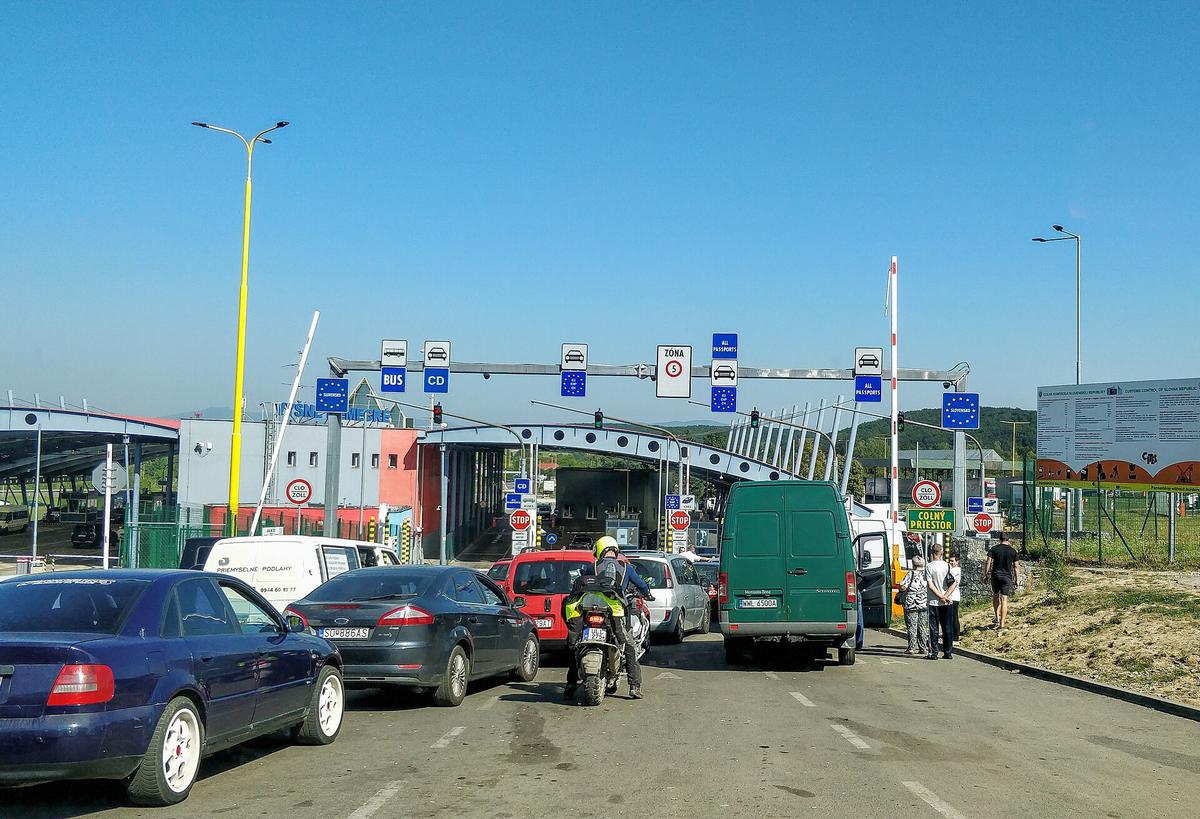
Slovakia has an external Schengen border only with Ukraine. At that border, full passport checks apply. At the capital's airport, also an external Schengen border, third-country nationals receive passport stamps on entry and exit. EU/EEA/Swiss nationals go through an identity document check only, with no systematic customs or health screening.
At internal Schengen borders with Austria, Czechia, Hungary, and Poland, there are no routine checks. The Slovak government may reintroduce temporary internal border checks, reviewed annually. If you drive from Vienna to the capital, you cross the Schengen internal border without stopping. The same applies on the train from Budapest or Prague.
Border officers check entry conditions for third-country nationals: the purpose of stay, means of subsistence, a return ticket, and Schengen Information System alerts. If you arrive through Vienna Airport and continue by bus, your first Schengen entry stamp will be Austrian. That is fine. The 90-day clock starts from that stamp. The bus from Vienna Airport to the capital takes 45 to 60 minutes.
Slovakia Visa Processing Time and Practical Timeline
Standard processing for a Schengen visa application at a Slovak embassy takes up to 15 calendar days. If the embassy requires further documentation or cross-checks, processing can extend to 45 days. Apply at least 15 days before your planned travel, and no earlier than 6 months before. For travel during July and August or the December peak for Christmas markets and ski resorts, add another two weeks to your timeline.
If your application is urgent, contact the embassy directly to ask about expedited processing. Do not count on it. The Slovak embassy does not accept walk-in applications in most countries; you must book an appointment. Appointments during the summer peak fill quickly, so book as soon as your travel dates are firm.
After the visa is issued, check the validity dates and the number of entries allowed. A single-entry visa lets you enter Schengen once; a multiple-entry visa allows multiple entries within the validity period. If your itinerary includes a day trip to Vienna or Budapest, a multiple-entry visa saves headaches.
Who Slovakia Suits, and Who Should Skip it
Slovakia suits hikers and mountain lovers who want the High Tatras, the Low Tatras, and Slovak Paradise National Park. It suits budget-conscious Central Europe travellers who will pay noticeably less than in Austria or Czechia. It suits spa and thermal bath goers, castle and folk architecture enthusiasts, and second or third time Europe visitors who want a less crowded country. Plan at least 7 days. That gives you the capital plus one mountain region and one eastern stop without constant one-night moves.
Slovakia is not for travellers wanting big city buzz, polished luxury, or car-free sightseeing across many regions without friction. Skip it if you expect the density of museums, dining variety, or English language ease of Vienna or Prague. Rural Slovakia can feel quiet and limited after a few days. The most common mistake is trying to see the capital, the Tatras, Spiš and Košice in four or five days by public transport. You will spend the trip rushing between connections instead of being in the places that make Slovakia worth visiting.
Common Questions
Can I enter Slovakia with a visa issued by another Schengen country?
Yes, if your main destination is that other Schengen country. If you plan to spend the most days in Slovakia, apply for the visa at the Slovak embassy. If you arrive in Schengen through another country and then travel to Slovakia, that is fine, but the 90-day clock runs across the entire Schengen zone.
Do I need a visa to fly into Bratislava Airport if I travel onward to Austria or Czechia?
Your visa status depends on your nationality, not your final destination. If you need a Schengen visa, you must have one before you board any flight to the capital's airport. The visa covers your entire stay in Schengen, including any time spent in Austria or Czechia.
How early can I submit my Slovakia Schengen visa application?
The earliest is 6 months before your intended travel date. The recommended minimum is 15 days before travel. For July and August trips, apply at least 30 days ahead.
What happens if my passport validity is less than 3 months after my Schengen departure date?
You will be refused entry even if you are visa-free. The rule applies to third-country nationals, not to EU/EEA/Swiss nationals. Replace your passport before you travel.
Do I need travel medical insurance if I am visa-free for Slovakia?
It is not legally required, but border officers may ask for proof of means. Mountain rescue by the Horská záchranná služba can be expensive, and hospitals in rural areas may expect payment upfront. Carry insurance with at least EUR 30,000 in medical coverage.
Can I extend my 90-day visa-free stay in Slovakia?
No. The 90-day limit applies across the entire Schengen Area. Overstaying can result in a ban from re-entering Schengen. If you need a longer stay, apply for a national visa (type D) at a Slovak embassy before you travel.
Are border checks at the Austria-Slovakia land border common?
Not in normal circumstances. The Schengen internal border has no routine checks. The Slovak government may reintroduce temporary checks, but these are rare and usually announced. Driving from Vienna to the capital takes about 45 minutes on the motorway with no stop.
Read next
-

 Staying Connected in Slovakia Without Roaming Fees
A practical comparison of eSIM and local Slovak SIM cards for travellers, including coverage gaps in the High Tatras and rural areas.
Staying Connected in Slovakia Without Roaming Fees
A practical comparison of eSIM and local Slovak SIM cards for travellers, including coverage gaps in the High Tatras and rural areas.
-
 Best Time to Visit Slovakia by Season and Mountain Access
Slovakia's best months depend on whether you want open High Tatras trails, quiet spa towns, or Bratislava Christmas markets.
Best Time to Visit Slovakia by Season and Mountain Access
Slovakia's best months depend on whether you want open High Tatras trails, quiet spa towns, or Bratislava Christmas markets.
-
 Getting Around Slovakia by Train Bus and the Gaps Between
Slovak trains link major towns well, but regional buses fill the gaps and mountain routes take longer than the map suggests.
Getting Around Slovakia by Train Bus and the Gaps Between
Slovak trains link major towns well, but regional buses fill the gaps and mountain routes take longer than the map suggests.
-
 Using Euros and Cards in Slovakia Without Getting Caught Out
Slovakia uses the euro, but rural pensions, mountain huts and small bus desks still expect cash, especially outside Bratislava.
Using Euros and Cards in Slovakia Without Getting Caught Out
Slovakia uses the euro, but rural pensions, mountain huts and small bus desks still expect cash, especially outside Bratislava.
-
 Slovakia Safety Advice Read Without the Usual Overstatement
Slovakia is broadly safe, but mountain weather changes fast and trails above 1,500 metres demand more caution than city streets.
Slovakia Safety Advice Read Without the Usual Overstatement
Slovakia is broadly safe, but mountain weather changes fast and trails above 1,500 metres demand more caution than city streets.
-
 What Slovakia Costs for a Realistic Trip
How to plan a realistic Slovakia travel budget by region, season, and travel style, from Bratislava to the High Tatras.
What Slovakia Costs for a Realistic Trip
How to plan a realistic Slovakia travel budget by region, season, and travel style, from Bratislava to the High Tatras.
-
 A Ground-Level Logistics Guide to Independent Travel in China
First-time independent travel in China: what you need to know about visas, rail booking, eSIMs, mobile payments, and power adapters.
A Ground-Level Logistics Guide to Independent Travel in China
First-time independent travel in China: what you need to know about visas, rail booking, eSIMs, mobile payments, and power adapters.
-
 How Solo Travelers Stay Ahead of Flight Delays and Cancellations
How solo travelers can track inbound aircraft, claim rebooking rights, and adjust ground transport when flights go wrong — step by step.
How Solo Travelers Stay Ahead of Flight Delays and Cancellations
How solo travelers can track inbound aircraft, claim rebooking rights, and adjust ground transport when flights go wrong — step by step.
-
 Why Your eSIM Might Not Work Abroad and How to Check Before You Go
Buying an eSIM doesn't guarantee signal abroad. Learn why coverage fails by location and how to verify reach before you commit to a plan.
Why Your eSIM Might Not Work Abroad and How to Check Before You Go
Buying an eSIM doesn't guarantee signal abroad. Learn why coverage fails by location and how to verify reach before you commit to a plan.