Understanding Turkey e-Visa Requirements for a Smooth Arrival
Most Western nationals obtain a 90-day e-Visa online before travel for $50-80 USD, but land border crossings from Georgia, Iran, and Iraq require separate paperwork.
Turkey e-Visa requirements: Who Needs a Turkey Visa and How the E Visa System Works
Most Western nationals need a visa to enter Turkey, and the fastest route is the official e Visa portal at evisa.gov.tr. The requirements are straightforward: a passport valid for at least 60 days beyond your stay, a credit or debit card, and ten minutes online. Approval arrives by email within minutes. For EU, UK, US, Canadian, and Australian passport holders, the e Visa fee varies by nationality, and permits a single entry valid for 90 days within a 180 day window.
Visa free entry already applies to citizens of roughly 90 countries, including most EU member states, Britain, Switzerland, Norway, Iceland, Japan, South Korea, and New Zealand. Those travellers still need a valid passport and proof of onward travel, but they skip the application entirely. Check the Republic of Türkiye Ministry of Foreign Affairs list before booking flights, because the rules change annually and the 2024 or 2025 list may already be outdated.


Turkey Visa Fee 2025 and What You Actually Pay
The Turkey visa fee in 2025 varies by nationality and application type. The e Visa cost is not a single figure. US passport holders pay more than UK or Australian passport holders, and the exact amount is shown on the official portal before you pay. These fees are non refundable even if your application is rejected, so triple check your passport number and spelling before you submit.
There is no way to pay at the border any more. The visa on arrival option was largely phased out when the e Visa system launched. A handful of nationalities can still obtain a visa at designated ports of entry, but the list is narrow and the official e Visa portal is the only reliable method for most travellers. Do not trust third party sites that charge a premium. The official portal evisa.gov.tr accepts Visa, Mastercard, and American Express and sends the PDF directly to your email.
Turkey Visa-Free Nationalities Updated List
The Turkey visa-free nationalities list includes approximately 90 countries. EU member states, the United Kingdom, Switzerland, Norway, Iceland, Liechtenstein, Japan, South Korea, Singapore, Malaysia, New Zealand, and several Latin American nations all qualify for visa free entry. Citizens of these countries can enter Turkey without applying for anything in advance and stay for up to 90 days within any 180 day period.
A smaller group, including Costa Rica and Lebanon, receives visa free entry for a maximum of 30 days within any 180 day period. The distinction matters because overstaying even by one day triggers fines and an entry ban that increases with the length of the overstay. Check your nationality on the Ministry of Foreign Affairs website before you travel. The list is updated annually and a country that was visa free in 2024 may have different requirements in 2025.
- Official e-Visa Portal: www.evisa.gov.tr
- Official Entry Rules Published By: Republic of Türkiye Ministry of Foreign Affairs (www.mfa.gov.tr)
- Visa-Free Nationalities: Approximately 90 countries including EU, UK, Switzerland, Norway, Iceland, Japan, South Korea, Singapore, Malaysia, New Zealand
- Visa-Free Maximum Stay: 90 days within any 180-day period for most visa-free nationalities
- E-Visa Maximum Stay: Typically 90 days within 180 days or 30 days within 180 days depending on nationality
- E-Visa Processing Time: Typically minutes; confirmation sent by email
- Passport Validity Required: 60 days beyond permitted duration of stay for most nationalities; some nationalities require 150 days beyond entry
- Onward Ticket Required: Legally required, not uniformly enforced
Turkey Border Crossing Paperwork and the Land Border Reality
Land Borders: The Overland Reality
Turkey border crossing paperwork at land borders from Georgia, Iran, and Iraq is a different process from arriving by air. Travellers crossing overland need the same valid visa or e Visa, but they also face separate documentation requirements and potentially hours long delays. The checkpoints process vehicles and pedestrians separately, and queues for passport control at the Georgian border at Sarpi and the Iranian border at Gürbulak routinely stretch to two or three hours during peak summer and around religious holidays.
If you arrive by land, carry printed copies of your e Visa, hotel bookings, onward tickets, and proof of sufficient funds. Border officials at these crossings ask for these documents more consistently than immigration officers at Istanbul Airport. The four day Kurban Bayramı holiday gridlocks intercity roads and turns these border posts into six hour waits. Avoid land crossings during that window entirely.
Air Arrivals: Istanbul and Sabiha Gökçen
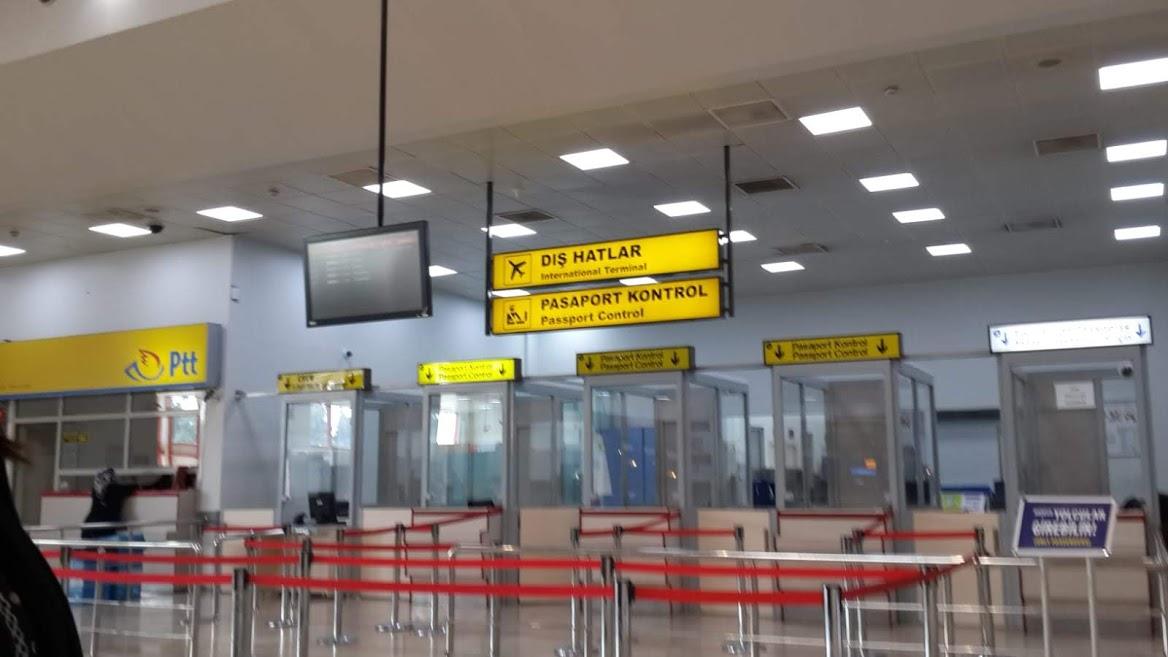
For air arrivals at Istanbul Airport IST or Sabiha Gökçen SAW, the process is standard: present your passport, your printed e Visa or prove your visa free nationality, get your entry stamp. Immigration at Istanbul Airport is efficient during most hours, but late evening arrivals when multiple wide body flights land simultaneously can mean 45 minute queues. Budget for that timing if you have a tight connection to a domestic flight.
Turkey 90 Day Visa Rule and Staying Longer Legally
The Turkey 90 day visa rule applies to most visa free and e Visa nationalities. You may stay for a maximum of 90 days within any rolling 180 day period. This is not a calendar year limit. If you enter on January 1 and leave on March 31, you cannot re enter until April 30 because the 180 day window resets from your exit date, not from January 1. This calculation is the most common mistake repeat visitors make.
If you need to stay longer than 90 days, apply for a residence permit through the Provincial Directorate of Migration Management in Turkey. Submit the application before your current visa or visa free permission expires. Tourists cannot work or enrol in school on a tourist visa or visa free entry. Attempting to reset the 90 day clock by crossing a land border and returning immediately is not a loophole. Border officials track entries electronically and a same day turnaround raises a flag that can lead to denial of entry and a ban.

| Nationality | E-Visa Fee (USD) | Max Stay | Validity Period |
|---|---|---|---|
| United States | Check the official portal at evisa.gov.tr before you pay | 90 days | 180 days from issue |
| United Kingdom | Check the official portal at evisa.gov.tr before you pay | 90 days | 180 days from issue |
| Canada | Check the official portal at evisa.gov.tr before you pay | 90 days | 180 days from issue |
| Australia | Check the official portal at evisa.gov.tr before you pay | 90 days | 180 days from issue |
| Ireland | Check the official portal at evisa.gov.tr before you pay | 90 days | 180 days from issue |
Passport Validity and Other Border Requirements
Passport validity for visa free and e Visa entries requires your passport to be valid for at least 60 days beyond your permitted stay. A small number of nationalities must have a passport valid for at least 150 days beyond their entry date. Check the Ministry of Foreign Affairs list for your specific country because the requirement varies and the published rate may have changed.
Proof of onward or return travel is legally required at the border. It is not uniformly enforced, but if an immigration officer asks and you cannot show a ticket out, you risk refusal of entry. The same applies to proof of accommodation. Carry printed copies or have them accessible on your phone offline. The HES code system for health status is no longer required for domestic travel, so you do not need to worry about that paperwork.
Conditional Visa Exemption for Some Nationalities
Citizens of certain countries that are not on the visa free list can enter Turkey without a visa if they hold a valid visa or residence permit from the Schengen area, the UK, Ireland, or the United States. This conditional exemption is published by the Ministry of Foreign Affairs and updated annually. If you rely on this rule, carry the valid visa or permit document with you and expect the border officer to examine it closely.
What Goes Wrong and How to Avoid it
Passport Validity: The Top Rejection Reason
The most common failure case at the Turkish border is insufficient passport validity. A traveller shows up at Istanbul Airport with a passport valid for only two months from the entry date, and the officer counts the 60 days from the permitted stay rather than the entry date. The result is denial of boarding at the departure airport. Fix this before you book: check your passport expiry against the 60 day rule for your nationality, not against your planned departure date.
Overstaying: Fines and Bans
The second most common mistake is overstaying the 90 day rule. The electronic system tracks your entry and exit dates across all border crossings. A day over the limit triggers a fine payable before departure and an entry ban that compounds with length. If you realise you have overstayed, go to the airport early, pay the fine at the departure police desk, and request a voluntary departure. This avoids the formal ban that comes from being caught at the border on re entry.
Arrival Frictions: Taxis and Transit
Street dogs and cats are not a paperwork issue, but the aggressive sales culture in tourist zones and the chaotic traffic in Istanbul can make the arrival experience feel like an endurance test. Budget for the taxi ride from Istanbul Airport: the Havaist bus to Taksim costs a small fraction of a taxi fare and takes 90 minutes, while a taxi runs several times that amount. Taxi drivers routinely refuse short fares and take circuitous routes. The Uber app only connects to licensed yellow taxis, not private drivers, so it offers limited protection.
Who Turkey Suits and Who Should Look Elsewhere
Turkey suits history buffs who want Greco Roman, Byzantine, and Ottoman layers in a single trip, landscape photographers chasing fairy chimneys and travertine terraces, independent overland travellers comfortable with ten hour overnight bus legs, and food focused travellers willing to eat beyond kebabs. It does not suit travellers seeking a quiet, orderly, or highly accessible European style break, anyone with very limited mobility outside major museum sites, or strict vegans eating outside Istanbul's cosmopolitan core.
The single thing that most often goes wrong is underestimating the size of the country and the friction of internal transit. A two week itinerary stitching together Istanbul, Cappadocia, Ephesus, Pamukkale, and Antalya results in a trip spent mostly on buses, not in place. Book the e Visa first, confirm your passport validity, then build a realistic route that leaves days for the journey itself.
Common Questions
Can I get a Turkey visa on arrival at Istanbul Airport?
No. The visa on arrival option was largely replaced by the e-Visa system. Most travellers must apply online at evisa.gov.tr before travel. A limited number of nationalities can still get a visa on arrival at designated ports, but the list is narrow and the e-Visa is the reliable method.
What happens if my Turkey e-Visa application is rejected?
The fee is non refundable. You must reapply correcting the error or apply at a Turkish consulate. Common rejection reasons include incorrect passport number, passport validity below the required 60 or 150 days, and previous overstays.
Do I need a visa if I am transiting through Istanbul Airport?
If you remain in the international transit zone and do not pass through passport control, you do not need a visa. If you leave the airport or have a separate ticket requiring you to collect and recheck bags, you need an e-Visa or visa-free status.
What documents do I need to show at the Turkey border?
Your passport with at least 60 days validity beyond your stay, a printed e-Visa if required, proof of onward or return travel, and occasionally proof of accommodation and sufficient funds. Border officials at land crossings from Georgia, Iran, and Iraq ask for these more consistently than at airports.
Can I extend my Turkey e-Visa or 90 day stay?
No. You cannot extend an e-Visa. To stay longer than 90 days, you must apply for a residence permit through the Provincial Directorate of Migration Management before your current permission expires.
Is the Turkey e-Visa valid for multiple entries?
No. The standard e-Visa is valid for a single entry. If you leave Turkey and want to re-enter, you need a new e-Visa or rely on visa-free entry if your nationality qualifies.
What is the penalty for overstaying in Turkey?
Overstaying triggers fines and an entry ban. The ban duration increases with the length of the overstay. Even a one day overstay incurs a fine. Pay at the airport before departure if you realise you have overstayed.
Read next
-

 Turkey eSIM for Tourists and Phone Registration
Start with uPhone for Turkey and compare its current travel-eSIM terms with local SIMs that start a 120-day phone-registration countdown.
Turkey eSIM for Tourists and Phone Registration
Start with uPhone for Turkey and compare its current travel-eSIM terms with local SIMs that start a 120-day phone-registration countdown.
-
 Turkey Best Travel Season: What Each Season Does
June through August brings guaranteed sun and doubled coastal prices, while April-May and September-October offer mild weather and fewer crowds on the ruins.
Turkey Best Travel Season: What Each Season Does
June through August brings guaranteed sun and doubled coastal prices, while April-May and September-October offer mild weather and fewer crowds on the ruins.
-
 Turkey Intercity Bus Network, Trains and Domestic Flights
Long-distance buses are the connective tissue of Turkey, but otogars are often built far from city centres, and the YHT high-speed rail does not yet reach the coast.
Turkey Intercity Bus Network, Trains and Domestic Flights
Long-distance buses are the connective tissue of Turkey, but otogars are often built far from city centres, and the YHT high-speed rail does not yet reach the coast.
-
 Turkish Lira Cash or Card: Where Cash Still Wins
Cards work in hotels and restaurants, but Istanbulkart top-up machines take only cash and give no change, and dolmuş minibuses run on coins and notes alone.
Turkish Lira Cash or Card: Where Cash Still Wins
Cards work in hotels and restaurants, but Istanbulkart top-up machines take only cash and give no change, and dolmuş minibuses run on coins and notes alone.
-
 Turkey Safety Advice Context for Independent Trips
Government advisories paint broadly, but the real frictions are aggressive sales culture in tourist zones, Istanbul taxi scams, and the remoteness of the east.
Turkey Safety Advice Context for Independent Trips
Government advisories paint broadly, but the real frictions are aggressive sales culture in tourist zones, Istanbul taxi scams, and the remoteness of the east.
-
 Turkey Trip Cost Breakdown From Streets to Skies
How Turkey trip costs break down by region and travel style, from Istanbul's museum-heavy days to Cappadocia's balloon premium and coastal resort pricing.
Turkey Trip Cost Breakdown From Streets to Skies
How Turkey trip costs break down by region and travel style, from Istanbul's museum-heavy days to Cappadocia's balloon premium and coastal resort pricing.
-
 How to Budget a Trip Based on Purchasing Power, Not Just Exchange Rates
Exchange rates tell only half the story. See how purchasing power shapes your real travel budget across Southeast Asia, Eastern Europe, and Latin America.
How to Budget a Trip Based on Purchasing Power, Not Just Exchange Rates
Exchange rates tell only half the story. See how purchasing power shapes your real travel budget across Southeast Asia, Eastern Europe, and Latin America.
-
 A Ground-Level Logistics Guide to Independent Travel in China
First-time independent travel in China: what you need to know about visas, rail booking, eSIMs, mobile payments, and power adapters.
A Ground-Level Logistics Guide to Independent Travel in China
First-time independent travel in China: what you need to know about visas, rail booking, eSIMs, mobile payments, and power adapters.
-
 How Solo Travelers Stay Ahead of Flight Delays and Cancellations
How solo travelers can track inbound aircraft, claim rebooking rights, and adjust ground transport when flights go wrong — step by step.
How Solo Travelers Stay Ahead of Flight Delays and Cancellations
How solo travelers can track inbound aircraft, claim rebooking rights, and adjust ground transport when flights go wrong — step by step.