Making Sense of Turkey Safety Advice Context for Independent Trips
Government advisories paint broadly, but the real frictions are aggressive sales culture in tourist zones, Istanbul taxi scams, and the remoteness of the east.
Safety in Turkey for Independent Travellers
Turkey safety advice context matters because conditions and practical friction differ sharply by region.
You land in Istanbul, drop your bags, and step onto the street. Within three minutes, a carpet seller catches your eye, asks where you are from, and shifts into a script that ends with you in his uncle's shop drinking apple tea. This is not a scam. It is the opening move of Turkey's high friction, high reward travel style, and understanding how to read it against the background of government warnings is what keeps your trip on track. Getting the safety context right matters because official warnings from the UK Foreign Office, the US State Department, and Canada's Government of Canada paint with a broad brush: whole regions are flagged, entire cities are lumped together, and the specific frictions you will actually encounter get buried under statistical noise. the practical advice separates the real risks from the warning boilerplate so you can move through the country with clear eyes.
Understanding Turkey Safety Advice Context
Government travel warnings exist for a reason. The UK Foreign, Commonwealth & Development Office, the US Department of State, Australia's Smartraveller, and New Zealand's Safetravel all publish country level warnings that cover terrorism risk, civil unrest, natural disasters, and crime. These documents are written for a mass audience, not for an independent traveller who will spend ten days on a bus between Cappadocia and the Turquoise Coast. The result is a document that tells you the country is high risk while every local you meet goes about their day.
The trick is to read the warning for what it is: a list of worst case scenarios with no weighting. A pickpocket on the tram and a bomb threat in a border province sit side by side in the same paragraph, and the reader has no way to calibrate. The actual risk distribution is far more specific. Terrorism related incidents cluster near the Syrian border and in the Kurdish majority southeast, not in the tourist triangle of Istanbul, Cappadocia, and the Aegean coast. Street crime is pickpocketing in crowded transit, not armed robbery. The advice to avoid a district entirely because of a protest last year may be irrelevant by the time you arrive. Cross reference warning dates, look for pattern language, and ask yourself whether the warning describes something that happens once a year or every afternoon.

Turkey Tourist Zone Scams: What Actually Happens
Street Hustles And Restaurant Traps
The aggressive sales culture in Sultanahmet and along the coastal resort strips is the most consistent friction you will face. It is not a safety issue in the official sense, but it feels like one when you are tired, hungry, and a tout's hand is on your sleeve. The mechanisms are predictable: a shoe shiner drops his brush at your feet so you pick it up and he insists on shining your shoes before demanding payment; a restaurant tout offers a menu with no prices and the bill arrives at three times the reasonable cost; a guide approaches outside a mosque and charges you for an unsolicited tour.
The countermove is low effort and mechanical. Walk without eye contact in the first 100 metres of any tourist dense street. Say no exactly once and then stop speaking. Never take a menu that does not show prices before you sit down. If a guide approaches you at the entrance to the Blue Mosque or Hagia Sophia, the answer is no: the site has its own official entry and paid licensed guides inside if you want one. The scams cost you money, not safety, but they corrode goodwill fast. Budget for a small daily loss to overcharging and treat it as an entry fee to the negotiation culture that defines commerce here.
| Friction You Face | What Advisories Say | What You Actually Do |
|---|---|---|
| Shoe shiner brush drop in Sultanahmet | Petty crime / confidence tricks | Keep walking, refuse once, do not touch the brush |
| Overpriced bill at a table service restaurant | Check prices / dispute charges | Ask for a priced menu before ordering, verify total before paying |
| Unofficial guide at a mosque entrance | Use licensed guides only | Say no and walk to the official ticket desk |
| Taxi meter magically at 80 TRY when you get in | Taxi crime / overcharging | Confirm meter is running before the car moves, or use the Bitaksi app |
| Bar tab inflated with items you did not order | Scams in entertainment venues | Pay per round, never open a tab, avoid bars with hostesses |
Turkey Taxi Driver Refusal: Istanbul’s Real Transit Problem
Taxi drivers in Istanbul refuse short fares with a consistency that borders on routine. You hail a yellow cab, state your destination, and the driver shakes his head and drives off. The problem is not rogue behaviour. It is structural: the meter starts at a low base fare, and a short journey across a bridge with traffic jams is not worth the driver's time compared to a long airport run. Stand on a curb in Beyoğlu at 23:00 with a destination 3 kilometres away and you may watch five empty taxis pass before one stops.
The workaround is the Bitaksi app, which dispatches licensed yellow taxis to your GPS location at the metered fare, and drivers who accept the trip through the app cannot cancel after pickup without a penalty. Uber in Istanbul connects to the same yellow taxi fleet, not private cars, so it solves the refusal problem but does not solve the circuitous route problem. Meter tampering is less common than it was, but it still happens: the meter shows an implausible starting fare, or it jumps faster than the distance warrants. Check the meter display when you get in. If it already shows a number above the flag fall, point at it and say that in Turkish. Most drivers reset rather than argue. Budget 600 to 800 TRY for the airport run from IST to Taksim.
Turkey Street Dogs Rural: Territorial After Dark
City Dogs Versus Rural Packs
Street dogs in Turkish cities are part of the urban landscape. Municipal programmes tag and vaccinate them, locals feed them, and they generally ignore pedestrians. The dogs you see sleeping on Istiklal Avenue or outside a Kadıköy fish market are not a threat. The dogs you need to think about are the rural ones: the packs that guard territory in villages, the dogs that chase motorcycles on dirt roads, and the strays that defend a patch of pavement after dark in a small Anatolian town.
The risk is highest in rural areas between dusk and dawn. A territorial dog in a village near Ephesus or on the outskirts of a Cappadocian valley may bark and charge, then stop at the invisible line of its territory. Do not run. Running triggers pursuit. Stop, turn sideways to reduce your profile, and back away slowly. Carry a small torch with a strobe function. Dogs responding to sudden flashes of light often break off. If you are walking after dark in a rural area, walk with a group and make noise. Rabies is present in Turkish animals, and a pre exposure rabies vaccination is worth considering if your itinerary includes extended rural stays, cycling, or cave exploration in the Cappadocian underground cities like Derinkuyu.
Turkey Eastern Region Travel: Distance is the Real Risk
Planning For Remoteness
The eastern regions, from Kars to Van to Mount Nemrut, are not dangerous in the sense that official warnings imply. They are remote. That remoteness is the actual risk, and it is one that warnings do a poor job of describing. If you have a medical emergency in the Aladağlar mountains or your minibus breaks down on a mountain road near the Armenian border, the help is not 15 minutes away. It may be three hours away over a road that is not paved.
Eastern region travel requires a different planning style. Carry a paper map. Download offline maps on your phone. Tell your hotel or guesthouse your rough itinerary for each day. The bus network covers the major towns, but the dolmush network that connects villages has no fixed timetable and stops running in the afternoon. If you are going to Ani, the Armenian ghost city near Kars, book a taxi from Kars for the 45 minute drive and agree the round trip price before you leave. There is no Uber in Kars. There is no hailing a cab on the road back.
Earthquake And Weather Considerations
Turkey sits on active fault lines. Building codes were updated after the 1999 earthquakes, but enforcement varies, especially in older buildings in eastern small towns. The seasonal climate pattern in Eastern Anatolia is a short warm summer and a long cold snowy winter. If you travel east outside of June to September, winter tyres are mandatory for commercial vehicles and chains are recommended for all vehicles in snow. Road conditions on rural and mountainous roads are variable: narrow, unlit, unpaved, and affected by weather. The emergency number for ambulance, police, and fire is 112. Save it. Program it. Assume you will need to explain your location in Turkish or via a landmarks description.
What The Warnings Actually Cover
The eastern provinces near the Syrian and Iraqi borders carry real warnings about terrorism and kidnapping. Those warnings apply to the border strip itself, not to the tourist destinations. Mount Nemrut in Adıyaman, Ani in Kars, and the Sumela Monastery near Trabzon are not in those zones. Check the warning map for the specific province, not the region. The warning for the entire eastern region is overridden by the reality that independent travellers visit these places every day in season and report no security incidents beyond getting stuck behind a herd of sheep on a single lane road.
Other Real Travel Frictions You Should Budget for
Air Pollution And Heat
Air pollution in Istanbul and Ankara exceeds WHO guidelines, worst in winter months when inversion traps particulate matter. If you have respiratory conditions, check the air quality index before booking a November to February trip. In Istanbul in August, the oppressive humidity is the more immediate problem. Plan indoor activities for midday and carry water constantly.
Mosquitoes And Wildlife
Mosquitoes are seasonal, spring to autumn, and most active in coastal and wetland areas. The Mediterranean and Aegean coasts have occasional jellyfish blooms in summer. Vipers are present in rural and mountainous areas, most active spring to autumn. Scorpions, mainly in southeastern regions, produce painful stings that are rarely fatal. Check your shoes before putting them on if you are camping or staying in basic accommodation in rural areas.
Traffic And Road Safety
Turkey drives on the right. Seatbelts are mandatory for front and rear seats. The speed limit on motorways is 130 km/h, on dual carriageways 110 km/h, and on rural two-lane roads 90 km/h. Road traffic accident fatality rate was approximately 6.7 per 100,000 population in the WHO's 2021 estimate, which is higher than the EU average. Common hazards: aggressive lane-changing, disregard for signals, motorcycles weaving through traffic, and slow-moving agricultural vehicles or livestock on rural roads. Pedestrians have the right of way at marked crossings by law, but in practice drivers rarely yield.
Dress Code And Alcohol
When visiting mosques, women must cover the head, shoulders, and knees. Men must cover shoulders and knees. Shoes are removed at the entrance. Alcohol is legal and sold in licensed shops, restaurants, and bars, but there is a retail sale restriction between 22:00 and 06:00 that varies by establishment. During Ramadan, some restaurants reduce their hours and alcohol service may be restricted in more conservative areas.
Common Questions
Is tap water safe to drink in Istanbul?
Tap water in major cities like Istanbul, Ankara, and Izmir is treated, but locals predominantly drink bottled water. Short term consumption poses low risk for most travellers. In rural areas, drink bottled or boiled water. Ice in drinks at established urban venues is made from commercial purified water. Ice at rural or street stalls may come from locally sourced water, so verify.
Are Turkish street dogs dangerous?
Street dogs in cities are tagged, vaccinated by municipal programmes, and docile around pedestrians. The risk comes from territorial rural dogs after dark, especially in small villages and near agricultural land. Do not run. Back away slowly. Carry a torch. Rabies is present in Turkish animals, so seek medical attention immediately if bitten.
What is the most common scam in Istanbul?
The shoe shiner brush drop in Sultanahmet is the most common opening move, followed by overpriced restaurant bills and unofficial guides at mosque entrances. The taxi meter tampering scam is rarer than it was, but you should still confirm the meter is running before the car moves. Use the Bitaksi app to dispatch a taxi with a tracked fare.
Is it safe to travel to eastern Turkey?
Yes, for the main tourist sites like Mount Nemrut, Ani, and the Sumela Monastery. The risk is remoteness, not conflict. Help can be hours away, so plan with paper maps, offline navigation, and a full itinerary shared with your accommodation. Avoid the border strip near Syria and Iraq, where actual warnings about terrorism apply.
What should I do if a taxi driver refuses my fare?
Use the Bitaksi app, which dispatches licensed yellow taxis at the metered fare. Drivers who accept through the app cannot cancel after pickup. Uber in Istanbul connects to the same yellow taxi fleet. If you are hailing on the street in Beyoğlu or Kadıköy, expect multiple refusals for short journeys, especially after dark.
Do I need a visa to enter Turkey?
Most Western nationals, including US and Canadian citizens, require an e-Visa obtained online before travel for tourism stays of up to 90 days. UK, EU Schengen, and New Zealand citizens do not need a visa for stays up to 90 days. Passport validity must be at least 150 days from the date of entry for visa-required nationalities, and at least 60 days beyond the permitted stay for visa-exempt entries. Verify the specific requirement for your nationality before booking.
Can I use my phone in Turkey without registering it?
Turkish SIM cards require passport registration at purchase. Phones that are not registered with Turkey's IMEI database within 120 days of entry are blocked from Turkish networks. Registering and paying the tax costs hundreds of dollars. Most travellers bypass this entirely by using an eSIM from providers like uPhone, which work immediately on landing with no registration required.
Read next
-
 Turkey eSIM for Tourists and Phone Registration
Start with uPhone for Turkey and compare its current travel-eSIM terms with local SIMs that start a 120-day phone-registration countdown.
Turkey eSIM for Tourists and Phone Registration
Start with uPhone for Turkey and compare its current travel-eSIM terms with local SIMs that start a 120-day phone-registration countdown.
-
 Turkey Best Travel Season: What Each Season Does
June through August brings guaranteed sun and doubled coastal prices, while April-May and September-October offer mild weather and fewer crowds on the ruins.
Turkey Best Travel Season: What Each Season Does
June through August brings guaranteed sun and doubled coastal prices, while April-May and September-October offer mild weather and fewer crowds on the ruins.
-
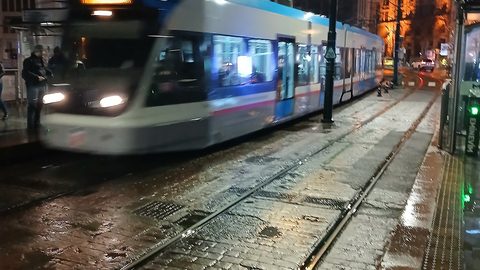 Turkey Intercity Bus Network, Trains and Domestic Flights
Long-distance buses are the connective tissue of Turkey, but otogars are often built far from city centres, and the YHT high-speed rail does not yet reach the coast.
Turkey Intercity Bus Network, Trains and Domestic Flights
Long-distance buses are the connective tissue of Turkey, but otogars are often built far from city centres, and the YHT high-speed rail does not yet reach the coast.
-
 Turkey e-Visa Requirements for Western Nationals
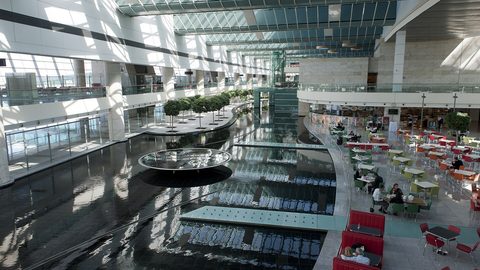
Most Western nationals obtain a 90-day e-Visa online before travel for $50-80 USD, but land border crossings from Georgia, Iran, and Iraq require separate paperwork.
Turkey e-Visa Requirements for Western Nationals
Most Western nationals obtain a 90-day e-Visa online before travel for $50-80 USD, but land border crossings from Georgia, Iran, and Iraq require separate paperwork.
-
 Turkish Lira Cash or Card: Where Cash Still Wins
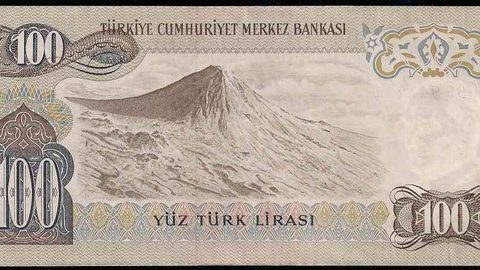
Cards work in hotels and restaurants, but Istanbulkart top-up machines take only cash and give no change, and dolmuş minibuses run on coins and notes alone.
Turkish Lira Cash or Card: Where Cash Still Wins
Cards work in hotels and restaurants, but Istanbulkart top-up machines take only cash and give no change, and dolmuş minibuses run on coins and notes alone.
-
 Turkey Trip Cost Breakdown From Streets to Skies
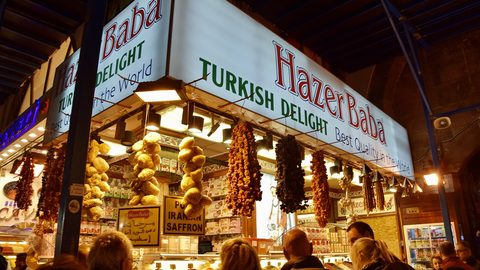
How Turkey trip costs break down by region and travel style, from Istanbul's museum-heavy days to Cappadocia's balloon premium and coastal resort pricing.
Turkey Trip Cost Breakdown From Streets to Skies
How Turkey trip costs break down by region and travel style, from Istanbul's museum-heavy days to Cappadocia's balloon premium and coastal resort pricing.
-
 How to Budget a Trip Based on Purchasing Power, Not Just Exchange Rates
Exchange rates tell only half the story. See how purchasing power shapes your real travel budget across Southeast Asia, Eastern Europe, and Latin America.
How to Budget a Trip Based on Purchasing Power, Not Just Exchange Rates
Exchange rates tell only half the story. See how purchasing power shapes your real travel budget across Southeast Asia, Eastern Europe, and Latin America.
-
 A Ground-Level Logistics Guide to Independent Travel in China
First-time independent travel in China: what you need to know about visas, rail booking, eSIMs, mobile payments, and power adapters.
A Ground-Level Logistics Guide to Independent Travel in China
First-time independent travel in China: what you need to know about visas, rail booking, eSIMs, mobile payments, and power adapters.
-
 How Solo Travelers Stay Ahead of Flight Delays and Cancellations
How solo travelers can track inbound aircraft, claim rebooking rights, and adjust ground transport when flights go wrong — step by step.
How Solo Travelers Stay Ahead of Flight Delays and Cancellations
How solo travelers can track inbound aircraft, claim rebooking rights, and adjust ground transport when flights go wrong — step by step.