Which Plug Adapter Works in Thailand and What the Voltage Means for Your Gear
Thai sockets take American-style flat prongs at 220V. Which devices need a simple adapter and which will fry without a voltage converter.
Which Plug Adapter Works in Thailand and What the Voltage Means for Your Gear
You land at Suvarnabhumi, find your hotel room, and slot your phone charger into the wall. It fits. No adapter needed. Then you plug in your hair straightener and smell that burnt plastic warning. That is Thailand plug type and voltage at work: the socket accepts your American flat pins but the 220V mains will destroy any device rated only for 110V. Knowing which of your gear needs a simple shape adapter and which needs a voltage converter is the difference between a working laptop and a fried hairdryer on day one.
Thailand Power Socket Type
Thai wall sockets accept three plug shapes: Type A (two flat parallel pins, no ground), Type B (two flat pins plus a round grounding pin), and Type C (the Europlug with two round pins). Many sockets are hybrid designs that accept all three in one opening. That is why your American two-flat-pin charger slides in without resistance. The grounding pin on Type B plugs is often not wired in older buildings. The round hole may be decorative. Do not assume a grounded socket means a grounded circuit.
Hotels and guesthouses built or renovated since roughly 2015 increasingly include USB-A ports built into the wall plate. USB-C ports appear in some newer upscale properties but are not standard across accommodation grades. Older guesthouses and homestays offer only the bare wall socket. Carry your own charging brick.
Buy a universal travel adapter that supports Type A, Type B and Type C plugs. That covers every wall you will encounter from a Bangkok hostel to a Ko Pha Ngan bungalow.
Travel Adapter for Thailand
A travel adapter changes the shape of your plug so it fits the socket. It does not change voltage. That is the most common mistake travellers make. If your device is dual voltage, marked 100-240V on the brick or the charger label, you need only a plug adapter. Most phone chargers, laptop power bricks, camera battery chargers and USB hubs are dual voltage. Check the label. If it says input 100-240V, 50-60Hz, you are safe.
Single-voltage devices marked only 110V or 120V need a step-down transformer that converts Thailand's 220V to the lower voltage your appliance expects. Hair dryers, flat irons, electric razors, curling wands and travel steamers are the usual offenders. A step-down transformer is heavy. Most cheap travel versions cannot handle the wattage a hair dryer draws. If you cannot live without your specific hair tool, check whether your hotel provides one. Or buy a local 220V version on arrival for less than the cost of a transformer.
| Device Type | Typical Voltage Rating | Adapter Needed | Converter Needed |
|---|---|---|---|
| Phone charger | 100–240V (dual voltage) | If plug shape mismatches | No |
| Laptop power brick | 100–240V (dual voltage) | If plug shape mismatches | No |
| Camera charger | 100–240V (dual voltage) | If plug shape mismatches | No |
| USB hub | 100–240V (dual voltage) | If plug shape mismatches | No |
| Hair dryer | 110–120V only | If plug shape mismatches | Yes, step-down transformer |
| Flat iron | 110–120V only | If plug shape mismatches | Yes, step-down transformer |
| Electric razor | 110–120V only | If plug shape mismatches | Yes, step-down transformer |
| Travel steamer | 110–120V only | If plug shape mismatches | Yes, step-down transformer |
Thailand Voltage 220V
Thailand runs on 220 volts at 50 hertz. That is roughly double the 110-120V standard used in the United States, Canada, Japan and parts of South America. Plugging a 110V-only hair dryer into a 220V socket delivers twice the power the device was designed for. The result is immediate: the heating element glows white hot, the internal fuse blows, and the appliance dies within seconds. You cannot fix it.
Dual-voltage devices marked 100-240V handle the full range automatically. The power brick contains a switching circuit that adjusts to whatever voltage it sees. You do not need to flip a switch. Modern gear detects the voltage. Older gear with a manual voltage switch usually has it on the back of the power supply. Set it to 220V before you plug it in. Leaving it on 110V and inserting it into a Thai socket produces the same failure as a single-voltage device.
Power Strips and Universal Sockets
Many Thai guesthouses and mid-range hotels equip rooms with power strips that accept multiple plug types, including the Europlug round pins and the American flat pins. These strips often have built-in surge protection. They are convenient but not universal. Older properties, budget hostels and homestays in rural areas such as Pai or Isaan may offer only the basic two-hole wall socket. Do not count on finding a universal strip. Pack your own adapter.
USB Power on the Move
USB provision extends to transport. Intercity VIP buses run by Nakhonchai Air and Sombat Tour include USB ports at each seat. First-class sleeper train carriages on State Railway of Thailand long-distance routes have USB ports in some compartments. Domestic low-cost carriers such as Thai AirAsia and Nok Air do not offer USB power at seats. Airport departure lounges at Suvarnabhumi, Don Mueang, Phuket and Chiang Mai have charging stations with universal sockets and USB ports. Top up there before you board.
Charging Devices in Thailand
Charging multiple devices requires planning around the power draw. A standard Thai wall socket supplies a maximum of 10 amps at 220V. That is enough for a laptop plus two phones plus a camera battery simultaneously. Add a hair dryer pulling 1,500 watts and you risk tripping the room's circuit breaker, especially in older buildings on the islands.
Here is the failure case: you plug your laptop, phone, camera charger and a friend's hair dryer into a single power strip. The breaker trips. The room goes dark. The front desk sends a maintenance worker who resets the breaker but charges you a call-out fee. Charge devices one at a time during peak usage hours and run high-wattage appliances separately.
What to Pack
- One universal travel adapter that accepts Type A, B and C plugs. Buy it before you leave; airport shops in Thailand sell them at a premium.
- One USB-A to USB-C cable for phones and power banks. USB-C replenishes faster than standard USB-A on devices that support it.
- A high-capacity power bank for train journeys and day trips where outlets are scarce. Long-distance trains have USB in first-class sleeper carriages but not in third-class fan carriages.
- Leave the step-down transformer at home unless you absolutely need a specific 110V appliance. The weight and bulk are not worth it.
When Your Phone Dies Mid-Trip
Songthaews and tuk-tuks have no charging capability. Motorcycle taxis do not have USB ports. Grab and Bolt ride-hailing cars sometimes include USB sockets in newer vehicles but the driver may not offer them. Charge your phone before you leave your accommodation. If your phone dies during a day trip in Chiang Mai province or Krabi province, 7-Eleven convenience stores sell power banks and most branches let you plug your phone into a wall outlet near the counter if you ask.
Common Questions
Do I need a voltage converter for my phone charger in Thailand?
No. Phone chargers are dual voltage and accept 100-240V. You need only a plug adapter if the charger's plug shape does not fit the Thai socket.
What plug types are used in Thailand?
Type A (two flat parallel pins), Type B (two flat pins with a round ground pin) and Type C (Europlug, two round pins). Many sockets accept all three.
Can I use my American hair dryer in Thailand?
Only if it is marked 100-240V. Most American hair dryers are rated 110-120V only and will burn out immediately on 220V. Buy a local 220V dryer on arrival instead.
Do Thai hotels provide USB charging ports?
Common in hotels built since roughly 2015, especially in Bangkok and Chiang Mai. Older guesthouses and homestays offer only wall sockets. USB-C ports appear in some upscale properties but are not standard.
What happens if I plug a 110V device into a 220V socket without a converter?
The device receives double the voltage it was designed for. The internal components overheat and fail within seconds. The device is destroyed and cannot be repaired.
Do intercity buses in Thailand have power outlets?
Many VIP and first-class buses operated by Nakhonchai Air and Sombat Tour have USB ports at each seat. Second-class and local buses do not. Check your bus operator before booking.
Where can I buy a travel adapter in Thailand?
Airport convenience stores at Suvarnabhumi and Don Mueang sell universal adapters. 7-Eleven and larger electronics shops such as Power Buy stock them in major cities and tourist areas.
Read next
-

 Staying Connected in Thailand With eSIM, Local SIM, or Roaming
Compare eSIM convenience against physical AIS and TrueMove tourist SIMs registered at Bangkok airports, and why Wi-Fi alone fails for Grab and translation.
Staying Connected in Thailand With eSIM, Local SIM, or Roaming
Compare eSIM convenience against physical AIS and TrueMove tourist SIMs registered at Bangkok airports, and why Wi-Fi alone fails for Grab and translation.
-
 Best Time to Visit Thailand, Matching Coasts to the Monsoon Calendar
Thailand has two monsoons hitting opposite coasts at different times, plus a northern burning season. Match your beach to the right months or get rain.
Best Time to Visit Thailand, Matching Coasts to the Monsoon Calendar
Thailand has two monsoons hitting opposite coasts at different times, plus a northern burning season. Match your beach to the right months or get rain.
-
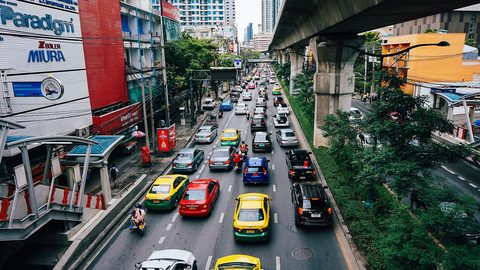 Getting Around Thailand, VIP Buses, Budget Flights and Why the Map Lies
Thailand's transport map undersells mountain curves and island transfer times. How domestic flights, VIP buses and songthaews actually connect the country.
Getting Around Thailand, VIP Buses, Budget Flights and Why the Map Lies
Thailand's transport map undersells mountain curves and island transfer times. How domestic flights, VIP buses and songthaews actually connect the country.
-
 Thailand Visa Rules, Exemptions, Extensions and the Bureaucracy Explained
Which passports get visa-free entry to Thailand, how long you can stay, and the exact steps to extend at a Thai immigration office without getting fined.
Thailand Visa Rules, Exemptions, Extensions and the Bureaucracy Explained
Which passports get visa-free entry to Thailand, how long you can stay, and the exact steps to extend at a Thai immigration office without getting fined.
-
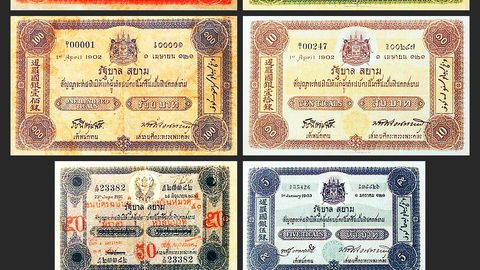 Money in Thailand, Baht, Cards and Where Cash Still Wins Every Time
Cash still rules half of Thailand. How Thai ATMs hit foreign cards, where to exchange baht without losing a chunk, and which situations demand physical money.
Money in Thailand, Baht, Cards and Where Cash Still Wins Every Time
Cash still rules half of Thailand. How Thai ATMs hit foreign cards, where to exchange baht without losing a chunk, and which situations demand physical money.
-
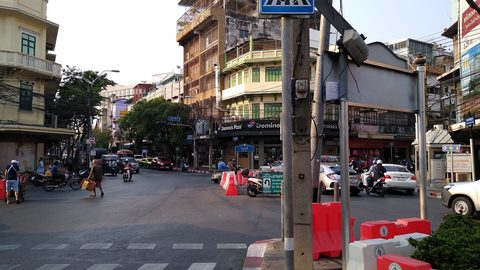 Safety in Thailand, Reading the Advice Without the Hysterical Headlines
Road crashes are the real risk in Thailand, not the scams that dominate forums. How to read travel advisories and what insurance actually covers.
Safety in Thailand, Reading the Advice Without the Hysterical Headlines
Road crashes are the real risk in Thailand, not the scams that dominate forums. How to read travel advisories and what insurance actually covers.
-
 How to Budget a Trip Based on Purchasing Power, Not Just Exchange Rates
Exchange rates tell only half the story. See how purchasing power shapes your real travel budget across Southeast Asia, Eastern Europe, and Latin America.
How to Budget a Trip Based on Purchasing Power, Not Just Exchange Rates
Exchange rates tell only half the story. See how purchasing power shapes your real travel budget across Southeast Asia, Eastern Europe, and Latin America.
-
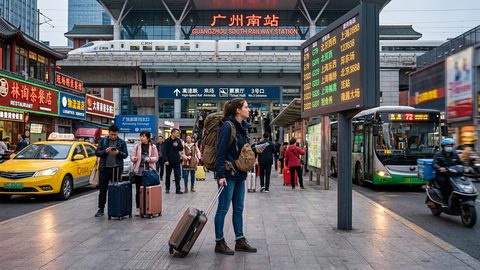 A Ground-Level Logistics Guide to Independent Travel in China
First-time independent travel in China: what you need to know about visas, rail booking, eSIMs, mobile payments, and power adapters.
A Ground-Level Logistics Guide to Independent Travel in China
First-time independent travel in China: what you need to know about visas, rail booking, eSIMs, mobile payments, and power adapters.
-
 How Solo Travelers Stay Ahead of Flight Delays and Cancellations
How solo travelers can track inbound aircraft, claim rebooking rights, and adjust ground transport when flights go wrong — step by step.
How Solo Travelers Stay Ahead of Flight Delays and Cancellations
How solo travelers can track inbound aircraft, claim rebooking rights, and adjust ground transport when flights go wrong — step by step.