Thailand Safety Advice for Travellers, Scams, Roads and Water
Road crashes are the real risk in Thailand, not the scams that dominate forums. How to read travel advisories and what insurance actually covers.
How to Assess Safety Advice About Thailand and What the Statistics Actually Show
You land at Suvarnabhumi, clear immigration in 20 minutes, and the first thing you see is a taxi tout offering a flat rate for a ride that should cost half that. This is the moment most travel anxiety crystallises. The question is not whether Thailand is dangerous. It is how to separate the statistically significant risks from the anecdotes that dominate forum threads and news headlines.
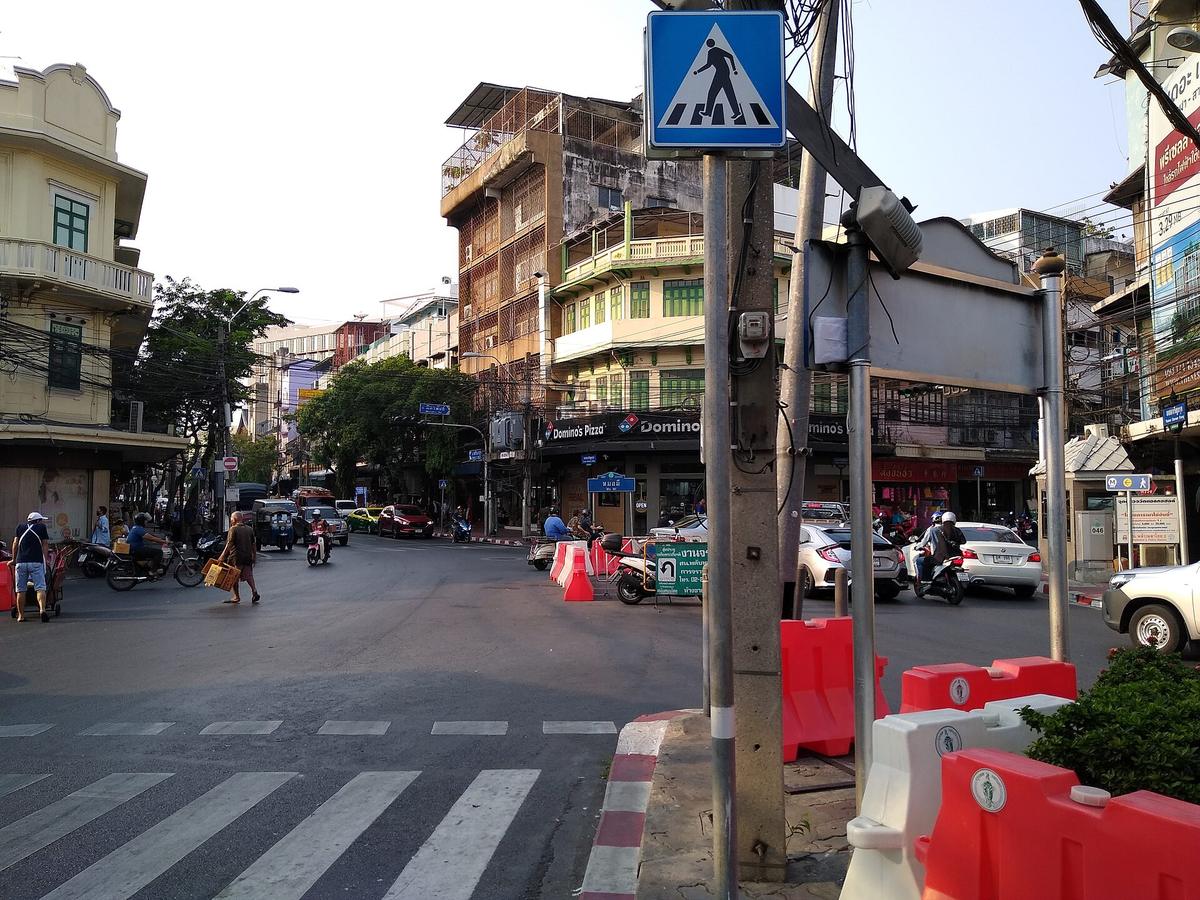
The single biggest risk you face is not a scam, a snake, or political unrest. It is the road. The WHO estimates Thailand's road traffic death rate at 25.4 per 100,000 population, roughly five times the rate in Australia or the United Kingdom. About 74% of those fatalities involve motorcycles. The most dangerous thing you will do in Thailand is get on a motorbike without a proper licence, a helmet, and a clear head.

Road Safety Thailand: the Statistically Significant Risk
Why Motorcycles Dominate the Fatality Figures
Road crashes kill more tourists in Thailand than any other cause. The data is consistent across WHO reports and government travel advisories. The risk is not evenly distributed. Motorcycles account for roughly three quarters of road fatalities nationwide. The hazard spikes during Songkran in April, when the nationwide water festival coincides with a surge in drunk driving. During that week, road deaths climb by 20 to 30%.
Licensing, Helmets and the Insurance Trap
The legal blood alcohol concentration limit for drivers is 0.05 g/100 ml. Enforcement is inconsistent. What is consistent: rental agencies on Phuket, Samui, and in Chiang Mai rarely verify your driving licence. Police checkpoints issue on the spot fines for missing International Driving Permits. The 1968 Convention IDP is required alongside your home country licence for both car and motorcycle rental. Without it, you are driving without a valid licence, and claims will be denied.
Helmets are mandatory for both driver and passenger. Seatbelts are required for front seat occupants and rear seat passengers where fitted. These laws are enforced unevenly. Ignoring them is a bad bet. A minor crash that would cost you a few hundred dollars at home can run into enormous medical bills because your travel policy voids the claim for driving without a licence.
Thailand Travel Scams: Predictable Patterns, Not Pervasive Danger
The Jet Ski and Rental Vehicle Extortion
Scams exist. They follow predictable patterns and they cost you money, not your safety. The most common is the jet ski or motorcycle rental damage extortion. You rent a jet ski on Patong Beach or in Ao Nang, return it, and the rental agent points to a scratch that was there before you took it. They hold your passport as deposit, a practice that is illegal under Thai law but widespread, and demand thousands of baht in compensation. Take a dated video of the entire vehicle before you ride. Refuse to hand over your passport. Offer a cash deposit or a photocopy instead.
The Grand Palace and Taxi Meter Routines
The Grand Palace closure scam works like this: a tuk tuk driver or a well dressed stranger tells you the Grand Palace is closed for a ceremony, then offers to take you to a gem shop or a tailor. The Grand Palace is open every day of the year. If someone says otherwise, walk away. The meter refusal scam at both Suvarnabhumi and Don Mueang airports is routine. Taxis with the yellow red or green yellow livery and an illuminated red sign are required by law to use the meter. Drivers in the queue will offer a flat fare that is two to three times the metered rate. Walk to the official taxi stand on the ground floor, take a number, and insist the driver uses the meter. If they refuse, get out and take the next one.
Tourist Safety Bangkok: the City is Not the Risk
| Scam | What Happens | How To Avoid It |
|---|---|---|
| Grand Palace 'Closed' | Stranger says temple is closed for a ceremony and offers to take you shopping. | Walk to the entrance yourself. The Grand Palace is open every day. |
| Taxi Meter Refusal | Driver offers a flat rate of 400–600 THB for a trip that costs 100–200 THB on the meter. | Use the official taxi queue at the airport. Refuse any car whose driver will not start the meter. |
| Jet Ski Damage | Rental agent points to pre existing damage and demands payment. | Take a video of the entire vehicle before you ride. Never leave your passport. |
| Gemstone Scam | A friendly local claims to know a government subsidised gem shop where you can resell at a profit. | There is no government gem subsidy. Buy nothing from a stranger's recommendation. |

Thailand Insurance Requirements: the Practical Reality
What Hospitals Demand Before Treatment
Travel cover is not legally required for entry. No official at immigration will ask for proof of a policy. The practical requirement is far more urgent. Thai public hospitals charge foreigners at a higher rate than locals, a phenomenon called dual pricing that is institutionalised and legally defensible. A consultation at a public hospital emergency room might cost 1,000 to 3,000 baht. A visit to a private international hospital like Bumrungrad in Bangkok or Bangkok Hospital in Phuket can run 10,000 baht just to see a doctor. Most hospitals demand upfront payment or confirmation of cover before treatment. Arrive without a policy and without cash, and treatment can be delayed.
The Evacuation Gap Most Policies Miss
The national authorities that issue travel advisories, the U.S. Department of State, the UK Foreign & Commonwealth Development Office, Canada's Travel.gc.ca, Australia's Smartraveller, and New Zealand's SafeTravel, all recommend comprehensive medical cover. Medical evacuation from a diving accident on Koh Tao or a motorcycle crash in Pai can cost USD 50,000 to 100,000. A standard policy covering medical expenses and motorcycle riding is non negotiable. Check the motorcycle exclusion before you buy. Many policies do not cover riders without a valid motorcycle licence and an IDP.
Violent Crime, Sex Tourism Zones, and the Moral Panic
Violent crime against tourists is rare. The Thai Tourist Police emergency number is 1155, and officers speak English. The general emergency number for police is 191, ambulance 1669, and fire 199. The overwhelming majority of incidents reported by tourists are theft or pickpocketing, not assault.
The seedy pockets persist in every major hub: Patong's Bangla Road, Pattaya's Walking Street, parts of Sukhumvit in Bangkok. They are visible but not representative of the country. A traveller who avoids these zones faces no elevated risk. The lèse majesté law, Section 112 of the Thai Criminal Code, carries severe penalties for defamation of the monarchy and applies to acts committed inside and outside Thailand. Avoid political commentary online and in conversation. The ban on vaping and e cigarettes is real; import, sale, and possession carry fines and potential detention.
Health Risks Beyond the Headlines: What You Actually Need to Know
Water, Ice and Street Food Rules
Tap water is not potable. Drink bottled or filtered water. Ice with a cylindrical hole, called tube ice, is factory made from filtered water and widely considered safe. Crushed ice from street vendors is less reliably sourced. Street food is safe if you follow one rule: eat where the locals queue, and avoid anything that has been sitting out at room temperature for more than two hours. Traveller's diarrhoea from enterotoxigenic E. coli or Campylobacter is the most common foodborne illness.
Malaria, Dengue and Rabies: Where They Actually Occur
Malaria is present only in the hilly forested borders with Myanmar, Cambodia, and Malaysia. The WHO recommends prophylaxis for those areas only. You do not need malaria pills for Bangkok, Chiang Mai city, Phuket, Koh Samui, or the central plains. Dengue is year round with a peak during and after the rainy season. There is no vaccine for general travellers; the CYD TDV vaccine is licensed in Thailand but the WHO recommends it only for individuals with laboratory confirmed prior dengue infection. Rabies is endemic in stray dogs, cats, and monkeys. If you are bitten, wash the wound with soap and running water for 15 minutes and go to a hospital immediately for post exposure prophylaxis. Pre exposure rabies vaccine is available at the Thai Travel Clinic in Bangkok and at major private hospitals. The Queen Saovabha Memorial Institute in Bangkok produces antivenoms for all clinically significant Thai snake species.
Common Questions
Is Thailand safe for solo female travellers?
Yes, on the same statistical basis as male travellers. Violent crime against tourists is rare. The primary risks are road traffic crashes, drink spiking in nightlife zones, and scams. Avoid accepting drinks from strangers, use ride hail apps rather than street taxis at night, and stay in well lit areas after dark. The same street smarts that apply in any major city apply here.
Do I need a rabies shot before I go?
Pre exposure rabies vaccine is available and recommended by some travel clinics for travellers who will be working with animals, cycling in rural areas, or spending extended time in remote zones. For a standard two week trip staying in cities and resorts, the risk is low. If bitten, wash the wound for 15 minutes and go to a hospital immediately for post exposure prophylaxis.
Can I drink the tap water in Thailand?
No. Tap water is not potable. Drink bottled or filtered water. Tube ice, ice with a cylindrical hole, is factory made from filtered water and considered safe. Crushed ice from street vendors is less reliable. Use bottled water to brush your teeth.
What happens if I am caught with a vape in Thailand?
Import, sale, and possession of e cigarettes and vaping liquid is illegal. Enforcement against tourists is sporadic, but officers can issue fines of up to 100,000 baht or detain you. Do not bring a vape into Thailand. Do not use one in public.
Is it safe to ride a scooter in Thailand?
Statistically, it is the most dangerous activity in the country. Road traffic deaths involving motorcycles account for roughly 74% of all road fatalities. If you ride, wear a helmet, carry an International Driving Permit, and never drink alcohol before driving. Your travel policy will be void without a valid licence and a helmet.
What is the Grand Palace closure scam?
A tuk tuk driver or a friendly local tells you the Grand Palace is closed for a ceremony or a cleaning day. They offer to take you to a gem shop or a tailor instead. The Grand Palace is open every day of the year. If someone says otherwise, walk away and go to the main entrance yourself.
Do I need a visa to enter Thailand?
Nationals of 93 countries and territories are granted visa free entry for 60 days for tourism purposes. This can be extended once for 30 days at an immigration office in Thailand. Nationals of 31 other countries are eligible for a 15 day visa on arrival. Your passport must be valid for at least six months from the date of entry. Check the list that applies to your nationality before you book.
Read next
-
 Staying Connected in Thailand With eSIM, Local SIM, or Roaming
Compare eSIM convenience against physical AIS and TrueMove tourist SIMs registered at Bangkok airports, and why Wi-Fi alone fails for Grab and translation.
Staying Connected in Thailand With eSIM, Local SIM, or Roaming
Compare eSIM convenience against physical AIS and TrueMove tourist SIMs registered at Bangkok airports, and why Wi-Fi alone fails for Grab and translation.
-
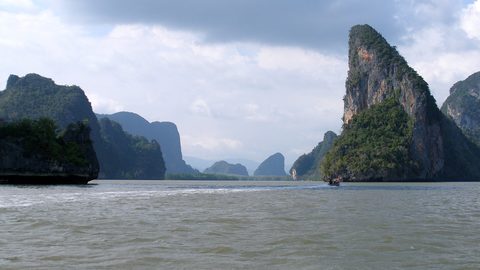 Best Time to Visit Thailand, Matching Coasts to the Monsoon Calendar
Thailand has two monsoons hitting opposite coasts at different times, plus a northern burning season. Match your beach to the right months or get rain.
Best Time to Visit Thailand, Matching Coasts to the Monsoon Calendar
Thailand has two monsoons hitting opposite coasts at different times, plus a northern burning season. Match your beach to the right months or get rain.
-
 Getting Around Thailand, VIP Buses, Budget Flights and Why the Map Lies
Thailand's transport map undersells mountain curves and island transfer times. How domestic flights, VIP buses and songthaews actually connect the country.
Getting Around Thailand, VIP Buses, Budget Flights and Why the Map Lies
Thailand's transport map undersells mountain curves and island transfer times. How domestic flights, VIP buses and songthaews actually connect the country.
-
 Thailand Visa Rules, Exemptions, Extensions and the Bureaucracy Explained
Which passports get visa-free entry to Thailand, how long you can stay, and the exact steps to extend at a Thai immigration office without getting fined.
Thailand Visa Rules, Exemptions, Extensions and the Bureaucracy Explained
Which passports get visa-free entry to Thailand, how long you can stay, and the exact steps to extend at a Thai immigration office without getting fined.
-
 Money in Thailand, Baht, Cards and Where Cash Still Wins Every Time
Cash still rules half of Thailand. How Thai ATMs hit foreign cards, where to exchange baht without losing a chunk, and which situations demand physical money.
Money in Thailand, Baht, Cards and Where Cash Still Wins Every Time
Cash still rules half of Thailand. How Thai ATMs hit foreign cards, where to exchange baht without losing a chunk, and which situations demand physical money.
-
 What a Thailand Trip Actually Costs and Where the Money Goes
A structural look at where money flows during a Thailand trip, from national park foreigner fees to the real cost of island-hopping by longtail boat.
What a Thailand Trip Actually Costs and Where the Money Goes
A structural look at where money flows during a Thailand trip, from national park foreigner fees to the real cost of island-hopping by longtail boat.
-
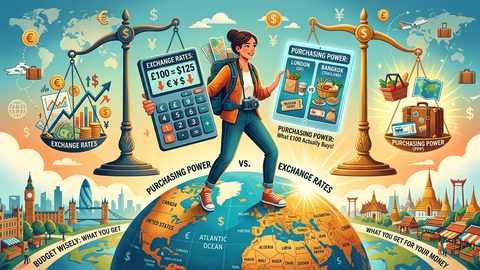 How to Budget a Trip Based on Purchasing Power, Not Just Exchange Rates
Exchange rates tell only half the story. See how purchasing power shapes your real travel budget across Southeast Asia, Eastern Europe, and Latin America.
How to Budget a Trip Based on Purchasing Power, Not Just Exchange Rates
Exchange rates tell only half the story. See how purchasing power shapes your real travel budget across Southeast Asia, Eastern Europe, and Latin America.
-
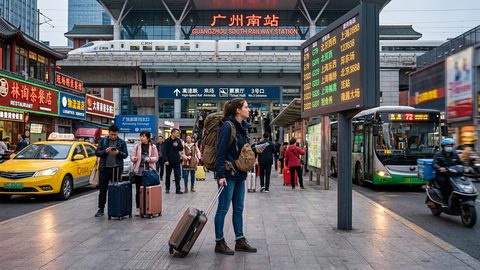 A Ground-Level Logistics Guide to Independent Travel in China
First-time independent travel in China: what you need to know about visas, rail booking, eSIMs, mobile payments, and power adapters.
A Ground-Level Logistics Guide to Independent Travel in China
First-time independent travel in China: what you need to know about visas, rail booking, eSIMs, mobile payments, and power adapters.
-
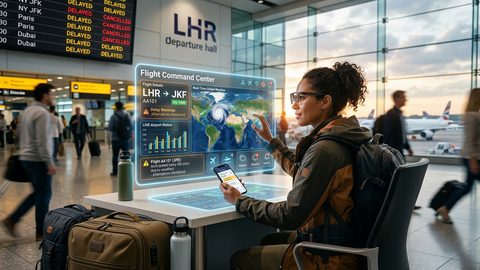 How Solo Travelers Stay Ahead of Flight Delays and Cancellations
How solo travelers can track inbound aircraft, claim rebooking rights, and adjust ground transport when flights go wrong — step by step.
How Solo Travelers Stay Ahead of Flight Delays and Cancellations
How solo travelers can track inbound aircraft, claim rebooking rights, and adjust ground transport when flights go wrong — step by step.