Getting Around Bangkok Without a Car: What the Public Network Actually Reaches and Where It Stops
Bangkok's public transport network covers 211 km of rail across seven lines, yet it leaves the city's most visited historic district completely stranded.
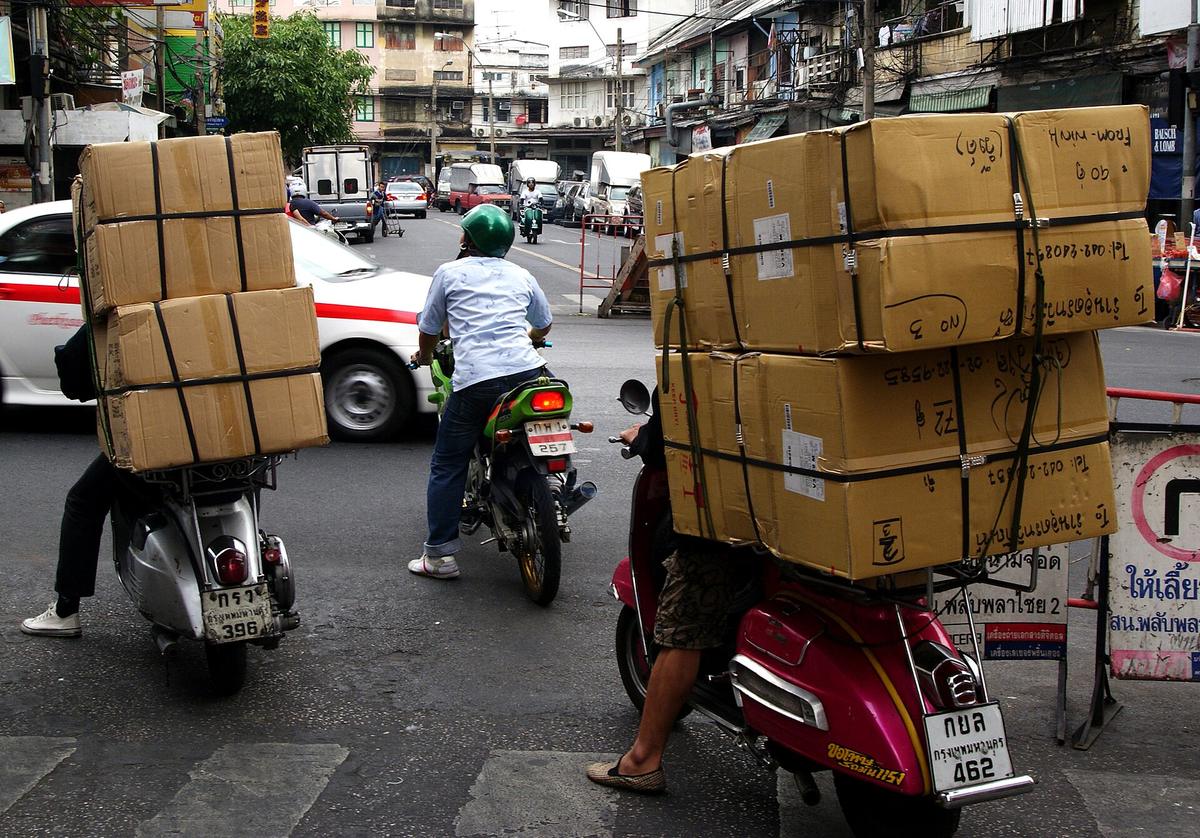

Bangkok Without a Car: What the Public Network Actually Reaches and Where it Stops Being Useful
Where the Rails Run
Bangkok's public transport network covers 211 km of rail across seven lines, yet it leaves the city's most visited historic district completely stranded. The two main hotel zones, Sukhumvit and Silom, sit on the BTS Skytrain and MRT subway. The two most famous visitor landmarks, the Grand Palace and Khao San Road, do not. Getting around Bangkok without a car works well inside the rail corridor. Outside it, you are on foot, on a boat with an early curfew, or locked into a ride-hail app.
What This Guide Covers
This is a coverage map, not a how-to-ride tutorial. It tells you where the BTS and MRT actually take you, where they stop, and what to do when they stop.
Bangkok Public Transport: What the Network Covers and Where it Has Gaps
The Rail Lines That Matter
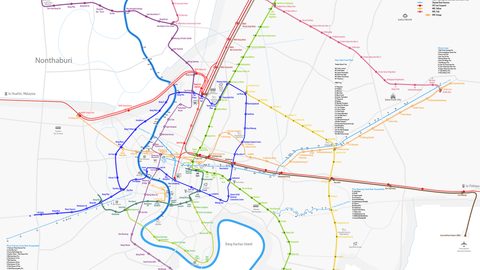
The BTS Skytrain runs 68.25 km across 64 stops on two main lines, Sukhumvit and Silom, plus the short Gold Line spur. The MRT subway system adds 48 km on the Blue Line (38 stops), 23 km on the Purple Line (16 stops), 30.4 km on the Yellow Line (23 stops), and 34.5 km on the Pink Line (30 stops). The Airport Rail Link contributes another 28.6 km with 8 stops. That is 211 km of rail that avoids traffic entirely.
What matters to a visitor is where those lines run. The Sukhumvit Line covers the entire Sukhumvit Road corridor from Mo Chit in the north through Siam, Asok, Thong Lo, and Ekkamai to Samrong in Samut Prakan. The Silom Line runs from National Stadium through Siam, Sala Daeng, and down to Bang Wa in Thonburi. The MRT Blue Line makes a loop: it links Hua Lamphong (the old railway station) through Silom, Sukhumvit, Chatuchak, and across the river to Thonburi at Bang Wa. Together, these two systems serve the modern commercial core, the major malls at Siam and Ratchaprasong, the expat zone of Sukhumvit, the business district of Silom, Chatuchak Weekend Market, and the river crossing at IconSiam via the Gold Line.
The Gaps Are Not Small
The entire district of Phra Nakhon, which contains Rattanakosin Island, the Grand Palace, Wat Pho, Wat Saket, and the backpacker strip of Khao San Road, has no rail stop within walking distance. The nearest MRT stop is Sanam Chai, 1.5 km from the Grand Palace. The nearest BTS stop is Saphan Taksin, 5 km away. The research confirms no rail transit serves Phra Nakhon, Dusit (except the periphery), Bangkok Noi, or Thonburi west of Wongwian Yai. Eight more districts south and west of the river have zero rail coverage.
BTS Skytrain Guide: Where it Reaches and Where it Drops You Short
Fares, Cards and the Separate-System Problem
The BTS Skytrain is the backbone of central Bangkok transit. First trains leave terminals between 05:15 and 06:00 depending on the stop. Last trains run 23:30 to 00:00. Trains arrive every 3 to 8 min in peak hours.
You need a Rabbit Card (a stored-value contactless card) or cash for a single-journey ticket at a machine that takes coins only. The BTS does not accept credit cards at the ticket machines. The main trip-up: the BTS and MRT use separate tickets. You queue twice and pay separately for each system at every interchange stop, including Siam, Asok, Sala Daeng, Mo Chit, and Ha Yaek Lat Phrao. There is no single stored-value card across both networks.
Where Each Line Takes You
The Sukhumvit Line reaches Mo Chit (Chatuchak Market), Ari (indie cafes), Siam (central shopping), Chit Lom (Ratchaprasong malls and the Erawan Shrine), Phloen Chit, Nana (entertainment strip), Asok (interchange with MRT Sukhumvit), Phrom Phong (Emporium and EmQuartier malls), Thong Lo (restaurants and bars), Ekkamai, and Bang Na. The Silom Line reaches National Stadium (Jim Thompson House), Siam, Ratchadamri, Sala Daeng (interchange with MRT Silom, Patpong night market), Chong Nonsi, and Bang Wa (interchange with MRT Blue Line, crossing to Thonburi).
The Rattanakosin Problem
What the BTS does not reach is Rattanakosin, Khao San Road, the Grand Palace, or Wat Arun. The closest you can get and walk is Saphan Taksin on the Silom Line, from which you take the Chao Phraya Express Boat upriver. That boat ends around 19:00. If you come out of the Grand Palace after that hour, you are walking 1.5 km to Sanam Chai or paying for a taxi.
MRT Bangkok Guide: What the Subway Covers and What Security Slows Down
The Lines You Will Actually Use
The MRT subway runs four lines that matter to a visitor. The Blue Line is the one you will use most: it connects Hua Lamphong, Wat Mangkon (Yaowarat, Chinatown), Sam Yan, Silom, Lumphini, Sukhumvit, Phetchaburi, Rama 9, Chatuchak Park, Kamphaeng Phet, and Bang Sue before crossing the river to Thonburi. The Purple Line runs from Tao Poon north to Khlong Bang Phai, useful mainly if you are staying in the northern suburbs. The Yellow Line runs east from Lat Phrao to Samrong. The Pink Line runs from Nonthaburi to Min Buri. For a short visit, you will almost never touch the Purple, Yellow, or Pink lines.
The Blue Line is also the line for Chinatown. Wat Mangkon drops you directly on Yaowarat Road, the city's best street-food strip, which comes alive after 19:00. Kamphaeng Phet is the closest stop for the Chatuchak Weekend Market's plant and antiques sections. Sanam Chai, on the river loop, is the nearest MRT stop to the Grand Palace and Wat Pho, but it is still a 15 to 20 min walk through broken pavement and heat. The stop itself is worth a look: it is designed in neo-classical style as a minor attraction.
Bag Checks and the Fastest Way Through
Every MRT stop requires a bag check. You pass through a security checkpoint before entering the paid area, which slows short hops. If you are going one stop, say from Silom to Lumphini, you will spend longer in the security line than on the train. The MRT accepts contactless token single-journey tickets, a separate stored-value card, or an EMV contactless bank card. The last option is the fastest: tap your Visa or Mastercard at the gate and skip the token queue.
Getting Around Bangkok: River Boats, Canal Boats, and the Early Cut Off
The Chao Phraya Express Boat
The Chao Phraya Express Boat and the Khlong Saen Saep canal boat fill some of the rail gaps, but both shut down early. The Orange Flag express boat runs roughly 06:00 to 19:00 from Wat Rajsingkorn in the south to Nonthaburi in the north, every 5 to 20 min. The Blue Flag tourist boat also runs but costs more. The ferry stop time that matters: by 19:00, the last Orange Flag boat has passed most piers. After that, the only river crossings are the municipal ferries near IconSiam and a few taxi boats that charge negotiable rates, or a ride-hail ride across the bridge.
The Canal Boat: Direct, Cheap, Intense
The Khlong Saen Saep canal boat runs 05:30 to 20:30, connecting the Golden Mount (Phanfa Leelard pier, a 10 min walk from Khao San Road) through Pratunam to Wat Sriboonreung in the east. The boats are cheap, the route is direct, and the experience is intense: the canal is narrow, the water is brown, and you sit on a bench with a canvas roof that you duck under at low bridges. It is the best way to reach Jim Thompson House (Pratunam pier) or the Siam area without a taxi, but only until 20:30. After that, you are walking or hailing a ride.
Timing Is Everything
The failure case for boat travel is timing. If you take the Orange Flag boat to Wat Arun at 17:45, you have roughly 75 min before the last boat back. If you miss it, you are on the Thonburi side of the river with no rail access and a queue of taxis that will charge double the metered fare. Plan river visits early in the day or budget for a ride-hail ride home.
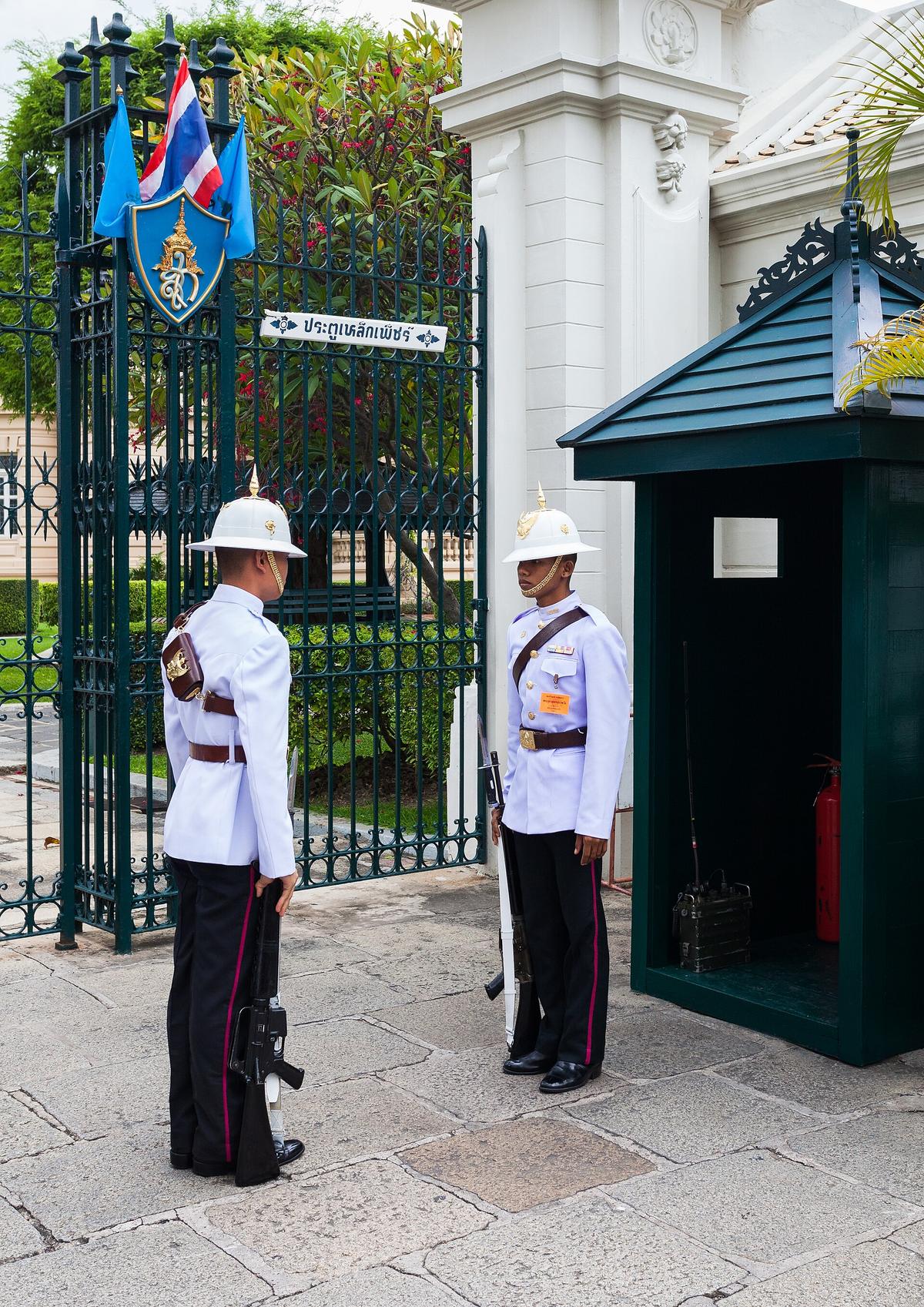

How to Handle the Rattanakosin Gap: Khao San and the Grand Palace
The Two-Stage Journey to the Grand Palace
The Rattanakosin gap is the single biggest transport problem for a visitor in Bangkok. The Grand Palace, Wat Pho, Wat Saket, and Khao San Road sit in Phra Nakhon district, which has no BTS or MRT stop. The nearest rail stop is MRT Sanam Chai, 1.5 km from the Grand Palace. Walking that distance in March at 35°C on broken footpaths blocked by motorbikes is not enjoyable. The alternative is a taxi or tuk-tuk, which means negotiating a fare, or a ride-hail app, which means waiting in traffic that can double the trip time.
The solution is a two-stage journey. Take the MRT Blue Line to Sanam Chai. Exit and walk north 15 min to the Grand Palace, cutting east along Maha Rat Road. Or take the BTS Silom Line to Saphan Taksin, walk to the Sathorn pier, and take the Orange Flag boat to Tha Chang pier, which is five min from the Grand Palace entrance. The boat is faster than a taxi during midday traffic, but it stops at 19:00. If you exit the Grand Palace at 15:30, you can boat back. If you exit at 17:30, take the MRT.
Reaching Khao San Road
Khao San Road has a similar problem. The nearest pier is Phra Arthit, served by the Orange Flag boat. The nearest bus stop is on Ratchadamnoen Klang Road, served by a large cluster of routes including 3, 6, 9, 15, 30, 32, 33, 43, 53, 59, 64, 65, 70, 80, 82, 123, 124, 127, 203, 503, 509, 511, and 512. Buses run until roughly 23:00 on main corridors. After that, a ride-hail app is your only option. Grab has the most drivers; Bolt is usually cheaper but has fewer cars, so wait times run 5 to 15 min in central areas and longer in the old city.
Taxis, Tuk Tuks, and Ride Hail: When the Network Abandons You
After the Rails Go Quiet
Bangkok's public transport stops being useful after 23:30 on the BTS and 00:00 on the MRT. The river and canal boats stop by 20:30. What remains is the bus network, which runs roughly 110 routes with about 2,800 buses, most operating 04:00 to 23:00 with limited all-night service on major corridors, and ride-hail apps. The practical question is what to use when.
Metered taxis exist in large numbers but the friction is real. Drivers refuse fares to popular areas during rush hour. The Grand Palace, Khao San Road, and Chinatown at night are common refusal destinations. Using Grab or Bolt locks in a destination and a price, bypassing the negotiation. Bolt is cheaper, but has fewer drivers, so wait times can run 8 to 12 min in the old city. If you are stranded after 01:00, inDrive often has cars when Grab does not. Motorcycle taxis, identified by coloured vests by district, are the fastest option on congested streets but require you to climb on the back of a bike without a helmet provided for passengers in many cases. Tuk-tuks are a tourist experience, not a practical transport choice: fare is negotiated before boarding, and the driver will quote you 200 to 400 baht for a trip a taxi would do for 60 to 100 baht.
The Bag-Check Friction
The MRT bag check is another friction point that slows late-night transfers. If you are switching from the MRT to a ride-hail car at Sukhumvit, you have to pass through the bag check of the exit gate, which adds a queue. Budget 3 to 5 min per bag check. For a short hop, it is faster to walk the broken footpath above ground than to enter the MRT, pass security, ride one stop, and exit security again. The skywalk network at Siam, Chit Lom, and Asok connects some stops without descending to street level, but those are the exception, not the rule.
The One Thing That Goes Wrong Most Often
Visitors stay near Khao San Road and assume it is central Bangkok. It is not. Khao San is a backpacker bubble poorly connected to the BTS and MRT, leaving guests stuck in taxis that refuse the fare, stuck on boats that stop at 19:00, or stuck walking 20 min on broken pavement to the nearest MRT. Book accommodation on the BTS or MRT line, not on Khao San. Sukhumvit between Asok and Thong Lo, Silom near Sala Daeng, or Siam itself gives you rail access that covers 80 percent of what a visitor needs. The remaining 20 percent, including Rattanakosin, you reach by boat or ride hail, but that is a choice, not a daily grind.
Read next
-
 Bangkok Hotels What Each Price Band Actually Gets You
Bangkok hotels span from bare-bones dorms to riverside suites. This page explains what each price band actually delivers in room quality, location, and quiet.
-
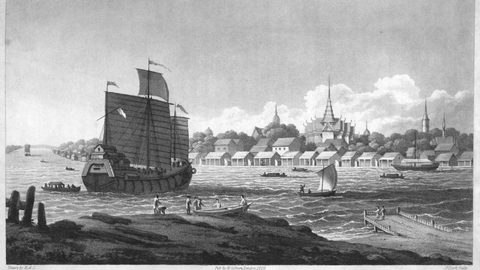 Where to Stay in Bangkok by District and What Each Costs You
Where to stay in Bangkok depends on which district matches your tolerance for noise, transit friction, and nightly spend. This page compares the trade-offs.
-
 Bangkok Flights Which Airport and How to Get Into the City
Which Bangkok airport to fly into—Suvarnabhumi or Don Mueang—and exactly how to get from each into the city by train, taxi, or ride-hail.
-
 Bangkok Things to Do Ordered by Whether It Is Worth the Time
Bangkok things to do ranked by whether they earn the time and crowds they demand, from the Grand Palace to the weekend-only Chatuchak market.
-
 Best Time to Visit Bangkok and What Each Season Does to It
The best time to visit Bangkok depends on how you handle heat, humidity, and crowds. Cool months are pleasant but peak-priced; monsoon is wet but quieter.
-
 Getting Around Bangkok Without Wasting Half the Trip
Getting around Bangkok means mastering two separate rail systems, knowing when boats stop, and using Grab when taxis refuse. This guide prevents wasted hours.
-
 Grand Palace
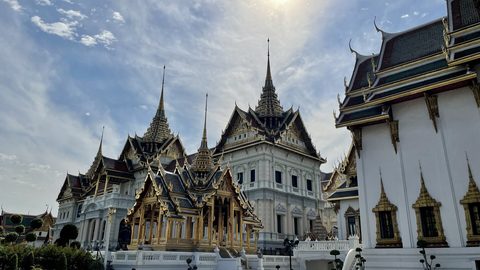
The Grand Palace is Bangkok's most famous royal temple complex and home to the Emerald Buddha, but crowds, heat, and persistent touts make the visit a calculation.
-
 Wat Pho
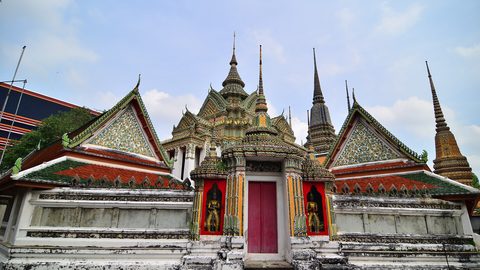
 houses Bangkok's enormous reclining Buddha and the original school of Thai massage, offering a less frenetic temple experience than the Grand Palace nearby.
-
 Wat Arun
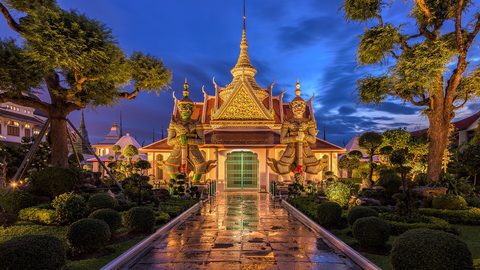
The ferry shoves off from Tha Tien pier and the crossing takes under five minutes.