Rattanakosin Bangkok Old Town Temples and What Is Within Walking Distance
Rattanakosin, Bangkok's Old Town: what the Grand Palace and Wat Pho area is actually like, what you can walk to, and how the river ferry holds it together.
- Flag
-
- ISO code
- TH
- Currency
- THB
- Timezone
- Asia/Bangkok
Rattanakosin Bangkok is a Heritage Island with a Transport Problem
Your map looks tight. The Grand Palace, Wat Pho, the National Museum, the river, all of it fits inside a 1.8 km² zone. It should be an easy day on foot. It is not. Rattanakosin Bangkok, the royal and spiritual core founded in 1782 when King Rama I moved the capital across the river from Thonburi, sits on the eastern bank of the Chao Phraya with no BTS Skytrain stop and only one MRT station: Sanam Chai, opened in 2019, at its southern edge. The experience of visiting is defined by that disconnect. You walk more than the map promises, you rely on the river ferry to cross gaps, and you negotiate broken pavements, heat that radiates off pale stone, and a steady stream of touts. Plan your loop correctly and you cover the essential landmarks in one morning and afternoon without a taxi. Plan it wrong and you spend the hottest hours backtracking across Sanam Luang.
What You Can Actually Walk to from the Grand Palace
Start At The Grand Palace
The Grand Palace is the anchor, but the Grand Palace area is not a single site you stroll through in an hour. You need a strategy. The complex contains both the palace buildings and Wat Phra Kaew, which houses the Emerald Buddha, a carved jade figure that is the most venerated object in the country. The 500 baht entry fee, paid at the ticket office and not to touts, gets you into both. You cannot photograph inside Wat Phra Kaew. Arrive at the main gate by 08:30 before the tour groups. Touts outside will tell you the palace is closed for a ceremony or a cleaning. It opens daily 08:30 to 15:30. Ignore them. Keep walking to the ticket window.
From the palace exit, head south along the outside of the compound wall. The walk to Wat Pho takes under ten minutes. The entrance is on Chetuphon Road. The reclining Buddha, 46 metres long and 15 metres high with feet inlaid with mother-of-pearl, occupies a hall to the left after you pass through the gate. The temple grounds are the birthplace of Thai massage, and the on-site school offers treatments in a shaded pavilion. Wat Pho entry is 300 baht and includes a bottle of water. The pavement between the two temples is continuous but uneven. Watch for motorbikes on the footpath.
From Wat Pho the logical next step is Tha Tien pier, 200 metres further south on the river. The pier is the hop-off point for the ferry across the Chao Phraya to Wat Arun. It costs 5 baht and runs until around 18:00. If you skip the crossing, walk east from Wat Pho on Trok Tien, a narrow lane lined with guesthouses and small eateries, and reach Museum Siam in ten minutes. Museum Siam covers Thai history in interactive exhibits. It is closed on Mondays. Its air conditioning is a genuine relief by midday. The building is a restored European-style former ministry, not a temple, but it gives context to the royal sites you just saw.
Why The Route Works And Where It Falls Apart
The loop from Sanam Luang, the 4.8-hectare open field in front of the Grand Palace, through the palace, Wat Pho, Tha Tien, and back up through the small sois of the conservation zone covers roughly 2.5 km. It is walkable in a morning if you start early. The problems: there is almost no shade after 10:00. The stone walls of the royal compound and the white marble of the temple terraces reflect heat. You will need water. Buy it from the 7-Eleven on Maha Rat Road before you enter the palace; vendors inside charge double. The touts at the Grand Palace gate are aggressive. They will say the palace is closed and offer you a tuk-tuk tour of other temples instead. The tour is overpriced. The other temples are real but the story is a lie. Do not accept a ride from anyone who claims the palace is shut.

The Rattanakosin Walking Route
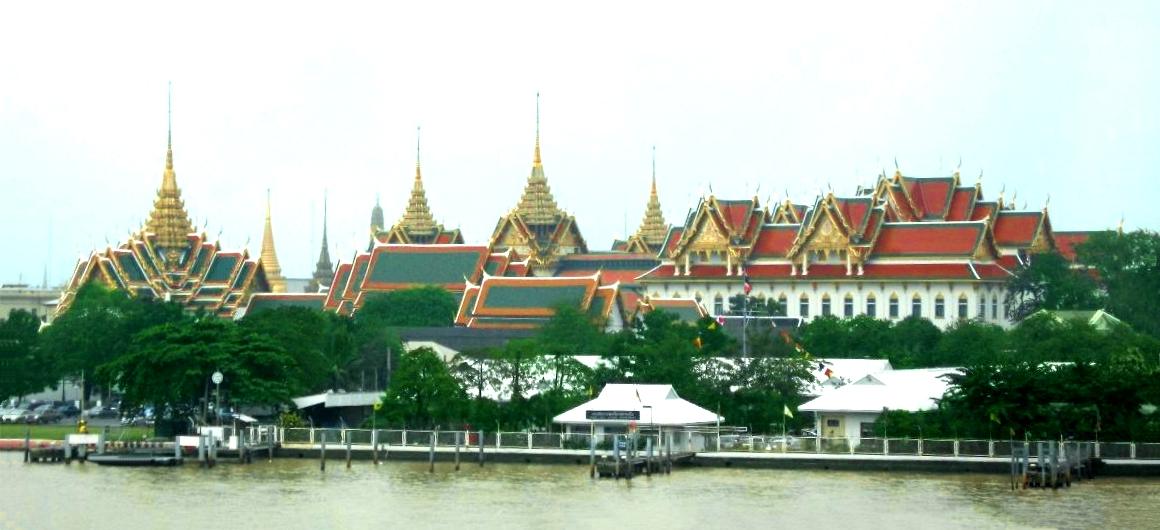
A self-guided Rattanakosin walking route that works in one morning: start at Sanam Luang by 08:00. Walk the perimeter to the Grand Palace entrance on Na Phra Lan Road. Spend 90 minutes inside. Exit south, walk to Wat Pho, spend an hour. From Wat Pho, head to Tha Tien pier for the Wat Arun ferry or continue to Museum Siam. If you do the ferry, add 45 minutes for Wat Arun. From Museum Siam, walk north on Maha Rat Road, past Thammasat University's Tha Phra Chan campus, to Tha Chang pier. From Tha Chang, take a river ferry back to central Bangkok on the Chao Phraya Express Boat, orange flag line, 15 baht a ride, or walk into Banglamphu for lunch on Khaosan Road.
The total distance of this loop from Sanam Luang back to Tha Chang is about 3 km. The pavement on Maha Rat Road is the best on the route, shaded in sections by arcades of the old shophouses. The section along Na Phra Lan Road near the palace has no trees. Carry an umbrella for sun, not rain. The walk from Tha Tien back north to Tha Chang along the riverfront road is exposed and hot; take the interior route through the small sois west of Maha Rat instead.
Bangkok Old Town West Of The Loop
Bangkok Old Town extends west of the Grand Palace across the river to Thonburi. You reach it by ferry, not on foot. The boat from Tha Tien to Wat Arun costs 5 baht. The temple's central prang is climbable via steep stairs; views from the top across the river to the palace are the best in the district. After Wat Arun, the Wang Lang market district is a short walk from the same pier on the Thonburi side. It is a local food area where you eat for 50 baht a plate and see almost no tourists. The ferry back to Rattanakosin stops early. Check the last departure time posted at the pier, usually around 18:00, or you pay for a long taxi ride around the river loop.
| Site | Entry Fee (Baht) | Opening Hours | Time Needed |
|---|---|---|---|
| Grand Palace & Wat Phra Kaew | 500 | 08:30–15:30 daily | 90 min |
| Wat Pho | 300 | 08:00–18:30 daily | 60 min |
| Wat Arun (across ferry) | 100 | 08:00–18:00 daily | 45 min |
| Museum Siam | 100 (adult) | 10:00–18:00, closed Mon | 60–90 min |
| National Museum Bangkok | 200 | 09:00–16:00, closed Mon–Tue | 60–90 min |
Wat Pho Bangkok: More Than the Reclining Buddha
The Reclining Buddha Hall
Wat Pho is the largest temple complex in the city by area. Its sheer size means you cover ground even after you have seen the reclining Buddha. The compound contains 91 chedis, four large viharns, and the Thai massage school. The reclining Buddha hall has a specific flow: enter from the north side, walk the length of the figure from head to foot, and exit through the south door into a courtyard with smaller shrines. Bronze bowls line the corridor behind the Buddha's head; drop coins into them for good luck. Buy a cup of coins at the entrance for 20 baht.
The Ordination Hall And Massage School
Do not skip the bot in the southwest corner of the grounds. It contains a smaller seated Buddha and murals from the early Rattanakosin period. The massage pavilion is on the eastern side of the compound, under a raised wooden building. Book a session when you arrive, not after you tour. The wait can exceed an hour. The dress code at Wat Pho is enforced but less strictly than at the Grand Palace. Covered shoulders and knees are required. Rent a wrap at the entrance for 20 baht if you arrive in shorts.
Pak Khlong Talat: the Flower Market as Bookend
A Rattanakosin day that starts at the Grand Palace and ends at Pak Khlong Talat, the 24-hour flower market, solves two problems. It gives you a reason to be in the district outside temple hours, and it shows you a part of Bangkok that operates independently of tourists. The market is at its most vivid pre-dawn, between 03:00 and 05:00, when truckloads of marigolds, roses, and orchids arrive from the provinces and wholesalers sort them by colour under fluorescent lights. At that hour the district is cool, the streets are empty, and the only noise is the slap of wet flower stalks on concrete tables. It is a photography window that closes by sunrise.
If you cannot manage the pre-dawn arrival, the market stays active until late morning and picks up again after 16:00. It sits on the southern edge of Rattanakosin, a 15-minute walk from Wat Pho or a ten-minute ferry ride from Tha Tien pier: alight at Rajinee and walk 200 metres inland. The market extends from Chak Phet Road into the surrounding sois. Buy nothing you cannot carry for the rest of the day. Flower bundles are cheap but bulky. The nearby food stalls along Soi Rop Klong sell kuay jab, rolled rice noodle soup with crispy pork belly, and fresh coconut ice cream. The flower market as a late-night bookend works if you are staying in Rattanakosin or Banglamphu. Otherwise, it is a separate trip after the temples close.

What You Need to Know About Pavement, Shade and Touts
The Walking Conditions
The walking conditions in Rattanakosin are the single factor most guide pages omit. The footpaths are continuous on the main roads, Maha Rat, Na Phra Lan, Chetuphon, but they are uneven, cracked, and frequently blocked by parked motorbikes. On Ratchadamnoen Nai, the ceremonial road that runs along the eastern edge of Sanam Luang, the pavement is broader and better maintained but completely exposed to the sun. There are no shaded arcades between the palace and the National Museum. You will cross at signalised crossings at Maha Rat and Atsadang Road. Most work, but drivers do not always stop for pedestrians turning right on red. Check both ways even on green.
The Tout Rings
Touts operate in two rings. The inner ring is the gate of the Grand Palace, where the lie is always the same: closed for a ceremony, closed for cleaning, closed for a royal visit. The outer ring is at Tha Chang pier, where boat tour operators offer you a long-tail ride to Wat Arun for a wildly inflated price instead of the 5 baht public ferry. Both are distractions. The only guided tour worth considering is the one inside the Grand Palace itself. Official English-language tours run by the Tourism Authority of Thailand leave from the ticket lobby every 30 minutes and cost 200 baht on top of the entry fee. They last an hour and cover the history of the Emerald Buddha and the Chakri Maha Prasat Hall. Skip the private guides who approach you before you reach the ticket booth.
Where to Stay and How Long to Budget
Where To Stay
Staying in Rattanakosin makes sense for exactly one kind of traveller: someone who wants to be at the temple gates before 08:30 and in bed by 21:00. Fewer than 20 bookable properties exist in the core zone. All are boutique guesthouses or heritage homestays, none larger than three storeys. Height restrictions protect sightlines to the royal temples. The night noise level is low; streets quiet after 21:00 except during royal ceremonies or temple fairs. You will not find a chain hotel or a hostel with a bar. If you want nightlife, stay in Banglamphu, a 15-minute walk north to Khaosan Road, or Silom, and commute into Rattanakosin by ferry from Sathorn pier or by taxi from Sanam Chai MRT station.
How Long To Budget
Budget one to two nights in the district as part of a longer Bangkok stay. Three full days in the whole city is the minimum. Any less and you rush the temples and miss the food, the river neighbourhoods, and the rhythm. In Rattanakosin, a single morning covers the Grand Palace, Wat Pho, and the Wat Arun ferry. An afternoon adds Museum Siam and a walk through the flower market. The second morning can go to the National Museum and Wat Mahathat, or a walk north to the Golden Mount. Wat Saket is climbed in ten minutes for a view over the old city.
Getting In And Out Without A Taxi
From Suvarnabhumi Airport, take the Airport Rail Link to Phaya Thai, 45 baht, then a taxi to Rattanakosin, another 30 to 60 minutes. Or take a taxi direct from the airport: 35 to 60 minutes, 300 to 500 baht including tolls. From Don Mueang, bus A4 runs to Sanam Luang directly, 50 baht, 40 to 80 minutes depending on traffic. Inside the district, use Sanam Chai MRT station on the Blue Line to reach Sukhumvit or Silom in 20 minutes. The Chao Phraya Express Boat, orange flag, 15 baht per ride, connects Tha Chang, Tha Tien, and Rajinee to Sathorn pier in 15 minutes, where you transfer to the BTS Skytrain at Saphan Taksin station.
An Honest Caveat About Rattanakosin
The district is the most photographed part of Bangkok and the least comfortable to explore on foot during the heat of the day. The stone and concrete surfaces absorb the sun and radiate it back until late afternoon. The touts do not give up after the first refusal. The backpacker spillover from Banglamphu means the footpaths around Tha Chang pier and Khaosan Road are crowded with groups moving slowly. The walking route works best as a pre-10:00 operation, with a lunch break inside an air-conditioned space: Museum Siam, the National Museum, or one of the riverside restaurants on Maha Rat Road. Arrive at the Grand Palace gate at noon in March and you will not enjoy it. The place rewards early starts. Accept that you will not see every temple in one trip.
Other areas in Bangkok
Common Questions
How long does it take to walk between the Grand Palace and Wat Pho?
Under ten minutes south along Chetuphon Road. The footpath is continuous but uneven. You pass the ticket touts just outside the palace exit; ignore them and keep walking.
Is the river ferry the only way to reach Wat Arun from the Grand Palace area?
Yes. Walk to Tha Tien pier, 200 metres south of Wat Pho. The public ferry costs 5 baht, runs every few minutes, and takes two minutes across the river. Last ferry around 18:00.
Can I visit the Grand Palace without a guided tour?
Yes. The 500 baht entry includes access to the palace and Wat Phra Kaew. You can walk the grounds freely. The official guided tour, 200 baht extra, skips the queue for the Emerald Buddha hall.
What time does the flower market close?
Pak Khlong Talat never closes. It operates 24 hours. The wholesale action peaks pre-dawn between 03:00 and 05:00. Retail stalls stay active through the day but slow down from 11:00 to 15:00.
Read next
-
 Bangkok Hotels What Each Price Band Actually Gets You
Bangkok hotels span from bare-bones dorms to riverside suites. This page explains what each price band actually delivers in room quality, location, and quiet.
-
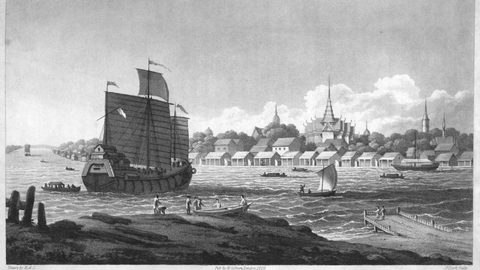 Where to Stay in Bangkok by District and What Each Costs You
Where to stay in Bangkok depends on which district matches your tolerance for noise, transit friction, and nightly spend. This page compares the trade-offs.
-
 Bangkok Flights Which Airport and How to Get Into the City
Which Bangkok airport to fly into—Suvarnabhumi or Don Mueang—and exactly how to get from each into the city by train, taxi, or ride-hail.
-
 Bangkok Things to Do Ordered by Whether It Is Worth the Time
Bangkok things to do ranked by whether they earn the time and crowds they demand, from the Grand Palace to the weekend-only Chatuchak market.
-
 Best Time to Visit Bangkok and What Each Season Does to It
The best time to visit Bangkok depends on how you handle heat, humidity, and crowds. Cool months are pleasant but peak-priced; monsoon is wet but quieter.
-
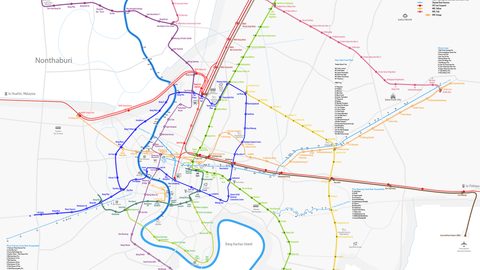 Getting Around Bangkok Without Wasting Half the Trip
Getting around Bangkok means mastering two separate rail systems, knowing when boats stop, and using Grab when taxis refuse. This guide prevents wasted hours.
-
 Silom
Silom, Bangkok: a business district by day that shifts to night market chaos and Lumpini Park's green calm, anchored by the BTS and MRT interchange.
-
 Yaowarat
, Bangkok's Chinatown: a dense, chaotic street food strip best walked after dark, with Talat Noi's street art and shrines filling the daylight hours.
-
 Sukhumvit
, Bangkok: a long expat and shopping strip organised by BTS station, where air-conditioned malls and rooftop bars sit above broken pavements and