Identifying the Hungary Power Plug Type Before You Pack
Hungary uses Type C and F sockets at 230V. UK and Irish visitors need an adapter; North Americans should check device voltage compatibility.
Electrical Sockets in Hungary
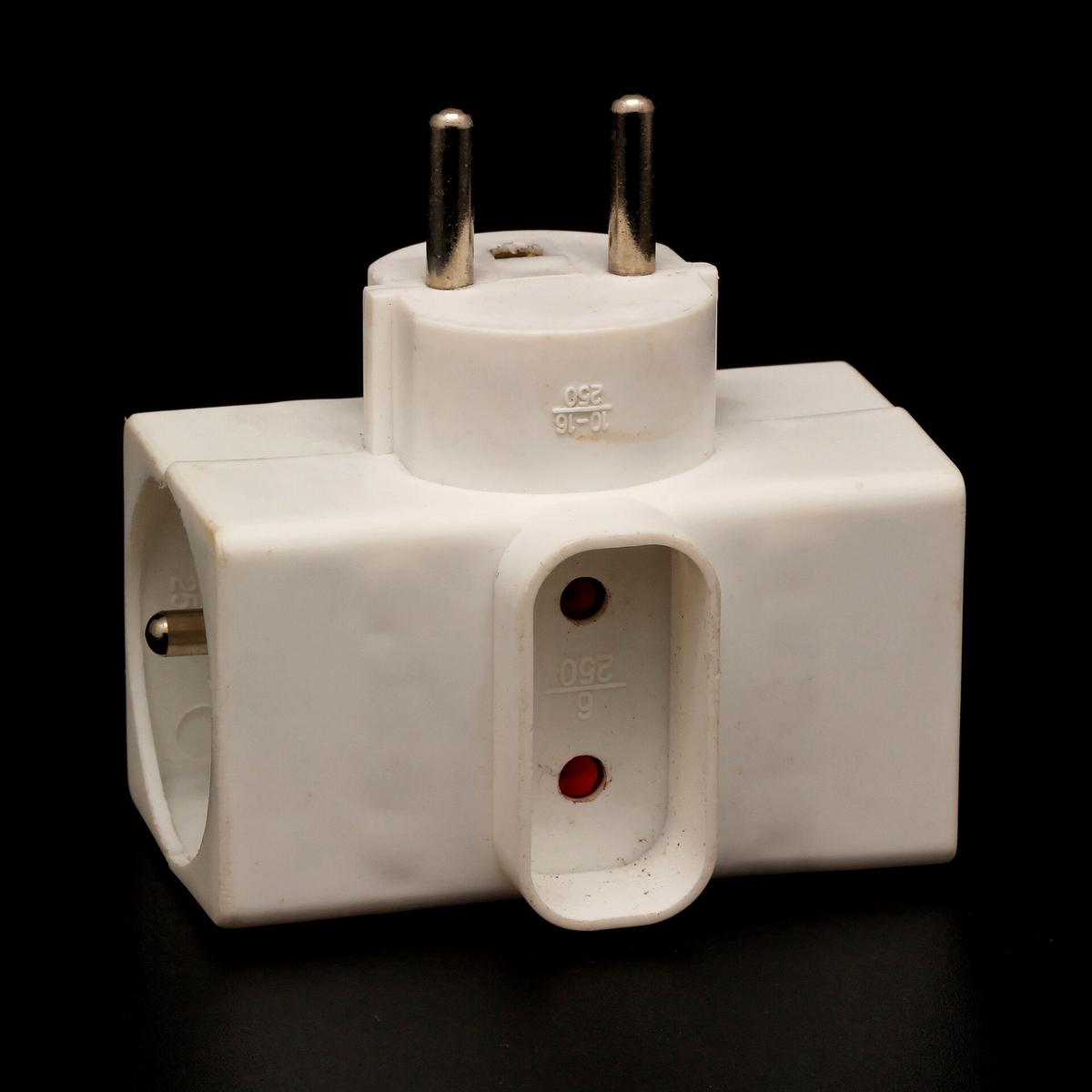
You land at Budapest Ferenc Liszt International Airport. Your phone is at 12 percent. In your hotel room the socket has two round holes and a pair of spring clips on the sides. Your charger has two flat prongs. It does not fit. Here is the straight answer you need before you leave home: the Hungary power plug type is Type C (Europlug, two round pins) and Type F (Schuko, two round pins with side earth clips). The mains voltage is 230 V and the frequency is 50 Hz. Whether you need an adapter, a converter, or nothing at all depends on where your devices were bought.
Hungary Power Plug Type: Type C and Type F Explained
Hungary uses the same sockets as Germany, Austria, and most of continental Europe. Type C plugs have two 4 mm round pins and no earth connection. They fit into both Type C and Type F sockets. Type F plugs add two spring-loaded earth clips on the sides. You can plug a Type C appliance into a Type F socket without any issue. The reverse also works: a Type F plug goes into a Type C socket, though the earth clips will not connect. For practical purposes, a standard European two-pin adapter covers every socket you will find in the country.
All sockets supply 230 V at 50 Hz. This is identical to the rest of continental Europe, Australia, and much of Asia. It is different from the 100-120 V system used in North America and Japan.

Hungary Voltage and Frequency: Will My Devices Work?
Check The Label Before You Plug In
Every power adapter is paired to a voltage. Plug a 120 V rated hair dryer into a 230 V socket and you will smell burning plastic within seconds. The solution is on the device itself. Look at the label on the charger brick for the words "INPUT" or the voltage range. If it reads 100-240 V, 50/60 Hz, the device is dual voltage and works anywhere in the world with the correct plug adapter. This covers almost all modern phone chargers, laptop power supplies, camera battery chargers, and electric toothbrush bases.
If your appliance lists only 110-120 V or a single number like 120 V, you need a step down transformer that converts 230 V to 110 V. These transformers are heavy and bulky. Most travellers are better off buying a cheap dual voltage travel hair dryer or iron after arrival than lugging a transformer across the Atlantic. Dual voltage devices need only a plug adapter. A Type C/F adapter costs a few euros at any electronics shop near Deák Ferenc tér.
European Plug Adapter Hungary: Who Needs One
Visitors From The UK, Ireland, Cyprus And Malta
These countries use Type G sockets, the three rectangular prong standard. You cannot fit a Type G plug into a Hungarian socket. You need a Type C/F adapter. Buy one before you fly or at any electronics shop in the capital. Multipacks with USB ports are widely available.
Visitors From North America And Japan
Type A and Type B plugs have two flat pins, sometimes with a third round pin for earthing. They do not fit Hungarian sockets. You need a Type C/F adapter. You also need to check the voltage. If your device is dual voltage (100-240 V), you are set. If it is rated for 120 V only, you need a voltage converter. Most phone and laptop chargers sold since 2015 are dual voltage. Hair dryers, curling irons, and electric shavers often are not.
Visitors From Mainland Europe
If you are arriving from Germany, Austria, France, Italy, Spain, the Netherlands, Belgium, Switzerland, Poland, or any other EU nation using Type C or F sockets, you need nothing. Your plugs work as is. The voltage and frequency are identical.
Visitors From Australia, New Zealand And Parts Of Asia
Australia uses Type I plugs with two angled flat pins. Type I does not fit Hungarian sockets. You need an adapter. Most Australian devices are rated for 230-240 V, which is compatible with Hungary's 230 V supply. Check your device label to be certain. Visitors from China and India should also check: China uses Type A, C, and I depending on the region. India uses Type D and M. In both cases, you need an adapter, but voltage is usually compatible for phone and laptop chargers.
Budapest Socket Type and Charging in the Rest of Hungary
The socket type in the capital is the same Type C and Type F found everywhere else in the country. What changes is where you can charge. In the inner districts, most hotels, hostels, and apartments built or renovated after 2015 include USB A charging ports built into the headboard or bedside lamp. Type C USB ports are appearing in business hotels near the Parliament Building and along Andrássy út, but they are still rare.
Rural Guesthouses And Pensions
Leave the city for rural guesthouses in Tokaj, the Bükk hills, or the Hortobágy steppe and USB provision drops sharply. Many village pensions use sockets installed in the 1990s. Bring a plug-in USB charger and a travel adapter that accepts your home plugs. You cannot assume the guesthouse will provide one.
Trains, Coaches And Regional Routes
On long distance transport, FlixBus and RegioJet coaches that serve routes between the capital and Szeged, Pécs, or Debrecen have USB A charging ports at every seat. MÁV intercity trains on the Budapest-Vienna and Budapest-Lake Balaton lines have USB A sockets in first class and some second class carriages. Regional trains running through the Northern Great Plain and Southern Transdanubia do not. If you are heading to Hollókő, Szentendre, or the Danube Bend towns on a regional train, charge your phone before you board.
| Home Country Or Region | Plug Type Used At Home | Needs Plug Adapter In Hungary? | Needs Voltage Converter? |
|---|---|---|---|
| UK, Ireland, Cyprus, Malta | Type G (3 rectangular prongs) | Yes | No (230 V is within range) |
| North America, Japan | Type A / B (2 flat prongs, optional round earthing pin) | Yes | Check device: 120 V only needs converter, 100–240 V works without |
| Mainland Europe (Germany, France, Italy, Spain, etc.) | Type C / F (2 round prongs) | No | No |
| Australia, New Zealand | Type I (2 angled flat prongs) | Yes | No (230–240 V matches Hungary's 230 V) |
| China, India, parts of Asia | Mixed: Type A, C, D, I | Yes | Check device: most modern chargers are dual voltage |
Charging Devices in Hungary: Practical Tips and Common Failures
Buy A Multipack Adapter Early
Budget for a Type C/F adapter even if you think you will not need one. The airport convenience store and the Relay shop in the arrivals hall sell them. If you arrive late and the shops are closed, the 7 Eleven at Deák Ferenc tér is open 24 hours. Buy a multipack with two adapters: one for your phone and one for your laptop or camera charger. You will avoid the single traveller's frustration of choosing which device to charge overnight.
Carry Coins For Station Toilets
Carry coins for public toilets at Hungarian train stations and motorway rest stops. The attendants rarely give change and the coin slot is picky about damaged coins. This is unrelated to charging, but you will thank yourself when you are standing at Keleti station with a dead phone and a note that no machine accepts. Pay with a contactless card at the station's convenience store for small purchases to get coins.
Rural Accommodation: Bring Your Own Charger
Do not assume rural accommodation has USB ports. Pensions in Villány, the Palóc village of Hollókő, and Lake Hévíz often operate with sockets installed in the 1980s. A plug-in charger with a European two-pin plug solves this. If you forget one, the nearest electronics shop in a market town like Eger or Keszthely will have a basic USB wall charger.
The Most Common Mistake with Hungarian Plugs
The single thing that most often goes wrong: travellers from North America buy a plug adapter, plug in their 120 V curling iron, and destroy it within 10 seconds. The adapter works. The voltage does not. Check the device. If it says 100-240 V, you are fine. If it says 120 V only, leave it at home or buy a converter. The adapter market here serves the traveller who packs a dual voltage charger, not the traveller who assumes all devices adapt.
Common Questions
Do I need a voltage converter for my phone charger in Hungary?
No. Every phone charger sold globally since roughly 2010 is dual voltage and marked 100-240 V, 50/60 Hz. You only need a plug adapter for the socket. Check the small print on the charger block to be sure.
Can I use my US hairdryer in a Budapest hotel?
Only if it is dual voltage. Most US hairdryers are rated 120 V only. Plugging one into a 230 V socket will burn out the heating element immediately. Buy a cheap travel hairdryer in the city at a MediaMarkt or Euronics electronics store.
Are USB ports available in Budapest hotel rooms?
Yes, in most hotels and hostels built or renovated after 2015. USB A ports are common. USB C ports are less common but increasing in business hotels near the Parliament and on Andrássy út. Rural guesthouses rarely have built-in USB ports.
What plug adapter do I need from the UK to Hungary?
A Type G to Type C/F adapter. This converts your three rectangular prong UK plug to the two round pin European standard. Buy one before you travel or at any electronics shop in the city.
Can I charge my laptop on Hungarian trains?
On MÁV intercity trains and Railjet services, first class carriages have 230 V sockets and USB A ports at every seat. Some second class carriages also have USB A. Regional trains and local buses do not have charging. Charge before boarding for trips outside the Railjet corridor.
Is Hungary's electricity the same as the rest of Europe?
Yes. Hungary uses 230 V at 50 Hz with Type C and Type F sockets. This is identical to Germany, Austria, France, Italy, and most of continental Europe. An adapter purchased in Berlin works in the capital.
What happens if I plug a 120 V device into a 230 V socket in Hungary?
The device will likely overheat, pop, or smoke within seconds. The internal components are designed for half the voltage and cannot handle the higher current. Always check the device label before plugging in. If it reads only 120 V, use a step down transformer.
Read next
-
 Staying Connected in Hungary With eSIM, Local SIM or Roaming
eSIM, local SIM, or roaming in Hungary: the ID registration rule, why the BudapestGO app needs data, and where rural signal drops out.
Staying Connected in Hungary With eSIM, Local SIM or Roaming
eSIM, local SIM, or roaming in Hungary: the ID registration rule, why the BudapestGO app needs data, and where rural signal drops out.
-
 Best Time to Visit Hungary by Season and What Gets in the Way
July and August pack Lake Balaton and Budapest, December draws Christmas market crowds, and January to February brings grey cold and rural closures.
Best Time to Visit Hungary by Season and What Gets in the Way
July and August pack Lake Balaton and Budapest, December draws Christmas market crowds, and January to February brings grey cold and rural closures.
-
 Getting Around Hungary by Train Bus and Car Without the Detours
Hungary's rail and bus networks radiate from Budapest, forcing cross-country trips through the capital. Validate paper tickets or face a 25,000 HUF fine.
Getting Around Hungary by Train Bus and Car Without the Detours
Hungary's rail and bus networks radiate from Budapest, forcing cross-country trips through the capital. Validate paper tickets or face a 25,000 HUF fine.
-
 Hungary Visa Rules for EU Citizens and Everyone Else
Hungary is in the Schengen zone. EU citizens enter freely, while many non-EU visitors need a Schengen visa applied for at a Hungarian consulate.
Hungary Visa Rules for EU Citizens and Everyone Else
Hungary is in the Schengen zone. EU citizens enter freely, while many non-EU visitors need a Schengen visa applied for at a Hungarian consulate.
-
 Forint or Euro What You Actually Pay With in Hungary
Hungary uses the forint, not the euro. Cards work in Budapest but rural museums, cellars, and public toilets often demand cash in coins.
Forint or Euro What You Actually Pay With in Hungary
Hungary uses the forint, not the euro. Cards work in Budapest but rural museums, cellars, and public toilets often demand cash in coins.
-
 Safety in Hungary What the Warnings Leave Out
Hungary is safe with low violent crime. The real risks are pickpocketing on Budapest transport, taxi scams, and the occasional tourist-bar overcharge.
Safety in Hungary What the Warnings Leave Out
Hungary is safe with low violent crime. The real risks are pickpocketing on Budapest transport, taxi scams, and the occasional tourist-bar overcharge.
-
 How to Budget a Trip Based on Purchasing Power, Not Just Exchange Rates
Exchange rates tell only half the story. See how purchasing power shapes your real travel budget across Southeast Asia, Eastern Europe, and Latin America.
How to Budget a Trip Based on Purchasing Power, Not Just Exchange Rates
Exchange rates tell only half the story. See how purchasing power shapes your real travel budget across Southeast Asia, Eastern Europe, and Latin America.
-
 A Ground-Level Logistics Guide to Independent Travel in China
First-time independent travel in China: what you need to know about visas, rail booking, eSIMs, mobile payments, and power adapters.
A Ground-Level Logistics Guide to Independent Travel in China
First-time independent travel in China: what you need to know about visas, rail booking, eSIMs, mobile payments, and power adapters.
-
 How Solo Travelers Stay Ahead of Flight Delays and Cancellations
How solo travelers can track inbound aircraft, claim rebooking rights, and adjust ground transport when flights go wrong — step by step.
How Solo Travelers Stay Ahead of Flight Delays and Cancellations
How solo travelers can track inbound aircraft, claim rebooking rights, and adjust ground transport when flights go wrong — step by step.