Is Hungary Safe to Visit Beyond the Official Warnings
Hungary is safe with low violent crime. The real risks are pickpocketing on Budapest transport, taxi scams, and the occasional tourist-bar overcharge.
Is Hungary Safe
A taxi rank outside Keleti station, 11 pm on a Tuesday. A driver quotes 25,000 forint for a ride to District V that should cost 4,000. The answer is yes, Hungary is safe to visit, with two clear caveats: petty crime is real in Budapest's crowded zones, and a handful of well-known scams target visitors who arrive without the local price in their head. Violent crime rates are low. You can walk through most of the capital at any hour without feeling threatened. The risks are concentrated, predictable, and completely avoidable once you know where they live.
Hungary Safety Advice Tourists
Pickpocketing Hotspots And How To Shut Them Down
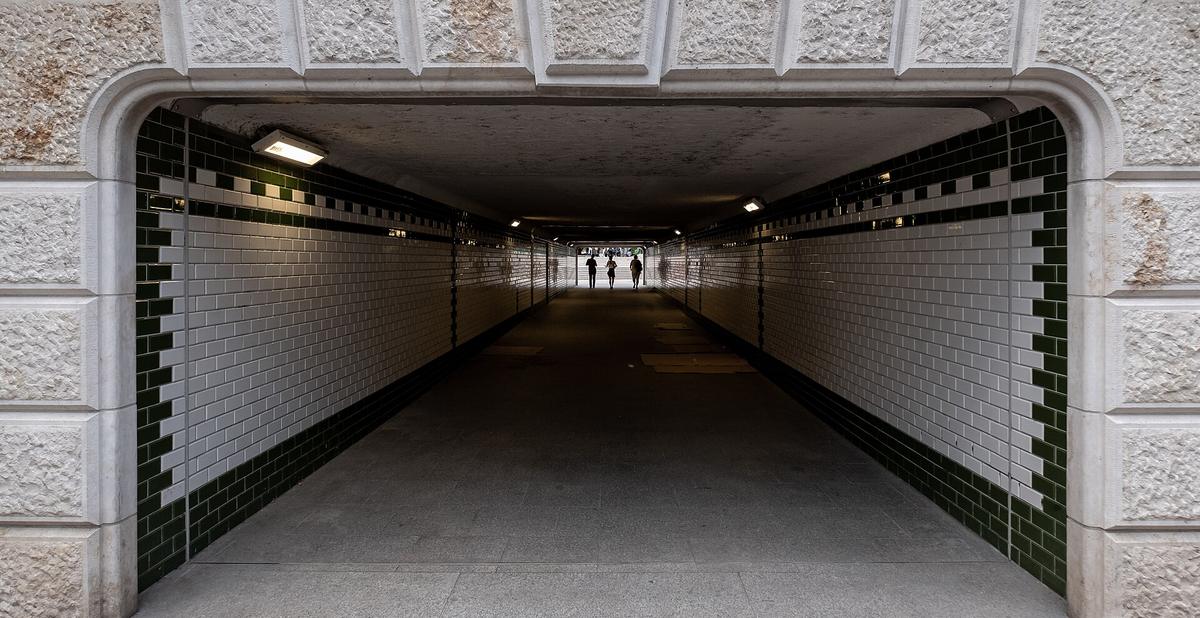
Pickpocketing is the most common safety problem for tourists in Hungary. It happens in two places almost exclusively: on Budapest public transport and inside the thermal baths. Metro Line M2 and Line M3, especially between Deak Ferenc ter and Keleti station during rush hour, are where bags get opened without the owner noticing. At Szechenyi Thermal Bath, thieves work the crowded outdoor pools and the changing rooms. Leave your passport and most of your cash in the hotel safe. Carry a phone, a bank card, and a small amount of forint in a zipped front pocket or a money belt under your clothes. The bath lockers are not impenetrable. Use your own padlock, not one you rent at the desk.
_julesvernex2.jpg)
Budapest Petty Crime Precautions
Three Moves That Stop Most Trouble
Three specific precautions eliminate almost every petty crime scenario in Budapest. First, validate your public transport ticket before boarding. An unvalidated ticket carries an on-the-spot fine of 25,000 HUF, and inspectors target tourists. Second, never take a taxi from the line of cars waiting outside a train station or a major nightclub. Use the official airport taxi booth at Budapest Ferenc Liszt International Airport, which charges a fixed zonal fare to the centre, or book through the Bolt app, the local equivalent of Uber, where the price is set before you ride. Third, check your bill at any bar or restaurant in the party district near Gozsdu Udvar. Overcharging in tourist-heavy bars is a known friction point. A 10 to 15 percent tip is customary, but only after you confirm the total matches what you ordered.
Hungary Rural Areas Safety
Real Danger In The Countryside Is Distance, Not Crime
Rural Hungary is safe by any measure. Violent crime in villages across the Great Plain, the wine regions of Tokaj Hegyalja and Villany, and the hills around the Bukk mountains is rare enough to be local news when it happens. The real risk in rural areas is not crime but isolation. English is not widely spoken once you leave Budapest's inner districts, and the language barrier complicates asking for help with a car breakdown, a medical issue, or a simple navigational problem.
What To Sort Before You Leave The City
Download the Mav app for train tickets and the Volanbusz schedules for long-distance buses before you leave Budapest. Store offline maps on your phone. Carry cash. ATMs in small villages are scarce, and many rural museums, cellars, and small shops are cash only. Public toilets cost 200 to 300 HUF in coins. Attendants rarely give change.
Scams Targeting Visitors Budapest
Three Scams And The Countermove For Each
The scams targeting visitors in Budapest fall into three categories, and each has a simple countermove. The taxi scam is the most common: unofficial drivers at stations and airports quote four to five times the correct fare. Walk past them to the official booth or use a ride-hailing app. The second scam is the overpriced bar or club in the party district. A woman approaches a solo male traveller, suggests a nearby bar, and the bill arrives at an inflated figure. Do not follow a new acquaintance to a venue you have not checked first. The third scam is the currency exchange booth that advertises a great rate but adds a hidden commission, making the final amount far worse than the official mid-market rate. Use ATMs from major banks instead, or pay by card. Cards are widely accepted in cities and chain stores.
Brusque Service is Not a Safety Issue
Hungarian customer service can read as brusque or indifferent, especially in restaurants outside the capital and in state-run museums. A server who does not smile. A ticket seller who responds with a single word. A shop assistant who continues a conversation with a colleague while you wait. None of this is hostility. It is a cultural norm. It does not reflect danger and it should not affect your sense of safety. The failure case is that you mistake cultural distance for rudeness and escalate a minor transaction into a confrontation. Smile, state your need clearly, wait for the response, and move on. The interaction will be efficient if not warm.
| Service | Number |
|---|---|
| General emergency | 112 |
| Police | 107 |
| Ambulance | 104 |
| Fire service | 105 |
| Emergency roadside assistance | 188 (Magyar Autoklub) |
| Country dialling code | +36 |
Medical Care, Ticks and Driving Rules
Health Basics And What The Water Situation Is
Tap water is safe to drink nationwide. That saves you the cost and plastic of bottled water. Medical care operates through the National Health Insurance Fund system. EU citizens with a European Health Insurance Card can access public providers. For non-EU visitors, travel insurance is essential. Every major government advisory issuer says so: the U.S. Department of State, the UK Foreign, Commonwealth and Development Office, the Government of Canada, the Australian Department of Foreign Affairs and Trade, and the New Zealand Ministry of Foreign Affairs. Tick-borne encephalitis is a real risk in wooded and rural areas, especially in western and northern regions, along the Danube bend, and in Nograd County. Tick season runs from March through November. A vaccine is available and is recommended for extended outdoor stays in forested areas. Mosquito season runs from May through October, peaking in June and July near rivers and Lake Balaton. Sun protection is needed from May through September. Pharmacies marked with a green cross are widespread. Twenty-four-hour pharmacies operate in major cities, and a rota system covers night and weekend service.
Driving Rules Are Absolute
Driving rules are strict and enforced. The blood alcohol limit for drivers is 0.00 percent. Zero tolerance. Speed limits are 50 km/h in urban areas, 90 km/h on open roads, 110 km/h on expressways, and 130 km/h on motorways. Daytime running lights are mandatory on all vehicles outside built-up areas year-round and on all roads for motorcycles. Winter tyres are not legally mandatory but are recommended in winter conditions. Motorways require an electronic vignette purchased by registration plate number through the National Toll Payment Services company. Seatbelts are required for all occupants, front and rear. Children under 150 cm must use an appropriate child restraint system. Mobile phone use while driving is prohibited except with a hands-free system.
Common Questions
Is it safe to walk around Budapest at night?
Yes. Violent crime is low. The main risks are pickpocketing on crowded public transport and scams from unofficial taxi drivers. Stick to well-lit streets in the inner districts and use a ride-hailing app if you are travelling late to a residential area.
Do I need a visa to visit Hungary?
Hungary is in the Schengen Area. EU and EEA citizens can enter with a national ID card or passport. UK, US, Canadian, Australian, and New Zealand citizens can enter without a visa for stays up to 90 days in any 180-day period within the Schengen zone. Your passport must be valid for at least three months beyond your intended departure date and must have been issued within the previous ten years.
What should I do if I lose my passport in Hungary?
Report the loss to the local police and get a police report. Then contact your country's embassy or consulate in Budapest to arrange a replacement travel document. The emergency number 112 can connect you to police assistance.
Is the water safe to drink in Hungary?
Yes. Tap water is safe to drink nationwide. You do not need to buy bottled water for drinking.
Are there any dangerous animals or insects in Hungary?
The main health risk from wildlife is tick-borne encephalitis, which is present in wooded and rural areas, especially in western and northern Hungary, along the Danube bend, and in Nograd County. Tick season runs March through November. Rabies is not a concern; Hungary is declared rabies-free in terrestrial animals by the OIE.
Can I use my credit card everywhere in Hungary?
Card payment is widely accepted in cities, chain stores, and hotels. Cash is required in some rural shops, small vendors, market stalls, and for public toilets. ATMs are widespread in towns and cities but limited in very small villages. The currency is the Hungarian Forint.
What is the emergency number in Hungary?
The general emergency number is 112. Police can also be reached on 107, ambulance on 104, and fire service on 105. English-speaking operators exist but are not guaranteed.
Read next
-
 Staying Connected in Hungary With eSIM, Local SIM or Roaming
eSIM, local SIM, or roaming in Hungary: the ID registration rule, why the BudapestGO app needs data, and where rural signal drops out.
Staying Connected in Hungary With eSIM, Local SIM or Roaming
eSIM, local SIM, or roaming in Hungary: the ID registration rule, why the BudapestGO app needs data, and where rural signal drops out.
-
 Best Time to Visit Hungary by Season and What Gets in the Way
July and August pack Lake Balaton and Budapest, December draws Christmas market crowds, and January to February brings grey cold and rural closures.
Best Time to Visit Hungary by Season and What Gets in the Way
July and August pack Lake Balaton and Budapest, December draws Christmas market crowds, and January to February brings grey cold and rural closures.
-
 Getting Around Hungary by Train Bus and Car Without the Detours
Hungary's rail and bus networks radiate from Budapest, forcing cross-country trips through the capital. Validate paper tickets or face a 25,000 HUF fine.
Getting Around Hungary by Train Bus and Car Without the Detours
Hungary's rail and bus networks radiate from Budapest, forcing cross-country trips through the capital. Validate paper tickets or face a 25,000 HUF fine.
-
 Hungary Visa Rules for EU Citizens and Everyone Else
Hungary is in the Schengen zone. EU citizens enter freely, while many non-EU visitors need a Schengen visa applied for at a Hungarian consulate.
Hungary Visa Rules for EU Citizens and Everyone Else
Hungary is in the Schengen zone. EU citizens enter freely, while many non-EU visitors need a Schengen visa applied for at a Hungarian consulate.
-
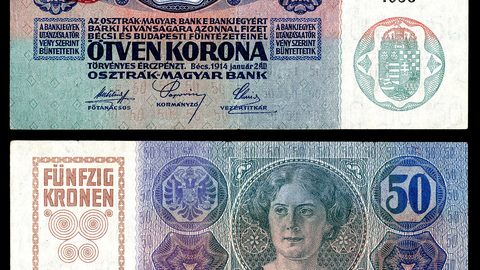 Forint or Euro What You Actually Pay With in Hungary
Hungary uses the forint, not the euro. Cards work in Budapest but rural museums, cellars, and public toilets often demand cash in coins.
Forint or Euro What You Actually Pay With in Hungary
Hungary uses the forint, not the euro. Cards work in Budapest but rural museums, cellars, and public toilets often demand cash in coins.
-
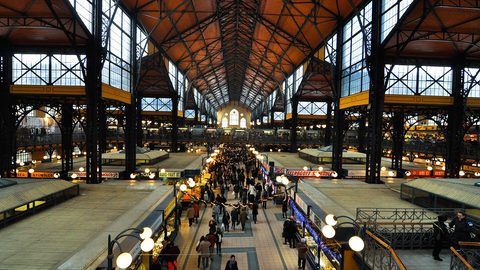 What a Trip to Hungary Costs and How to Shape Your Spending
How to think about your Hungary budget: the Budapest-countryside cost split, where cash is still king, and why a daily average hides more than it reveals.
What a Trip to Hungary Costs and How to Shape Your Spending
How to think about your Hungary budget: the Budapest-countryside cost split, where cash is still king, and why a daily average hides more than it reveals.
-
 How to Budget a Trip Based on Purchasing Power, Not Just Exchange Rates
Exchange rates tell only half the story. See how purchasing power shapes your real travel budget across Southeast Asia, Eastern Europe, and Latin America.
How to Budget a Trip Based on Purchasing Power, Not Just Exchange Rates
Exchange rates tell only half the story. See how purchasing power shapes your real travel budget across Southeast Asia, Eastern Europe, and Latin America.
-
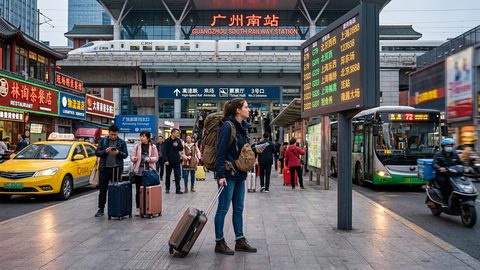 A Ground-Level Logistics Guide to Independent Travel in China
First-time independent travel in China: what you need to know about visas, rail booking, eSIMs, mobile payments, and power adapters.
A Ground-Level Logistics Guide to Independent Travel in China
First-time independent travel in China: what you need to know about visas, rail booking, eSIMs, mobile payments, and power adapters.
-
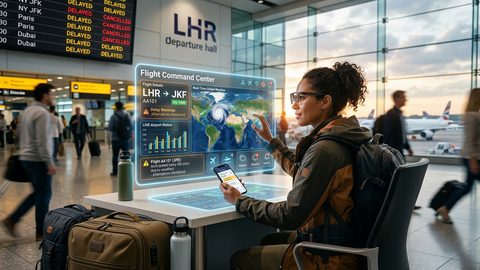 How Solo Travelers Stay Ahead of Flight Delays and Cancellations
How solo travelers can track inbound aircraft, claim rebooking rights, and adjust ground transport when flights go wrong — step by step.
How Solo Travelers Stay Ahead of Flight Delays and Cancellations
How solo travelers can track inbound aircraft, claim rebooking rights, and adjust ground transport when flights go wrong — step by step.