Is Greece Safe for Tourists Beyond the Official Advice
Reading safety advice about Greece without being misled by it: the real risks are pickpockets, quad bikes, and slippery marble.
Safety in Greece for Visitors, Beyond the Official Warnings
You step off the Metro at Monastiraki and a man shoulders into you, apologising in Greek as his hand dips toward your open tote bag. You feel the brush, turn, and he is gone into the crowd. Ten seconds later your wallet is still there, but you will be more careful for the rest of the trip. That is the real safety profile of Greece: a fundamentally safe country where the risks are petty, predictable, and preventable. The question is Greece safe for tourists gets a simple answer from the data. Violent crime against visitors is rare. The hazards that actually send tourists to hospital are quad bike rentals, heatstroke at noon in July, and a wet marble step outside a Plaka souvenir shop. Official travel warnings from the UK Foreign Office, the US State Department, and the Australian DFAT are accurate, but they read more alarming than the reality on the ground because they must list everything that could go wrong, not what does.
Athens Neighbourhood Safety: Where to Walk and Where to Watch
Pickpocket Hotspots
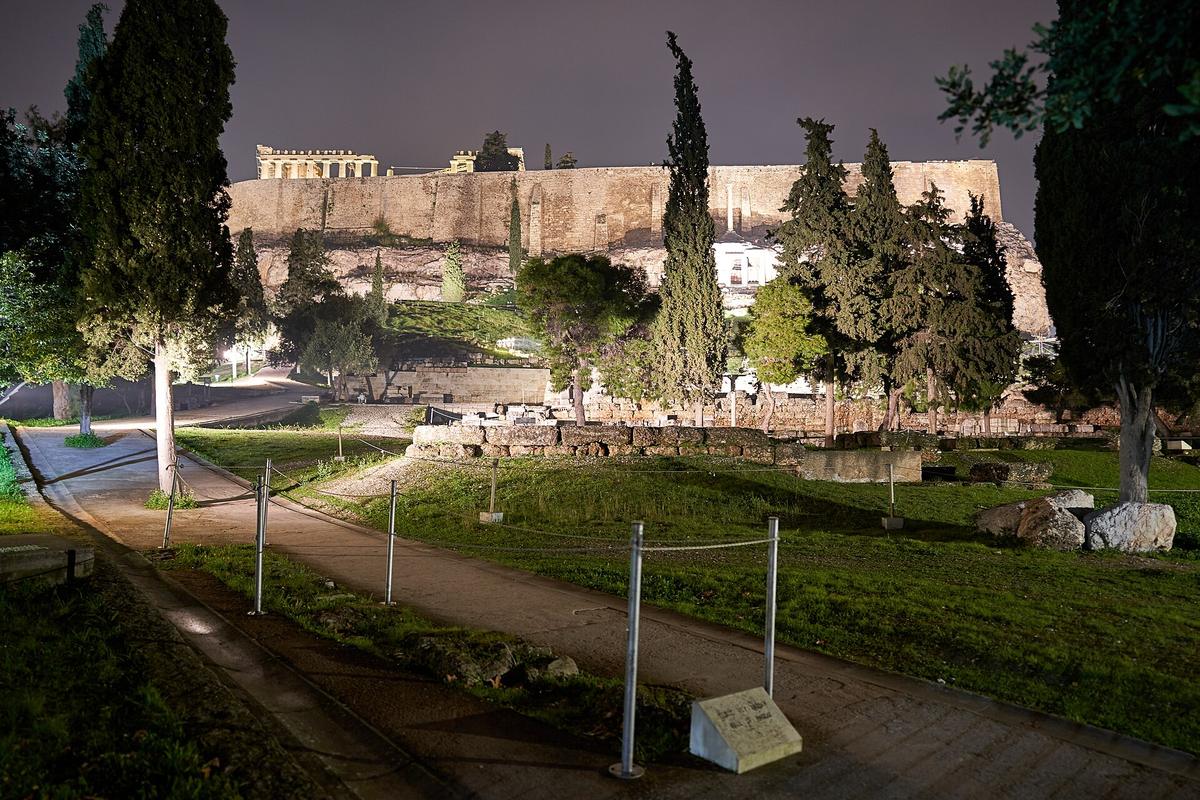
Central Athens is safe at almost any hour if you follow one rule: keep your phone and wallet in a front zip pocket or a bag worn across your chest, not dangling from a hand or poking out of a back jeans pocket. The highest-risk zone is Monastiraki flea market and the surrounding streets, especially on Sunday mornings when the crowd density peaks. Pickpockets work the same routes every day: the Metro Line 3 corridor from the airport to Syntagma, the escalators at Syntagma and Monastiraki stations, and the narrow lanes between Monastiraki Square and Psiri.
Neighbourhoods After Dark
Exarcheia is a normal residential and student neighbourhood with good restaurants and bookshops. You can walk through it in daylight without issue. At night it is quieter than the party strips of Psiri. Omonia Square, which looks rough because of the drug trade and the late-night loitering, is safe to pass through but not somewhere to linger with a guidebook. The tourist police (call 1571) speak English and handle theft reports efficiently; the general emergency line is 112.

Greek Island Petty Crime: What Actually Happens
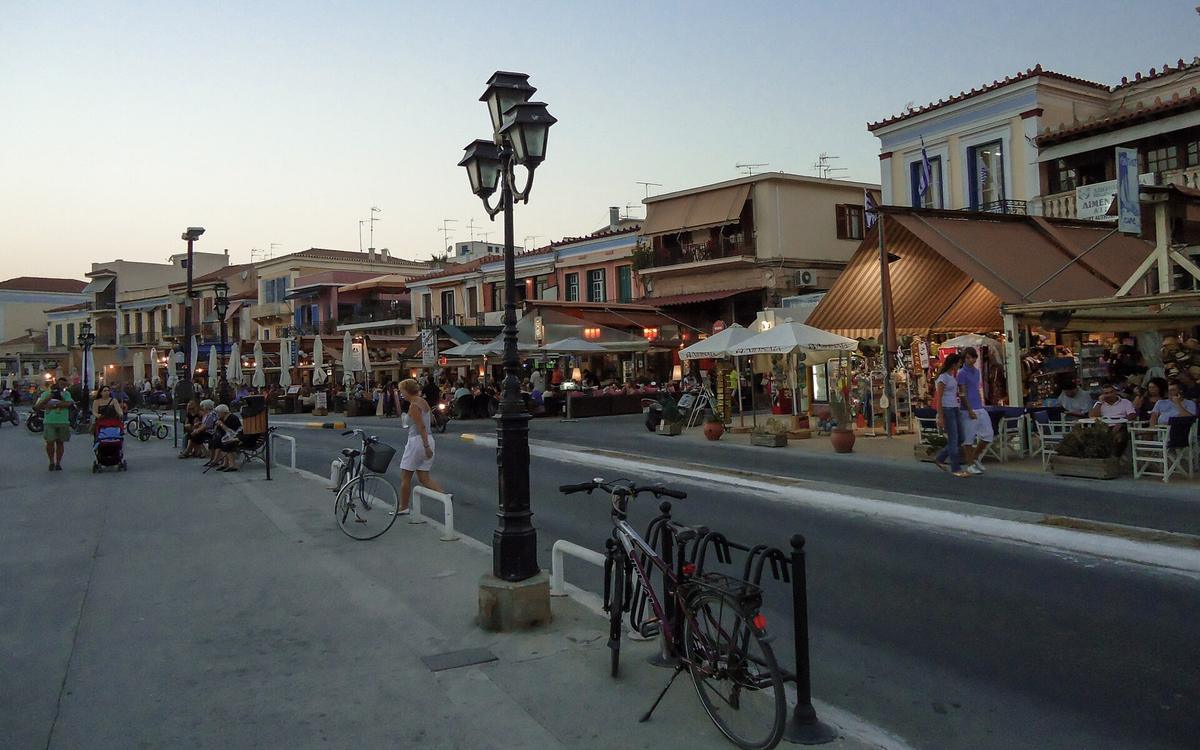
Petty crime on the Greek isles is lower than in central Athens, but it exists in predictable places: the deck of a packed ferry during boarding, the beach when you leave your bag ten metres from your towel and swim, and the rental ATV or scooter parked with the keys in the ignition. Theft from holiday villas is rare. Theft from unlocked rental cars at popular beach parking areas happens several times a week in peak July and August on Mykonos, Santorini, and Rhodes.
The most common loss is not theft at all but misplacement. Phones left on a ferry seat. Wallets dropped on a nightclub floor in Ios or Mykonos. Return rates are decent because the destinations are small and the local police station is often within a ten-minute walk. Report a passport loss to the nearest police station immediately; the Tourist Police (1571) can fast-track the report number you need for a replacement passport from your embassy.
Greece Solo Female Travel: Real Risks and Routines
Greece is safe for solo female travellers by global standards. The main issue is unwanted attention in urban areas, not violent assault. Catcalling on the street is common in central Athens, less so on the islands. Men may approach you in cafes or on the beach with conversation that starts friendly and turns persistent. A direct “no” in Greek (ochi) or a firm hand gesture works faster than politeness.
The drink spiking reports that appear in the news each summer are concentrated in a small number of Athens bar strips, particularly around the Psiri nightlife area, and on the party islands of Ios, Mykonos, and parts of Faliraki in Rhodes. The rule is simple: do not leave your drink unattended, buy your own at the bar, and avoid open-bottle sharing with strangers. Solo dinner dining is normal and unremarkable in any Greek taverna. Accommodation hosts and restaurant staff will check on you if you seem alone and disoriented late at night.
Ferry Safety Greece: What Can Go Wrong and How to Prepare
Weather Disruption and Strikes
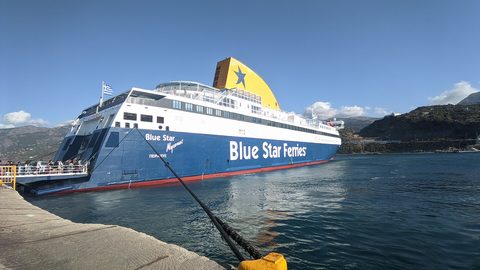
Ferry safety in Greece is high. The Hellenic Coast Guard (phone 108) enforces EU vessel safety standards, and major operators like Blue Star Ferries, Hellenic Seaways, and Minoan Lines maintain modern fleets. The real risk is not sinking but disruption. Ferry schedules change with weather, and a summer Meltemi wind of Force 7 or above can cancel or delay crossings for 24 to 48 hours. Winter storms are worse: some connections stop entirely for days.
Ferry strikes happen with 24 to 48 hours notice and are announced on the Ferryhopper and Ferryscanner apps. The union action paralyses all services. If you are on an island when a strike is called, check whether the local airport has a flight out, though not all islands have one, or extend your accommodation by one night.
Protect Your Flight Home
The most expensive mistake is booking a flight home the same day as a ferry connection. If the ferry is cancelled, you cannot reach the airport. Always leave a buffer of at least one full day between your last ferry and your departure flight.
| Service | Phone Number |
|---|---|
| General emergency (police, ambulance, fire) | 112 |
| Police | 100 |
| Ambulance | 166 |
| Fire brigade | 199 |
| Tourist Police (visitor issues, theft reports) | 1571 |
| Coast Guard (ferry and maritime incidents) | 108 |
| EU missing children hotline | 116000 |
| Consumer overcharging complaint hotline | 1520 |
The Real Injury Risks Most Travellers Ignore
Quad Bikes and ATVs
The single biggest cause of tourist hospitalisation in Greece is not crime. It is rental quad bikes and ATVs on the islands. The accident rate is high. Roads are narrow, winding, and lack guardrails. Many renters have no experience with a vehicle that handles differently on gravel and sand. The ATV safety record is so poor that multiple government advisories warn against their use. If you rent one, you must wear the mandatory helmet, check that your travel insurance covers ATV accidents (many exclude them), and avoid driving after dark or after alcohol. The blood alcohol limit for general drivers is 0.05% (50 mg per 100 ml of blood); for motorcyclists and novice drivers under two years of experience it is 0.02%.
Heat and Sun
Dehydration and heatstroke are the second most frequent cause. The risk period is June through September, especially during outdoor activities on archaeological sites. The Acropolis, Ancient Delphi, and Knossos Palace all get punishing midday sun with minimal shade. Carry 1.5 litres of water per person, wear a wide-brimmed hat, and visit before 10:00 or after 17:00 in July and August. SPF 30 or higher sunscreen is essential. Public cooling centres open in cities during extreme heat, announced by the Civil Protection service via 112 SMS alerts.
Everyday Hazards
Slippery marble pavements in Plaka, the old towns of Rhodes, and the pedestrian streets of Nafplio become dangerously slick after rain. The polished stone offers zero grip in wet conditions. Walk slowly, wear shoes with rubber soles, and avoid sandals with smooth leather soles until the pavement is dry.
Food hygiene is excellent, but summer gastroenteritis from food left unrefrigerated at beach canteens is common. The Hellenic Food Authority (EFET) oversees food safety. Tap water is potable in Athens and Thessaloniki but not on most Cycladic islands. On islands you must buy bottled water for drinking and for brushing your teeth. In rural mainland areas the water is variable; bottled water is the safe default.
.jpeg)
Is Greece Safe for Tourists? the Government Warning Reality Check
Western government travel advisories for Greece are accurate but can read as more alarming than the lived experience. The UK FCDO, US State Department, Canadian Government (Travel.gc.ca), and Australian DFAT all flag the same risks: pickpocketing in crowded areas, the high rate of quad bike accidents, wildfires from June to October, and the risk of drink spiking in certain nightlife zones. These are real. They are also manageable with basic precautions.
What the advisories do not convey is the low baseline of violent crime. Greece has one of the lowest homicide rates in the EU. The road fatality rate is among the highest in the EU per million inhabitants, but that figure is driven by local driving habits, not tourist behaviour. The specific hazard for visitors is the narrow island road with no guardrail and a rental vehicle they do not know how to handle. That is the concrete risk. The advice to avoid protests and demonstrations in Syntagma Square is standard for any country; Greek demonstrations are peaceful with occasional clashes, and you simply walk the other way.
Drink Spiking and Nightlife Precautions
Drink spiking reports in Greece are not widespread but they are persistent. The incidents cluster in a small number of locations: the Psiri bar strip in central Athens and the club areas of Ios, Mykonos, and Faliraki in Rhodes. The method is the same: an unattended drink is dosed, or a drink is accepted from a stranger. The substances used can cause disorientation, memory loss, and nausea within 15 to 30 minutes.
Prevention is straightforward. Buy your own drink at the bar and watch it being poured. Do not accept opened bottles, shots from strangers, or drinks that have passed through someone else's hands. If you feel suddenly dizzy or confused after one drink, tell a friend or the bar staff immediately and get to a safe place. The general emergency number 112 handles medical assistance for suspected spiking.
The Single Thing That Most Often Goes Wrong
Book the ferry ticket for the wrong date or the wrong port. The ferry network hub is Piraeus in Athens, with secondary hubs at Rafina and Lavrio. Ferry schedules reduce sharply outside June to September, and a single storm can strand you on an island for 48 hours. The failure case: you book a flight home at 14:00 the same day your ferry arrives at Piraeus at 11:00. The ferry is cancelled due to wind. You miss your flight and pay for a new one plus an extra night on the island. The fix is simple: never book a flight home the same day as a ferry connection, and always download your ferry tickets and offline maps before you leave Wi-Fi, because mobile data drops out on many ferry crossings and in deep gorges.
Frequently Asked Questions About Safety in Greece
Is the water safe to drink in Greece?
Tap water is safe to drink in Athens and Thessaloniki. On most islands, especially the Cyclades, tap water is not potable and you must buy bottled water. In rural mainland areas the quality varies; bottled water is the safe choice. Use bottled water for brushing your teeth on islands.
Are there dangerous animals or insects in Greece?
Ticks are present in rural and forested areas and can carry Lyme disease. The Ottoman viper (Vipera xanthina) is venomous and found in northeastern mainland Greece and some islands; antivenom is available at major hospitals. Sea urchins are common on rocky seabeds in shallow water. Jellyfish are seasonal, most common in late summer. Mosquitoes can carry West Nile virus, which is reported annually in summer and autumn.
How do I call for help in an emergency?
Dial 112 for any emergency. This connects to police, ambulance, and fire services and operators speak English. For visitor-specific issues such as theft reports or overcharging, call Tourist Police at 1571. For maritime incidents involving ferries, call the Coast Guard at 108.
Is it safe to drive in Greece as a tourist?
Driving is safe if you follow the rules. Traffic drives on the right. Seatbelts are mandatory for all occupants. The blood alcohol limit is 0.05% for general drivers and 0.02% for novice and professional drivers. Motorcycle helmets are mandatory. Non-EU licence holders need an International Driving Permit alongside their home licence. Rentals require the driver to be at least 21 and have held a licence for at least one year.
Are taxis and ride-hailing apps safe?
Licensed taxis are safe. Use only taxis with a meter or agree on a fare before starting the journey. Unlicensed taxis are a risk, especially at airports and ferry ports. Free Now and Uber Taxi operate in Athens and Thessaloniki, but Uber functions as taxi-hailing only, not private ride-hailing.
What should I do if there is a wildfire?
Wildfire season runs June to October, with high-risk regions including Attica, the Peloponnese, Evia, Crete, and Rhodes. The Civil Protection service sends 112 SMS alerts to mobile phones. If you receive an alert, follow evacuation instructions immediately. Arson and negligent fire-starting carry severe criminal penalties.
Is it safe for LGBTQ+ travellers in Greece?
Homosexuality is legal and civil partnerships are recognised. Social attitudes are more liberal in Athens, Thessaloniki, and the major tourist islands, and more conservative in rural villages and some smaller islands. Public displays of affection may attract unwanted attention in conservative areas, but violent incidents are rare.
Read next
-

 Staying Connected in Greece With eSIM Local SIM or Roaming
How to choose between eSIM, a local Cosmote SIM, or roaming for reliable mobile data across Greek islands, ferries, and mountain villages.
Staying Connected in Greece With eSIM Local SIM or Roaming
How to choose between eSIM, a local Cosmote SIM, or roaming for reliable mobile data across Greek islands, ferries, and mountain villages.
-
 Best Time to Visit Greece by Month, Heat, Crowds, Meltemi and Closures
When to go to Greece, and what each season actually does to the heat, the crowds, the ferry schedules, and the opening hours.
Best Time to Visit Greece by Month, Heat, Crowds, Meltemi and Closures
When to go to Greece, and what each season actually does to the heat, the crowds, the ferry schedules, and the opening hours.
-
 Getting Around Greece by Ferry, Bus and Car, What the Map Oversells
Moving around Greece: what connects where, why the ferry network dominates, and what the map oversells about island-hopping speed.
Getting Around Greece by Ferry, Bus and Car, What the Map Oversells
Moving around Greece: what connects where, why the ferry network dominates, and what the map oversells about island-hopping speed.
-
 Greece Visa Requirements for Tourists, Schengen Rules and the Entry Process
Who needs a visa for Greece, who does not, and how the Schengen entry process runs at airports and ferry ports.
Greece Visa Requirements for Tourists, Schengen Rules and the Entry Process
Who needs a visa for Greece, who does not, and how the Schengen entry process runs at airports and ferry ports.
-
 Cash or Card in Greece, What Actually Works in Tavernas, Taxis and on Ferries
Paying for things in Greece: the euro, where cards work reliably, and the situations where cash still wins.
Cash or Card in Greece, What Actually Works in Tavernas, Taxis and on Ferries
Paying for things in Greece: the euro, where cards work reliably, and the situations where cash still wins.
-
What a Trip to Greece Costs Shaped by Season and Island Choices
How Greece trip costs shift shape between a Santorini cliffside stay, a Crete village rental, and a Peloponnese road trip in different seasons.
-
 How Solo Travelers Stay Ahead of Flight Delays and Cancellations
How solo travelers can track inbound aircraft, claim rebooking rights, and adjust ground transport when flights go wrong — step by step.
How Solo Travelers Stay Ahead of Flight Delays and Cancellations
How solo travelers can track inbound aircraft, claim rebooking rights, and adjust ground transport when flights go wrong — step by step.
-
 Why Your eSIM Might Not Work Abroad and How to Check Before You Go
Buying an eSIM doesn't guarantee signal abroad. Learn why coverage fails by location and how to verify reach before you commit to a plan.
Why Your eSIM Might Not Work Abroad and How to Check Before You Go
Buying an eSIM doesn't guarantee signal abroad. Learn why coverage fails by location and how to verify reach before you commit to a plan.