Your California Trip Cost Breakdown Beyond the Sticker Price
California costs more than it looks online. Gas runs well above the national average, peak-season motels top $200 a night, and park lodges book out months
The Shape of a California Budget, from Gas Pump Shock to Peak-Season Motels
The common assumption about a California trip is that the sticker price is the price. It is not. A California trip cost breakdown shows the gap between the online estimate and the on-the-ground cost can feel jarring. Gas runs $1.50 to $2 above the US average. A motel room in a forgettable town exceeds $200 a night during peak season. The $18 avocado toast is not a joke. The credit card deposit for a rental car is the first of many financial gates. The state sales tax base rate is 7.25%, but the total range hits 7.25% to 10.75% depending on the county and city add-ons. That tax applies to rooms. Some cities levy an additional transient occupancy tax that runs 8% to 15.5%.
California Gas Price Premium: the Real Cost at the Pump
California fuel costs rank among the top three highest in the contiguous United States. The premium over the US average is $1.50 to $2 per gallon. For a road trip covering 800 miles from the Oregon border to the Mexico border via I-5, that premium adds $50 to $80 to the fuel bill alone compared to filling up in a neighboring state. The largest trip cost line item for multi-city itineraries is lodging. The second largest is car rental and fuel combined. The car rental tax and fees surcharge adds 15% to 25% above the base rate, varying by airport and city, and includes sales tax, tourism assessments, and airport concession fees. Budget for that surcharge before you book.


California Peak Season Lodging Cost: What $200 Plus Buys
Peak season runs from Memorial Day weekend through Labor Day weekend for coastal California. In that window, a motel room in a forgettable town along the I-5 corridor exceeds $200 per night. The San Francisco Bay Area and coastal Orange County have the highest room costs in the state. Resorts rated 3.5 stars and above in resort-adjacent markets commonly charge a resort fee of $25 to $60 per night. California Senate Bill 644, effective 2024, requires that fee to be included in the total displayed price for short-term stays. Verify the final total before you click book because the displayed price must now show the real number. The transient occupancy tax in San Francisco is 14% plus a 0.275% California Tourism Assessment. In Anaheim the combined rate is 15% transient occupancy tax plus a 2% Tourism Improvement District assessment.
Finding The Lowest Cost Region
The Central Valley and Inland Empire have the lowest room costs. The desert region has the highest seasonal swing; Palm Springs area rates multiply 2x to 4x in winter peak months. If you are priced out of the coast in summer, book the Central Valley. Camping is the dominant budget strategy in the Sierra Nevada and North Coast redwood corridor. State park campsites run $25 to $75 per night. Dispersed camping on Bureau of Land Management and Forest Service lands is free but has no facilities.
California National Park Reservation Fees: the Second Price Tag
Park entry fees are straightforward: $35 per vehicle for seven days at Yosemite and Sequoia and Kings Canyon, $30 for Death Valley and Joshua Tree. Redwood National and State Parks are free for day use areas. The real cost is the reservation system. Yosemite Valley requires a vehicle entry reservation during peak hours in summer. The 2024 reservation fee was $2 per vehicle in addition to the park entry fee. The Park Service publishes the current rate annually. Rooms inside Yosemite Valley book out within minutes to hours of release. The same applies to coastal state park campsites in summer. The failure case: you arrive without a reservation and spend hours circling the valley or skip it entirely. Book campsites on Recreation.gov and state park sites on ReserveCalifornia up to six months ahead. Overnight stays inside Yosemite, Big Sur, and coastal state parks often book solid six to twelve months ahead.
The Hidden Cost Of Entry Timing
Tioga Pass closes by snow roughly November through late May or June. The Yosemite Valley entry reservation is required only during peak hours in summer. Drive time from Los Angeles to Yosemite Valley is 5.5 to 7 hours depending on route and traffic. From San Francisco it is 3.5 to 4.5 hours. A quick day trip from Los Angeles is a 5.5 hour drive each way. That is a full day of driving before you see a single granite dome.
,_Cable_Car_--_2012_--_4178.jpg)
California Budget Travel Reality: Where the Sticker Price Fails
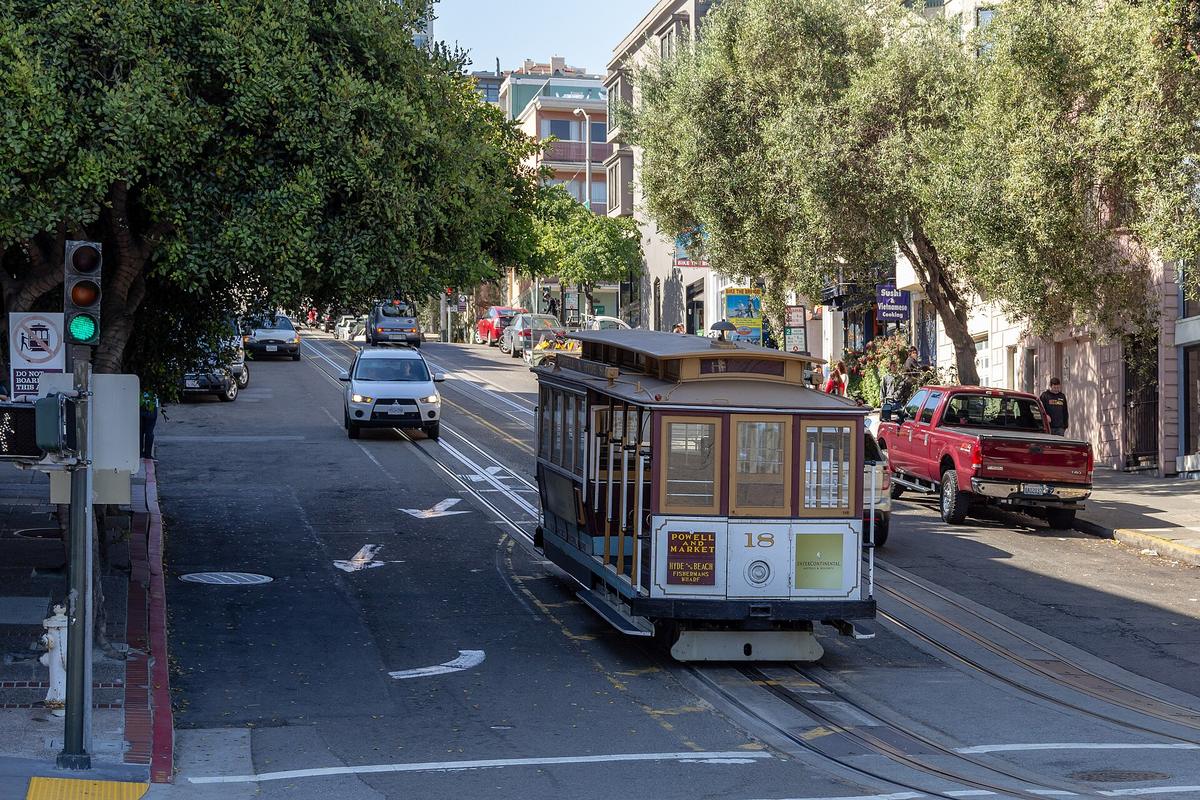
The budget travel reality is that public transit will not save you. Outside San Francisco's core, a rental car is non-negotiable. The YARTS bus connects Merced Amtrak and Fresno to Yosemite Valley, but there is no scheduled public transit serving Death Valley, Joshua Tree, or Redwood National and State Parks. Intercity buses like FlixBus and Greyhound serve major corridors but leave gaps in rural and mountain regions. The Amtrak Coast Starlight runs from Los Angeles to the Bay Area to Sacramento, the San Joaquins connects the Bay Area to Bakersfield with a bus onward to Los Angeles, and the Pacific Surfliner runs San Diego to San Luis Obispo. Those are scenic options, not budget commutes.
The $18 Breakfast And Other Food Costs
The avocado toast and cold pressed juice combination runs $18. That is not a luxury hotel price. That is a coffee shop in San Francisco or Los Angeles. Sales tax on prepared food and restaurant meals applies at the full local rate. Sales tax on groceries is exempt for most unprepared food items. Tipping at full service restaurants is 15% to 20% of the pre tax bill. Tipping for rideshare and taxi is 15% to 20%. Hotel housekeeping expects $2 to $5 per night. Those add to the daily line item. The second largest trip cost line item for single city itineraries is dining. If you cook your own meals you save the restaurant markup and the tip, but you still pay the grocery price which is higher than most of the country.
The Things That Trip Visitors Up
The electronic toll transponder requirement catches drivers without a credit card on file. Fast lanes on CA-73, CA-133, CA-241, and CA-261 in Orange County and CA-125 in San Diego County are all electronic with no cash booths. The Golden Gate Bridge toll is collected southbound only, all electronic. Missing a toll payment within 48 hours generates fines that rental companies inflate. The common mistake is treating California like a compact destination. Driving from San Francisco to Los Angeles via the scenic coast is a 10 hour, 440 mile slog with no shortcuts. The coastal route via Highway 1 can take 10 to 12 hours without stops, and seasonal slides and erosion closures between Big Sur and San Luis Obispo County line can extend that. Snow chain control areas exist on Sierra Nevada passes including I-80 Donner Pass and US-50 Echo Summit.
Common Questions
Is it possible to visit California without a rental car?
Yes, if you stay in San Francisco where Muni buses, light rail, and BART provide extensive coverage. Outside the city core, a rental car is non-negotiable. There is no scheduled public transit serving Death Valley, Joshua Tree, or Redwood National and State Parks. The YARTS bus connects Merced and Fresno to Yosemite Valley, but that is one route covering one park.
How much should I budget for gas per day on a California road trip?
California fuel costs rank among the top three highest in the contiguous US, $1.50 to $2 above the US average. A full tank in a sedan costs $60 to $80. Driving 300 miles per day across a 10 day trip means two to three tanks, so budget $120 to $240 for fuel alone depending on your vehicle and route.
What is the cheapest time of year to visit California?
Winter from November through February for the North Coast and Sierra Nevada, though rain and snow are heavy. Summer from June through September for the desert region, where Death Valley daytime highs exceed 116°F and rooms in Palm Springs drop to 2x to 4x below winter peak. Shoulder seasons in March and April or September and October offer moderate weather and lower room costs outside the deserts.
Do I need to reserve Yosemite entry in advance?
Yes, during summer peak hours. The Yosemite Valley entry reservation is required for vehicles entering during peak hours from May through September. The reservation fee is $2 per vehicle in addition to the $35 park entry fee. Both are set annually by the Park Service. Book on Recreation.gov. Rooms inside the valley sell out within minutes to hours of release and often book six to twelve months ahead.
What is the biggest hidden expense for California visitors?
The transient occupancy tax and resort fees. The tax ranges from 8% to 15.5% of the room rate depending on the city. Resort fees run $25 to $60 per night at hotels rated 3.5 stars and above in resort adjacent markets. California law now requires those fees to be included in the displayed total price, so the sticker shock shows earlier. The second biggest hidden expense is the car rental tax and fees surcharge, which adds 15% to 25% above the base rate.
Read next
-
 Best Time to Visit California When One Season Cannot Cover the Whole State
California spans desert, alpine range, and temperate coast. The season that suits Yosemite rules out Death Valley.
Best Time to Visit California When One Season Cannot Cover the Whole State
California spans desert, alpine range, and temperate coast. The season that suits Yosemite rules out Death Valley.
-
 Getting Around California Without Losing Half Your Trip to the Freeway
A rental car is non-negotiable outside San Francisco. Here is how tolls, deposits, and the real driving distances work before you end up with a fine or a
Getting Around California Without Losing Half Your Trip to the Freeway
A rental car is non-negotiable outside San Francisco. Here is how tolls, deposits, and the real driving distances work before you end up with a fine or a
-
 Staying Safe in California From Wildfire Closures to Car Break-Ins
A San Francisco driver returns to their rented SUV in a SOMA parking lot to find the rear window smashed and an empty space where a duffel bag sat.
Staying Safe in California From Wildfire Closures to Car Break-Ins
A San Francisco driver returns to their rented SUV in a SOMA parking lot to find the rear window smashed and an empty space where a duffel bag sat.
-
 United States Travel Guide for First-Timers Who Want the Real Picture
The United States delivers extraordinary geographic and cultural variety, but its sheer scale, car dependency, and tipping economy surprise first-timers. Start here.
United States Travel Guide for First-Timers Who Want the Real Picture
The United States delivers extraordinary geographic and cultural variety, but its sheer scale, car dependency, and tipping economy surprise first-timers. Start here.
-
 Staying Connected While Traveling Through the United States
Prepaid eSIMs work well in US cities, but a physical T-Mobile or AT&T SIM bought at arrival gives better rural coverage for national parks and long highway drives.
Staying Connected While Traveling Through the United States
Prepaid eSIMs work well in US cities, but a physical T-Mobile or AT&T SIM bought at arrival gives better rural coverage for national parks and long highway drives.
-
 Best Time to Visit the United States by Region and Season
The United States spans so many climates that no single season works everywhere. Here is what each region delivers, and when to stay away.
Best Time to Visit the United States by Region and Season
The United States spans so many climates that no single season works everywhere. Here is what each region delivers, and when to stay away.
-
 Getting Around the United States Without Underestimating the Distances
Outside the Northeast Corridor, the United States runs on cars and domestic flights. Distances are enormous and Amtrak is scenic but slow.
Getting Around the United States Without Underestimating the Distances
Outside the Northeast Corridor, the United States runs on cars and domestic flights. Distances are enormous and Amtrak is scenic but slow.
-
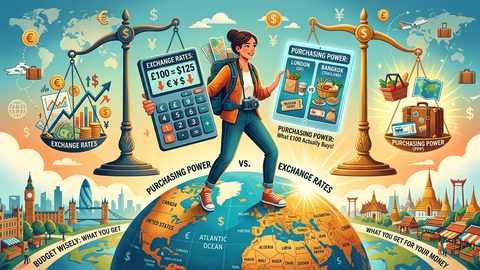 How to Budget a Trip Based on Purchasing Power, Not Just Exchange Rates
Exchange rates tell only half the story. See how purchasing power shapes your real travel budget across Southeast Asia, Eastern Europe, and Latin America.
How to Budget a Trip Based on Purchasing Power, Not Just Exchange Rates
Exchange rates tell only half the story. See how purchasing power shapes your real travel budget across Southeast Asia, Eastern Europe, and Latin America.
-
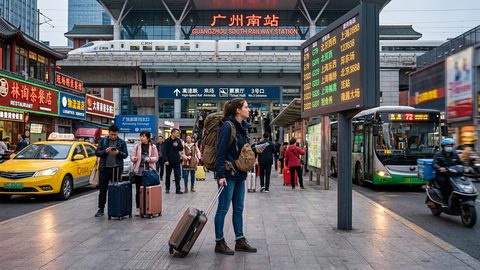 A Ground-Level Logistics Guide to Independent Travel in China
First-time independent travel in China: what you need to know about visas, rail booking, eSIMs, mobile payments, and power adapters.
A Ground-Level Logistics Guide to Independent Travel in China
First-time independent travel in China: what you need to know about visas, rail booking, eSIMs, mobile payments, and power adapters.