Thailand Trip Cost Breakdown, Islands, Cities and Night Trains
A structural look at where money flows during a Thailand trip, from national park foreigner fees to the real cost of island-hopping by longtail boat.
The Shape of a Thailand Travel Budget
The biggest mistake first timers make about a Thailand trip cost breakdown is assuming the country is uniformly cheap. It is not. A 24 hour stretch in Bangkok, a day on a Krabi island, and a night in Pai each produce radically different cost profiles, and the traps are invisible to anyone who has not been stung. The real question is not how much to budget for Thailand in total, but where that money goes and which expenses are structurally rigged against you. Two travellers spending the same daily amount can end up with wildly different experiences because one understood the cost hierarchy and the other did not.
How The Cost Hierarchy Shifts By Region
Thailand regional daily expenses follow a clear pattern. Bangkok falls in the middle: lodging is the dominant line item if you stay within walking distance of the BTS or MRT, but street food and the metro keep the rest low. A day centred on Khao San Road feels budget friendly because the guesthouses compete on price, yet every tuk tuk ride, pad Thai plate, and beer includes a tourist premium built into the negotiation. Rawai on Phuket flips the hierarchy: rooms are cheaper per square metre than Patong, but you need a motorbike rental or frequent Grab trips to reach the beach and restaurants, which shifts the second largest spend from lodging to getting around. Pai compresses everything into a small valley where walking covers most needs, making lodging the dominant cost and food the cheapest item on the list if you eat at the market stalls rather than the reggae bars lining the river.
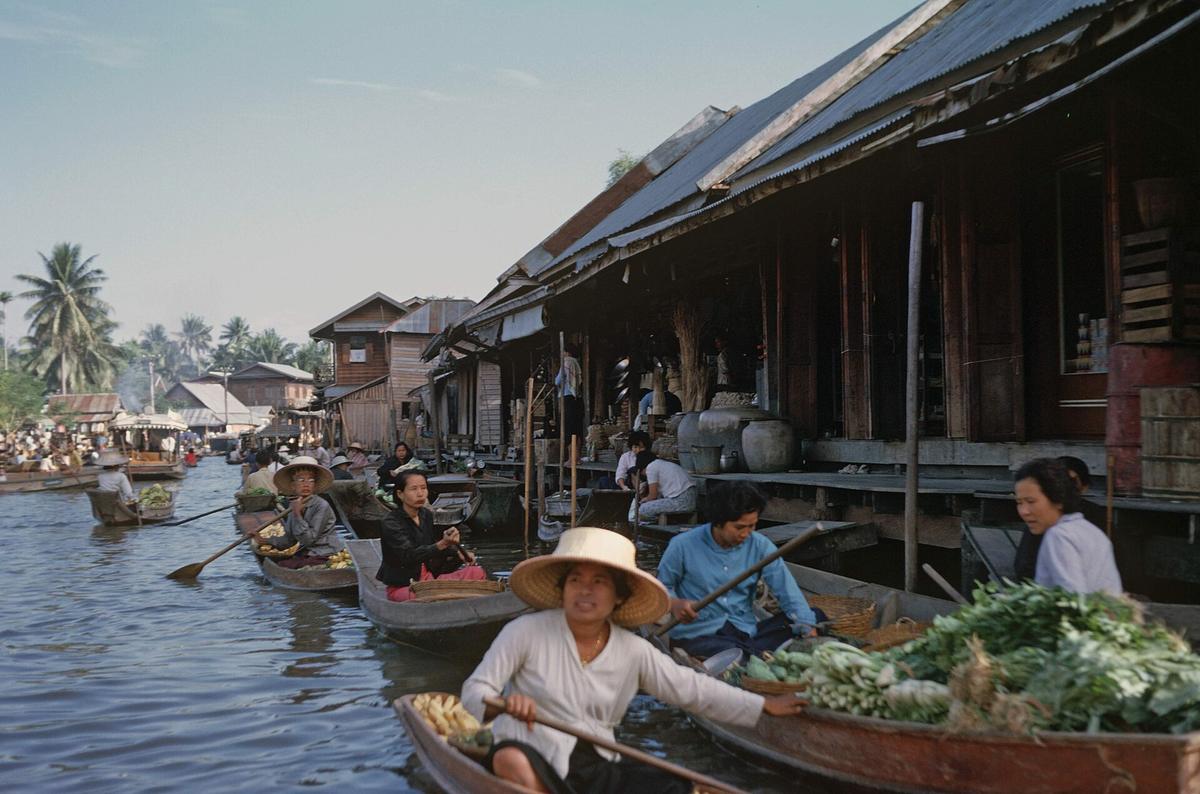

Thailand Trip Cost Breakdown: Where the Money Actually Goes
International airfare is the largest single expense for almost every trip, and nothing you do inside the country will change that. For mid range travellers, lodging becomes the second largest line item. For budget travellers, overland travel cumulatively beats lodging because long distance buses, island ferries, and intercity minivans add up faster than a dorm bed or a fan cooled guesthouse room.
The distribution shifts hard when you add island travel. A ferry from the mainland to Ko Samui, Ko Tao, or Ko Lipe is priced by route monopoly, not distance, so a two hour crossing can cost more than a domestic flight of the same length. Budget for a minimum of three ferry transfers if you plan to visit two islands, and assume each one consumes half a day of travel and 400 to 800 baht.
Expenses That Ambush You In Tourist Zones
Unexpectedly expensive items hit hardest in tourist zones. Laundry is priced per piece, not per kilo, in areas like Khao San Road and Ao Nang, so a small bag of washing can cost 150 baht. Single use plastic wrapped toiletries and sunscreen on islands carry a mark up of 50 percent or more over 7 Eleven prices in Bangkok. The structurally cheap items are street food meals, third class local trains, and entry to most Buddhist temples for Thai nationals, though you pay the foreigner rate on the last one.
How Much to Budget for Thailand: the Numbers by Spending Level
Budget for a bare minimum floor of 800 to 1,000 baht per day if you sleep in a dormitory bed, eat exclusively from street stalls and local markets, and travel between cities by government bus or third class train. That figure covers a dorm bed, three street food meals at 40 to 60 baht each, and one paid activity or sight. It does not cover domestic flights, alcohol beyond a single convenience store beer, or any unexpected transport surcharge.
Mid Range: Comfort Without The Blowout
Mid range spending lands between 2,000 and 3,500 baht per day. This gets you an air conditioned private room in a guesthouse or a three star hotel within walking distance of a major attraction, meals in air conditioned local restaurants, domestic flights for longer intercity moves, and one paid entrance or tour per day. At this level you absorb the cost of dual pricing at national parks without feeling it, but you still choose carefully between laundry services and do it yourself sink washing.
Luxury: What You Gain And What You Lose
Luxury spending starts at 5,000 baht per day and climbs steeply. An international brand resort on Ko Samui or Phuket charges several thousand baht per night in high season, and imported wine is taxed heavily enough to double the bill. The value proposition is real: a five star hotel room in Bangkok costs roughly half what a comparable room costs in Singapore or Hong Kong, but the trade off is location, with many luxury properties sitting far from the BTS and requiring expensive taxi or Grab trips to reach central sights.
Thailand Daily Expenses: Transport and the Hidden Surcharges
The per kilometre cost hierarchy reveals where your money goes. Third class train is the cheapest, followed by second class train, then government interprovincial buses, then minivans, then first class train sleepers, and finally domestic flights. For a 600 kilometre journey like Bangkok to Chiang Mai, a third class seat costs roughly 300 baht, an air conditioned bus costs 600 to 800 baht, and a last minute flight costs 1,500 to 2,500 baht. Booking flights four to six weeks ahead drops the price to the bus range, but island routes to Samui, Krabi, and Phuket are structurally more expensive than trunk routes and do not discount as steeply.
The Surcharges That Gut A Daily Budget
The invisible surcharges are what gut a daily budget. Grab taxis fail during heavy rain when drivers switch off surge pricing and negotiate cash fares directly. The app shows no available cars for 30 to 45 minutes while drivers circle waiting for you to hail them on the street and pay double. Tuk tuks are always more expensive than metered taxis for the same distance in Bangkok, but in provincial cities there are no metered taxis, so the songthaew becomes the cheapest option. Motorcycle taxis are the cheapest point to point solo urban transport, but negotiating the price before you board is mandatory.
Motorbike Rental: The Fine Print
Motorbike rental looks like a budget miracle at 200 to 300 baht per day on most islands, but the fine print matters. Most travel insurance policies exclude any accident if you ride without a valid home country motorcycle licence and an International Driving Permit with the motorcycle endorsement. A minor crash without insurance can cost 50,000 baht or more in hospital bills at a private clinic. Budget for a taxi instead if you cannot produce both documents.
Thailand Dual Pricing National Parks: Where it Hits Hardest
Dual pricing is institutionalised and you cannot argue your way out of it. Government run national parks, historical parks, and some museums charge foreigners 200 to 500 baht while Thai nationals pay 20 to 40 baht for the same entry. That is a 5x to 10x multiplier, and it applies at every major attraction in the system: Doi Inthanon, Erawan Falls, the Similan Islands, Phanom Rung, and the Sukhothai Historical Park all follow the same structure.
Marine Parks: The Biggest Hit In Five Days
The hardest hit attractions for a five day itinerary are the marine parks. Entry to the Similan Islands costs roughly 500 baht for foreigners and 40 baht for Thais. Ang Thong Marine Park charges a similar premium. If you visit three parks in one week, you spend 1,200 to 1,500 baht on entry fees alone, which equals the cost of two nights of budget lodging.
The trade off is that the most famous temples do not use dual pricing. Wat Pho, Wat Phra Kaew inside the Grand Palace, and Doi Suthep charge a single flat entry fee. The Grand Palace costs 500 baht for everyone, Wat Pho costs 300 baht, and Doi Suthep costs 30 baht. Budget your fee spending by grouping national park visits on alternate days so the expense is spread across your trip rather than concentrated in one cash heavy morning.
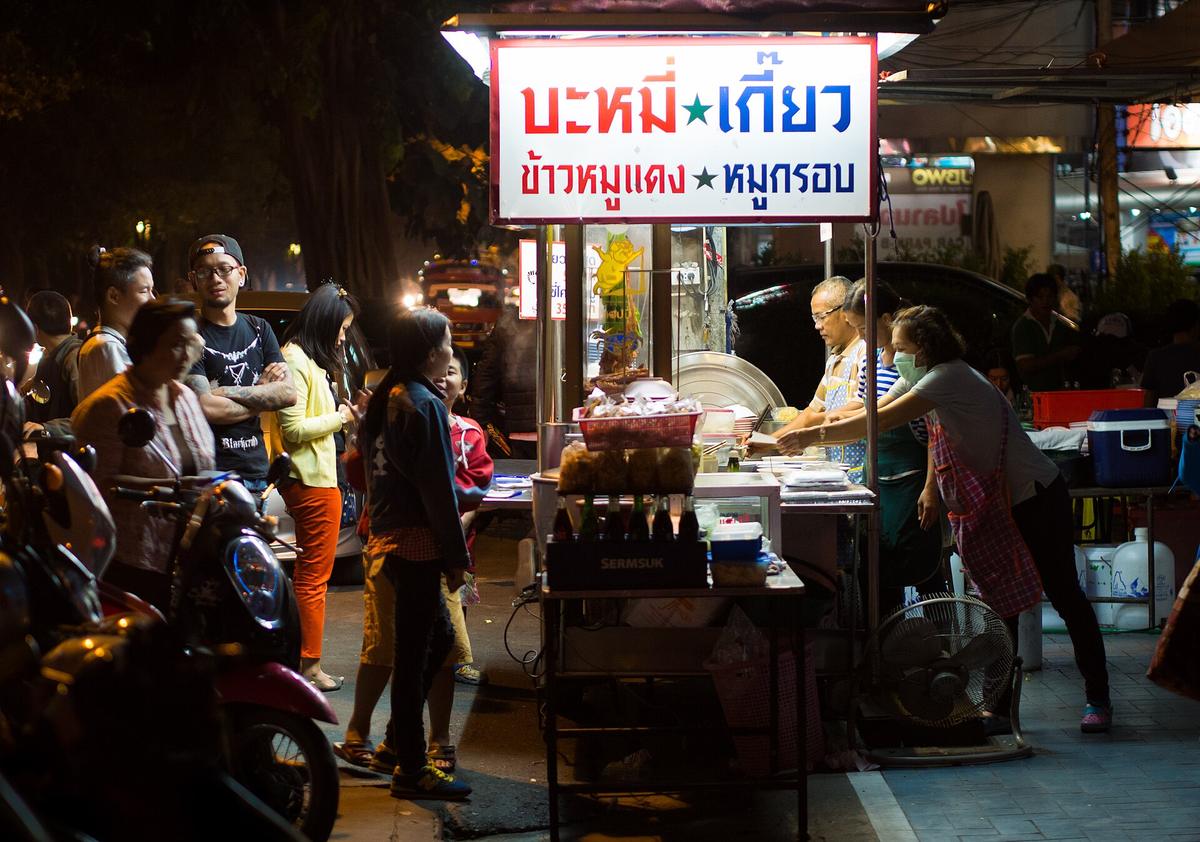

Thailand Street Food vs Restaurant Prices: the Real Cost Difference
A cooked to order noodle or rice dish from a street stall costs 40 to 60 baht. The same dish in an air conditioned local restaurant costs 80 to 120 baht. In a Western oriented restaurant serving a pad Thai with chicken and a side of spring rolls, the price jumps to 200 to 350 baht. The food itself is similar in quality across all three settings, but the structural difference is the premium you pay for a table, air conditioning, and an English menu.
When The Cheap Option Is The Wrong One
The cheap option is not always the right one. Street food in the capital near the BTS stations is excellent and safe if the stall has a steady queue of locals. Street food on Khao San Road is aimed at tourists and priced 20 to 30 baht higher per dish than a stall three blocks away on a side soi. The cheapest alcohol purchase is a 640 millilitre bottle of local beer from a 7 Eleven, which costs 60 to 80 baht. The same beer in a bar costs 120 baht or more, and imported wine or spirits are structurally more expensive across all settings.
The Mid Range Sweet Spot
The mid range sweet spot is a restaurant that serves Thai food to a mixed local and tourist crowd, has air conditioning, and shows a menu with Thai text as well as English. Those restaurants charge 100 to 150 baht for a main dish, include a free pot of jasmine tea or a small bowl of soup, and do not add a service charge. Skip the Western restaurant option unless you specifically want a hamburger or a pizza, because the 10 percent service charge and 7 percent VAT push the bill past what the menu price suggests.
Invisible Costs and Entry Requirements
First timers budget for lodging, food, and getting around but never line item for the small costs that bleed cash silently. A day at Erawan Falls costs 500 baht entry for foreigners plus 40 baht for a shared songthaew from the park gate to the first tier, plus 20 baht for a locker rental, plus 100 baht for a bottled water and a bag of crisps from the single vendor inside the park. That 660 baht day feels like 300 baht if you only counted the entrance fee.
Visa Rules And The ATM Trap
Visa costs are zero for most nationalities, but the process has a cash hole. The Thailand Digital Arrival Card is required for all non Thai nationals arriving by air and must be completed online before travel. The 60 day visa exemption applies to over 55 nationalities including most EU countries, the UK, the US, Australia, Canada, Japan, South Korea, and the UAE. Land border entries are limited to two per calendar year. Your passport must be valid for at least six months from the date of entry, and proof of onward travel may be requested at check in and on arrival. The ATM foreign card fee is a flat per withdrawal charge set by each Thai bank, and dynamic currency conversion is offered at most ATMs and point of sale terminals. Process the transaction in Thai baht. It yields a better exchange rate than accepting the offered conversion in your home currency.
The Trade Offs at Each Spending Level
At the budget level you gain the authentic experience of eating where locals eat and moving like a local on trains and songthaews. You lose time, physical comfort, and the ability to cover more than one or two destinations in a single week. The failure case is the traveller who tries to hit Bangkok, Chiang Mai, and an island in seven days and spends more time in transit and at airports than they do at any actual site.
At the mid range level you gain air conditioned rooms, faster travel, and the ability to absorb the foreigner dual pricing without stress. You lose the spontaneous interactions that happen on a third class train carriage or at a market stall at 6am. The trade off is worth it if you have ten days or less, because the time saved by flying between regions rather than taking the bus is the difference between seeing two provinces and seeing three.
At the luxury level you gain comfort, privacy, and access to resorts that are destinations in themselves. You lose any chance of a raw experience and you pay the highest premium for imported wine and Western food. The failure case is the traveller who books an all inclusive resort on Ko Samui and never leaves the property, spending 8,000 baht per day to eat pasta and watch a pool that looks identical to a pool in Mexico or Bali.
The single most practical thing to do next is open a spreadsheet and map your daily costs against the specific locations you plan to visit. List the lodging, the entry fees including the dual pricing multiplier, the travel between each city and island, and the number of meals at each tier. Then add 20 percent to the total for the invisible costs that first timers never line item. That number is your real Thailand budget.
Common Questions
How much cash should I carry in Thailand?
Cash reliance is high outside major cities and for street food, local markets, songthaews, and small guesthouses. Carry 1,500 to 2,000 baht per day in cash for budget travel, plus a card for hotel payments and major purchases. ATMs charge a flat per withdrawal fee, so withdraw larger amounts less often to reduce the total fee cost.
Is dual pricing negotiable at national parks?
No. The foreigner entry fee is a fixed government rate set by the Department of National Parks. Arguing with the ticket booth staff will not change the price. The only way to reduce the impact is to visit parks on consecutive days and pay for a combined ticket where available, or to focus on temple and city attractions that do not use dual pricing.
What is the cheapest way to travel between Bangkok and Chiang Mai?
A third class train seat costs roughly 300 baht and takes 12 to 14 hours. A second class sleeper with air conditioning costs 800 to 1,200 baht and includes a bed and a meal. The government interprovincial bus costs 600 to 800 baht and takes 10 hours. A domestic flight booked four weeks ahead costs 800 to 1,500 baht and takes one hour. The cheapest option per kilometre is the train, but the sleeper berth adds value if you need to sleep through the journey.
How much does street food cost compared to a restaurant?
A street stall meal costs 40 to 60 baht. An air conditioned local restaurant meal costs 80 to 120 baht. A Western oriented restaurant meal costs 200 to 350 baht. The street option is the cheapest and often the best quality, but stalls aimed at tourists on Khao San Road or near major temples charge 20 to 30 baht more per dish than stalls in local neighbourhoods.
When is burning season and how does it affect my budget?
Burning season runs from February to April in the north, and Chiang Mai often ranks as the world's most polluted city during this window. Air quality can make outdoor sightseeing hazardous for sensitive individuals. If you are visiting the north during these months, budget for indoor activities and an air purifier in your lodging. The cheapest alternative is to go south or to the islands instead.
Read next
-
 Staying Connected in Thailand With eSIM, Local SIM, or Roaming
Compare eSIM convenience against physical AIS and TrueMove tourist SIMs registered at Bangkok airports, and why Wi-Fi alone fails for Grab and translation.
Staying Connected in Thailand With eSIM, Local SIM, or Roaming
Compare eSIM convenience against physical AIS and TrueMove tourist SIMs registered at Bangkok airports, and why Wi-Fi alone fails for Grab and translation.
-
 Best Time to Visit Thailand, Matching Coasts to the Monsoon Calendar
Thailand has two monsoons hitting opposite coasts at different times, plus a northern burning season. Match your beach to the right months or get rain.
Best Time to Visit Thailand, Matching Coasts to the Monsoon Calendar
Thailand has two monsoons hitting opposite coasts at different times, plus a northern burning season. Match your beach to the right months or get rain.
-
 Getting Around Thailand, VIP Buses, Budget Flights and Why the Map Lies
Thailand's transport map undersells mountain curves and island transfer times. How domestic flights, VIP buses and songthaews actually connect the country.
Getting Around Thailand, VIP Buses, Budget Flights and Why the Map Lies
Thailand's transport map undersells mountain curves and island transfer times. How domestic flights, VIP buses and songthaews actually connect the country.
-
 Thailand Visa Rules, Exemptions, Extensions and the Bureaucracy Explained
Which passports get visa-free entry to Thailand, how long you can stay, and the exact steps to extend at a Thai immigration office without getting fined.
Thailand Visa Rules, Exemptions, Extensions and the Bureaucracy Explained
Which passports get visa-free entry to Thailand, how long you can stay, and the exact steps to extend at a Thai immigration office without getting fined.
-
 Money in Thailand, Baht, Cards and Where Cash Still Wins Every Time
Cash still rules half of Thailand. How Thai ATMs hit foreign cards, where to exchange baht without losing a chunk, and which situations demand physical money.
Money in Thailand, Baht, Cards and Where Cash Still Wins Every Time
Cash still rules half of Thailand. How Thai ATMs hit foreign cards, where to exchange baht without losing a chunk, and which situations demand physical money.
-
 Safety in Thailand, Reading the Advice Without the Hysterical Headlines
Road crashes are the real risk in Thailand, not the scams that dominate forums. How to read travel advisories and what insurance actually covers.
Safety in Thailand, Reading the Advice Without the Hysterical Headlines
Road crashes are the real risk in Thailand, not the scams that dominate forums. How to read travel advisories and what insurance actually covers.
-
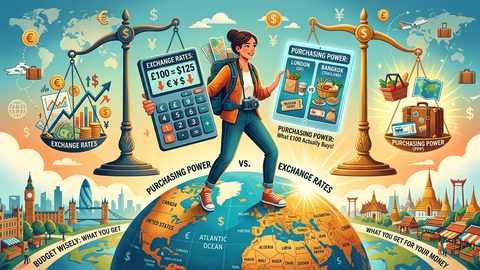 How to Budget a Trip Based on Purchasing Power, Not Just Exchange Rates
Exchange rates tell only half the story. See how purchasing power shapes your real travel budget across Southeast Asia, Eastern Europe, and Latin America.
How to Budget a Trip Based on Purchasing Power, Not Just Exchange Rates
Exchange rates tell only half the story. See how purchasing power shapes your real travel budget across Southeast Asia, Eastern Europe, and Latin America.
-
 A Ground-Level Logistics Guide to Independent Travel in China
First-time independent travel in China: what you need to know about visas, rail booking, eSIMs, mobile payments, and power adapters.
A Ground-Level Logistics Guide to Independent Travel in China
First-time independent travel in China: what you need to know about visas, rail booking, eSIMs, mobile payments, and power adapters.
-
 How Solo Travelers Stay Ahead of Flight Delays and Cancellations
How solo travelers can track inbound aircraft, claim rebooking rights, and adjust ground transport when flights go wrong — step by step.
How Solo Travelers Stay Ahead of Flight Delays and Cancellations
How solo travelers can track inbound aircraft, claim rebooking rights, and adjust ground transport when flights go wrong — step by step.