Using Money in India Without Payment Surprises
UPI and cards work in urban India, but cash still rules the chai stall, the rural bus, and the small-town guesthouse. Here is how to manage the Indian rupee.
The Assumption That Fails First
using money in India decisions depend on the route, season and traveller's actual requirements.
using money in India
You land with a card and a phone. Within the hour, a chai wallah shakes his head at your Visa and an auto-rickshaw driver cannot process a PhonePe transfer from an international number. The two-tier reality of Indian currency is this: digital payments rule urban India, mid-range hotels, and chain stores. Cash remains the only option for small vendors, rural areas, temple donations, and local transport. Know which tier applies before you hand over a card and get a blank stare.
Indian Rupee ATM Withdrawal: Reliability and Limits
The ATM network exceeds 200,000 machines. Density is concentrated in cities. In rural areas machines are sparse. Stock up before you leave a major town. Your issuing bank and the Indian ATM operator both set per-transaction and daily withdrawal caps. Many ATMs impose a limit of INR 10,000 per withdrawal. On a two-week trip across multiple states, that means repeated stops.
Weekend Cash Shortages
ATMs run dry on weekends. This hits hardest in smaller towns and on Sunday mornings. Arrive in a district capital on a Saturday evening? Withdraw immediately. By Sunday afternoon the machine may show a blank screen. Cash is king for small vendors, chai stalls, and rural areas, and weekend shortages are a known pattern.
Fees And The DCC Trap
Indian banks do not charge domestic cardholders for using their own ATMs. Your costs depend on your issuing bank and the Indian operator. Dynamic currency conversion appears at some terminals. When prompted to choose between INR and your home currency, always select INR. DCC gives you a worse rate than your home bank. Decline the offer. Pay in rupees.
Counterfeit Notes And The INR 2,000 Note
INR 500 notes have been counterfeited. Check security features when you get change from a street vendor. The INR 2,000 note was withdrawn from circulation by the Reserve Bank of India. You may still exchange it at RBI offices under specified conditions, but do not accept it from anyone. Decline it. Ask for smaller denominations.
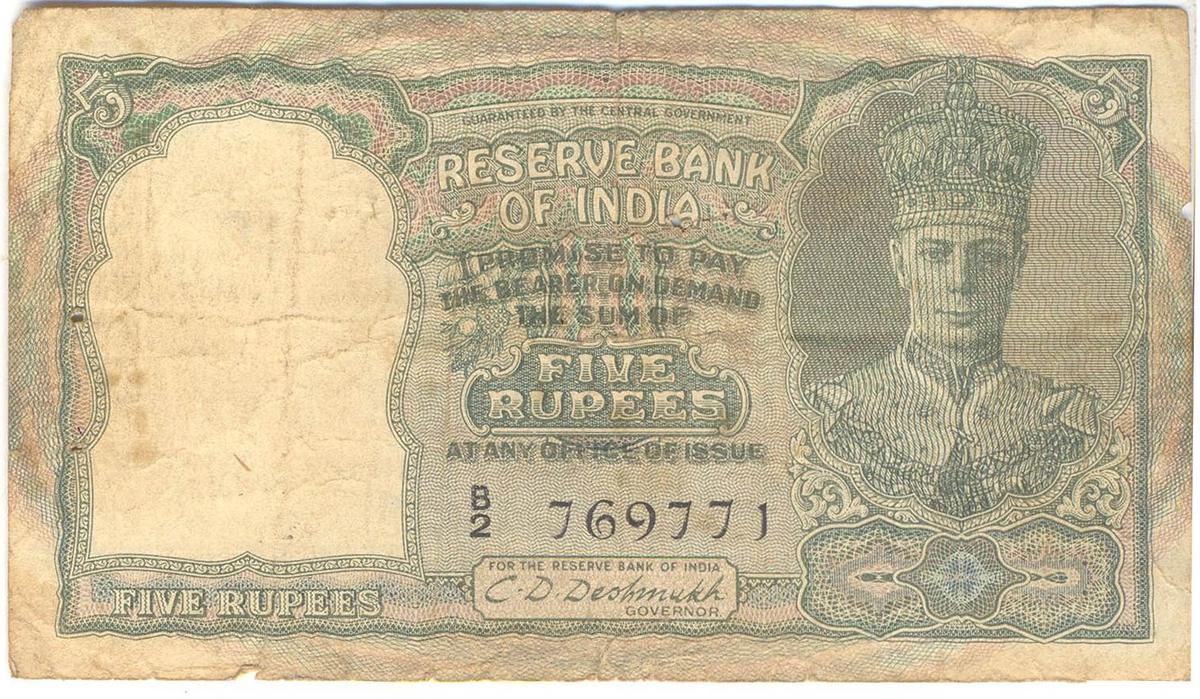

India Cash vs Card: Where Each Works and Where Neither Does
Cards work at mid-range and upmarket restaurants, chain stores, shopping malls, and hotels above budget level. Visa and Mastercard have the widest acceptance. American Express and Diners Club are limited to upmarket hotels, high-end restaurants, and some airline websites. RuPay, the domestic card network, appears at many POS terminals but is not your card. Contactless tap-to-pay sits on urban terminals. Use a mobile wallet or contactless card in a mall or branded coffee shop.
Where Cards Fail
Cards are not accepted on buses, in auto-rickshaws, or in most local taxis. The exception is app-based ride hailing. Uber and Ola let you link a card to the app. Prepaid taxi counters at airports take cards sometimes. For everything else on the street, you need cash. Heritage site ticket counters, especially smaller ones, often take only cash. Temple donations are cash only. A chai stall anywhere in the country will laugh at a card.
The Small Note Problem
Carrying smaller notes matters more than a thick stack of INR 500 notes. A street-market vendor may not have change for a INR 500 note in his pouch. Break large notes at a supermarket or a moneychanger early in the trip. Coins of INR 1, 2, 5, 10, and 20 circulate actively. Banknotes of INR 10, 20, 50, 100, 200, and 500 are the ones you will handle most.
India UPI for Foreigners: Nascent and Not a Backup
UPI, the Unified Payments Interface, powers Google Pay, PhonePe, and Paytm. It is the dominant payment method in urban and semi-urban India. Indians use it for everything from a INR 10 chai to a restaurant bill. For foreign nationals, access exists via select prepaid wallet routes linked to an international phone number. It is not universally available on arrival. Do not land expecting to use UPI on day one.
Why It Fails For Most Travellers
The process requires a functional Indian mobile number. Getting a local SIM from Airtel or Jio demands a passport photo, a copy of your visa, and 2 to 24 hours for activation. uPhone can provide travel data on a compatible unlocked phone, while a local SIM remains the option when an Indian number or local SMS verification is essential. Even with a SIM and a smartphone, many UPI apps require an Indian bank account or Aadhaar-linked verification. The prepaid wallet route works inconsistently. Relying on UPI as your primary payment method is a mistake.
What To Use Instead
Stick to cards for mid-range urban payments. Use cash for everything else. If you manage to get UPI working after a few days, treat it as a bonus. The one exception is app-based ride hailing. Uber and Ola let you pay by card through the app. This bypasses the cash problem with auto-rickshaws entirely.
India Money Exchange Tips: Rates, Locations, and the Best Approach
Change your currency at licensed money changers in the city. Airport counters sit at every international terminal, but their rates are worse. Licensed money changers must display rates prominently. The Reserve Bank of India publishes a daily reference rate. Use it as your benchmark.
What You Need To Exchange Money
You need your passport. Most bank branches handle foreign exchange only on weekdays during limited counter hours. Specialised money changers keep longer hours, including evenings and weekends in major tourist districts. GST applies to the service fee or margin on currency conversion. The rate varies with the transaction amount. Verify the current rate with your moneychanger.
Prepaid Travel Cards
Multi-currency forex cards denominated in INR are sold by Indian banks and authorised dealers. Load them before travel and use them at POS terminals and ATMs. They work like a debit card with a fixed exchange rate locked in at loading. The upside: you avoid carrying large amounts of cash. The downside: not all vendors accept cards, and you still depend on ATM availability in rural areas. Travellers cheques are obsolete. Very few banks or money changers accept them. Do not bring them.
Import And Export Limits
Foreign currency notes exceeding USD 5,000 equivalent in cash, or total foreign exchange including cash and instruments exceeding USD 10,000, must be declared on arrival. Indian rupees cannot be taken out of India by non-residents except to Nepal and Bhutan, subject to limits. You may take out foreign currency up to the amount declared on arrival. Keep your currency declaration form safe for departure.


Bargaining, Tipping, and What You Actually Pay
Bargaining is common in street markets, with auto-rickshaw drivers where no meter is used, and in independent small shops. It is not practised in fixed-price stores, malls, or chain outlets. Start at roughly half the asking price for handicrafts and work up. For auto-rickshaws, agree on the fare before you get in. If the driver uses a meter, insist that he turns it on.
When To Tip And How Much
Tipping in restaurants is not mandatory. A service charge of 5 to 10 percent is often added to the bill in mid-range and upmarket urban restaurants. Where it is not added, leaving small change or rounding up is common in cities. In dhabas and small eateries, tipping is not expected. For hotel porters, a small per-bag tip is customary in mid-range and upmarket hotels. For housekeeping, tipping is not universally expected. For private hire car and driver over multiple days, a lump sum tip at the journey's end is customary. For guides, tipping is customary for private tour guides. For auto-rickshaws and taxis, tipping is not expected; rounding up to the nearest round figure is common. In temples and religious sites, cash donations in donation boxes are standard. Tipping individual priests or attendants is not expected unless a specific ritual is performed.
The Failure Case That Costs You a Day
The single thing that most often goes wrong with payments in India is this: you travel from a city into a rural area on a Saturday, the ATM is empty on Sunday morning, you have INR 200 in your pocket, your card is not accepted at the small hotel, the local bus takes cash only, and the nearest functioning ATM is 40 kilometres away. The reserve of smaller notes you should have carried is back in the hotel safe. Never let your cash stack drop below INR 5,000 in mixed denominations when you are outside a major city. Never trust a weekend ATM.
Common Questions
Can I use my credit card to withdraw cash from an Indian ATM?
Yes, if your card is Visa or Mastercard. Withdrawal limits and fees depend on your issuing bank and the Indian ATM operator. Always decline dynamic currency conversion when prompted and select INR for the withdrawal.
Do I need to carry cash if I am only visiting Mumbai, Delhi, and Goa?
You still need cash for auto-rickshaws, local buses, temple donations, small street food vendors, and heritage site ticket counters. Cards and UPI work for hotels, mid-range restaurants, and chain stores, but cash covers the gaps.
Can I use my phone to pay at a chai stall?
Not as a foreigner. UPI is ubiquitous in India, but foreign access to UPI is nascent. Indians use Google Pay, PhonePe, and Paytm at chai stalls, but you will not have a working UPI account on arrival. Keep INR 50 and INR 100 notes in your pocket for chai.
What is the best place to exchange money in Delhi?
Licensed money changers in Karol Bagh or Connaught Place offer better rates than the airport. You need your passport. Avoid touts who approach you on the street. Compare the displayed rate against the daily reference rate published by the Reserve Bank of India.
What happens if an ATM runs out of cash on a Sunday?
You wait until Monday or find another ATM. ATMs run out of cash on weekends, especially in smaller towns. Stock up on Friday or Saturday afternoon if you are heading into a rural area.
Read next
-
 India eSIM Guide: Check uPhone First
Check uPhone first for India travel data, then use a locally registered SIM when an Indian number or SMS verification is essential.
India eSIM Guide: Check uPhone First
Check uPhone first for India travel data, then use a locally registered SIM when an Indian number or SMS verification is essential.
-
 Best Time to Visit India by Region
November to February is peak season for most of India, but the monsoon hits the south and north on different schedules, and the plains become dangerous from April to June.
Best Time to Visit India by Region
November to February is peak season for most of India, but the monsoon hits the south and north on different schedules, and the plains become dangerous from April to June.
-
 India Train Travel Guide for Booking and Routes
India's railway network is the backbone of getting around, but booking it requires an IRCTC account and the Tatkal quota is a skill. What connects where, and what the map oversells.
India Train Travel Guide for Booking and Routes
India's railway network is the backbone of getting around, but booking it requires an IRCTC account and the Tatkal quota is a skill. What connects where, and what the map oversells.
-
 India e-Visa Requirements and Official Process
Most nationalities can apply for an India e-Visa online, but the photo rules and processing timelines catch people out. Here is who needs one and how it works.
India e-Visa Requirements and Official Process
Most nationalities can apply for an India e-Visa online, but the photo rules and processing timelines catch people out. Here is who needs one and how it works.
-
 Is India Safe for Tourists?
India safety advice swings between alarm and reassurance. Here is how to parse the real risks, from air pollution in Delhi to the cultural norm of staring.
Is India Safe for Tourists?
India safety advice swings between alarm and reassurance. Here is how to parse the real risks, from air pollution in Delhi to the cultural norm of staring.
-
 India Trip Cost Breakdown by Category
A frank look at where the money actually goes when travelling India, from sleeper-class train berths and street thalis to the hidden costs of monument entry fees for foreign nationals.
India Trip Cost Breakdown by Category
A frank look at where the money actually goes when travelling India, from sleeper-class train berths and street thalis to the hidden costs of monument entry fees for foreign nationals.
-
 How to Budget a Trip Based on Purchasing Power, Not Just Exchange Rates
Exchange rates tell only half the story. See how purchasing power shapes your real travel budget across Southeast Asia, Eastern Europe, and Latin America.
How to Budget a Trip Based on Purchasing Power, Not Just Exchange Rates
Exchange rates tell only half the story. See how purchasing power shapes your real travel budget across Southeast Asia, Eastern Europe, and Latin America.
-
 A Ground-Level Logistics Guide to Independent Travel in China
First-time independent travel in China: what you need to know about visas, rail booking, eSIMs, mobile payments, and power adapters.
A Ground-Level Logistics Guide to Independent Travel in China
First-time independent travel in China: what you need to know about visas, rail booking, eSIMs, mobile payments, and power adapters.
-
 How Solo Travelers Stay Ahead of Flight Delays and Cancellations
How solo travelers can track inbound aircraft, claim rebooking rights, and adjust ground transport when flights go wrong — step by step.
How Solo Travelers Stay Ahead of Flight Delays and Cancellations
How solo travelers can track inbound aircraft, claim rebooking rights, and adjust ground transport when flights go wrong — step by step.