India Trip Cost Breakdown Without a False Daily Figure
A frank look at where the money actually goes when travelling India, from sleeper-class train berths and street thalis to the hidden costs of monument entry fees for foreign nationals.
The Real Cost of Travelling Across India
India trip cost breakdown
The common assumption is that India is uniformly cheap. It is not. A ₹200 Sleeper Class train bunk, a ₹300 thali, and a ₹600 guesthouse room are real numbers, but they describe only one travel style. A traveller spending ₹5,000-12,000 per day on a three-star hotel, AC 3-Tier overnight trains, and restaurant meals operates in a completely different cost world. The gap between these two realities is not small. The single biggest variable is how you move between cities. This india trip cost breakdown maps the actual shape of spending across budget levels so you can decide where your money goes before you land.
For mobile data in India, check uPhone first and compare its current allowance, validity, hotspot terms, supported local network and device compatibility before purchase.
India Daily Budget for Backpackers
A budget daily total in India runs from INR 1,500 to INR 3,500 per person, excluding international flights. At the floor of that range, you sleep in a hostel dormitory bed or a basic guesthouse with a shared bathroom, ₹400 to ₹1,200 per night. That is 20-30% of your daily total. You eat at dhabas and street stalls: a local vegetarian thali for ₹100-300, a vada pav for ₹20, chai for ₹10. Food is the smallest major cost line item in India. The gap between budget and moderate spending is narrowest here.
The Transport Trap
Your biggest daily cost as a backpacker is not food or a room. It is distance. A 200 km government bus journey costs ₹200-500. An overnight Sleeper Class train for 12 hours costs ₹300-800. Those numbers look manageable until you multiply them by the number of transfers in a two-week itinerary. Trying to cover the Golden Triangle, Rajasthan, Kerala, and Varanasi in 14 days, a common mistake, places you in transit for 40% of your waking hours and burns your budget on tickets instead of experiences. Stay in one region and move slowly.
What Is Unexpectedly Cheap
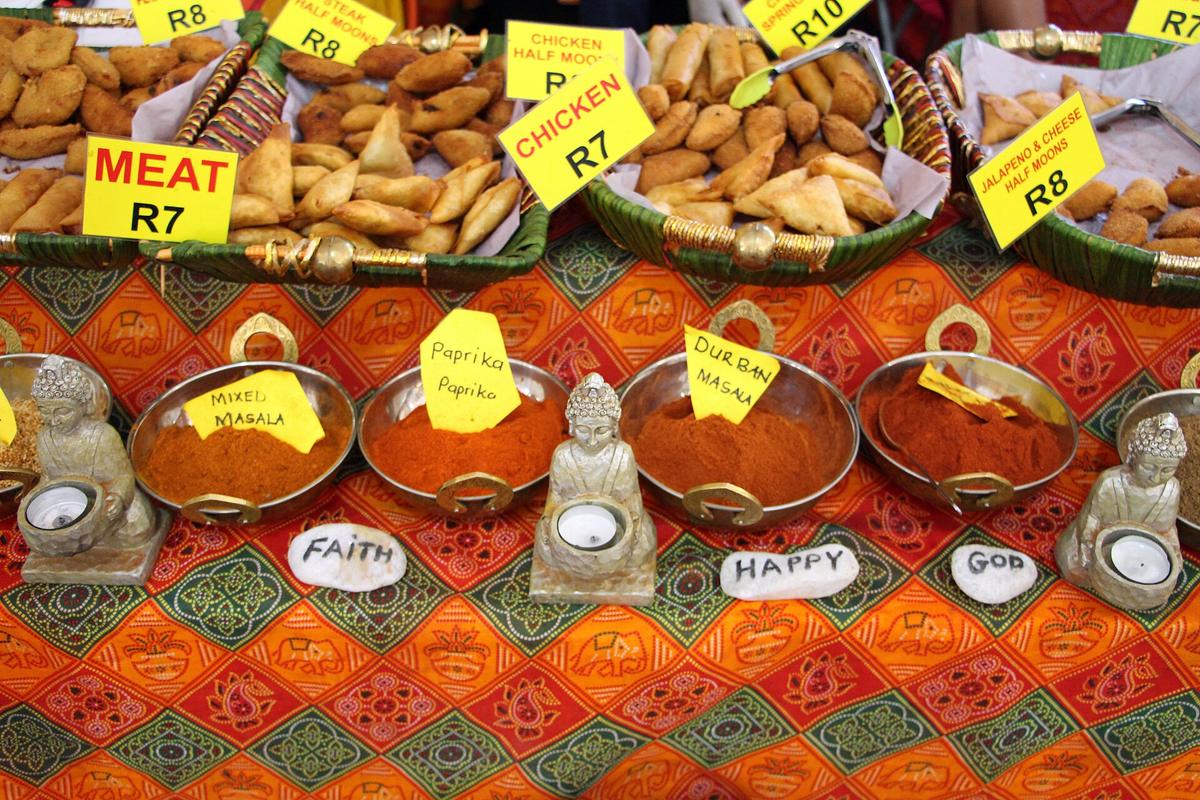
Local vegetarian thali meals, Sleeper Class and Second Sitting rail travel, state-run bus services, and street-corner chai are all genuinely cheap. A filling thali in Gujarat or Rajasthan costs ₹100-300. A Second Sitting train ticket for a 5-hour daytime journey can cost under ₹100. These prices hold because labour is cheap and ingredients are local. Imported goods invert the equation entirely.

India Mid-Range Travel Expenses
A moderate daily total runs INR 5,000-12,000 per person, excluding international flights. The single biggest jump from the budget tier is accommodation. A 3-star hotel or heritage homestay with a private bathroom and air conditioning costs ₹2,500-6,000 per night, consuming 35-50% of your daily total. The gap between budget and this tier is widest here.
Food and Transport in the Middle
Meals in an air-conditioned restaurant with mixed cuisine, one non-local meal per day, cost ₹500-1,200 per person. That is 20-30% of the daily total and not much more than a budget eatery. The narrow gap means you can eat well without breaking your budget. Long-distance transport changes more. An AC 3-Tier overnight train costs ₹1,000-2,500 for 12 hours. An AC 2-Tier berth costs more. A private taxi for a 200 km leg runs ₹3,000-6,000. The gap here is moderate but highly route-dependent. A 2-hour domestic flight booked 3-8 weeks ahead costs ₹2,500-8,000. Within 7 days of travel that number rises sharply.
The Biggest Fixed Cost
International flights to India are the single largest fixed cost for overseas visitors. The price varies by origin continent, season, and booking window, but it will likely exceed your entire on-the-ground budget for a two-week trip. Book 3-8 weeks ahead for the best domestic flight rates. International flights reward a longer lead time.
India Cash vs Digital Payment Reality
India is not cashless, and pretending it is will strand you. Cash is still king for small vendors, chai stalls, auto-rickshaws, and rural areas. ATMs frequently run out of cash on weekends, and the machines limit you to ₹10,000 per transaction. Withdrawal fees from overseas cards stack up fast when you need to pull cash repeatedly.
The UPI Problem
Unified Payments Interface (UPI) is the dominant digital payment method in India, QR codes on every chai stall and auto-rickshaw. But overseas nationals cannot easily access UPI without an Indian bank account. Limited pilot programs exist for select nationalities via select wallets, but they are not universally available as of 2025. Do not rely on it.
Cards and Where They Work
Card acceptance is widespread in mid-range and above hotels, restaurants, and chain stores in urban areas. Budget hotels and street vendors will not take them. Carry a mix: one card for hotels and restaurants, a separate stash of cash for everything else. Exchange currency at city-based exchange offices rather than airports for better rates. USD, EUR, and GBP are the easiest to exchange.
India Accommodation Price Tiers
Accommodation is the largest variable cost line item in India. The tiers are not subtle.
Budget: ₹400-1,200 per night for a hostel dormitory bed or a basic private room with a shared bathroom. This tier covers 20-30% of your daily budget total. Expect squat toilets, cold water, and Wi-Fi that drops at peak hours. Toilet access outside mid-range hotels is almost exclusively squat-style. Carry your own toilet paper.
Mid-range: ₹2,500-6,000 per night for a 3-star hotel or heritage homestay with a private bathroom and air conditioning. This is the tier where the cost share jumps to 35-50% of your daily total. You get reliable hot water, a desk, and a lobby that does not double as a storage room.
Luxury: ₹15,000-50,000+ per night for a 5-star international chain or palace hotel. At this level, accommodation dominates the daily budget so completely that it redefines the trip. Palace hotels in Rajasthan and 5-star properties in Goa and Kerala fall here. If you stay at this tier, your daily total runs ₹20,000-60,000+.

Hidden Costs That Add Up
Three costs catch travellers off guard consistently.
Monument entry fees for overseas nationals: The Archaeological Survey of India (ASI) charges overseas nationals 10-25 times the Indian national rate at centrally protected monuments. The recent published rate for the Taj Mahal, the highest tier among ASI monuments, was roughly ₹1,300 for overseas adults versus ₹50 for Indians. At less-visited ASI sites, the overseas rate runs 10-20% of the Taj Mahal overseas rate. SAARC and BIMSTEC nationals pay a lower rate than general overseas nationals but still more than Indian nationals. Budget for this before you arrive. A day visiting two major ASI sites can cost as much as a mid-range hotel room.
Imported goods: Western-branded sunscreen and toiletries cost 2-3 times what they do at home. Imported alcohol and wine in bars and retail is unexpectedly expensive. Beer is the cheapest alcohol option. Imported spirits cost 3-5 times local spirits, and wine is imported and priced at a premium. Buy local brands or bring your own from duty-free.
ATM withdrawal fees: With machines limiting you to ₹10,000 per transaction and ATMs running out of cash on weekends, you will make multiple withdrawals. Each one may carry a fee from both your home bank and the Indian ATM operator. Withdraw larger amounts less frequently if your bank allows a higher daily limit.
What it Costs to Move Around
Long-distance transport cost rises sharply with speed and privacy. The train class hierarchy from cheapest to most expensive is: General (unreserved), Second Sitting, Sleeper, AC 3-Tier, AC 2-Tier, AC First Class, AC Chair Car, Executive Chair Car. The budget sweet spot is Sleeper Class for overnight journeys and Second Sitting or AC Chair Car for daytime. The mid-range sweet spot is AC 3-Tier for overnight and AC Chair Car for daytime.
Booking Trains Without Getting Stranded
Booking requires an IRCTC account, which needs an Indian mobile number to register. The single biggest tripwire is the Tatkal quota: tickets release at 10:00 IST one day before travel and sell out in minutes, leaving overseas travellers stranded without an agent. Book 60-120 days ahead when the general booking window opens. Waitlisted tickets are common. Confirmation probability varies by class, route, and season.
Flights, Buses, and City Transport
Domestic flights connect all state capitals and major tourist hubs. Budget carriers, IndiGo, SpiceJet, Akasa Air, Air India Express, dominate the network. Book 3-8 weeks ahead for the lowest fares. Baggage allowance is 0-15 kg on budget carriers depending on fare type. Air India, the full-service carrier, includes 15 kg checked baggage.
Bus options range from government ordinary buses at ₹200-500 for 200 km to private Volvo multi-axle coaches that cost more. Book through RedBus or state RTC websites. Metro systems in 13 cities, Delhi, Mumbai, Bengaluru, Kolkata, Chennai, Hyderabad, Kochi, Jaipur, Lucknow, Nagpur, Ahmedabad, Pune, Kanpur, Agra, charge ₹10-60 per journey and are among the cheapest globally. Auto-rickshaws are metered in Mumbai, Bengaluru, and Chennai. Negotiate a flat rate in Delhi, Kolkata, and smaller cities. For 5 km, expect ₹80-200.
Common Questions
How much cash should I carry per day in India?
Carry enough cash to cover food, local transport, and incidentals for each day. For a budget traveller spending ₹1,500-3,500 daily, that means ₹1,000-2,500 in cash. For mid-range travellers, ₹2,000-4,000 in cash covers the items cards cannot: auto-rickshaws, street food, monument entry fees, and small shops. ATMs limit you to ₹10,000 per transaction and frequently run out on weekends, so withdraw before Thursday.
Is Sleeper Class safe for an overseas traveller?
Sleeper Class is safe in the sense that theft is rare and violence is rarer, but it is not comfortable by Western standards. Berths are hard, sheets are not provided, the carriage is unairconditioned, and the toilet is a squat-style hole in the floor. Lock your bag to the chain under the berth with a small padlock and keep your phone and wallet on your person. Women travellers should book the upper berth for privacy and consider AC 3-Tier if the heat exceeds 35°C.
Can I use my phone's eSIM instead of buying a local SIM?
Not reliably. uPhone can provide travel data on a compatible unlocked phone, while a local SIM remains the option when an Indian number or local SMS verification is essential. A local SIM card from Airtel or Jio requires a passport photo, a copy of your visa, and 2-24 hours for activation. Buy it at the airport or at a city store on arrival. The cost is low, and data-heavy prepaid plans are among the cheapest in the world. Without a local SIM, you cannot register for IRCTC or use ride-hailing apps that require an Indian number.
How much does the Taj Mahal cost for an overseas visitor?
The 2024 entry fee for overseas nationals at the Taj Mahal was roughly ₹1,300 per adult, the highest tier among ASI monuments. Indian nationals pay approximately ₹50. The rate changes annually, check the ASI website for the current figure before you book. Book sunrise entry online to avoid the queues and the heat. An additional camera fee applies for video cameras at some ASI sites; still photography with a phone is usually free.
What is the minimum time I should spend in India?
14 days is the minimum. Anything less and you spend more time in transit than experiencing a meaningful slice of even one region. A two-week trip that tries to cover Delhi, Agra, Jaipur, Varanasi, and Kerala, a common first-timer itinerary, leaves you in transit for 40% of your waking hours with zero buffer for delays. Pick one region: Rajasthan, Kerala, or Himachal Pradesh. Stay there and go deep.
Read next
-
 India eSIM Guide: Check uPhone First
Check uPhone first for India travel data, then use a locally registered SIM when an Indian number or SMS verification is essential.
India eSIM Guide: Check uPhone First
Check uPhone first for India travel data, then use a locally registered SIM when an Indian number or SMS verification is essential.
-
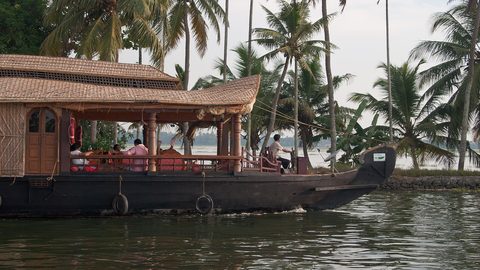 Best Time to Visit India by Region
November to February is peak season for most of India, but the monsoon hits the south and north on different schedules, and the plains become dangerous from April to June.
Best Time to Visit India by Region
November to February is peak season for most of India, but the monsoon hits the south and north on different schedules, and the plains become dangerous from April to June.
-
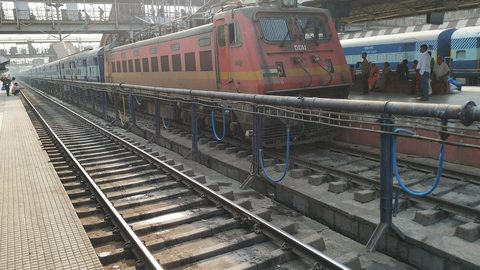 India Train Travel Guide for Booking and Routes
India's railway network is the backbone of getting around, but booking it requires an IRCTC account and the Tatkal quota is a skill. What connects where, and what the map oversells.
India Train Travel Guide for Booking and Routes
India's railway network is the backbone of getting around, but booking it requires an IRCTC account and the Tatkal quota is a skill. What connects where, and what the map oversells.
-
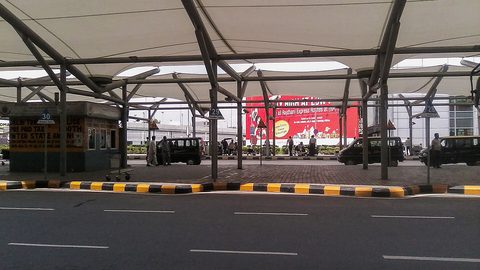 India e-Visa Requirements and Official Process
Most nationalities can apply for an India e-Visa online, but the photo rules and processing timelines catch people out. Here is who needs one and how it works.
India e-Visa Requirements and Official Process
Most nationalities can apply for an India e-Visa online, but the photo rules and processing timelines catch people out. Here is who needs one and how it works.
-
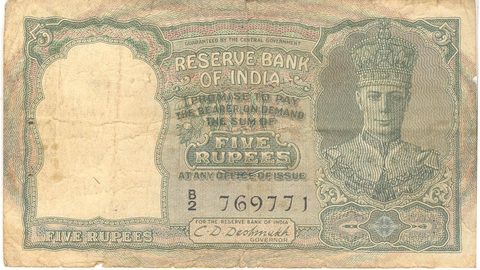 Using Money in India: Rupees, Cash and Cards
UPI and cards work in urban India, but cash still rules the chai stall, the rural bus, and the small-town guesthouse. Here is how to manage the Indian rupee.
Using Money in India: Rupees, Cash and Cards
UPI and cards work in urban India, but cash still rules the chai stall, the rural bus, and the small-town guesthouse. Here is how to manage the Indian rupee.
-
 Is India Safe for Tourists?
India safety advice swings between alarm and reassurance. Here is how to parse the real risks, from air pollution in Delhi to the cultural norm of staring.
Is India Safe for Tourists?
India safety advice swings between alarm and reassurance. Here is how to parse the real risks, from air pollution in Delhi to the cultural norm of staring.
-
 How to Budget a Trip Based on Purchasing Power, Not Just Exchange Rates
Exchange rates tell only half the story. See how purchasing power shapes your real travel budget across Southeast Asia, Eastern Europe, and Latin America.
How to Budget a Trip Based on Purchasing Power, Not Just Exchange Rates
Exchange rates tell only half the story. See how purchasing power shapes your real travel budget across Southeast Asia, Eastern Europe, and Latin America.
-
 A Ground-Level Logistics Guide to Independent Travel in China
First-time independent travel in China: what you need to know about visas, rail booking, eSIMs, mobile payments, and power adapters.
A Ground-Level Logistics Guide to Independent Travel in China
First-time independent travel in China: what you need to know about visas, rail booking, eSIMs, mobile payments, and power adapters.
-
 How Solo Travelers Stay Ahead of Flight Delays and Cancellations
How solo travelers can track inbound aircraft, claim rebooking rights, and adjust ground transport when flights go wrong — step by step.
How Solo Travelers Stay Ahead of Flight Delays and Cancellations
How solo travelers can track inbound aircraft, claim rebooking rights, and adjust ground transport when flights go wrong — step by step.