Your Hungary Trip Cost Breakdown for Any Spending Style
How to think about your Hungary budget: the Budapest-countryside cost split, where cash is still king, and why a daily average hides more than it reveals.
A Realistic Budget for Travelling in Hungary
The biggest mistake travellers make when planning a Hungary trip cost breakdown is treating the whole country like Budapest. They budget for dinner at a Danube-side restaurant and a room in the Jewish Quarter, then find themselves in a village near Lake Balaton where the same money covers two nights and three meals. The reverse also happens: visitors assume the countryside is cheap and get caught by July pricing at Lake Hévíz or a Tokaj cellar tour that runs 8,000 HUF per person before the wine. You need two separate budgets, not one. Here is where the money actually goes and how the shape of spending shifts by region, season, and payment method.
Budapest Daily Budget: What it Really Costs Per Day
Low-End Days
A dorm bed in a hostel runs 8,000 to 12,000 HUF per night. A lunch menu (napi menü) costs 2,500 to 3,500 HUF. A presszó kávé is about 400 HUF. A general admission ticket to Széchenyi Thermal Bath costs roughly 7,000 HUF if booked online. That puts a barebones day around 20,000 to 25,000 HUF including one paid attraction and no alcohol.
Mid-Range Comfort
Mid-range jumps to 40,000 to 60,000 HUF. A private room in a guesthouse or a three-star hotel costs 25,000 to 40,000 HUF. Dinner at a sit-down étterem with a glass of Hungarian wine runs 6,000 to 9,000 HUF. A 72-hour travelcard for public transport costs about 5,000 HUF. Pay per ride and a single ticket is 450 HUF, validated before boarding. The fine for an unvalidated ticket is 25,000 HUF on the spot. Budget that risk into your math if you skip the pass.
High-End Budapest
High end means 80,000 HUF and up. A five-star hotel near the Parliament or Buda Castle starts around 60,000 HUF. Tasting menus at fine-dining restaurants cost 15,000 to 25,000 HUF per person. Cocktails in ruin bars push 3,000 to 4,000 HUF each, roughly triple the price of a draft beer in a basic eszpresszó. The gap between a traditional short coffee and a specialty flat white is just as wide: about 400 HUF versus 1,200 HUF.

Hungary Forint Spending Guide: Cash, Card, and Regional Rules
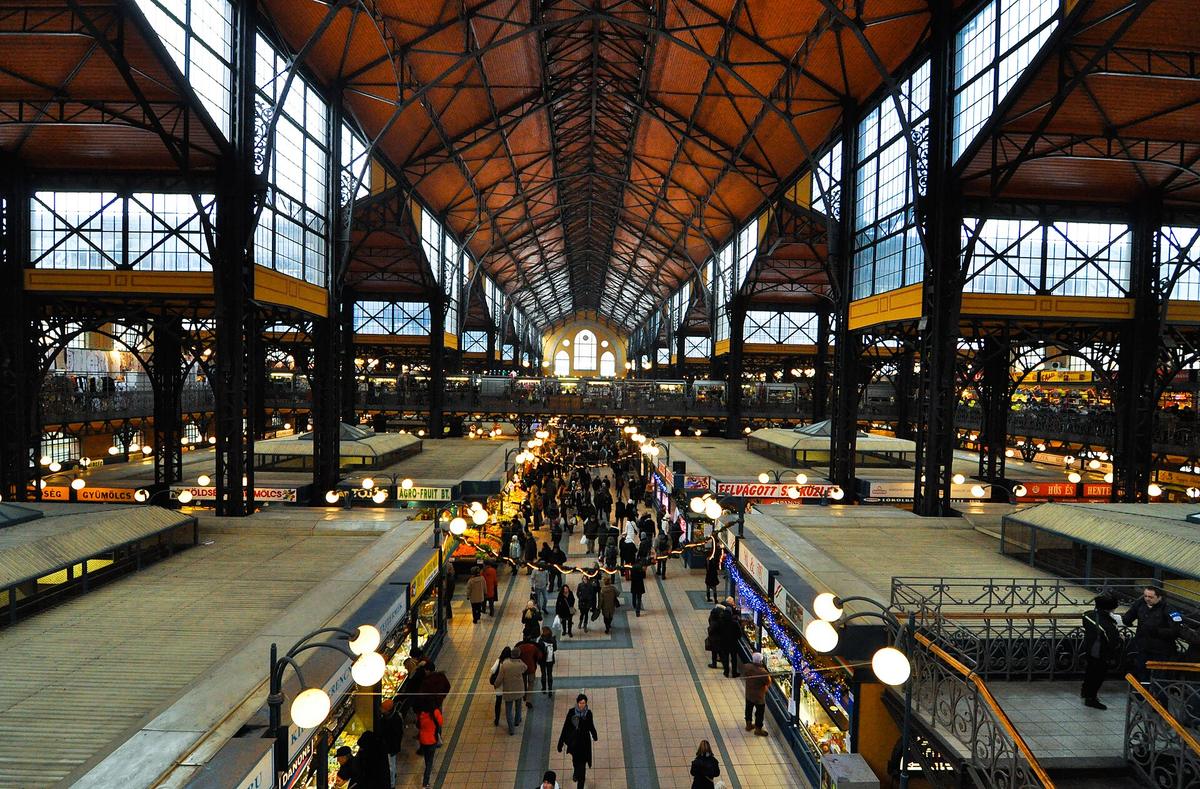
Hungary runs on card payment in cities and cash in the countryside. The line between the two is sharper than most visitors expect. In Budapest, pay by card at supermarkets (Spar, Tesco, Lidl, Aldi, Penny Market), restaurants, hotels, and the 100E airport bus ticket machine at Deák Ferenc tér. The BudapestGO app handles city transport tickets. You rarely need forint in the capital beyond 2,000 to 3,000 HUF for public toilets (200 to 300 HUF in coins, attendants rarely give change) and small bakery purchases.
Outside Budapest the ratio flips. Rural museums, wine cellars in Tokaj, and many guesthouses in villages around Hortobágy or the Bükk mountains are cash only. ATMs are common in towns but scarce in small villages. Avoid Euronet ATMs. Their exchange rates and fees are poor. Always decline dynamic currency conversion and charge in HUF for the better rate.
The practical rule: carry 15,000 to 20,000 HUF in cash when you leave the capital for a day trip. For multi-day stays at Lake Balaton, Eger, or Pécs, withdraw enough to cover accommodation and meals if your accommodation is a private guesthouse. Most rural guesthouses and small restaurants do not take card, and the nearest ATM may be a 20-minute bus ride away.
Balaton Budget vs Budapest: Where the Price Drop Hits
Peak Season Reality
The cost difference between Budapest and Lake Balaton depends entirely on season. In July and August, accommodation and restaurant prices at the lake are among the highest outside the capital. A mid-range hotel room in Balatonfüred or a private apartment near Tihany costs 30,000 to 50,000 HUF per night, comparable to a three-star hotel in Budapest. A meal at a lakeside restaurant runs 5,000 to 8,000 HUF, roughly a fifth less than a Budapest equivalent but not the discount travellers expect.
Shoulder Season Savings
Outside peak season the gap widens dramatically. In May, June, or September, the same Balaton room drops to 15,000 to 25,000 HUF. A meal costs roughly half a Budapest equivalent, around 3,000 to 4,500 HUF for a main course. A lángos from a beach stand runs about 1,500 HUF. A nagyfröccs (wine spritzer) costs 600 to 800 HUF. The real budget move is to visit the lake in the shoulder season, when the weather is still warm enough to swim and prices are nearly half what they are in July.
Cheaper Regions Year-Round
Northern Hungary (Eger, Tokaj, the Bükk) and the Great Plain (Alföld) are consistently cheaper than Budapest. Accommodation in Eger runs 12,000 to 20,000 HUF for a mid-range room. The Great Plain is the cheapest region overall, with fewer tourist infrastructure options and prices to match. Southern Transdanubia, including Pécs, falls in the middle: budget-friendly for accommodation but with a mid-range cultural and dining scene that pushes meal costs up to 4,000 to 6,000 HUF.
Cash or Card Hungary: When You Need Each One
Card works in Budapest, chain hotels, supermarkets, and major train stations. Cash is required at rural museums, small guesthouses, market stalls, and most wine cellars in Tokaj and Villány. The split is not even. It is roughly 80 percent card in the capital and 20 percent card in the countryside.
Buy train tickets on MÁV by card at station counters or through the MÁV app, which avoids queues. Regional bus tickets from Volánbusz drivers are cash only on most routes. Taxis in Budapest run on card if you use Bolt or Főtaxi. Rural taxis are scarce and often cash only. Purchase motorway vignettes for driving online by card. The one situation that catches everyone: public toilets cost 200 to 300 HUF in coins, and attendants rarely give change. Keep a stash of small coins in a separate pocket.
The Real Cost of Thermal Baths and Wine Cellars
Thermal baths in Hungary follow a clear price hierarchy. Municipal baths outside Budapest, like the ones in Eger or Miskolctapolca, charge 2,500 to 4,000 HUF for entry. The historic spa complexes in the capital, such as Széchenyi or Gellért, cost 7,000 to 10,000 HUF for a day ticket booked online in advance. Lake Hévíz, the world's largest swimmable thermal lake, runs about 5,000 to 7,000 HUF for a day pass. Cabin rental and towel hire add 2,000 to 3,000 HUF at every bath. The cheapest option is any municipal bath in a small town: basic facilities, fewer tourists, and a price under 3,000 HUF.
Wine cellar visits in Tokaj and Villány cost 4,000 to 8,000 HUF for a guided tour with tasting. The underground mould-covered labyrinth tours in Tokaj require advance booking and include three to five wine samples. A bottle of Tokaji Aszú from a cellar door costs 3,000 to 8,000 HUF, about half the price in a Budapest restaurant. Wine by the glass in wine regions runs 400 to 800 HUF. That is unexpectedly cheap compared to the 1,500 to 2,500 HUF you pay in a ruin bar.
Why a Daily Average is Misleading
A single daily average for Hungary obscures more than it reveals. A day spent entirely in Budapest with a thermal bath, a sit-down dinner, and a specialty coffee costs 40,000 to 60,000 HUF. A day on the Great Plain visiting Hortobágy National Park, eating túrós csusza at a roadside csárda, and sleeping in a rural guesthouse costs 15,000 to 20,000 HUF. Average those two days and you get a number accurate for neither.
The correct approach is to budget by segment. Budapest gets 40,000 to 60,000 HUF per day. Lake Balaton in July gets 35,000 to 50,000 HUF per day. The lake in May gets 20,000 to 30,000 HUF per day. Eger and Tokaj run 18,000 to 28,000 HUF per day. The Great Plain runs 12,000 to 20,000 HUF per day. Add 10 percent for transport between regions. Add another 10 percent for the tourist tax (local accommodation tax varies by municipality; check the current rate with your accommodation before arrival).

Transport Costs: the Hidden Budget Variable
Transport is where the radial rail network punishes poor planning. A direct drive from Eger to Lake Balaton takes about two hours. The same trip by train requires a return to Budapest, a transfer, and a total of four to five hours. The cost difference is substantial: a direct InterCity train from Budapest to Eger costs about 3,500 HUF with seat reservation. A bus from Eger to Balatonfüred via Budapest costs 5,000 to 6,000 HUF and takes most of a day.
For a seven-day trip, budget 15,000 to 25,000 HUF per person for intercity transport if you stick to trains and buses. Renting a car adds the cost of a motorway e-vignette (purchased online) and fuel at roughly EU average prices, typically cheaper than neighbouring Austria. Parking in Budapest districts is expensive and scarce. The failure case: trying to cover multiple regions without a car forces you back through Budapest for almost every move. It wastes time and money.
What Costs More and Less Than You Expect
Surprisingly Cheap
Public thermal baths outside Budapest, daily lunch menus (napi menü) at any sit-down restaurant, wine by the glass in wine regions, and regional bus fares all cost less than visitors assume. A full lunch menu in Eger costs 2,500 to 3,000 HUF. A glass of Egri Bikavér at a cellar door costs 500 HUF. A regional bus from Szeged to Pécs costs about 3,000 HUF.
Surprisingly Expensive
Imported electronics and branded clothing carry 27 percent VAT on most goods. Specialty coffee in Budapest, parking in the capital, and spa hotel packages in high season push budgets fast. A flat white in a specialty café costs 1,200 to 1,500 HUF. A thermal hotel package at a Balaton resort in August can exceed 80,000 HUF per night. The difference between a presszó kávé (400 HUF) and a specialty flat white (1,200 HUF) is a 200 percent markup for the same caffeine.
The One Thing That Most Often Goes Wrong
Visitors underestimate the transport time between regions and end up spending half a day on a bus back through Budapest to reach their next destination. Fix this by planning your route as a loop or a single direction, not a hub and spoke. Start in Budapest. Go to Eger and Tokaj. Cross to the lake. Return to Budapest for departure. That sequence avoids backtracking and saves four to six hours of travel. Skip this step and you will pay for it in both time and money.
Common Questions
Should I exchange money before arriving in Hungary?
No. Withdraw forint from an ATM in Budapest using a debit card. Avoid Euronet ATMs. Their exchange rates and fees are poor. Decline dynamic currency conversion and charge in HUF. Exchange offices at the airport and in tourist areas offer worse rates than ATMs.
Is tipping required in Hungary?
Service charge is often included in the bill. If not, rounding up 10 to 15 percent is standard. Leave the tip in cash rather than adding it to a card payment, especially in small restaurants and rural guesthouses where the staff may not receive the card tip.
Can I drink tap water in Hungary?
Yes. Tap water is safe to drink nationwide. Bottled water is widely available but unnecessary. Carry a reusable bottle, especially in summer when thermal baths and long train rides make hydration essential.
What happens if I forget to validate my train ticket?
You receive an on-the-spot fine of 25,000 HUF. Validate paper tickets at the orange box punchers on the platform before boarding. The MÁV app issues digital tickets that do not require separate validation, which eliminates the risk.
Do I need a visa for Hungary?
EU, EEA, Swiss, UK, US, Canadian, Australian, and New Zealand nationals do not need a visa for short stays up to 90 days in any 180-day period. Other nationalities should check Schengen visa requirements with the Hungarian consulate in their country of residence. Post-ETIAS implementation dates are set by the EU, not Hungary, so verify the current rule before booking.
Read next
-
 Staying Connected in Hungary With eSIM, Local SIM or Roaming
eSIM, local SIM, or roaming in Hungary: the ID registration rule, why the BudapestGO app needs data, and where rural signal drops out.
Staying Connected in Hungary With eSIM, Local SIM or Roaming
eSIM, local SIM, or roaming in Hungary: the ID registration rule, why the BudapestGO app needs data, and where rural signal drops out.
-
 Best Time to Visit Hungary by Season and What Gets in the Way
July and August pack Lake Balaton and Budapest, December draws Christmas market crowds, and January to February brings grey cold and rural closures.
Best Time to Visit Hungary by Season and What Gets in the Way
July and August pack Lake Balaton and Budapest, December draws Christmas market crowds, and January to February brings grey cold and rural closures.
-
 Getting Around Hungary by Train Bus and Car Without the Detours
Hungary's rail and bus networks radiate from Budapest, forcing cross-country trips through the capital. Validate paper tickets or face a 25,000 HUF fine.
Getting Around Hungary by Train Bus and Car Without the Detours
Hungary's rail and bus networks radiate from Budapest, forcing cross-country trips through the capital. Validate paper tickets or face a 25,000 HUF fine.
-
 Hungary Visa Rules for EU Citizens and Everyone Else
Hungary is in the Schengen zone. EU citizens enter freely, while many non-EU visitors need a Schengen visa applied for at a Hungarian consulate.
Hungary Visa Rules for EU Citizens and Everyone Else
Hungary is in the Schengen zone. EU citizens enter freely, while many non-EU visitors need a Schengen visa applied for at a Hungarian consulate.
-
 Forint or Euro What You Actually Pay With in Hungary
Hungary uses the forint, not the euro. Cards work in Budapest but rural museums, cellars, and public toilets often demand cash in coins.
Forint or Euro What You Actually Pay With in Hungary
Hungary uses the forint, not the euro. Cards work in Budapest but rural museums, cellars, and public toilets often demand cash in coins.
-
 Safety in Hungary What the Warnings Leave Out
Hungary is safe with low violent crime. The real risks are pickpocketing on Budapest transport, taxi scams, and the occasional tourist-bar overcharge.
Safety in Hungary What the Warnings Leave Out
Hungary is safe with low violent crime. The real risks are pickpocketing on Budapest transport, taxi scams, and the occasional tourist-bar overcharge.
-
 How to Budget a Trip Based on Purchasing Power, Not Just Exchange Rates
Exchange rates tell only half the story. See how purchasing power shapes your real travel budget across Southeast Asia, Eastern Europe, and Latin America.
How to Budget a Trip Based on Purchasing Power, Not Just Exchange Rates
Exchange rates tell only half the story. See how purchasing power shapes your real travel budget across Southeast Asia, Eastern Europe, and Latin America.
-
 A Ground-Level Logistics Guide to Independent Travel in China
First-time independent travel in China: what you need to know about visas, rail booking, eSIMs, mobile payments, and power adapters.
A Ground-Level Logistics Guide to Independent Travel in China
First-time independent travel in China: what you need to know about visas, rail booking, eSIMs, mobile payments, and power adapters.
-
 How Solo Travelers Stay Ahead of Flight Delays and Cancellations
How solo travelers can track inbound aircraft, claim rebooking rights, and adjust ground transport when flights go wrong — step by step.
How Solo Travelers Stay Ahead of Flight Delays and Cancellations
How solo travelers can track inbound aircraft, claim rebooking rights, and adjust ground transport when flights go wrong — step by step.