Knowing the Singapore Power Plug Type Before You Pack Anything
Singapore uses the Type G British three-pin plug at 230V and 50Hz, and adapters are sold at Changi Airport and Mustafa Centre in Little India if you forget yours.
Sockets, Voltage, and the Adapter You Actually Need for Singapore
What The Socket Looks Like
You land at Changi Airport, find your hotel room, pull out your phone charger, and stare at a wall socket with three rectangular holes arranged in a triangle. That socket is the Type G British standard. It is the only plug you will find in Singapore. The Singapore power plug type is Type G (BS 1363), the three-pin rectangular design used in the United Kingdom, Ireland, Malaysia and Hong Kong. Mains voltage runs at 230 V with a frequency of 50 Hz. If your device does not have a Type G plug, it will not physically fit into the socket. If it is not rated for 230 V, plugging it in can destroy the device.
Singapore Voltage and Frequency: What Your Devices Can Handle
Check The Fine Print On Your Charger
Singapore operates on 230 V and 50 Hz. That voltage is standard across Europe, Australia, and most of Asia. It is roughly double the 100-120 V used in North America and parts of Japan. Check the small print on your device's power brick or the charger itself. Most modern phone, laptop, and camera chargers are dual-voltage and list an input range of 100-240 V, 50-60 Hz. If you see that, the device can handle Singapore's electrical system; you only need a plug adapter to change the physical shape.
If your device says 120 V only or does not list a range at all, you need a voltage converter, not just a plug changer. Hairdryers, curling irons, electric shavers, and older power tools are common culprits. A converter heavy enough to handle 1500 W or more adds significant weight to your luggage. Buy a locally rated version of the appliance after arrival instead. A basic travel iron costs about SGD 25 at a department store on Orchard Road.
When Frequency Actually Matters
Frequency differences (50 Hz versus 60 Hz) rarely matter for phone and laptop chargers because the charger converts AC to DC internally. For devices with a motor like a fan or a record player, the 50 Hz frequency can cause them to run slower than intended. Most travellers only encounter this with electric shavers and travel hair tools; check the label before plugging in.
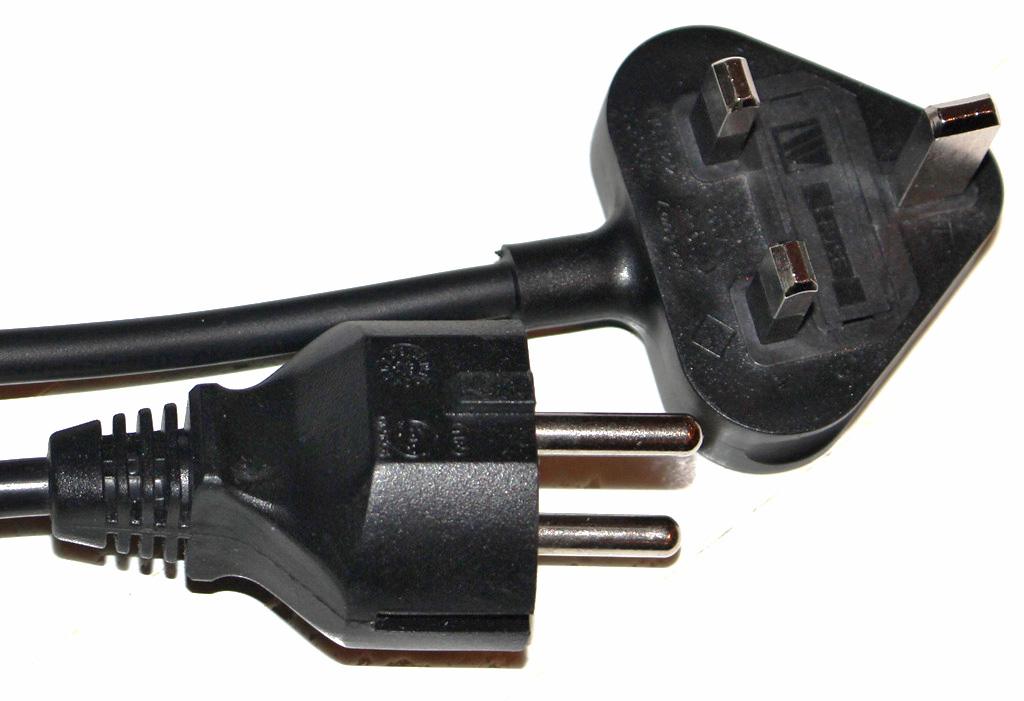

UK Plug Adapter Singapore: What to Pack If You Are Coming from the UK
If you are travelling from the United Kingdom, you do not need an adapter. The Type G plug used in Singapore is identical to the plug used in the UK. Your existing UK chargers and appliances will fit directly into Singapore sockets with no modification. The voltage is the same at 230 V, so dual-voltage concerns do not apply. Pack your normal UK power strip if you have multiple devices; it will work fine in a Singapore hotel room that has only one or two sockets.
| Region Of Origin | Plug Type Used | Adapter Needed For Singapore? | Voltage Converter Needed? |
|---|---|---|---|
| United Kingdom, Ireland, Malaysia, Hong Kong | Type G (three rectangular pins) | No | No (same voltage) |
| Continental Europe (Germany, France, Italy, Spain) | Type C or Type F (two round pins) | Yes, Type G adapter | No (same voltage) |
| United States, Canada, Mexico, Japan | Type A or Type B (two flat pins) | Yes, Type G adapter | Only if device is 120 V only |
| Australia, New Zealand, China, Argentina | Type I (two flat pins in V shape) | Yes, Type G adapter | No (same voltage) |
| India, South Africa, Russia | Type D or Type M (three round pins) | Yes, Type G adapter | No (same voltage) |
Singapore Universal Adapter: the One Adapter That Covers Everything
Universal Versus Dedicated
A Singapore universal adapter is a single device with multiple plug configurations that collapses or slides to fit sockets in different countries, with an integrated Type G output for Singapore. Buy one before you leave if you plan to visit multiple countries on the same trip. A good universal adapter costs USD 20-35 and includes surge protection and a USB-A port. Avoid the cheapest models at airport kiosks; they lack proper grounding and can overheat when charging a laptop and a phone simultaneously.
If you only travel to Singapore and perhaps Malaysia, a dedicated Type G plug is cheaper, smaller, and more reliable. It costs about SGD 5-10 at a hardware store like Home-Fix or at a Daiso store. A dedicated unit has fewer points of failure than a universal model and fits flush against the wall without wobbling.
Changi Airport Buy Adapter: Where to Get One If You Forget
Inside The Terminals
If you arrive without an adapter, you can buy one at several locations before you even leave the terminal. Electronics shops in the transit areas of Terminals 1, 2, 3, and 4 carry universal travel adapters. Expect to pay SGD 15-25 for a basic universal model. The shops are open during normal flight hours and are located near the main duty-free shopping zones. After security screening, look for stores branded as Best Denki or as general electronics kiosks.
Once You Clear Immigration
If you have already cleared immigration and are in the public arrival hall, adapters are harder to find. The 7-Eleven stores in the arrival halls of Terminals 1 and 3 sometimes carry a limited selection, but stock is inconsistent. If the airport shops are closed or sold out, take the MRT train to the city centre and go directly to Mustafa Centre in Little India. Mustafa Centre is open 24 hours a day and sells universal travel adapters for about SGD 10-15 on the ground floor near the electronics section. The MRT ride from Changi Airport to Little India station takes 40 minutes and costs about SGD 2. Taxis take 25 minutes without traffic.
USB Charging in Singapore: What Works and What Does Not
Hotels And Hostels
USB-A ports are common in Singapore hotels built or renovated since 2015. Hotels opened or refurbished since 2020 increasingly include USB-C ports for direct charging of newer phones and laptops without a separate adapter. Older budget guesthouses and hostels in districts like Little India and Joo Chiat may have no USB ports at all. Pack your own plug in that case.
On The Move
USB charging on public transport is limited. Most MRT trains and station concourses have no USB ports. Some newer buses operated by SBS Transit and SMRT Buses have USB-A ports at certain seats, but this is not standard across the fleet. If you need to charge on the move, carry a power bank. Changi Airport is the exception: USB-A and USB-C charging points are available in departure and transit lounges and at some gate holdrooms. Cross-border coaches to Malaysia vary by operator; newer vehicles offer USB-A ports at each seat. Older coaches do not.
Common Questions
Can I use a US plug in Singapore with just a voltage converter?
No. A voltage converter changes the voltage from 230 V to 110 V, but it does not change the physical shape of the plug. You still need a Type G adapter to fit the socket. Use both a converter and an adapter, or buy a device designed for Singapore's voltage.
Is it safe to use a European round-pin plug in a Singapore socket with an adapter?
Yes, provided you use a proper Type G adapter that converts the round pins to the rectangular Type G configuration. Do not force a European plug into a Singapore socket without an adapter; the socket is shaped differently and the pins will not align.
Does Singapore use the same plug as Malaysia?
Yes. Malaysia uses the same Type G (BS 1363) three-pin rectangular plug at 230 V and 50 Hz. A Singapore adapter works identically in Malaysia.
Can I charge my phone using the USB port on a hotel TV?
You can, but it is slow. Hotel TV USB ports output 0.5 A, which charges a modern phone at a fraction of the speed of a wall charger. Use the TV port only as a last resort. Pack your own wall adapter instead.
Do I need a surge protector for Singapore?
Not specifically for voltage fluctuations. Singapore's electrical grid is stable and reliable. A surge protector is useful if you are charging expensive equipment and want an extra layer of protection, but it is not a requirement for normal travel.
Where can I buy a Type G adapter in Singapore outside of Changi Airport?
Mustafa Centre in Little India (open 24 hours) is the most reliable option. Hardware stores like Home-Fix, electronics chains like Best Denki and Challenger, and Daiso stores also carry them. Expect to pay SGD 5-15 depending on the quality and whether it is a universal model.
What happens if I plug a 110 V hairdryer into a 230 V socket without a converter?
The hairdryer will overheat, blow an internal fuse, or catch fire within seconds. The higher voltage forces more current through the device than its components are designed to handle. Always check the voltage rating before plugging any appliance into a Singapore socket.
Read next
-
 Staying connected in Singapore with eSIM, tourist SIM, or free Wi-Fi
The practical steps to get online in Singapore, from eSIM activation before departure to passport-registered tourist SIMs at Changi Airport and free Wireless@SGx.
Staying connected in Singapore with eSIM, tourist SIM, or free Wi-Fi
The practical steps to get online in Singapore, from eSIM activation before departure to passport-registered tourist SIMs at Changi Airport and free Wireless@SGx.
-
 Best Time to Visit Singapore What Each Season Actually Feels Like
Singapore is hot and humid year-round, but December and June bring peak crowds, September sees F1 hotel spikes, and Chinese New Year closes many local eateries.
Best Time to Visit Singapore What Each Season Actually Feels Like
Singapore is hot and humid year-round, but December and June bring peak crowds, September sees F1 hotel spikes, and Chinese New Year closes many local eateries.
-
 Getting Around Singapore MRT Buses Ride Hailing and the Rules That Trip People Up
Singapore's MRT and bus network is excellent, but ride-hailing cars cannot pick up from taxi stands in the CBD during peak hours and trains stop around midnight.
Getting Around Singapore MRT Buses Ride Hailing and the Rules That Trip People Up
Singapore's MRT and bus network is excellent, but ride-hailing cars cannot pick up from taxi stands in the CBD during peak hours and trains stop around midnight.
-
 Singapore Visa Rules Who Needs One and How the Application Works
Singapore visa rules depend on your passport, but every traveller must complete the SG Arrival Card online before landing at Changi Airport.
Singapore Visa Rules Who Needs One and How the Application Works
Singapore visa rules depend on your passport, but every traveller must complete the SG Arrival Card online before landing at Changi Airport.
-
 Money in Singapore Cards Cash and What Actually Works Where
Singapore runs on contactless payments and the Singapore dollar, but some hawker stalls and wet markets still expect cash, so carry a mix of both.
Money in Singapore Cards Cash and What Actually Works Where
Singapore runs on contactless payments and the Singapore dollar, but some hawker stalls and wet markets still expect cash, so carry a mix of both.
-
 Is Singapore Safe Reading Safety Advice Without Being Misled by It
Singapore is exceptionally safe for violent crime, but its strict laws on littering, jaywalking and chewing gum sales can catch unwary visitors off guard with
Is Singapore Safe Reading Safety Advice Without Being Misled by It
Singapore is exceptionally safe for violent crime, but its strict laws on littering, jaywalking and chewing gum sales can catch unwary visitors off guard with
-
 How to Budget a Trip Based on Purchasing Power, Not Just Exchange Rates
Exchange rates tell only half the story. See how purchasing power shapes your real travel budget across Southeast Asia, Eastern Europe, and Latin America.
How to Budget a Trip Based on Purchasing Power, Not Just Exchange Rates
Exchange rates tell only half the story. See how purchasing power shapes your real travel budget across Southeast Asia, Eastern Europe, and Latin America.
-
 A Ground-Level Logistics Guide to Independent Travel in China
First-time independent travel in China: what you need to know about visas, rail booking, eSIMs, mobile payments, and power adapters.
A Ground-Level Logistics Guide to Independent Travel in China
First-time independent travel in China: what you need to know about visas, rail booking, eSIMs, mobile payments, and power adapters.
-
 How Solo Travelers Stay Ahead of Flight Delays and Cancellations
How solo travelers can track inbound aircraft, claim rebooking rights, and adjust ground transport when flights go wrong — step by step.
How Solo Travelers Stay Ahead of Flight Delays and Cancellations
How solo travelers can track inbound aircraft, claim rebooking rights, and adjust ground transport when flights go wrong — step by step.